
Mama-Tomo Culture: Navigating Mother Friendships in Japan

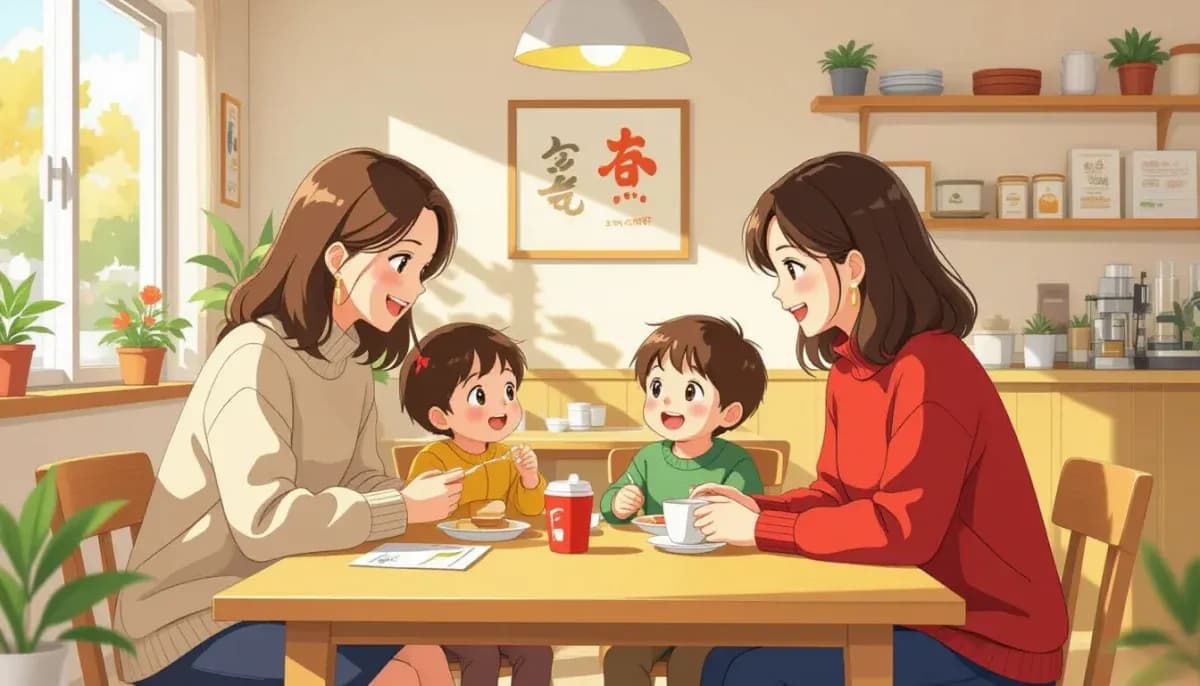
Understand mama-tomo (ママ友) culture in Japan and learn practical strategies for foreign mothers to build genuine friendships through hoikuen, kodomokan, and school communities.
Mama-Tomo Culture: Navigating Mother Friendships in Japan
Moving to Japan with children is one of the most rewarding — and isolating — experiences a parent can have. While Japan offers incredible safety, excellent healthcare, and a rich cultural environment for raising kids, building a genuine social support network takes real effort. At the center of Japanese parenting culture is a uniquely important concept: mama-tomo (ママ友), the friendships formed between mothers through shared parenting experiences.
Whether you are a foreign mother new to Japan or a long-term expat trying to understand why making close mom-friends feels so difficult, this guide explains the mama-tomo phenomenon in depth — what it is, why it matters, how it works, and how to actually build meaningful connections as an outsider.
What Is Mama-Tomo? Understanding the Concept
Mama-tomo (ママ友) is a Japanese compound word combining mama (ママ, mother) and tomo (友, friend). It refers specifically to friendships between mothers who meet through their children — at hoikuen (nursery school), yochien (kindergarten), elementary school, the local park, or neighborhood children's centers.
These relationships are distinct from general friendships. Mama-tomo are connected through their role as mothers and their children's shared environments. The friendship often begins as a practical arrangement — sharing information about school events, childcare tips, neighborhood resources — and sometimes deepens into genuine emotional bonds.
The term is so embedded in Japanese daily life that it appears in mainstream media, TV dramas, and academic research. Understanding mama-tomo culture is not optional for foreign mothers in Japan: it is the key to accessing the informal networks that make Japanese parenting actually manageable.
| Aspect | Detail |
|---|---|
| Word origin | ママ (mama) + 友 (tomo = friend) |
| First used | 1990s, rose with nuclear family trend |
| Where bonds form | Hoikuen, yochien, elementary school, kodomokan |
| Core function | Information sharing + emotional support |
| Common meeting formats | Playdates, lunch after school events, kodomokan visits |
| Challenge for foreigners | Language barrier, cultural restraint (enryo), daytime scheduling |
Why Mama-Tomo Friendships Matter More Than You Think
Japan's social structure has changed dramatically over the past few decades. In previous generations, mothers relied on extended family networks — grandmothers nearby, aunts within walking distance, neighbors who had known each other for decades. That world has largely disappeared.
According to research published in PMC (PubMed Central), 93.9% of Japanese families today live in nuclear family units — just parents and children, with grandparents living separately. For foreign families in Japan, this number is essentially 100%: your family support network is overseas and largely unreachable for daily emergencies.
This structural shift makes mama-tomo connections not just socially nice but practically essential. These are the people who will:
- Tell you which doctor in your neighborhood speaks English
- Warn you about school event scheduling before you miss something important
- Watch your child for an hour when you have an unexpected appointment
- Share the informal knowledge about how the local yochien actually works
- Provide emotional validation during the hard days of parenting in a foreign country
For foreign mothers specifically, mama-tomo friendships offer a bridge into Japanese community life that is otherwise very difficult to access independently. They are a living, updating resource on navigating Japanese institutions with children.
For more on navigating the childcare system that often serves as the starting point for mama-tomo friendships, see our guide to daycare and hoikuen in Japan for foreign parents.
The Hidden Difficulty: Why Making Mama-Tomo Friends Is Hard
Despite how important these friendships are, nearly every foreign mother in Japan reports that building mama-tomo relationships is unexpectedly difficult. Japanese mothers themselves struggle — the challenge is not unique to foreigners, but foreigners face additional layers.
The Role of Enryo
Enryo (遠慮) is the Japanese cultural principle of restraint and self-effacement. It means not imposing on others, not asking for favors, not appearing too eager or needy. While enryo creates a respectful social environment, it directly conflicts with the vulnerability required to build genuine friendships.
In practice, this means:
- A mother who is struggling will rarely ask for help, even when she desperately needs it
- Inviting another mother to lunch feels presumptuous — "what if she's busy and feels pressured to say yes?"
- Sharing problems or frustrations risks being seen as complaining or burdening others
- Making the first move toward deeper friendship is scary precisely because Japanese social norms don't strongly model it
The result is that many mama-tomo relationships stay permanently at the level of polite small talk — warm, pleasant, but not supportive in the deeper sense.
The "Perfect Mother" Ideal
Japanese society places intense pressure on mothers to appear organized, selfless, capable, and wholly devoted to their children. This ideal — sometimes called ryosai kenbo (良妻賢母, "good wife, wise mother") in its historical form — creates invisible social performance requirements.
When mothers feel they must project competence and contentment, they cannot easily admit to loneliness, overwhelm, or confusion. The social mask that protects them from judgment also prevents them from connecting authentically.
Working Mothers and Schedule Barriers
PTA activities, school volunteer events, and informal mama-tomo gatherings at kodomokan are overwhelmingly scheduled during weekday morning hours — precisely when working mothers cannot attend. This is not accidental: Japan's school culture still assumes a full-time homemaker parent.
The result is that working mothers are structurally excluded from the primary channels through which mama-tomo friendships form. Many working mothers report feeling guilty for not participating, and then isolated for not connecting.
The Extra Layer for Foreign Mothers
On top of all this, foreign mothers face:
- Language barriers: Even conversational Japanese may not be enough for nuanced emotional exchange
- Cultural unfamiliarity: Not knowing unspoken rules about when to bow, what to bring as omiyage, how to respond to indirect communication
- Temporary resident mindset: Both sides may hesitate to invest in a friendship if they know the other family may leave Japan in a year or two
- Physical distance from home support: Unlike Japanese mothers whose parents may be a two-hour shinkansen ride away, foreign mothers' families are on the other side of the world
Where Mama-Tomo Friendships Actually Form
Despite the challenges, mama-tomo friendships do form — and there are specific environments where they are most likely to develop. Understanding these spaces is the first step to entering them.
Hoikuen and Yochien Gates
The most natural environment for mama-tomo connections is the school gate. Pickup and dropoff times create repeated, low-stakes encounters over months and years. You see the same faces, exchange brief pleasantries, and slowly build familiarity.
The challenge: Japanese mothers at the gate are often in a hurry, and conversations stay brief and functional. To deepen these contacts, look for informal gatherings organized by the school's parent group — even attending one event per term makes a difference.
For more on navigating the yochien system, see our complete guide to kindergarten and yochien in Japan for foreign parents.
Kodomokan (子どもの館 / 児童館)
Kodomokan — children's halls — are government-run community centers designed specifically for children and parents to gather. They typically have indoor play areas, toy libraries, and structured activities. Most charge minimal entry fees (around ¥200) and require no advance reservation.
These spaces are goldmines for mama-tomo connections because:
- They are specifically designed for parent-child interaction
- The informal, drop-in format removes the pressure of a formal invitation
- Regular attendance creates the repeated contact that builds familiarity
- Activities give you something to talk about beyond pleasantries
Many cities also have jidoukan (児童館), children's centers with age-specific clubs, monthly workshops, and toy-lending libraries. Check your local city hall website for the jidoukan nearest to you.
School PTA and Volunteer Activities
Volunteering for school events — even in a small capacity — places you in extended, task-oriented contact with other mothers. Working toward a shared goal (preparing for sports day, setting up a classroom event, organizing a school trip) creates the conditions for natural conversation and mutual appreciation.
The critical insight: you do not need to be fluent in Japanese to volunteer. Showing up, being helpful, and being present communicates goodwill more powerfully than any conversation. Many foreign mothers report that their first real mama-tomo friendships formed during school events where language was secondary to shared effort.
Expat and Mixed Parent Groups
Major Japanese cities have active communities of foreign parents. Groups like Tokyo Mothers Group organize playdates that deliberately mix local Japanese and international families — creating lower-pressure environments for cross-cultural connection.
These groups serve a dual purpose: they give you foreign-language support when you need it, and they can introduce you to Japanese mothers who are specifically interested in international exchange.
Practical Strategies for Building Mama-Tomo Friendships as a Foreigner
Building genuine mama-tomo friendships as a foreign mother requires proactive effort and some tolerance for awkward initial interactions. Here are strategies that actually work.
Start With Consistent Presence
Friendship in Japan is built through repeated, low-intensity contact over time rather than dramatic one-time efforts. The key is showing up consistently — at the school gate, at kodomokan, at school events — so that faces become familiar and conversations begin naturally.
Do not wait for someone to initiate contact with you. Japanese social norms around enryo mean that many mothers are waiting for you to make the first move, even as you wait for them.
Use Your Child as a Bridge
Children create natural connection points. When your child plays with another child at kodomokan, an opening for parent conversation appears automatically. Commenting positively on a child's toy, asking a child's age, or watching the children together creates an easy, low-stakes entry into conversation.
Embrace Imperfect Language
Many foreign mothers are embarrassed by limited Japanese and avoid conversation as a result. This is the opposite of what works. Japanese mothers are typically delighted and impressed when foreign mothers make any effort to speak Japanese, however imperfectly.
Simple phrases for mama-tomo settings:
- Oikutsu desu ka? (What age is your child?) — お幾つですか?
- Doko no hoikuen desu ka? (Which nursery school?) — どこの保育園ですか?
- Issho ni asobimashoo ka? (Shall we play together?) — 一緒に遊びましょうか?
- Kondo cha demo ikaga desu ka? (Would you like to get tea sometime?) — 今度お茶でもいかがですか?
Bring Omiyage
Japanese social exchange is lubricated by small gifts — omiyage (お土産). If you have traveled anywhere, returning with small regional snacks to share at the school gate or kodomokan immediately positions you as culturally aware and generous. This small gesture can warm relationships significantly.
Build in the Digital Space
Japanese parents heavily use LINE for communication. Once you have exchanged LINE contacts with another mother, you have moved past the acquaintance stage. Sending occasional messages — sharing a photo of the children, mentioning a useful local event, checking in after a school event — maintains the relationship between in-person meetings.
For more context on the broader social challenges of raising children in Japan as a foreigner, see our guide on mental health and emotional wellbeing for foreign children in Japan.
When Mama-Tomo Relationships Become Complicated
Mama-tomo culture has a complicated social dimension that Japanese TV dramas and domestic media explore endlessly. Not all mama-tomo dynamics are positive, and understanding the potential pitfalls helps foreign mothers navigate them.
Gossip and Information Leakage
Because mama-tomo networks are informationally rich, they can also be gossip-rich. Information shared in confidence with one mama-tomo may travel through the network. Foreign mothers sometimes find that their private circumstances — their visa status, their family situation, their financial position — become known to other parents without their intention.
The practical guidance: be warm and friendly, but exercise judgment about what personal information you share early in a relationship.
Hierarchy and In-Group Dynamics
Japanese social groups tend toward hierarchical organization, and mama-tomo groups are no exception. Mothers whose children entered the school earlier, or who have been in the neighborhood longer, may hold informal social authority. New arrivals — especially foreigners — may initially be on the periphery.
This is not personal exclusion; it is structural. Consistent presence and genuine helpfulness gradually move you toward the center of the group.
The AI Mama-Tomo Phenomenon
A striking indicator of how real the isolation problem has become: in 2025, Japanese companies began offering AI mama-tomo services — LINE-based AI companions specifically designed to replace the mama-tomo relationship for isolated mothers.
One service features an AI character named "Yoko" (a warm, senior mother of three) available 24/7 for ¥480/month. Mothers use it to discuss topics too sensitive to share with real mama-tomo: marital stress, in-law conflicts, maternal anxiety, developmental concerns. The existence of a commercial market for this service tells you something important about how isolating Japanese motherhood can be.
For an overview of other resources available to foreign families navigating Japanese systems, see the complete guide to raising children in Japan for foreign parents and the guide to government benefits and subsidies for families in Japan.
Resources and Further Reading
Building mama-tomo friendships is part of a broader project of building community as a foreign parent in Japan. The following resources can help:
- Living in Nihon — comprehensive guides to daily life in Japan for foreigners, including parenting and community resources
- For Work in Japan — practical guidance on balancing work and family life in Japan as a foreign resident
- Chuukou Benkyou — resources for navigating the Japanese education system
- Savvy Tokyo — personal accounts and practical advice on making friends as a mother in Japan
- PMC: Social Prescription for Isolated Parenting in Japan — academic research on social isolation among Japanese mothers
Conclusion: Patience, Presence, and Persistence
Mama-tomo culture is one of the most important — and least discussed — aspects of life as a foreign parent in Japan. Understanding it helps you recognize that the difficulty of making close friends is not a personal failure or a reflection of unwelcoming Japanese culture. It is a structural challenge shaped by cultural restraint, modern nuclear family isolation, and the specific social architecture of Japanese parenting spaces.
The path through it is patient, consistent, and proactive: show up at the kodomokan, volunteer at the school gate, exchange LINE contacts, bring omiyage, speak imperfect Japanese without embarrassment. Over months and years, these small efforts compound into genuine community.
The mothers who succeed in building mama-tomo friendships in Japan consistently describe it as one of the most rewarding aspects of their Japanese lives — a genuine connection to the country, the culture, and a community of people navigating the same extraordinary adventure.

Originally from Vietnam, living in Japan for 16+ years. Graduated from Nagoya University, with 11 years of professional experience at Japanese and international companies. Sharing practical information for foreign parents raising children in Japan.
View Profile →Related Articles

Modern Parenting Trends and Changes in Japan
Explore how parenting in Japan is changing in 2025 — from landmark government reforms and childcare expansion to shifting discipline norms and the rise of involved fathers. A practical guide for foreign families.
Read more →
The Ikumen Movement: Japan's Push for Involved Fathers
Discover Japan's ikumen movement — the cultural push for involved fatherhood. Learn about paternity leave rights, government initiatives, and what it means for foreign fathers living in Japan.
Read more →
Japanese vs Western Parenting Styles Compared
Discover the key differences between Japanese and Western parenting styles — from amae and shitsuke to co-sleeping, discipline, and public behavior. A practical guide for foreign parents in Japan.
Read more →
Group Harmony and Socialization in Japanese Child-Rearing
Understand wa (group harmony) and how Japanese schools, proximal parenting, and mimamoru shape your child's socialization. Essential guide for expat families in Japan.
Read more →
Japanese Approach to Early Childhood Development
Understand Japan's early childhood development philosophy: hoikuen, yochien, kodomoen, mimamoru, and Chi-Toku-Tai. A complete guide for foreign parents raising children in Japan.
Read more →
Discipline Methods in Japanese Parenting Culture
Discover how Japanese parents use shitsuke, empathy-based discipline, and group harmony to raise well-behaved children. A practical guide for foreign families in Japan.
Read more →