
Elementary School Subjects and Curriculum in Japan

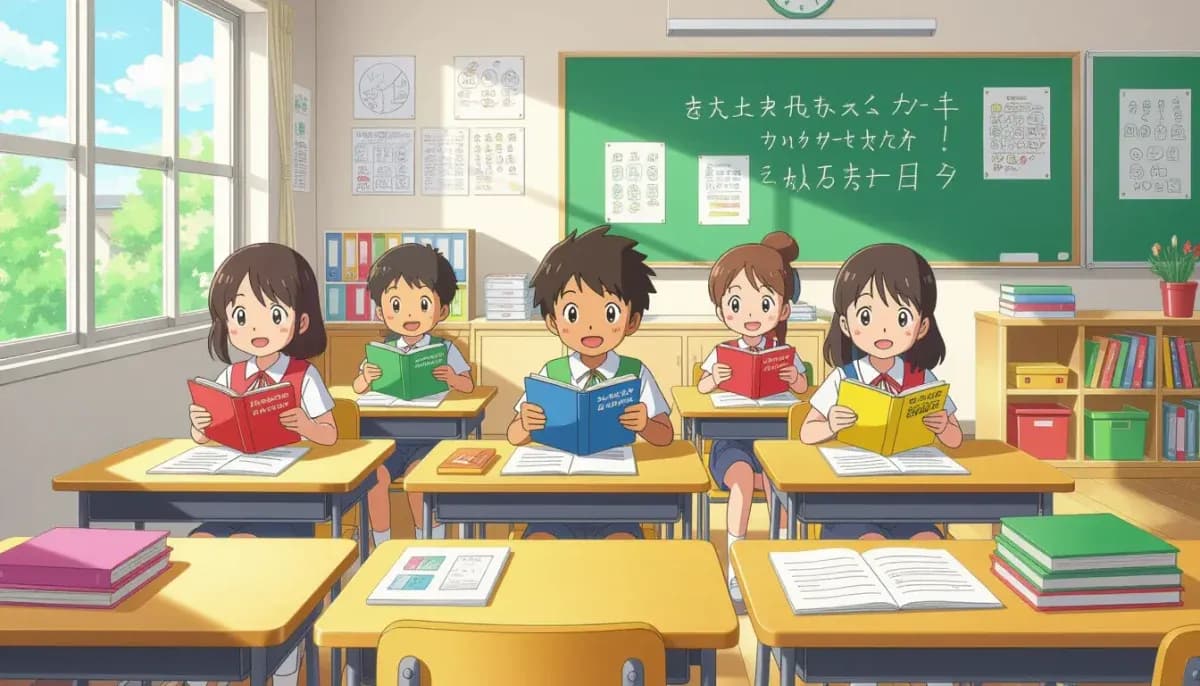
Learn everything about elementary school subjects and curriculum in Japan (Grades 1-6): Japanese, math, science, moral education, English, home economics and more. Essential guide for foreign parents.
Elementary School Subjects and Curriculum in Japan: A Complete Guide for Foreign Parents
If your child is about to start elementary school in Japan, one of the most important things to understand is what they will actually be learning — and how the curriculum compares to what you might be used to back home. Japanese elementary school (小学校, shōgakkō) covers six years and follows a carefully structured national curriculum that balances academics, character development, and life skills. This guide walks you through every subject, explains the unique features of the Japanese curriculum, and helps you prepare your child for what lies ahead.
Overview: The Japanese Elementary School Curriculum
Japanese elementary school runs from Grades 1 through 6, typically ages 6 to 12. The curriculum is set by the Ministry of Education, Culture, Sports, Science and Technology (MEXT) through the Gakushū Shidō Yōryō (学習指導要領) — the National Curriculum Standards — which are revised approximately every ten years. The current guidelines, which came into full effect in 2020, reflect Japan's goals of nurturing students who can think critically, communicate effectively, and contribute to society.
What makes the Japanese curriculum distinctive is not just its academic rigor, but its integration of everyday routines — like eating lunch together and cleaning classrooms — as learning experiences in their own right. For foreign parents, this holistic approach to education may be one of the most striking and memorable aspects of the Japanese school system.
For a broader overview of elementary school life in Japan, see our Complete Guide to Elementary School in Japan for Foreign Parents.
Core Academic Subjects by Grade
The core academic subjects are taught throughout all six years of elementary school, with lesson hours increasing as students progress. Each class period is 45 minutes long.
Japanese Language (国語, Kokugo)
Japanese Language is the most heavily weighted subject, especially in the early grades. In Grade 1, students have approximately 306 hours of Japanese language instruction per year — more than any other subject. This decreases slightly in upper grades as other subjects are introduced, settling to around 175 hours per year by Grades 5 and 6.
The Japanese Language curriculum covers:
- Reading and writing hiragana, katakana, and kanji
- Listening and speaking skills
- Reading comprehension and literary appreciation
- Writing essays and reports
By the end of Grade 6, students are expected to know at least 1,006 kanji (the Kyōiku Kanji). This is a major milestone — and for children of foreign parents, one that may require additional support if Japanese is not spoken at home.
Mathematics (算数, Sansū)
Math receives significant attention throughout all six years, with approximately 175 hours per year from Grade 2 onward. The curriculum builds systematically:
- Grades 1–2: Counting, basic addition and subtraction, shapes, and measurement
- Grades 3–4: Multiplication, division, fractions, and basic geometry
- Grades 5–6: Decimals, ratios, area, volume, and introduction to algebraic thinking
Japanese students consistently rank among the top performers globally in mathematics assessments, reflecting the emphasis placed on conceptual understanding and problem-solving from an early age.
Science (理科, Rika)
Science is introduced in Grade 3 and continues through Grade 6. Earlier grades learn about the natural world through Life Environment Studies (see below). The science curriculum includes:
- Plants, animals, and human biology
- Physical phenomena (magnets, electricity, light)
- Earth science and weather
- Simple experiments and observation
In the 2009 curriculum revision, science hours were increased, reflecting a national priority to strengthen STEM education.
Social Studies (社会, Shakai)
Like science, social studies begins in Grade 3. In Grades 1 and 2, it is combined with science into the integrated subject Life Environment Studies. The social studies curriculum covers:
- Grade 3: Local community, maps, and neighborhood geography
- Grade 4: Prefectural history and geography, water and waste management
- Grades 5–6: Japanese geography, industry, history, and civics/politics
By Grade 6, students have a solid understanding of Japan's history from ancient times to the present, and begin exploring global issues.
Unique Japanese Curriculum Areas
Beyond the core academic subjects, the Japanese curriculum includes several areas that are largely unique to Japan — or implemented in ways that differ significantly from most other countries.
Life Environment Studies (生活, Seikatsu)
This subject is exclusive to Grades 1 and 2 and serves as an integrated introduction to both social studies and science. Rather than teaching these as separate disciplines, Seikatsu encourages hands-on exploration of the natural and social environment. Activities might include observing insects, growing vegetables, exploring the local neighborhood, or learning how to interact with community members. The subject also emphasizes developing children's independence and sense of self.
Moral Education (道徳, Dōtoku)
Moral Education is one of the most distinctive aspects of Japanese schooling. All students receive 34 to 35 hours per year of formal moral education — roughly one class per week — across all six grades. In 2018, it was elevated from a supplementary activity to a fully recognized subject with formal evaluations.
Topics covered include:
- Respect for self and others
- Friendship, honesty, and compassion
- Community responsibility and civic virtue
- Appreciation for nature and life
Importantly, moral education in Japan is not limited to the classroom. The daily routines of kyūshoku (giving out lunch) and sōji (cleaning the school) are considered extensions of moral education — teaching children responsibility, teamwork, and respect for shared spaces. Learn more in our dedicated guide on Moral Education (Dōtoku) at Japanese Elementary Schools.
English / Foreign Language Education
One of the most significant recent changes to the Japanese elementary curriculum is the formal introduction of English instruction:
- Grades 3–4 (Foreign Language Activities): Approximately 35 hours per year. These are informal, communication-focused activities led by the homeroom teacher, often with support from an Assistant Language Teacher (ALT). This is not a formally graded subject.
- Grades 5–6 (Foreign Language): Approximately 70 hours per year. English becomes a formal, graded subject. Students work on all four skills: listening, speaking, reading, and writing.
For children of foreign parents, especially those from English-speaking countries, this can be an area where they have a natural advantage — and where they may be called upon to help their classmates.
Integrated Studies (総合的な学習の時間, Sōgōteki na Gakushū no Jikan)
Introduced in 2002, Integrated Studies runs from Grades 3 to 6 at approximately three unit-hours per week. It is designed to be cross-curricular and project-based, encouraging students to investigate real-world topics that span multiple subject areas. Common themes include:
- Environmental issues and sustainability
- International understanding and cultural awareness
- Community engagement and volunteerism
- Information and technology literacy
This subject is particularly valuable for foreign children, as international understanding is a core theme and their own multicultural background can be celebrated and shared.
Home Economics (家庭, Katei-ka)
Japan's Home Economics curriculum is famous for being both comprehensive and universal — both boys and girls are required to take it in Grades 5 and 6. Subjects include:
- Cooking (learning to prepare simple, nutritious Japanese meals)
- Sewing and basic clothing care
- Household cleaning and organization
- Family relationships and everyday life skills
This emphasis on practical life skills from a young age is one of the things that surprises many foreign parents — and it's widely credited with contributing to Japan's culture of self-sufficiency and tidiness.
Music (音楽, Ongaku) and Arts & Crafts (図工, Zukō)
Creative subjects are taught throughout all six years. Music education emphasizes:
- Singing and choral performance
- Playing instruments (recorder in early grades, keyboard harmonica)
- Music appreciation and notation
Arts and Crafts (Zukō) focuses on:
- Drawing, painting, and sculpture
- Creative expression and design
- Appreciation of art and craft traditions
For more detail, see our guide on Music and Arts Education in Japanese Elementary Schools.
Physical Education (体育, Taiiku)
PE is compulsory across all six years. The curriculum covers a wide range of activities including gymnastics, running, ball sports, martial arts basics, and dance. Swimming is a particularly important component — most Japanese elementary schools have a pool, and swimming lessons are a regular part of the curriculum from around Grade 2 onward. See our guide on Swimming Lessons at Japanese Elementary Schools.
Special Activities (特別活動, Tokubetsu Katsudō)
Special Activities include student council participation, class activities, school festivals, club activities, and field trips. These are an important part of learning civic participation and community responsibility. Field trips (遠足, ensoku) and school excursions are highlights of the school year for many children. Learn more in our article on School Field Trips and Excursions in Japanese Elementary Schools.
Subject Hours by Grade: At a Glance
| Subject | Grades Taught | Approx. Annual Hours (Mid-Grades) |
|---|---|---|
| Japanese Language (国語) | 1–6 | 175–306 hrs |
| Mathematics (算数) | 1–6 | 150–175 hrs |
| Science (理科) | 3–6 | 90–105 hrs |
| Social Studies (社会) | 3–6 | 70–105 hrs |
| Life Environment Studies (生活) | 1–2 | 102–105 hrs |
| Moral Education (道徳) | 1–6 | 34–35 hrs |
| Music (音楽) | 1–6 | 50–70 hrs |
| Arts & Crafts (図工) | 1–6 | 50–70 hrs |
| Physical Education (体育) | 1–6 | 90–105 hrs |
| Home Economics (家庭) | 5–6 | 55–60 hrs |
| Foreign Language Activities (外国語活動) | 3–4 | 35 hrs |
| English / Foreign Language (外国語) | 5–6 | 70 hrs |
| Integrated Studies (総合的な学習) | 3–6 | ~105 hrs |
| Special Activities (特別活動) | 1–6 | 34–35 hrs |
What This Means for Foreign Children
For children joining Japanese elementary school from abroad, the curriculum can present both challenges and opportunities:
Challenges:
- The intensive Japanese language instruction assumes a native speaker foundation; children learning Japanese as a second language will need additional support.
- The kanji requirement (1,006 by Grade 6) is a significant milestone that takes years of practice.
- Social norms embedded in the curriculum (cleaning duties, lunch service, group activities) may feel unfamiliar at first.
Opportunities:
- Foreign children often excel in English class and can serve as natural conversation partners.
- The Integrated Studies program regularly focuses on international understanding — your child's background may be celebrated.
- The emphasis on character, cooperation, and community can be deeply positive for children who adapt to it.
As of recent data, over 46,000 foreign children enrolled in Japanese elementary schools require Japanese language support, and schools have improved their frameworks for supporting these students. Special Japanese-language support programs (日本語指導が必要な児童生徒) were formalized in 2014, and many schools now offer pull-out support sessions or in-class assistance.
For practical guidance on enrolling your child and navigating the first days of school, check our resources at Living in Nihon and For Work in Japan, both of which offer helpful guides for foreign residents navigating daily life in Japan.
Preparing Your Child for the Japanese Curriculum
Here are some practical steps foreign parents can take:
- Start Japanese early. The earlier your child begins learning Japanese, the easier the curriculum will be. Enroll in a Japanese preschool or kindergarten if possible — see our guide on Kindergarten in Japan (Yōchien).
- Practice hiragana and katakana before Grade 1. These two phonetic alphabets are taught in the first weeks of school, but a head start helps enormously.
- Ask the school about support. Most schools have systems in place for foreign children. Ask specifically about 日本語指導 (Japanese language instruction) support.
- Maintain your home language. Bilingualism is an asset. Don't sacrifice your native language for Japanese — both are achievable. See our Raising Bilingual Children in Japan guide for strategies.
- Get a copy of the curriculum overview. Ask the school office for the 教育課程 (kyōiku katei) overview, which lists subjects and hours. This gives you a clear picture of what your child will study each year.
For additional resources on exam preparation support (especially for those planning for middle school), Chuukou Benkyou offers study materials for students navigating Japan's academic system.
Final Thoughts
Japanese elementary school offers a rich, well-rounded curriculum that goes far beyond academic subjects. From the daily ritual of cleaning classrooms together to the creative freedom of arts and crafts, children learn not just knowledge but character. For foreign families, understanding this curriculum is the first step toward helping your child thrive — and perhaps even come to love — their Japanese school experience.
Want to know more about what your child's school day looks like in practice? Read our guide to the Japanese Elementary School Daily Schedule and Routine for a detailed hour-by-hour breakdown.
For further reading on Japan's school curriculum, see this overview from the Japan Living Guide and curriculum facts at FactsAndDetails.

Originally from Vietnam, living in Japan for 16+ years. Graduated from Nagoya University, with 11 years of professional experience at Japanese and international companies. Sharing practical information for foreign parents raising children in Japan.
View Profile →Related Articles
Elementary School Graduation Ceremony in Japan
Everything foreign parents need to know about Japan's elementary school graduation ceremony (sotsugyo-shiki): ceremony format, dress code, songs, traditions, and tips for expats.
Read more →
Swimming Lessons at Japanese Elementary Schools
Complete guide to swimming lessons at Japanese elementary schools: schedule, required gear, exemptions, grading, and tips for foreign parents navigating suiei season.
Read more →
Music and Arts Education in Japanese Elementary Schools
A complete guide for foreign families on music and arts education in Japanese elementary schools. Learn what subjects are taught, what instruments children use, school festivals, and practical tips for expat parents.
Read more →
Moral Education (Doutoku) at Japanese Elementary Schools
A complete guide to Doutoku (道徳), Japan's moral education class, for foreign parents. Learn what's taught, how classes work, and how to support your child.
Read more →
School Field Trips and Excursions in Japanese Elementary Schools
Everything foreign parents need to know about school field trips in Japanese elementary schools — ensoku day trips, shugakuryoko overnight trips, costs, packing lists, and cultural significance.
Read more →
Parent-Teacher Meetings at Japanese Elementary Schools
A complete guide for foreign parents on navigating parent-teacher meetings at Japanese elementary schools: types, what to expect, language tips, and how to prepare.
Read more →