
Swimming Lessons at Japanese Elementary Schools

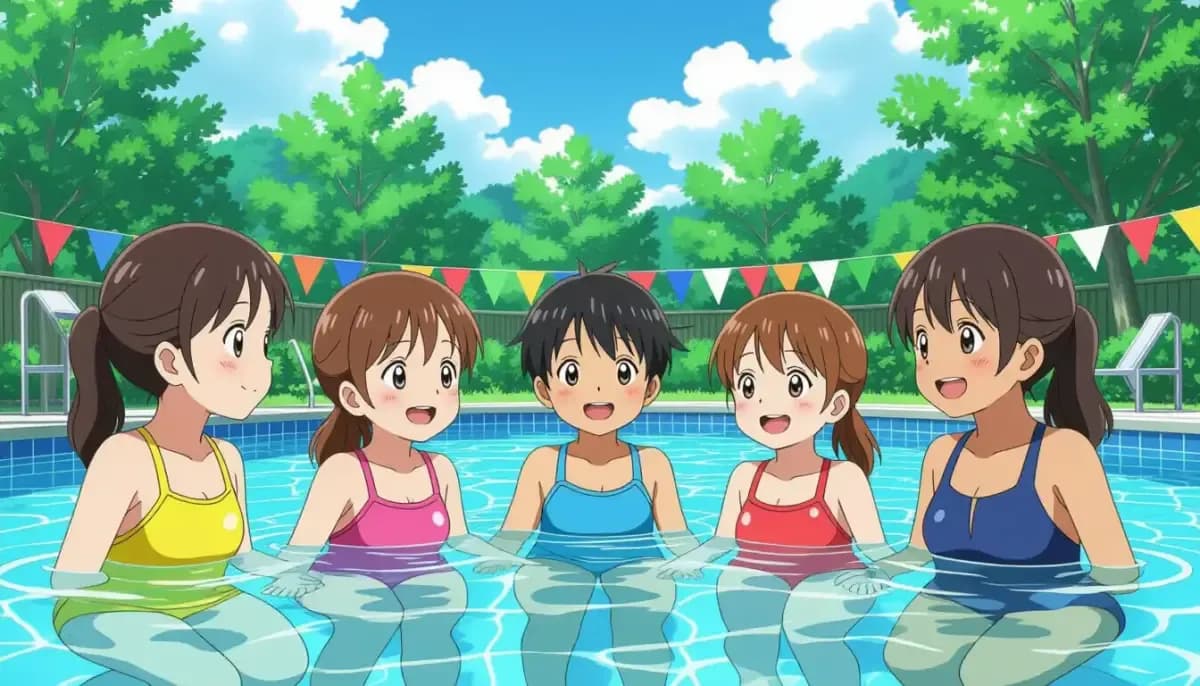
Complete guide to swimming lessons at Japanese elementary schools: schedule, required gear, exemptions, grading, and tips for foreign parents navigating suiei season.
Swimming Lessons at Japanese Elementary Schools: A Complete Guide for Foreign Families
If your child attends a Japanese elementary school, one of the most memorable parts of their school year will be suiei (水泳) — swimming lessons. Every summer, school pools come alive with the splashing of children learning water safety and swimming skills. For foreign parents unfamiliar with this tradition, understanding what to expect can make the experience smooth and even exciting for the whole family.
This guide covers everything you need to know: the history behind school swimming in Japan, what equipment your child needs, how lessons are structured, how to handle exemptions, and what happens as your child progresses through the grades.
The History of Swimming Education in Japan
Swimming was not always part of the Japanese school curriculum. The push to make it mandatory came after two devastating tragedies in 1955:
- The Shiun Maru ferry collision — A collision in the Seto Inland Sea killed 168 people, including 100 schoolchildren on a field trip. Many deaths were attributed to an inability to swim or stay afloat while awaiting rescue.
- The Kyōhoku Junior High School incident — Thirty-six students drowned when a group was swept away by unexpected currents during an outdoor activity.
These events shocked the nation and sparked a national debate about water safety education. Swimming was formally added to the regular school curriculum in 1968 following revisions to the national education guidelines. The timing also aligned with Japan's preparation for the 1964 Tokyo Olympics, which brought increased investment in sports infrastructure nationwide.
By the 1990s, more than 80% of elementary schools had swimming pools on their premises. As of 2021, Japan has 22,036 school pools across 29,412 elementary and junior high schools — meaning roughly 75% of schools have their own pool. Most are outdoor facilities (21,607 outdoor vs. 429 indoor), which is why the swimming season is tied to summer weather.
For more on Japanese school life, see our Complete Guide to Elementary School in Japan for Foreign Parents.
When and How Often Are Swimming Lessons Held?
Swimming lessons are part of physical education (体育, taiiku) class and take place during Japan's hot summer months.
| Item | Details |
|---|---|
| Season | Mid-June through September (varies by region) |
| Lessons per season | Typically 4–5 lessons |
| Time per lesson | 2 consecutive class periods (~90 minutes) |
| Pool location | On-campus pool (most schools) or nearby public facility |
| Class cancellation | Cancelled if water temperature or weather is unsuitable |
Schools in warmer regions like Okinawa or Kyushu may start as early as May, while those in Hokkaido or with indoor pools may follow a slightly different schedule. Each lesson uses two consecutive 45-minute class periods — giving children enough time to change, swim, and clean up.
The total number of lessons is relatively low (4–5 per year), which surprises many foreign parents used to more intensive swimming programs. The goal is not competitive swimming but rather basic water comfort and safety skills.
What Your Child Needs to Bring
Schools take swimming equipment seriously. Expect a detailed handout (プリント, purinto) from the school at the start of the season with a specific list of required items. Here's a general overview:
| Equipment | Notes |
|---|---|
| Swimwear (水着, mizugi) | School may specify color, style, or brand restrictions |
| Swim cap (水泳帽, suiei bō) | Often color-coded by grade or class |
| Goggles (ゴーグル) | Recommended but check if required |
| Towel (タオル) | Bring a large absorbent towel |
| Bag for wet items | Waterproof bag to bring wet gear home |
| Name tags | Some schools require name tags sewn on swimwear |
Important tips for foreign parents:
- Read the school's equipment list carefully — some schools have strict rules about swimwear style (e.g., no bikinis for girls; no board shorts for boys)
- Swim caps are typically sold at sports stores or 100-yen shops
- Name tags should be sewn in, not ironed on, as they must survive repeated washing
For a comprehensive overview of navigating Japanese school requirements, check out Living in Nihon's guide for raising children and education in Japan.
How Swimming Lessons Are Structured by Grade
Japanese elementary school swimming education progresses systematically across six grade levels. The curriculum moves from water comfort to distance swimming.
| Grade Level | Key Skills Taught |
|---|---|
| 1st–2nd Grade (低学年) | Water entry, breath-holding, floating, basic kicking |
| 3rd–4th Grade (中学年) | Gliding, basic freestyle (crawl) stroke, floating on back |
| 5th–6th Grade (高学年) | Freestyle and breaststroke technique, swimming 25m+ |
Children are assessed not by competitive speed but by their ability to complete basic skills. The national curriculum guidelines (学習指導要領, gakushū shidō yōryō) set broad targets, but individual schools have flexibility in how they implement lessons.
What about grading? Swimming is evaluated as part of physical education. Children are assessed on participation, attitude, and skill improvement — not on how fast they swim compared to classmates.
Can Your Child Be Exempt from Swimming Lessons?
Yes. Swimming lessons are not mandatory in the sense that students cannot be forced to participate. Here are the main exemption scenarios:
Health Reasons
If your child has a medical condition such as:
- Ear infections or chronic ear problems
- Skin conditions (eczema, allergies)
- Heart conditions or respiratory issues
- Recent surgery or injury
…you can submit a doctor's note (診断書, shindan-sho) to the school to have your child excused.
Religious Reasons
Some families have religious or cultural reasons for requesting an exemption — for example, concerns about mixed-gender swimming. Japanese schools are generally accommodating and will work with families on a case-by-case basis.
Menstruation
Girls who have started menstruating may be excused from specific lessons. Schools handle this sensitively, and children are usually told how to notify their teacher discreetly.
How to Request an Exemption
Contact your child's homeroom teacher (担任の先生, tantei no sensei) as early as possible in the school year. You'll typically fill out a form explaining the reason. Most schools have forms in Japanese only — if language is a barrier, see our guide on Teaching Japanese to Foreign Children or ask your local municipal board of education about interpretation services.
For additional guidance on family life and navigating school systems in Japan, For Work in Japan's family life guide has helpful context.
Swimming as an After-School Activity in Japan
School swimming lessons are just the beginning. Japan has a thriving private swimming school industry, and swimming is consistently ranked as the #1 extracurricular activity for Japanese children.
According to surveys by Nippon.com and the Sasakawa Sports Foundation:
- 38% of parents choose swimming as their child's extracurricular activity — the top choice for four consecutive years since 2017
- 23.7% of children aged 4–11 participate in after-school swimming lessons
- Swimming beats tutoring (18.3%) and piano lessons (14.3%) in popularity
Why is swimming so popular as an extracurricular?
- Safety — Parents see it as a life skill that could save their child's life
- Health benefits — Swimming is low-impact and builds cardiovascular fitness; many parents with asthmatic children choose it to help lung development
- Low parental burden — Unlike team sports like baseball or soccer, swimming doesn't require parents to volunteer, manage equipment, or attend every practice
- Year-round availability — Private swimming schools have indoor pools and operate throughout the year
Private swimming schools (スイミングスクール, suimingu sukūru) often begin accepting children as young as 3–4 years old. By age 5, over 60% of children enrolled in extracurricular activities are doing swimming.
For more context on extracurricular activities and your child's development in Japan, explore our Complete Guide to the Japanese Education System for Foreign Families.
The Changing Landscape: Schools Losing Their Pools
While swimming has been a cornerstone of Japanese school life for decades, the landscape is changing:
- In 1996, over 20,000 elementary schools had their own pool
- By 2015, that number dropped by ~25% to around 15,000
- In 2021, approximately 75% of schools still have pools, but maintenance challenges are growing
Several factors are driving this change:
- Aging infrastructure — Many pools were built 50–60 years ago and require expensive repairs
- Declining enrollment — Japan's shrinking youth population makes large pool maintenance less economical
- Teacher burden — Managing pool safety and water quality is time-consuming for already overworked teachers
- Heat concerns — Japan's increasingly hot summers make outdoor pool use more dangerous during extreme heat
As a result, a growing number of municipalities are outsourcing swimming education to private swimming schools or public facilities. This can actually mean a better experience for students — professional instructors, climate-controlled indoor pools, and smaller class sizes.
For deeper data on this trend, see the Sasakawa Sports Foundation's overview of swimming education in Japan.
Practical Tips for Foreign Parents
Here's a quick-reference checklist for navigating swimming lessons as a foreign family:
Before the season:
- [ ] Read the school's equipment list handout carefully
- [ ] Buy approved swimwear, swim cap, goggles, and a large towel
- [ ] Sew name tags onto swimwear and swim cap
- [ ] Ask the school if your child needs to demonstrate any pre-existing water comfort level
- [ ] Notify the school of any health conditions that may affect participation
During the season:
- [ ] Check your child's school bag for cancellation notices (lessons are often cancelled due to weather)
- [ ] Ensure wet gear is washed and dried between lessons
- [ ] Ask the teacher about your child's progress — don't wait for report cards
Communication tips:
- If your Japanese is limited, bring a bilingual friend or use a translation app for written forms
- Some schools have volunteer interpreters for non-Japanese-speaking families — ask your local municipal board of education (教育委員会, kyōiku iinkai)
- The school nurse (保健室の先生, hokenshitsu no sensei) is a good point of contact for health-related exemption discussions
For guidance on communicating with Japanese schools and supporting your child's development, see Raising Bilingual Children in Japan.
Also useful for context on community resources and support for foreign children: Chuukou Benkyou covers study support for junior high students navigating Japan's academic system.
Summary
Swimming lessons are a beloved and important part of Japanese elementary school life — rooted in a history of water safety advocacy and supported by one of the most impressive school pool networks in the world. For your child, these lessons offer not just swimming skills but also a shared cultural experience with their Japanese classmates.
Key takeaways:
- Season: Mid-June to September, 4–5 lessons per year
- Equipment: School-approved swimwear, swim cap, goggles, towel with name tags
- Exemptions: Available for health, religious, or other personal reasons — contact the homeroom teacher
- Extracurriculars: Private swimming schools are hugely popular and start as young as age 3
- Trends: Some schools are transitioning to outsourced programs at private facilities
Whether your child is a confident swimmer or just getting their feet wet (literally), Japanese school swimming is an experience worth embracing.
Sources: Swim Classes at Elementary Schools (Koto-Koto) | Sasakawa Sports Foundation | Swimming Lessons Popular for Japanese Children (Nippon.com)

Originally from Vietnam, living in Japan for 16+ years. Graduated from Nagoya University, with 11 years of professional experience at Japanese and international companies. Sharing practical information for foreign parents raising children in Japan.
View Profile →Related Articles
Elementary School Graduation Ceremony in Japan
Everything foreign parents need to know about Japan's elementary school graduation ceremony (sotsugyo-shiki): ceremony format, dress code, songs, traditions, and tips for expats.
Read more →
Music and Arts Education in Japanese Elementary Schools
A complete guide for foreign families on music and arts education in Japanese elementary schools. Learn what subjects are taught, what instruments children use, school festivals, and practical tips for expat parents.
Read more →
Moral Education (Doutoku) at Japanese Elementary Schools
A complete guide to Doutoku (道徳), Japan's moral education class, for foreign parents. Learn what's taught, how classes work, and how to support your child.
Read more →
School Field Trips and Excursions in Japanese Elementary Schools
Everything foreign parents need to know about school field trips in Japanese elementary schools — ensoku day trips, shugakuryoko overnight trips, costs, packing lists, and cultural significance.
Read more →
Parent-Teacher Meetings at Japanese Elementary Schools
A complete guide for foreign parents on navigating parent-teacher meetings at Japanese elementary schools: types, what to expect, language tips, and how to prepare.
Read more →
Cleaning Time (Souji): Why Japanese Students Clean Their Schools
Learn why Japanese students clean their own schools every day. Discover how souji works, its cultural roots in Buddhism and Shinto, educational benefits, and what foreign parents need to know.
Read more →