
Moral Education (Doutoku) at Japanese Elementary Schools

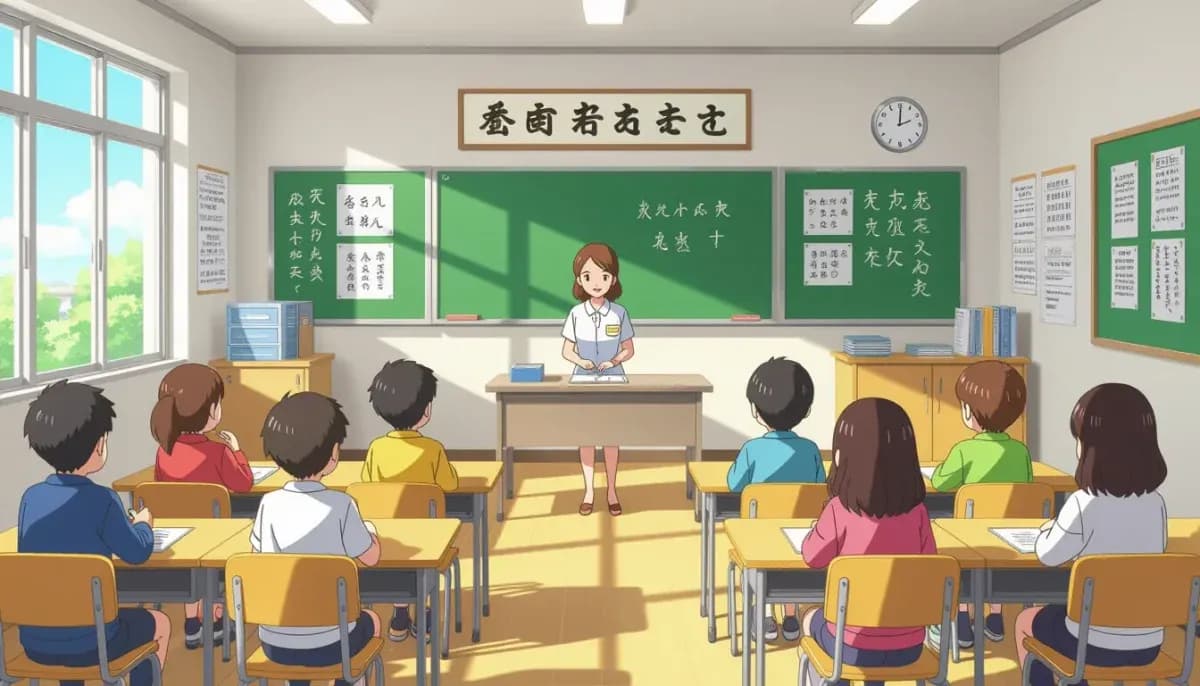
A complete guide to Doutoku (道徳), Japan's moral education class, for foreign parents. Learn what's taught, how classes work, and how to support your child.
Moral Education (Doutoku) at Japanese Elementary Schools: A Complete Guide for Foreign Parents
If your child attends a Japanese elementary school, you'll quickly notice that education here goes far beyond academics. One of the most distinctive features of Japanese schooling is Doutoku (道徳) — a dedicated class for moral and character education. For foreign parents raising children in Japan, understanding Doutoku is essential to making sense of your child's school experience and the values Japanese society seeks to instill from an early age.
This guide explains everything you need to know about Doutoku: what it is, what's taught, how classes work, and what it means for your child as a foreign student navigating Japanese school culture.
What Is Doutoku? Understanding Japan's Moral Education Class
Doutoku (道徳) literally means "morality" or "virtue," and Doutoku kyoiku (道徳教育) refers to Japan's formal moral education program. In elementary school, the dedicated class is known as Doutoku no Jugyou (道徳の授業).
Moral education has been part of Japanese schooling for over 150 years, dating back to the Fundamental Code of Education (Gakusei) in 1872, which established moral development as a national priority. However, the subject underwent a major transformation in 2018, when it was elevated from an informal cross-curricular activity into a compulsory, standalone, formally assessed subject in both elementary and junior high schools.
Before 2018, moral principles were integrated across all subjects rather than taught in dedicated lessons. The 2018 reform reflected growing concern among educators and policymakers about declining social cohesion, bullying, and the need to nurture engaged, ethical citizens in modern Japan.
For foreign families, Doutoku can be one of the more culturally specific aspects of Japanese schooling — lessons that may seem straightforward often carry deep cultural meaning. Learning what to expect will help you support your child through this unique experience.
| Key Facts | Details |
|---|---|
| Japanese name | 道徳 (Doutoku) / 道徳の授業 (Doutoku no Jugyou) |
| Made compulsory | 2018 |
| Frequency | Once per week |
| Class length | 45 minutes |
| Annual hours (Grade 1) | 34 hours |
| Annual hours (Grades 2–6) | 35 hours |
| Textbook | Watashitachi no Doutoku (わたしたちの道徳) |
| Reflection journal | Kokoro no Note (心のノート) |
What Is Taught in Doutoku? The Four Core Domains
The Ministry of Education (MEXT) structures the Doutoku curriculum around four domains, each focusing on a different dimension of moral development:
1. Self (Jiko — 自己)
This domain focuses on the individual: self-awareness, emotional regulation, personal responsibility, and the importance of perseverance. Students explore questions like: Who am I? How do I handle my feelings? What are my responsibilities?
2. Others (Hoka — 他者)
This domain emphasizes relationships with other people: empathy, communication, conflict resolution, and care for friends, family, and people in need. Students learn how to understand others' perspectives and respond with kindness.
3. Society (Shakai — 社会)
This domain covers civic values: following rules, contributing to the community, civic responsibility, and understanding laws and social norms. It aims to develop children who feel a sense of duty to society as a whole.
4. Environment (Kankyo — 環境)
The final domain addresses respect for nature and the broader world: environmental stewardship, sustainability, and a sense of connection to the Earth. Students develop appreciation for the natural world and a responsibility to protect it.
These four domains build progressively across grade levels, with content becoming more abstract and nuanced as children get older.
Core Values Doutoku Aims to Develop
While Doutoku lessons cover a wide range of topics, several core Japanese values run throughout the curriculum:
Collective Harmony (Wa — 和): Perhaps the most fundamental value in Japanese culture, wa refers to group cohesion and the importance of maintaining harmony within a group. Doutoku teaches children to prioritize the group's wellbeing, sometimes over individual desires.
Respect for Elders (Keiro — 敬老): Reverence for seniority and authority — including teachers, parents, and older community members — is a core theme throughout the curriculum.
Responsibility and Diligence (Sekinin/Kinben — 責任/勤勉): Children are taught to take their commitments seriously, work hard, and be accountable for their actions.
Honesty (Shojiki — 正直): Truthfulness and integrity are central themes in many Doutoku stories, helping children understand the importance of honesty even when it is difficult.
Empathy and Care: Students practice seeing situations from others' points of view, developing compassion for classmates, family members, and people they may never meet.
For a broader look at how these values shape daily school life, see our guide on Elementary School in Japan: A Complete Guide for Foreign Parents.
How Doutoku Classes Actually Work: A Typical Lesson
One of the most distinctive features of Doutoku is its story-based teaching method. Here's what a typical class looks like:
1. The Story: The teacher reads a morally themed narrative from the official textbook, Watashitachi no Doutoku (わたしたちの道徳 / "Our Moral Education"). Stories feature relatable characters — children, animals, or community members — facing ethical dilemmas.
2. Discussion: After the story, the teacher opens a class discussion. Students are encouraged to share their personal thoughts and feelings about the characters' choices. Teachers typically emphasize that "there are no right or wrong answers" — the goal is to stimulate reflection rather than recite correct responses.
3. Reflection: Students record their thoughts in their Kokoro no Note (心のノート / "Heart Notebook"), a personal reflection journal used throughout elementary school.
4. Internalization: Activities — drawing, role-playing, small group discussion — help students internalize the lesson's values in ways that feel personally meaningful.
In practice, while teachers present discussions as open-ended, certain responses are culturally guided as more appropriate. This is an important nuance for foreign parents: your child may feel that even "open" questions carry expected answers, which can be particularly confusing if they come from a cultural background that encourages more individual expression.
For more on how Japanese elementary schools operate day-to-day, see our Elementary School in Japan guide.
Doutoku and Everyday School Life: How Values Are Reinforced
Doutoku does not exist in isolation — it works hand-in-hand with other distinctive features of Japanese school life that reinforce the same moral principles:
O-soji (掃除) — Daily Cleaning: Students are responsible for cleaning their classrooms, hallways, and school toilets every day. This practice develops responsibility, teamwork, and respect for shared spaces — values directly aligned with Doutoku's Self and Society domains.
Kyushoku (給食) — School Lunch: School lunch is eaten together in the classroom, with students serving each other. This routine teaches gratitude, communal values, and care for others.
Club and Group Activities: Extracurricular clubs, sports teams, and class committees reinforce cooperation, leadership, and perseverance — all themes explicitly addressed in Doutoku lessons.
This integration means your child is absorbing moral education not just in the weekly class, but throughout their entire school day. For more on daily routines at Japanese schools, see our guide on Raising Bilingual Children in Japan.
Doutoku for Foreign Children: What Parents Should Know
For children who grew up outside Japan — or who have one or more non-Japanese parents — Doutoku can present both opportunities and challenges.
Cultural Differences in Discussion Style: Japanese Doutoku classes tend to favor consensus and group reflection over individual dissent. Your child may find it difficult to express opinions that go against the grain, particularly if they come from a more individualistic cultural background. Reassure your child that their feelings are valid, and use the stories as conversation starters at home.
Language Barrier: For children still developing Japanese proficiency, following story-based discussions can be challenging. Talk to your child's teacher about support strategies, and consider reading similar moral stories in your home language to reinforce the themes.
Culturally Specific Content: Some Doutoku stories draw on deeply Japanese cultural references — seasonal festivals, traditional community roles, or specifically Japanese social norms. These can be wonderful opportunities for your child to learn about Japanese culture, but they may sometimes feel alienating if the content doesn't reflect your family's values.
No Formal Grading Pressure: While Doutoku is formally assessed since 2018, assessment focuses on engagement and reflection rather than correct answers. This means Doutoku is usually one of the lower-stress classes for academic achievers — a welcome relief for children already managing the pressure of a new language.
For broader strategies on helping your child thrive in the Japanese school system, see our article on Mental Health and Emotional Wellbeing for Foreign Children in Japan.
The History of Moral Education in Japan: A Brief Overview
Understanding the history of Doutoku helps explain why it holds such a prominent place in Japanese education today.
- 1872: The Fundamental Code of Education establishes moral development as a core educational goal.
- 1930s–1945: During the militarist era, moral education was deeply fused with nationalist ideology, emphasizing duty to the Emperor and the state.
- Post-1945: After Japan's defeat in World War II, the occupation-era educational reforms stripped out nationalist content, and moral education lost its prominent role.
- Late 20th century: Rising concerns about juvenile delinquency, school bullying (ijime), and declining civic values prompted calls to reinstate structured moral education.
- 2018: Formal reintroduction as a dedicated, assessed subject — the current system your child experiences today.
This history means that Doutoku carries some political and social weight in Japan. Some educators and parents celebrate it as essential character-building; others note the ongoing challenge of facilitating genuinely open ethical debate in a school culture that values conformity.
For more context on the broader Japanese education system, read our Complete Guide to the Japanese Education System for Foreign Families.
Helpful Resources for Foreign Parents
Navigating the Japanese school system as a foreign parent can feel overwhelming, but there are excellent resources available:
- Living in Nihon — practical guides for everyday life in Japan for expats and foreigners
- For Work in Japan — information on working and living in Japan as a foreigner
- Chuukou Benkyou — study support resources for children navigating the Japanese education system
- Today We Dream — What is Doutoku no Jugyou? — an accessible English explanation of what actually happens in Doutoku class
- The International Classroom — Foundation of Moral Education — deeper analysis of the Doutoku curriculum framework
You may also find it helpful to connect with your local international parent community or the school's PTA (保護者会 / hogoshakai) to ask other foreign parents about their experience with Doutoku.
Final Thoughts: Embracing Doutoku as Part of Your Child's Education
Doutoku is one of the most culturally rich — and culturally specific — aspects of Japanese elementary education. For foreign parents, it offers a fascinating window into the values Japan seeks to pass on to the next generation: harmony, responsibility, empathy, and civic engagement.
Your child's experience of Doutoku will be shaped by their personality, their language level, and how your family's values align with the curriculum. Some children embrace it wholeheartedly; others may find certain lessons puzzling or uncomfortable.
The best approach is to stay curious and open: ask your child what stories they discussed this week, share your own perspective on the themes, and use Doutoku as an opportunity to explore cultural differences together. This kind of cross-cultural reflection is itself one of the most valuable things your child can learn during their time in Japan.
For more guidance on supporting your child through Japanese schooling, explore our related articles on Cultural Identity for Hafu and Mixed-Race Children in Japan and Teaching Japanese to Foreign Children.

Originally from Vietnam, living in Japan for 16+ years. Graduated from Nagoya University, with 11 years of professional experience at Japanese and international companies. Sharing practical information for foreign parents raising children in Japan.
View Profile →Related Articles
Elementary School Graduation Ceremony in Japan
Everything foreign parents need to know about Japan's elementary school graduation ceremony (sotsugyo-shiki): ceremony format, dress code, songs, traditions, and tips for expats.
Read more →
Swimming Lessons at Japanese Elementary Schools
Complete guide to swimming lessons at Japanese elementary schools: schedule, required gear, exemptions, grading, and tips for foreign parents navigating suiei season.
Read more →
Music and Arts Education in Japanese Elementary Schools
A complete guide for foreign families on music and arts education in Japanese elementary schools. Learn what subjects are taught, what instruments children use, school festivals, and practical tips for expat parents.
Read more →
School Field Trips and Excursions in Japanese Elementary Schools
Everything foreign parents need to know about school field trips in Japanese elementary schools — ensoku day trips, shugakuryoko overnight trips, costs, packing lists, and cultural significance.
Read more →
Parent-Teacher Meetings at Japanese Elementary Schools
A complete guide for foreign parents on navigating parent-teacher meetings at Japanese elementary schools: types, what to expect, language tips, and how to prepare.
Read more →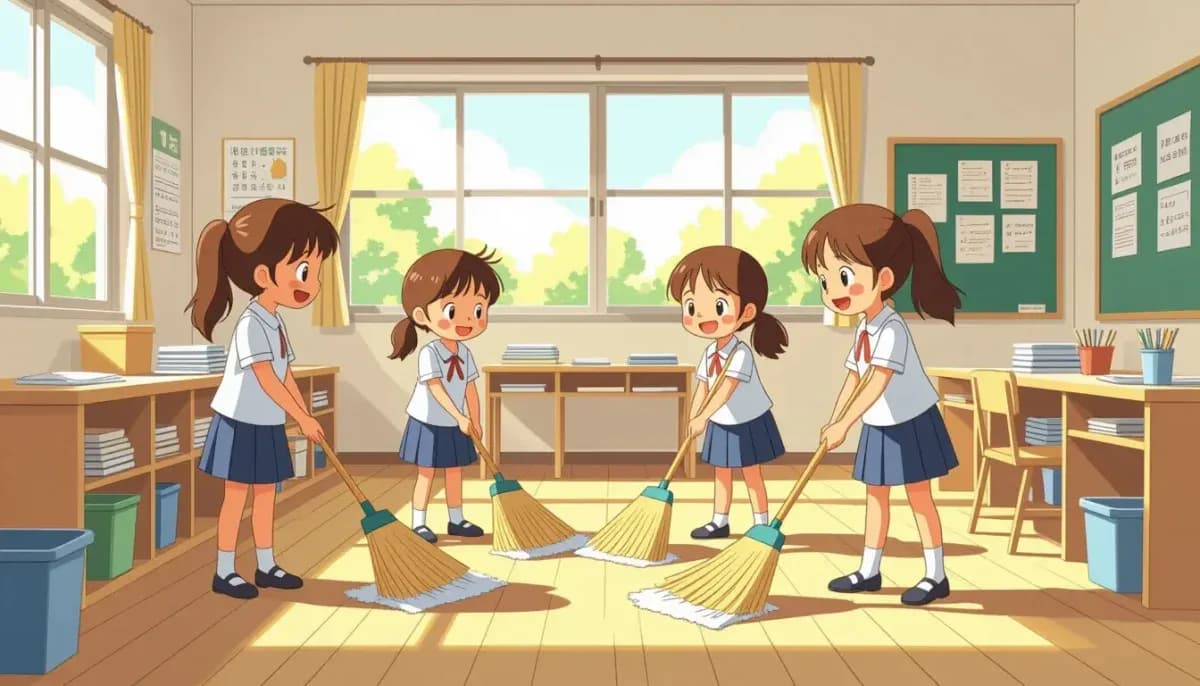
Cleaning Time (Souji): Why Japanese Students Clean Their Schools
Learn why Japanese students clean their own schools every day. Discover how souji works, its cultural roots in Buddhism and Shinto, educational benefits, and what foreign parents need to know.
Read more →