
Flexible Work Arrangements for Parents in Japan

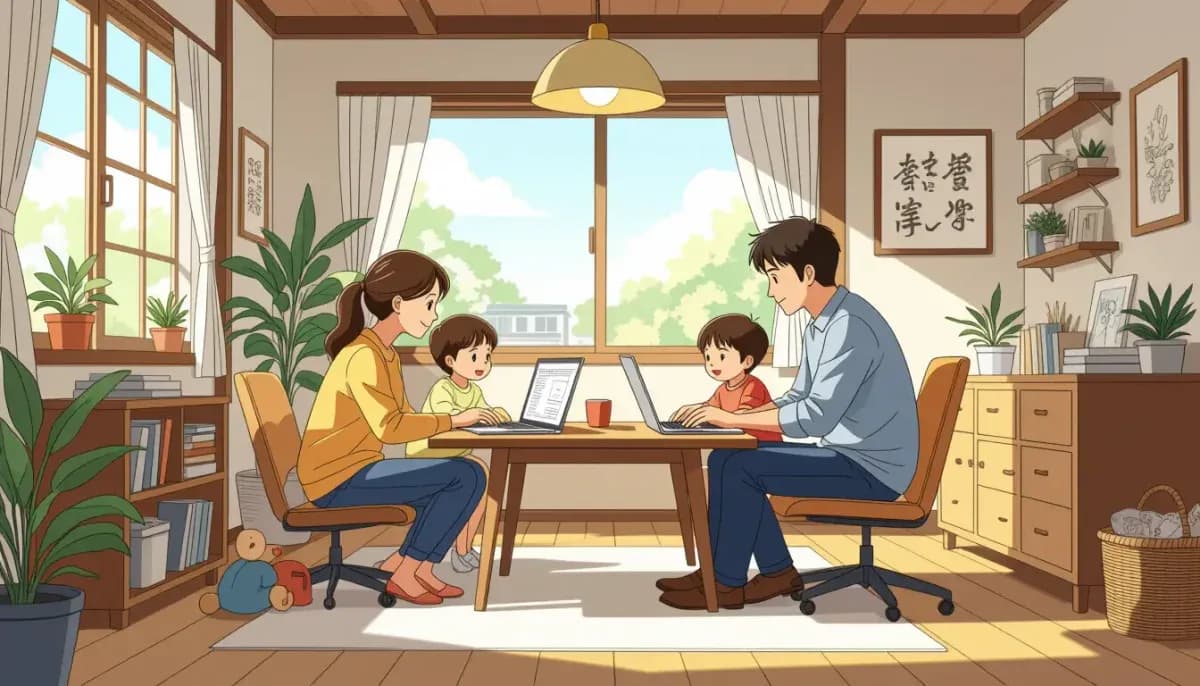
Learn about Japan's 2025 flexible work laws for parents, including telework rights, flextime options, overtime exemptions, and how to request accommodations as a foreign employee in Japan.
Flexible Work Arrangements for Parents in Japan: A Complete Guide for Foreign Residents
Balancing a career and raising children in Japan is a challenge that many foreign parents know all too well. Between school drop-offs, healthcare appointments, and the demands of a Japanese workplace culture that has historically prized long hours and physical presence, finding equilibrium can feel like an impossible task. The good news is that Japan has been making significant legal and cultural shifts to support working parents — changes that directly benefit foreigners living and working here.
Whether you are employed by a Japanese company, an international firm based in Japan, or working remotely for an overseas employer, understanding your rights and options around flexible work is essential. This guide covers the latest laws, practical arrangements, and strategies to help you navigate flexible work as a parent in Japan.
Japan's 2025 Childcare Leave Law: What Changed and What It Means for You
Japan amended its Childcare and Family Care Leave Act with two major sets of changes rolling out in 2025. These are among the most significant updates to working parent protections in decades.
April 1, 2025 changes: Employers became obligated to make a genuine effort to offer remote work (telework) to employees with children under age 3. While framed as a "best effort" requirement, this creates a formal expectation and opens the door for employees to request remote work without social stigma.
October 1, 2025 changes: For employees with children aged 3 to pre-primary school age (typically up to kindergarten), employers must now offer at least two of the following five flexible work options:
| Option | Description |
|---|---|
| Telework/Remote Work | At least 10 days per month working from home or remotely |
| Flextime or Staggered Hours | Flexible start and end times, or choosing shift start times |
| Employer-Provided Childcare | On-site nursery or financial subsidy for childcare costs |
| Work-Childcare Balance Leave | At least 10 days per year, usable by the hour |
| Short-Hours (Reduced Workday) | A reduced workday system for parents managing childcare |
This menu-based approach is significant because it gives both employers and employees flexibility in finding arrangements that work within business realities while meeting parent needs.
Overtime exemptions expanded: Previously, only parents of children under age 2 could refuse mandatory overtime. This protection has been expanded to cover parents of children up to elementary school graduation age — roughly 12 years old. This is a major shift that applies to millions more working parents.
For foreign residents at Japanese companies, these protections apply to you equally. If you are on a valid work visa and employed by a Japanese company, you are entitled to request these accommodations. For more context on your labor rights, see For Work in Japan's labor law guide for foreigners.
Types of Flexible Work Arrangements Available in Japan
Understanding the terminology used in Japanese workplaces will help you navigate conversations with HR and managers.
Telework (テレワーク / リモートワーク)
Remote work — known as telework or remote work in Japan — has grown significantly since the COVID-19 pandemic. A 2023 Doda survey of 15,000 workers found that 51.2% of Japanese workers are permitted to telework in some form, while 27.4% are currently doing so. Among those who work remotely, 82.2% said they want to continue.
For parents, telework eliminates commute time and allows you to be physically present for school pickups, sick days, and unexpected childcare situations. However, it is important to establish clear expectations with your employer around working hours and availability.
Flextime (フレックスタイム)
Flextime systems allow employees to choose their start and end times within certain parameters, as long as they work a set number of core hours. Many Japanese companies now offer flextime, especially in IT, consulting, and international firms. As a parent, this can be invaluable for handling morning childcare routines before a late start or leaving early for pickup.
Staggered Working Hours (時差出勤)
Different from flextime, staggered hours allow employees to shift their fixed schedule earlier or later. For example, working 7am–4pm instead of 9am–6pm. This can align better with school drop-off and pickup times without the complexity of a full flextime system.
Reduced Working Hours (短時間勤務)
This arrangement allows parents of young children to work fewer hours per day — often six hours instead of the standard eight. It is typically used alongside childcare leave and is often available until a child reaches the end of their third year of primary school. Note that reduced hours usually come with a proportional reduction in pay.
Annual Leave and Nursing Leave (看護休暇)
Japan expanded nursing leave to 10 days per year for parents of children through Grade 3 (approximately age 9). This leave can be taken in hourly increments and used for sick child care, vaccinations, medical check-ups, school ceremonies, and even classroom closures. This is particularly useful for foreign parents navigating Japan's medical and education systems. For an overview of what school life involves, see our guide on what to expect on your child's first day of elementary school in Japan.
How to Request Flexible Work Arrangements as a Foreign Employee
Requesting flexible work in Japan requires understanding both the legal framework and the workplace culture. Here is a practical approach:
1. Know your entitlements before the conversation. Under the 2025 amendments, your employer is legally required to inform you proactively of your work-life balance entitlements when you report a pregnancy or become a new parent. If they have not done so, you have the right to ask HR directly.
2. Make the request in writing. While Japan has a strong oral communication culture in the workplace, putting flexible work requests in writing creates a record and signals that you are taking it seriously. Most companies have internal forms for this.
3. Frame it as a benefit to the team. Japanese workplace culture values group harmony. Framing your flexible work request in terms of how it helps you maintain productivity and commitment to the team — rather than purely as a personal need — tends to be better received.
4. Start with what the law requires. If your employer is reluctant, remind them (diplomatically) of their obligations under the amended Childcare and Family Care Leave Act. Non-compliance can result in administrative guidance or even public disclosure of violations by the government.
5. Involve HR, not just your direct manager. Direct managers in Japan may be cautious about approving arrangements they see as setting precedents. HR departments are more familiar with the legal requirements and are better positioned to approve formal flexible work arrangements.
For a broader look at raising children as a foreign family in Japan, the team at Living in Nihon has an excellent guide for foreign parents covering education and daily life.
Remote Work and Telework: Practical Tips for Parents in Japan
Even when remote work is permitted, making it work well with young children at home takes planning. Here are some practical considerations specific to Japan:
Childcare during remote work hours: Remote work does not mean you can care for your children simultaneously during work hours. Japan's hoikuen (nursery schools) system can be an excellent resource — children of working parents receive priority placement. See our complete guide to daycare and hoikuen in Japan for details on the application process.
Home office setup: Japan's apartment sizes can make dedicated home offices challenging. However, Japanese companies generally accept working from a home desk setup. Ensure your background during video calls is professional — this matters in Japanese business culture.
Communication tools: Most Japanese companies use tools like Slack, Teams, or Zoom alongside the traditional kintone or cybozu internal systems. As a foreign employee, familiarize yourself with your company's preferred communication tools and maintain more frequent check-ins than you might in other countries to compensate for reduced face time.
Internet infrastructure: Japan has excellent broadband infrastructure, particularly in urban areas. Fiber connections (hikari) are widely available and affordable, making video calls and remote collaboration reliable.
Hanko and paperwork challenges: One of Japan's persistent remote work barriers is the reliance on physical stamps (hanko) and paper-based processes. If you find yourself needing to come in physically just for stamping documents, raise this with HR — many companies are digitizing these processes, and there may be a designated person who can handle physical stamps on your behalf.
Flexible Work by Industry and Company Type in Japan
Not all employers offer the same level of flexibility. Understanding patterns across industries helps you set expectations or make career decisions:
| Industry / Company Type | Telework Availability | Flexibility Level |
|---|---|---|
| IT / Tech (especially foreign-affiliated) | High | Very High |
| Finance / Banking | Medium-High | Medium |
| Consulting | Medium-High | Medium-High |
| Manufacturing | Low-Medium | Low |
| Retail / Hospitality | Very Low | Very Low |
| Government / Public Sector | Low-Medium | Low |
| Education | Low-Medium | Low |
| Large corporations (300+ employees) | Higher | Higher |
| SMEs (fewer than 100 employees) | Lower | Lower |
A WTW survey found that 64% of surveyed Japanese companies have flexible work policies and 62% have telework policies — but implementation varies significantly. Large corporations are far more likely to have structured programs, while small and medium-sized businesses may offer flexibility informally or not at all.
If you are considering changing jobs with flexibility in mind, international companies and Japanese tech firms tend to offer the most formal remote work and flextime programs. Japan-dev's research on working in Japan for international tech professionals offers useful context on what to expect in the tech sector.
For an overview of the costs involved in childcare alongside work decisions, see our breakdown of the cost of raising a child in Japan.
Special Considerations for Foreign Parents in Japan
Foreign residents face a few additional dimensions when navigating flexible work:
Language barriers: Requesting flexible work arrangements involves Japanese HR documentation and potentially formal meetings. If your Japanese is limited, ask if HR materials are available in English or request an interpreter. Many companies with international employees have English-speaking HR staff.
Visa status: Your ability to work in Japan is tied to your visa. If you are on a work visa, your employer is your visa sponsor, which can make employment conversations feel higher stakes. Know that requesting legal entitlements like parental flexible work cannot be used as grounds for dismissal or disadvantageous treatment — this is explicitly prohibited under Japanese law.
Foreign employer / digital nomad situations: If you work remotely for a foreign company while living in Japan, Japan's domestic labor law typically does not apply. However, Japan introduced a Digital Nomad Visa in 2024 allowing remote workers to stay for up to 6 months. If you are on a standard work or spouse visa working remotely for an overseas employer, confirm your tax and legal status with an advisor.
Dependent visa spouses: If you are a stay-at-home parent on a dependent visa and considering entering the Japanese workforce, understand that your visa allows part-time work (up to 28 hours per week) without a separate work permit. Transitioning to full employment requires a change of status. See our guide on dependent visas for children in Japan for related visa context.
For support on the educational side of raising children here, Chuukou Benkyou provides resources for Japanese academic preparation that may be relevant as your children grow older.
Looking Ahead: Japan's Evolving Work Culture
Japan's demographic reality — a declining and aging population — is the fundamental driver behind these flexible work reforms. The government and major corporations have increasingly recognized that retaining working parents, particularly mothers, is essential for economic sustainability.
While cultural change is slower than legal change, there are genuine shifts underway. Male childcare leave uptake rose approximately 13 percentage points year-over-year to around 30% by 2023 — still far below the 84% female uptake rate, but a meaningful trend. Surveys consistently show that younger Japanese workers prioritize work-life balance over job security in ways their parents' generation did not.
For foreign parents in Japan, this creates an environment that is more accommodating than it was even five years ago — and the legal framework now firmly supports your right to ask for it.
Navigating Japan's childcare and school systems alongside work demands can feel overwhelming, but understanding your rights is the first step. For more practical guidance on raising children as a foreign family in Japan, explore our related articles on hoikuen vs yochien childcare choices and finding English-speaking pediatricians in Japan.

Originally from Vietnam, living in Japan for 16+ years. Graduated from Nagoya University, with 11 years of professional experience at Japanese and international companies. Sharing practical information for foreign parents raising children in Japan.
View Profile →Related Articles

Self-Care and Preventing Burnout for Expat Parents
Expat parent burnout in Japan is real. Learn practical self-care strategies, warning signs to watch for, and mental health resources designed for foreign parents raising children in Japan.
Read more →
Managing Dual-Career Families in Japan
Both partners working in Japan while raising children? Navigate daycare waitlists, parental leave rights, health insurance, visa strategy, and household management as a dual-career expat family.
Read more →
Part-Time Work Options for Parents in Japan
A complete guide to part-time work options for foreign parents in Japan — covering visa rules, job types, income thresholds, Japanese job boards, and 2025 workplace rights for working parents.
Read more →
Building a Support System as a Working Expat Parent
Learn how to build a strong support system as a working expat parent in Japan. Find parent communities, government resources, professional networks, and practical tips for the first month.
Read more →
Career Impact of Becoming a Parent in Japan
Discover the real career impact of becoming a parent in Japan. From parental leave rights and financial benefits to daycare challenges and workplace culture — a complete guide for foreign workers.
Read more →
Remote Work and Parenting in Japan: Making It Work
Learn how to balance remote work and parenting in Japan. Covers legal rights, childcare integration, home office setup, financial support, and practical tips for expat parents.
Read more →