
Music Education and Instrument Lessons for Kids in Japan

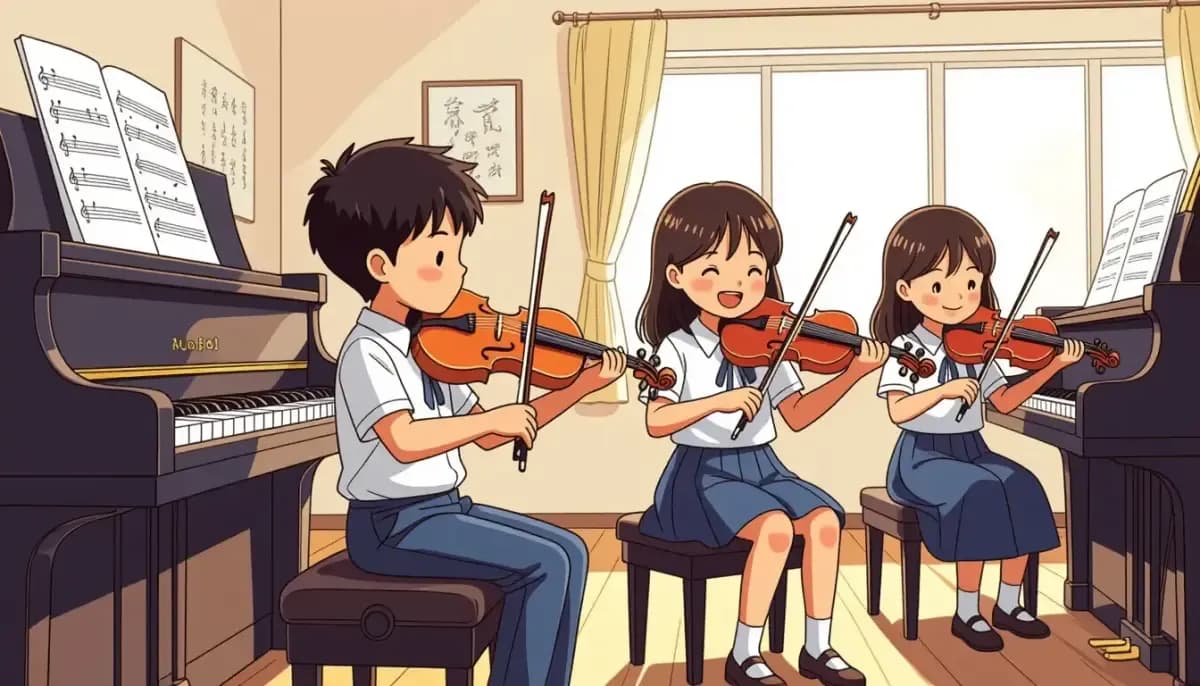
Complete guide to music education and instrument lessons for kids in Japan. Covers Yamaha, Kawai, Suzuki method, English-friendly schools, costs, and tips for foreign families.
Music Education and Instrument Lessons for Kids in Japan: A Complete Guide for Foreign Families
If you are raising children in Japan, you have likely noticed how deeply music is woven into daily life — from school performances to neighborhood music schools on every corner. Japan has one of the most developed music education cultures in the world, and foreign families are in a unique position to take full advantage of it. Whether your child is a curious toddler or a motivated teenager, this guide walks you through everything you need to know about music education and instrument lessons for kids in Japan.
Why Music Education Matters in Japan
Japan is genuinely exceptional when it comes to music education. The country mandates music instruction at both the elementary and junior high school levels — placing it among a small group of nations that treat music as a core academic subject rather than an optional enrichment activity. As a result, 100% of Japanese school students are exposed to Western classical music as part of their formal schooling.
The outcomes speak for themselves. Japanese musicians are widely recognized as among the most skilled globally, and Japan's high school band competitions (the All-Japan Band Competition) are considered among the most prestigious in the world. Elementary students regularly perform repertoire that would be considered advanced for high school bands in Western countries.
For foreign families, this means your child will grow up surrounded by a culture that takes music seriously — and that finding quality music instruction, at almost any level, is both straightforward and affordable compared to many other countries.
Beyond technical skill, research consistently shows that music education builds non-cognitive abilities. A large-scale study of 2,032 teachers at Yamaha music schools found that 91.6% reported children developed measurable extra-musical skills — and 97.9% of those gains were in non-cognitive areas such as collaboration (25.5%), concentration (24.4%), and social engagement. These are exactly the skills that help foreign children integrate more smoothly into Japanese school life.
The Music Lesson Landscape: What to Expect in Japan
Japan's extracurricular culture is intense. By age 4, roughly 50% of Japanese children are enrolled in at least one extracurricular activity. By age 6, that figure exceeds 80%. Music — piano in particular — is consistently at or near the top of the rankings. According to both PiCRO and Benesse surveys, piano ranks as either the #1 or #2 most popular extracurricular activity for children in Japan.
This widespread participation means music schools are everywhere. Major chains like Yamaha and Kawai operate branches across Japan, often inside shopping malls or community centers. Smaller independent studios also abound in residential neighborhoods. Competition among schools keeps prices reasonable and quality generally high.
As a foreign parent, you will typically encounter three main formats:
- Group lessons: Common at major chains like Yamaha, often 60 minutes per session, 40 sessions per year. These are excellent for socialization and building a musical community.
- Private lessons (ko-jin lesson): One-on-one instruction, more expensive but faster progression. Available at chains and independent studios.
- Home tutors: Private teachers who come to your home. Increasingly available through platforms like Apprentus, including some foreign instructors based in Japan.
For more on navigating extracurricular activities in Japan as a foreign family, see our guide on raising bilingual children in Japan.
Popular Instruments and What They Cost
The most popular instruments for children in Japan align closely with school curricula and cultural preferences. Here is a breakdown of the most common options and their associated lesson costs:
| Instrument | Typical Age to Start | Monthly Lesson Cost | Notes |
|---|---|---|---|
| Piano | Age 3+ | ¥7,000–¥12,000 | Most popular; wide availability |
| Violin | Age 3–4 | ¥8,000–¥15,000 | Suzuki method widely available |
| Guitar | Age 6+ | ¥6,000–¥12,000 | Including ukulele for younger children |
| Flute | Age 7+ | ¥7,000–¥12,000 | Common in school wind ensembles |
| Cello | Age 4–5 | ¥10,000–¥18,000 | Less common; specialist teachers needed |
| Drums/Percussion | Age 5+ | ¥7,000–¥12,000 | Increasingly popular |
| Vocals | Age 5+ | ¥6,000–¥12,000 | Group or private; choir very popular |
| Electronic Keyboard | Age 3+ | ¥6,000–¥10,000 | Good stepping stone before acoustic piano |
In addition to monthly tuition fees, budget for:
- Instrument purchase or rental (Yamaha and Kawai offer rental programs)
- Recital participation fees (often ¥3,000–¥10,000 per event)
- Sheet music and materials (typically included in major chains; separate cost at independent studios)
For broader financial planning guidance as an expat family in Japan, see our article on financial planning for expat families.
Major Music School Chains in Japan
Yamaha Music School
Yamaha is the giant of Japanese music education. With 311,000 students enrolled in Japan alone (as of 2021) and 156,000 more overseas, it is the largest nationwide music school network. Yamaha is known for its structured curriculum, high-quality teaching materials, and group lesson format that emphasizes ensemble playing and ear training from an early age.
Yamaha schools accept beginners from age 2 (with a parent-participation format) and have pathways up through advanced performance and composition courses. Their "Ongaku Nōryoku Kentei" (music ability certification) is widely recognized across Japan.
For foreign families: Yamaha's standardized curriculum means the teaching format is consistent across branches. However, lessons are conducted in Japanese at most locations. If your child is already in a Japanese-language environment, this may not be a concern — but if you prefer English instruction, you will need to seek out a bilingual-friendly school.
Visit hub.yamaha.com for more information on Yamaha's approach to music education in Japan.
Kawai Music School
Kawai is Yamaha's main competitor, with a similarly nationwide network. Kawai schools are often slightly smaller and more community-oriented in feel, with a strong emphasis on classical piano repertoire. Kawai also runs well-regarded teacher training programs and annual student recitals.
Like Yamaha, most instruction is in Japanese, but individual teachers at Kawai may speak English — worth asking at enrollment.
The Suzuki Method Network
The Suzuki Method was developed in Japan by Shinichi Suzuki and remains deeply influential here. There are 23 Suzuki Method schools in Japan serving approximately 20,000 students. The approach — sometimes called the "mother tongue method" — is built around the idea that musical ability is not innate but is cultivated through early exposure, repetition, a supportive environment, and active listening.
Key features of the Suzuki approach that matter for foreign families:
- Parents are required to attend every lesson and supervise daily home practice — a significant time commitment but also an excellent bonding experience
- Early start is strongly encouraged (violin from age 3, piano from age 3–4)
- The environment at home matters as much as formal lessons
For expat families, the Suzuki philosophy's emphasis on parental involvement can actually be an advantage — it gives non-Japanese-speaking parents a meaningful role even in a Japanese-language lesson setting.
English-Friendly Music Schools in Japan
Finding English-language music instruction is easiest in Tokyo and other major cities with large expat communities. Here are some specifically English-friendly options:
JiLL Music School (Tokyo — 3 locations) One of the best-known English-medium music schools in Tokyo. JiLL accepts students from age 3 and offers instruction in guitar, ukulele, piano, violin, viola, flute, and vocals. Monthly fees range from ¥8,000 to ¥23,000 depending on the instrument and lesson schedule. Enrollment fee is ¥3,100. Free trial lessons are available. → jill-music.com/english
EIFJ — École Internationale Franco-Japonaise de Musique (Tokyo) Founded in 2021, EIFJ is open to all ages and welcomes non-enrolled students. Online lesson options are available, making it flexible for families outside central Tokyo. The Franco-Japanese approach brings a European classical tradition into a Japanese context.
Private Home Tutors Platforms like Apprentus connect families with private music teachers in Tokyo, including foreign instructors. One example: a Canadian guitar teacher based in Tokyo since 2013 who works with children and adults at all levels. This can be an excellent option for families in areas with fewer dedicated music schools.
Tip: Expat Facebook groups and community forums (such as those for Tokyo, Osaka, or Nagoya expats) are an excellent resource for finding English-speaking music teachers through personal recommendations.
For more on finding English-friendly resources for your family in Japan, see our guide on international schools in Japan.
Music Education in Japanese Schools
Understanding how music fits into your child's Japanese schooling helps you plan supplementary lessons more effectively.
At the elementary school level (shogakko), music is a mandatory subject from Grade 1 through Grade 6. Children learn to read basic music notation, sing as a class, and play the recorder (pianica/keyboard harmonica is also common). School music festivals (ongaku kai) are a highlight of the school year, often requiring significant preparation.
At the junior high school level (chugakko), music remains compulsory. Students study music theory at a more advanced level, work on ensemble performance, and often participate in school bands or choirs. The school music club (ongaku bu) can be extremely competitive — especially for wind and brass instruments.
At the high school level (koko), music becomes optional but remains popular. School bands (suisogaku bu) are serious commitments, often practicing daily.
For foreign children: Participating in school music activities is one of the best pathways to social integration. Even if your child is still learning Japanese, music provides a non-verbal common ground. Encourage participation in school music events and clubs from the earliest opportunity.
See our article on elementary school in Japan for foreign parents for more on what to expect across all school subjects.
Practical Tips for Foreign Parents Enrolling Children in Music Lessons
Start early. Japanese music culture strongly favors early starts. Three years old is not too young for piano or violin — and the earlier you begin, the more naturally your child will absorb the fundamentals.
Attend a trial lesson first. Almost every music school in Japan offers a taiken (trial/experience) lesson at low or no cost. Use this to assess the teacher's communication style, the classroom environment, and how your child responds.
Ask about the teacher's English ability upfront. Do not assume — ask directly, ideally by email before visiting. Teachers who work with expat families often advertise this capability.
Prepare for the recital culture. Japan takes music recitals seriously. Your child will likely perform at least once or twice a year, and recital preparation becomes part of the lesson routine. This is a wonderful experience and a great way to meet other music families.
Instrument logistics matter. If you are renting a home in Japan, check lease terms regarding noise. Most apartments prohibit or restrict instrument playing during certain hours. Electronic keyboards with headphones are a practical solution for apartment dwellers, as are practice mutes for strings. Some families use practice rooms at local music schools on an hourly basis.
For more on navigating daily life in Japan as an expat family, visit Living in Nihon — a comprehensive resource for foreigners living in Japan.
Planning Your Child's Music Journey
Choosing the right path depends on your child's age, interests, and your family's goals. Here is a simple framework:
- Ages 2–4: Parent-participation group lessons at Yamaha or a similar school. Focus on ear training, rhythm, and enjoyment. This age is about building a love of music, not technique.
- Ages 4–6: Begin instrument-specific lessons. Piano and violin are the most common starting points. Consider both chain schools (for structure) and independent teachers (for more personalized attention).
- Ages 7–12: More serious technical development. At this stage, your child can begin participating in school music activities and working toward graded examinations.
- Ages 13+: Specialization if interest is strong. Japan has an excellent network of junior music conservatories and pre-professional programs for dedicated students.
For guidance on your child's overall educational path in Japan, see our complete guide to the Japanese education system for foreign families.
Additional resources for planning your family's life in Japan:
- For Work in Japan — practical guidance for foreign workers and their families settling in Japan
- Chuukou Benkyou — resources for academic study in Japan's middle and high school system
- Yamaha Music Education Research — in-depth look at Japan's music education approach
- Fun Japan — Children's Extracurriculars Survey 2025 — latest data on what Japanese children are doing after school
Conclusion
Japan is one of the best countries in the world to raise musically curious children. The infrastructure — from major chains like Yamaha and Kawai to the Suzuki Method network to English-friendly schools in major cities — is exceptional. Music is taken seriously here, embedded in schools, and supported by a culture that values discipline and artistry in equal measure.
As a foreign family, you will need to do a little extra research to find English-friendly options, but those options exist and are accessible in every major city. Start early, attend trial lessons, connect with other expat families, and let your child absorb the rich musical culture that surrounds them. The benefits — musical, social, and cognitive — will stay with them long after your time in Japan ends.
For more guidance on raising children in Japan, explore our related articles on toddler parenting in Japan and mental health and emotional wellbeing for foreign children in Japan.

Originally from Vietnam, living in Japan for 16+ years. Graduated from Nagoya University, with 11 years of professional experience at Japanese and international companies. Sharing practical information for foreign parents raising children in Japan.
View Profile →Related Articles
Cultural Arts Festivals and Children's Participation
Complete guide to cultural arts festivals and children participation in Japan for expat families. Covers bunkasai, Shichi-Go-San, Kodomo no Hi, matsuri traditions, and how foreign children can participate fully.
Read more →
How to Support Your Creative Child in Japan
Discover how to nurture your creative child in Japan through traditional crafts, naraigoto lessons, bilingual expression, and smart use of Japan's generous family support programs. A complete guide for foreign parents.
Read more →
Art Competitions and Exhibitions for Children in Japan
Complete guide to art competitions and exhibitions for children in Japan. Discover Pentel ICAE, JQA Environmental Drawing Contest, top museums, and tips for expat families supporting young artists.
Read more →
Digital Art and Animation Classes for Kids in Japan
A complete guide for expat families: find English-friendly digital art and animation classes for kids in Japan, from iPad studios to bilingual workshops in Tokyo and beyond.
Read more →
Community Art Programs and Workshops for Kids
Discover community art programs and workshops for kids in Japan. Find English-friendly studios, costs, and tips for expat families to enroll children in art classes.
Read more →
Best Museums and Art Galleries for Children in Japan
Discover the best museums and art galleries for children in Japan — from Tokyo's Ghibli Museum and teamLab to Railway Museum and Kids Plaza Osaka. Practical tips, admission prices, and age-by-age recommendations for foreign families.
Read more →