
Renting with Children in Japan: Challenges and Tips

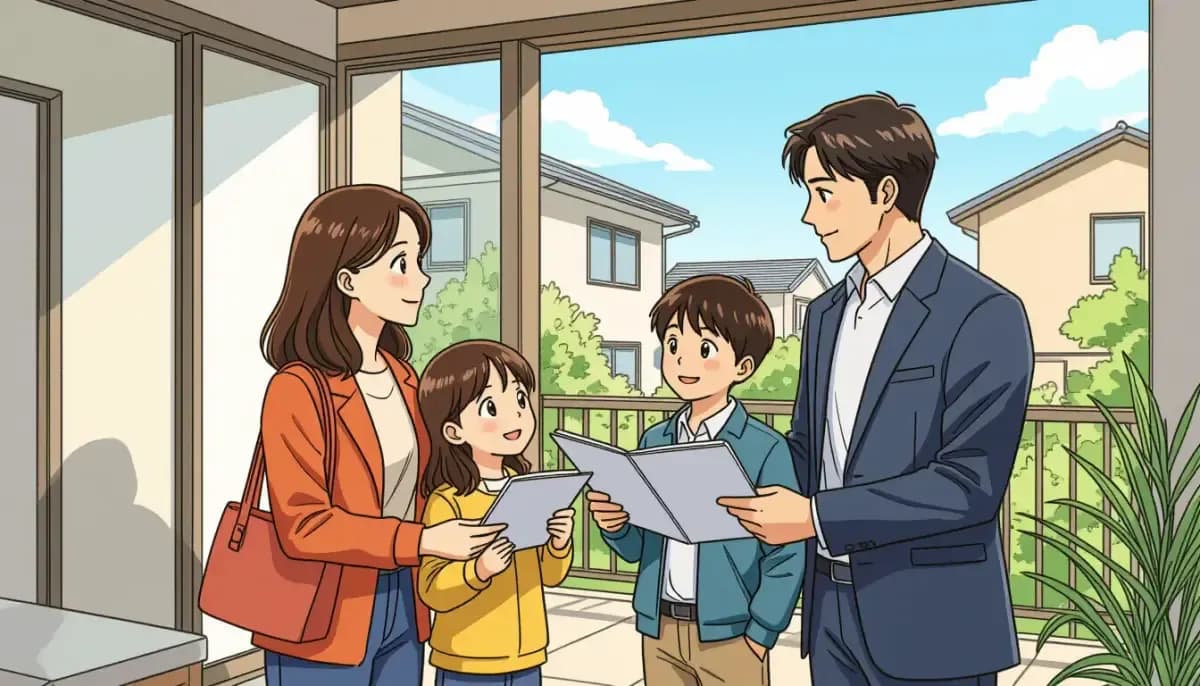
Complete guide to renting with children in Japan as a foreigner. Learn about landlord discrimination, UR housing, family-friendly agencies, upfront costs, and practical tips to secure your ideal family home.
Renting with Children in Japan: Challenges and Tips for Foreign Families
Finding a rental property in Japan is challenging for anyone — but when you add children and a foreign nationality to the equation, the process becomes significantly more complex. Many foreign families are surprised to discover that landlords in Japan can legally refuse tenants based on nationality, family composition, or the presence of children. However, with the right strategy, preparation, and knowledge of your options, it is absolutely possible to find a great family home in Japan.
This guide walks you through the real challenges foreign families face when renting in Japan, practical tips to overcome them, and the best resources to find family-friendly housing.
Why Renting with Children in Japan Is Difficult for Foreigners
Japan's rental market has a reputation for being unwelcoming to foreign nationals, and this challenge is compounded when you have children. Understanding the root causes helps you navigate the system more effectively.
Landlord Discrimination Is Still Legal
Japan currently has no national law prohibiting landlords from discriminating against foreign nationals. A 2016 Ministry of Justice survey found that 39.8% of foreigners were rejected for housing because of their nationality, and 26.8% encountered explicit "no foreigners" policies. While attitudes are gradually improving — especially in major cities — discrimination remains a real obstacle.
Children Raise Noise and Damage Concerns
Many Japanese landlords are elderly and have conservative expectations about tenant behavior. They worry that children will make noise (disturbing neighbors), cause wear and tear to walls and flooring, or create conflicts in apartment buildings. Even Japanese families sometimes face pushback from landlords about young children.
Space Constraints
Japanese apartments, particularly in Tokyo, are famously small. Standard 1K (one room + kitchen) units average just 18–25 sqm — far too small for a family. Finding 2LDK or 3LDK units (two or three bedrooms) that are also foreigner-friendly and within budget requires significant effort.
Language Barriers
The entire rental process — from viewing properties to reviewing contracts — is conducted primarily in Japanese. Lease agreements can run 20–30 pages of dense legal language. Without Japanese language skills or a bilingual agent, misunderstandings are easy and costly.
Common Challenges at Each Stage of the Rental Process
| Stage | Challenge for Foreign Families |
|---|---|
| Property Search | Limited listings that accept foreigners + children |
| Initial Inquiry | Application rejected based on nationality before viewing |
| Viewing | Language barrier with agent; small units unsuitable for families |
| Application | Guarantor requirements; lack of Japanese credit history |
| Contract Review | Complex Japanese legal language; hidden clauses |
| Move-In Costs | 4–6 months of upfront costs (deposit, key money, fees) |
| During Tenancy | Neighbor noise complaints; requests to quiet children |
| Move-Out | Excessive restoration charges claimed by landlord |
The Guarantor Problem
Most Japanese rental contracts require a guarantor (hoshounin) — typically a Japanese national who co-signs responsibility for rent payments and property damage. Foreign nationals rarely have a Japanese guarantor, so most use a guarantor company (hoshougaisha) instead. This adds another layer of fees (usually 0.5–1 month's rent) and another party who can refuse your application.
A Keio University research study found that using a foreign-sounding name in rental inquiries reduces the likelihood of a positive response by approximately 13% compared to Japanese-sounding names — evidence that discrimination happens even before a viewing is arranged.
The Best Housing Options for Foreign Families with Children
Despite these hurdles, there are strong options available to foreign families. Knowing where to look makes a significant difference.
UR Public Housing (UR賃貸住宅)
UR (Urban Renaissance Agency) housing is one of the best-kept secrets for foreign families in Japan. Key advantages include:
- No guarantor required — this alone removes a huge barrier
- No key money (reikin) — saving you 1–2 months' rent upfront
- No discrimination against foreigners or families with children
- Units tend to be larger than private rentals — many 2LDK and 3LDK options available
- Monthly rents are competitive with the private market
- Located across Japan, with strong presence in major metro areas
The main dowside of UR housing is that units can be older in style, and availability in central urban areas is limited. However, for families prioritizing stability and fairness, UR is an excellent starting point.
For a detailed guide on applying for UR and public housing in Japan, see Living in Nihon's UR housing application guide.
Foreigner-Friendly Real Estate Agencies
Several real estate agencies have built their businesses specifically around helping foreigners navigate Japan's rental market. These agencies often have pre-vetted landlords who accept foreign tenants, bilingual staff, and English-language contract support.
Top agencies to consider:
- PLAZA HOMES (Tokyo-based, strong English support)
- Tokyo Apartment Inc. (specializes in expat and foreigner clients)
- E-Housing Japan (multilingual support, nationwide listings)
- Sakura House (share houses and private apartments for foreigners)
Using one of these agencies significantly increases your chances of acceptance and reduces the stress of language barriers.
Company Housing and Employer Assistance
If you are moving to Japan for work, check whether your employer offers shakataku (company housing) or housing allowances. Many large Japanese companies and foreign multinationals provide housing support for international employees, which bypasses the rental market entirely. Even if you are not provided a specific unit, some companies will act as your guarantor, which dramatically improves your rental prospects.
For a comprehensive overview of family life and housing as a foreigner in Japan, the For Work in Japan family life guide covers practical aspects of settling in with children.
Practical Tips to Improve Your Rental Application
A well-prepared application can make the difference between acceptance and rejection. Here is what to prioritize:
1. Use a Specialist Agent Avoid generic online portals like Suumo or HOME'S for your initial search if you are foreign. Instead, start with foreigner-friendly agencies who have established relationships with accepting landlords.
2. Prepare a Strong Financial Package Japanese landlords are risk-averse. Prepare pay slips (3 months minimum), employment contract, bank statements, and your residence card (zairyu card). For families, showing stable dual income helps considerably.
3. Write a Self-Introduction Letter A brief, polite letter in Japanese (ask a Japanese-speaking friend or your agency to help) introducing your family — your profession, how long you plan to stay, your children's ages — can shift a landlord's perception from "risky foreigner" to "responsible family."
4. Offer to Pay More Upfront Some landlords will accept a foreign family if offered 2–3 months' deposit instead of the standard 1. While this increases upfront costs, it demonstrates financial reliability.
5. Look Beyond Tokyo Center Central Tokyo wards (Shibuya, Minato, Shinjuku) have the highest concentration of foreigner-aware landlords, but also the highest rents. Suburban areas of greater Tokyo — Nerima, Edogawa, Setagaya — often offer larger units, more accepting landlords, and better proximity to international schools.
6. Time Your Search Carefully Japan's rental market peaks from January to March (before the April school start and job transfer season). Apply between April and November for less competition and potentially more negotiating room.
What to Look for in a Family-Friendly Rental
Once you find a landlord who accepts foreign families, make sure the property actually suits your needs:
- Floor level: Higher floors reduce noise complaints but make prams difficult without elevators. Ground-floor units with garden access are great for toddlers.
- Flooring: Carpet or tatami reduces sound transmission downward — important for families with young children in apartment buildings.
- Proximity to parks: Japan's urban parks are excellent for children; proximity adds significant quality of life.
- School district (gakku): In Japan, public elementary and junior high school attendance is determined by your registered address. Research the local school's quality and international support before committing to an area.
- Elevator access: For families with strollers, a building without an elevator can become a serious daily inconvenience.
For more on how school districts work and how to choose an area based on education quality, see our guide to Elementary School in Japan for Foreign Parents.
Understanding Move-In Costs for Families
One of the biggest practical shocks for foreign families renting in Japan is the upfront cost. Here is a typical cost breakdown for a private rental:
| Cost Item | Typical Amount |
|---|---|
| Security Deposit (shikikin) | 1–2 months' rent |
| Key Money (reikin) | 0–2 months' rent |
| Agency Fee (chukaishuryou) | 1 month's rent |
| Guarantor Company Fee | 0.5–1 month's rent |
| First Month's Rent (pro-rated) | Variable |
| Fire Insurance | ¥15,000–¥30,000 |
| Total Upfront | 4–7 months' rent |
For a ¥150,000/month apartment, this means initial costs of ¥600,000–¥1,050,000 (approximately $4,000–$7,000 USD). UR housing eliminates key money and guarantor fees, reducing upfront costs to approximately 2–3 months' rent.
For broader financial planning as an expat family, see our article on Financial Planning for Expat Families with Children in Japan.
Rights and Protections for Tenants in Japan
While discrimination is not explicitly banned, you do have legal protections as a tenant:
- Landlords cannot increase rent arbitrarily during a fixed-term lease (teikichintai)
- The Land and House Lease Law provides strong tenant protections including limits on eviction
- Move-out restoration rules (genjokaifuku) require landlords to absorb normal wear and tear — they cannot charge you for scratches and stains caused by everyday living
- Dispute resolution is available through the Japan Judicial Support Center (Houterasu/Japan Legal Support Center), which offers free consultations in multiple languages
If you experience discrimination, you can report it to the Ministry of Land, Infrastructure, Transport and Tourism (MLIT), which has a housing consultation window for foreigners.
For comprehensive information on rental discrimination statistics and your rights, see the Jobs in Japan housing discrimination guide and the Ministry of Justice survey analysis at realestate.co.jp.
Life After Moving In: Managing a Japanese Apartment with Children
Finding and securing the rental is only part of the journey. Living in a Japanese apartment building with children requires some cultural adjustment:
Noise Etiquette is Serious Japanese apartment living has strict noise norms. Running, jumping, and loud play inside the unit are sources of neighbor complaints — particularly if you live above others. Many families lay foam play mats throughout the living areas to absorb sound. Some buildings have explicit rules about quiet hours (usually 10pm–8am).
Neighborhood Association (Jichikai) Many residential areas have a neighborhood association that handles local events, garbage rotation schedules, and community notices. Joining (or at least participating minimally) reduces friction with neighbors and can actually be helpful for connecting your children with local kids.
School Registration is Tied to Your Address Once you have a registered address, you can enroll your children in the local public school. This is a significant benefit — your address determines your school zone, so choosing the right area before signing a lease matters. For guidance on navigating school enrollment, see our guide to the Japanese Education System for Foreign Families.
For support with the broader experience of raising children in Japan, the Chuukou Benkyou resource site offers educational support tools that can help your children as they progress through the Japanese school system.
Final Thoughts: Is It Worth It?
Renting with children in Japan as a foreigner is challenging — but not impossible, and for many families, the rewards far outweigh the difficulty. Japan offers exceptional safety, excellent public education, rich cultural experiences, and a child-friendly environment once you are settled in.
The key is going in prepared: know your options (especially UR housing), use specialist agencies, prepare strong financial documentation, and be ready for the upfront costs. The 2025–2026 rental market is reportedly more foreigner-friendly than in past years, with more landlords open to international tenants — a positive trend for families considering a move.
With the right preparation, your family can find a home in Japan that becomes the foundation for an extraordinary experience raising children in one of the world's most unique and rewarding countries.

Originally from Vietnam, living in Japan for 16+ years. Graduated from Nagoya University, with 11 years of professional experience at Japanese and international companies. Sharing practical information for foreign parents raising children in Japan.
View Profile →Related Articles
Cost of Family Housing by Region in Japan
Compare family housing costs across Japan's major regions — Tokyo, Osaka, Fukuoka, Sapporo and more. Includes rent tables, move-in cost guide, and tips for foreign families renting in Japan.
Read more →
Safety Considerations for Family Neighborhoods in Japan
A complete guide to safety considerations for foreign families choosing neighborhoods in Japan — covering crime statistics, natural disaster risk, safest wards, and practical daily safety tips for expat families with children.
Read more →
Parks and Green Spaces Near Family Housing
Complete guide to parks and green spaces near family housing in Japan. Compare Tokyo wards, city rankings, park types, seasonal tips, and what to look for when choosing a family neighborhood with good outdoor access.
Read more →
Moving with Children Within Japan: A Practical Guide
A complete guide to moving with children within Japan for foreign families — school transfers, address change procedures, healthcare continuity, and tips for helping kids adjust emotionally to their new home.
Read more →
School Districts and How They Affect Housing Choices
Learn how Japan's school district (gakku) system works and how it affects housing choices for foreign families. Research districts, understand pricing premiums, and find the right neighborhood for your child's education.
Read more →
International Areas with Diverse Communities in Japan
Discover Japan's most international and diverse communities — from Tokyo's Shin-Okubo Korean Town to Yokohama Chinatown, Osaka's Ikuno Ward, and beyond. A complete expat guide.
Read more →