
School Disaster Drills and Safety Education in Japan

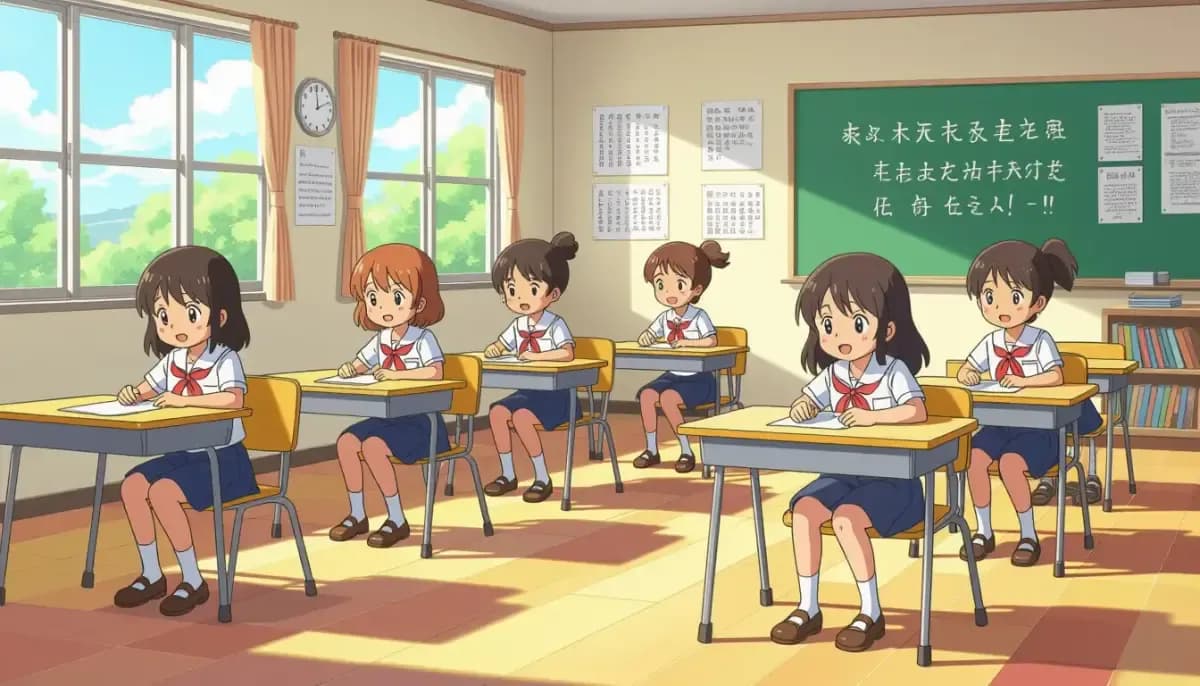
Everything foreign families need to know about school disaster drills and safety education in Japan — earthquake, fire, tsunami drills, September 1 Bousai Day, and how to prepare at home.
School Disaster Drills and Safety Education in Japan: A Guide for Foreign Families
Japan is one of the most earthquake-prone countries on Earth, and that reality shapes nearly every aspect of daily life — including how children are educated. If your child attends a Japanese school, they will regularly participate in disaster drills, emergency preparedness exercises, and safety education programs that may feel unfamiliar compared to what you experienced back home. Understanding this system helps you support your child and prepare your own family for emergencies.
This guide explains how school disaster drills work in Japan, what children are taught about safety, and how foreign families can navigate and engage with Japan's outstanding disaster preparedness culture.
Why Japan Takes Disaster Education So Seriously
Japan's commitment to disaster preparedness in schools is not arbitrary — it is the hard-won result of devastating national tragedies. Three earthquakes fundamentally shaped Japan's current safety education system:
- 1923 Great Kanto Earthquake (magnitude 7.9): Killed over 100,000 people in the Tokyo area and prompted the first national discussions about disaster readiness.
- 1995 Great Hanshin-Awaji Earthquake (magnitude 7.2): Destroyed approximately 4,000 school buildings and led to a nationwide school retrofitting program.
- 2011 Great East Japan Earthquake and Tsunami (magnitude 9.0): The deadliest earthquake in Japan's modern history reinforced the life-saving value of regular drill participation.
Japan experiences approximately 1,500 earthquakes each year. It sits squarely on the Pacific Ring of Fire, meaning the threat of large earthquakes, tsunamis, volcanic eruptions, and typhoons is ever-present. Against this backdrop, teaching children what to do when disaster strikes is not an optional enrichment activity — it is considered a core civic and survival skill.
The government's response has been dramatic: the share of public schools meeting earthquake-safety (seismic resilience) construction standards rose from just 42.5% in 2002 to nearly 100% today, thanks to a national program that subsidized two-thirds of retrofitting costs for local governments.
What Types of Drills Do Japanese Schools Conduct?
Japanese schools run disaster drills throughout the academic year, and most schools hold at least one drill per month. Some schools, particularly those in high-risk coastal or urban areas, run dedicated emergency training exercises up to 10 times per year.
The main types of drills your child will encounter include:
| Drill Type | Japanese Term | Typical Frequency | What Children Practice |
|---|---|---|---|
| Earthquake drill | 地震避難訓練 (jishin hinan kunren) | Monthly | Drop, cover, hold; orderly evacuation |
| Fire drill | 火災避難訓練 (kasai hinan kunren) | Several times/year | Emergency exit routes, not using elevators |
| Tsunami drill | 津波避難訓練 (tsunami hinan kunren) | Coastal schools | Rapid vertical evacuation to high ground |
| Lockdown/intruder drill | 不審者対応訓練 (fushinsha taiō kunren) | Annually | Moving to safe rooms, staying quiet |
| Shelter management drill | 避難所運営訓練 (hinanjo unei kunren) | Periodic | Setting up and managing emergency shelters |
Earthquake drill procedure: When the drill alarm sounds, children are taught to immediately get under their desk (low and protected), grip the desk legs to prevent it from sliding, and cover the back of their neck with one hand. They remain in this position until the shaking signal stops, then evacuate calmly under teacher supervision to a designated outdoor assembly area. If a child is outdoors when the alarm sounds, they are taught to move to the center of the schoolyard, away from buildings and structures.
Fire drills are often combined with earthquake drills, with the simulated fire location changed each time so that students learn multiple evacuation routes rather than memorizing just one path. Some schools use smoke-filled corridors (with non-toxic smoke) to make the exercise more realistic.
Tsunami drills at coastal schools train children in rapid vertical evacuation — getting to high ground or upper floors as quickly as possible — since survival in a tsunami depends heavily on speed.
The Broader Safety Education Curriculum
Disaster drills are just one part of a wider safety education system embedded in the Japanese school curriculum. Disaster preparedness falls under tokubetsu katsudo (特別活動, "special activities"), which is taught alongside school events, clubs, and homeroom guidance.
The curriculum is deliberately progressive across school levels:
- Elementary school (小学校): Focus on self-protection — children learn what to do to keep themselves safe. Topics include fire escape routes, what to grab in an emergency, and how to call for help.
- Junior high school (中学校): Broadens to include protecting others. Students may learn basic first aid, how to transport an injured person, and how to operate emergency equipment.
- High school (高校): Extends to community responsibility. Students study disaster risk management, community evacuation planning, and may participate in town-level emergency exercises.
This progressive model means that by the time a Japanese student graduates high school, they have spent years internalizing disaster response — not just as a drill, but as a mindset.
Interdisciplinary Integration
Disaster education does not exist in isolation. Japanese teachers integrate it across subjects:
- Social studies covers the geography of local hazard zones, historical disasters, and the role of government emergency systems.
- Science explains the mechanics of earthquakes, volcanoes, and weather-related disasters.
- Physical education includes evacuation route practice and endurance elements that support emergency response.
- Home economics may include emergency cooking (takidashi) drills where students practice preparing simple meals without normal utilities.
September 1: Disaster Prevention Day
Every September 1 is designated Bousai no Hi (防災の日) — Disaster Prevention Day — in Japan. The date was chosen in memory of the 1923 Great Kanto Earthquake, which struck on September 1. The entire week surrounding September 1 is designated Disaster Preparedness Week, during which:
- Schools across Japan hold their largest and most comprehensive drills of the year
- Cities and municipalities conduct community-wide evacuation exercises
- Local government offices run disaster awareness events
- Many workplaces also participate in emergency readiness training
For families new to Japan, the week around September 1 is an ideal time to:
- Talk with your child about what they learned at school
- Review your own family emergency plan
- Check that your emergency kit is stocked and up to date
- Locate the nearest designated evacuation site (hinanjo) in your neighborhood
School Emergency Infrastructure and Shelter Role
Japanese schools are not just educational facilities — they are designated community emergency shelters (hinanjo). When a major disaster strikes, the local school grounds and gymnasium often become the temporary home for evacuated residents from the surrounding neighborhood.
Because of this dual role, schools maintain:
- Emergency stockpiles of dry food, water, and basic supplies, renewed on a five-year cycle
- Emergency equipment caches including generators, stretchers, portable toilets, and communications equipment
- Seismically reinforced structures that can withstand major earthquakes while surrounding buildings may not
Some schools are also equipped with earthquake simulation rooms — specially designed spaces that can recreate the physical sensation of a real earthquake. Often operated in partnership with local fire departments, these rooms give students (and parents, during open school events) direct experience of earthquake shaking and reinforce why the drop-cover-hold technique matters.
Older students at multi-story school buildings may also practice emergency evacuation chutes — slide-based systems attached to upper-floor windows that allow rapid descent when stairways are blocked.
What This Means for Foreign Families
For foreign families raising children in Japan, the disaster drill system is both reassuring and, at first, potentially overwhelming. Here is what to expect and how to engage.
Your Child Will Participate Regularly
All students at Japanese public schools — and most international schools in Japan — participate in disaster drills. There is no opt-out. This is a good thing: research following the 2011 Tohoku disaster found that tsunami drill participation was directly associated with higher evacuation rates during the actual event. Drills save lives.
Language May Be a Challenge
Drill instructions, evacuation maps, and emergency procedures at Japanese public schools are typically conducted in Japanese. If your child is still developing their Japanese language skills, it is worth:
- Reviewing key vocabulary (jishin = earthquake, hinan = evacuation, tsuyoi kaze = strong wind) before drills occur
- Asking the school for translated materials if available — some urban schools with high foreign student populations provide multilingual support
- Practicing the physical movements at home (drop under a table, hold the leg, cover your neck) so the motions feel natural regardless of language
The Japanese government has developed Yasashii Nihongo (easy Japanese) guidelines for disaster communications specifically to support non-native speakers, using simple sentence structures, furigana on kanji, and clear pictograms.
International Students Are Often Under-Prepared
A 2023 survey of 114 international students at Japanese language schools in Osaka, Kyoto, and Hyogo found stark gaps in preparedness:
- 47.4% had never participated in any disaster prevention drill
- Only 16.7% had done a drill specifically in Japan
- Only 53.5% knew the location of nearby evacuation sites
- Only 32.5% had prepared an emergency evacuation bag (hijyou bukuro)
- Only 23.7% knew how to use Japan's emergency message systems (171 or Web171)
These findings highlight that the burden of disaster preparedness does not fall entirely on schools — foreign families need to take proactive steps at home as well.
What You Should Do at Home
Complement the education your child receives at school with these family preparedness steps:
- Locate your nearest evacuation site. Use Google Maps or your city's hazard map (bousai map) to find where you should go in an emergency. Most local ward offices provide printed and online hazard maps in multiple languages.
- Prepare an emergency bag (hijyou bukuro). Include water, 3-day food supply, medications, copies of important documents, cash, a flashlight, and a portable radio.
- Practice the earthquake response at home. Run a family drill: when you shout "jishin!" everyone drops, covers, and holds. Practice until it is automatic.
- Register with your local ward office. Many wards have foreigner emergency contact systems and will send alerts in multiple languages. Confirm your registration is current.
- Save emergency numbers. Police: 110, Fire/Ambulance: 119, Disaster message dial: 171.
For more resources on settling in and understanding daily life in Japan, see Living in Nihon and For Work in Japan for practical guides.
Japan's Global Influence on School Safety
Japan's approach to school safety is recognized worldwide as a model. The World Bank has documented how Japan's seismic retrofitting program and disaster education curriculum have been adapted in countries including Peru, El Salvador, Turkey, and the Philippines. Peru's adapted program alone is projected to protect 2.5 million children.
The core lesson that Japan exports is not just the technical side (how to build earthquake-safe schools), but the educational philosophy: disaster preparedness must be built into school culture and practiced regularly, not treated as a one-time event or checkbox exercise.
As Vice Principal Iwasaki of Koyo Junior High School in Tokyo's Odaiba district put it: "What matters is always keeping in mind that a natural disaster can occur."
For families raising children in Japan, embracing that mindset — rather than seeing drills as an inconvenience — is one of the most valuable adaptations you can make. Your child is learning skills that could save their life, and yours.
Related Resources
- The Complete Guide to Elementary School in Japan for Foreign Parents
- Junior High School in Japan: Guide for Foreign Families
- Healthcare and Medical Care for Children in Japan
- Mental Health and Emotional Wellbeing for Foreign Children in Japan
- The Japanese Education System for Foreign Families
For broader coverage of living in Japan and disaster preparedness for expats, see Living in Nihon, For Work in Japan, and Chuukou Benkyou for additional guides and support resources.
Learn more about Japan's disaster preparedness day tradition at Web Japan Kids and read detailed reporting on school earthquake drills at Northeastern University's Global News.

Originally from Vietnam, living in Japan for 16+ years. Graduated from Nagoya University, with 11 years of professional experience at Japanese and international companies. Sharing practical information for foreign parents raising children in Japan.
View Profile →Related Articles
Helping Children Recover After a Natural Disaster
A practical guide for foreign parents on helping children recover emotionally and mentally after a natural disaster in Japan, with evidence-based strategies and available support resources.
Read more →
Creating a Family Disaster Communication Plan
Learn how to create a family disaster communication plan in Japan as a foreign resident. Covers 171 dial, Safety Tips app, school protocols, and multilingual strategies for expat families.
Read more →
Emergency Contacts and Helplines for Families in Japan
Complete guide to emergency contacts and helplines for families in Japan. Police 110, ambulance 119, English hotlines, disaster messaging, and mental health support for expat families.
Read more →
Fire Safety at Home with Children in Japan
Essential fire safety guide for foreign families in Japan. Learn about smoke detectors, evacuation hatches, emergency procedures, teaching children fire safety, and protecting your home.
Read more →
Water Safety and Drowning Prevention for Kids in Japan
Essential water safety guide for parents raising kids in Japan. Learn about beach rip currents, river dangers, bathtub risks, emergency contacts, and Japan's drowning prevention resources for expat families.
Read more →
Teaching Children About Stranger Danger in Japan
A complete guide for foreign parents on teaching children about stranger danger in Japan, covering the Kodomo 110-ban safety house system, evening chimes, age-appropriate safety conversations, and how Japan's approach differs from Western stranger-danger messaging.
Read more →