
Essential School Supplies for Japanese Schools: Complete Checklist

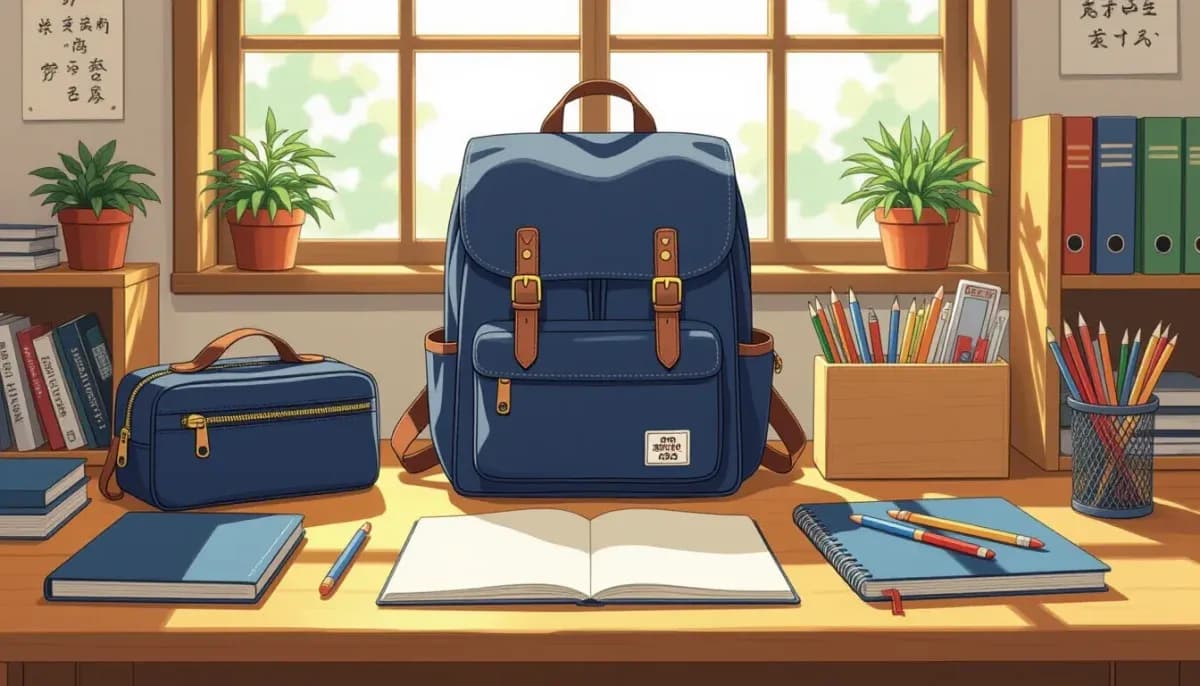
Complete checklist of school supplies needed for Japanese schools, from randoseru backpacks to uwabaki shoes. Costs, where to buy, and tips for foreign parents in Japan.
Essential School Supplies for Japanese Schools: Complete Checklist
Starting at a Japanese school can feel overwhelming for foreign families, especially when the supply list is entirely in Japanese and includes items you have never seen before. From the iconic randoseru backpack to disaster prevention hoods, Japanese schools require a unique set of supplies that differ significantly from Western schools. This comprehensive checklist will help you prepare everything your child needs for a smooth start.
The Randoseru: Japan's Iconic School Backpack
The randoseru (ランドセル) is the most recognizable piece of Japanese school equipment. This structured leather or synthetic leather backpack is used by elementary school students from first grade through sixth grade. Unlike regular backpacks, a randoseru is designed to last all six years and distribute weight evenly across a child's shoulders.
Randoseru prices range widely from ¥10,000 for budget options to over ¥100,000 for luxury handcrafted versions. Most families spend around ¥30,000 to ¥50,000 at department stores like Ito-Yokado or Aeon. Traditionally, red was for girls and black for boys, but today children choose from dozens of colors including lavender, caramel, navy, and mint green.
When to buy: The best selection is available from May to September the year before your child starts school. Popular brands sell out quickly, so early shopping is recommended. You can find a detailed guide to buying randoseru at Savvy Tokyo.
If your child is attending Japanese school temporarily, an ordinary backpack is acceptable at most schools. Check with your school before purchasing.
Daily Essentials: Items Your Child Needs Every Day
Japanese schools require several items that children must bring daily. Unlike many Western schools, Japanese classrooms do not provide paper towels, tissues, or water fountains, so children must come prepared.
| Item | Japanese Name | Approximate Cost | Where to Buy |
|---|---|---|---|
| Indoor shoes (uwabaki) | うわばき | ¥1,000–¥2,500 | Shoe stores, Aeon |
| Shoe bag | くつ袋 | ¥500–¥1,500 | 100-yen shops, craft stores |
| Handkerchief | ハンカチ | ¥300–¥800 | Daiso, Seria, LOFT |
| Tissue pack | ティッシュ | ¥100–¥300 | Any convenience store |
| Water bottle | 水筒 | ¥1,500–¥3,500 | Muji, Aeon, Amazon Japan |
| Lesson bag (tote) | レッスンバッグ | ¥500–¥2,000 | Craft stores, handmade |
| School hat | 通学帽 | ¥800–¥1,500 | School-designated shop |
Uwabaki (indoor shoes) are particularly important. Children change from outdoor shoes to uwabaki at the school entrance every morning. Most schools require white or designated-color uwabaki. Make sure to buy a shoe bag as well, since children take uwabaki home on Fridays for washing.
Handkerchiefs and tissues are essential because Japanese schools do not have paper towels in restrooms. Children dry their hands with their personal handkerchief after washing. For more about planning your child's education costs in Japan, visit Living in Nihon.
Classroom Supplies and Stationery
Japanese schools are particular about stationery. Many elementary schools specify exact requirements, such as pencil type (usually 2B for younger grades) and pencil case style (box-type rather than pouch-type for first graders).
Standard Stationery List
- Pencils (2B): Most schools require 2B pencils for grades 1–2, switching to HB in later grades
- Pencil case (fudebako): Box-type cases are preferred for younger students as they keep supplies organized
- Eraser: White, rectangular erasers are standard; character erasers are often not allowed
- Ruler (15cm): Clear, simple rulers without characters
- Red pencil: Used for self-checking work
- Shitajiki (writing board): A plastic sheet placed under notebook pages for smoother writing
- Notebooks (Japan-style): Grid-style notebooks specific to each subject, often designated by the school
- Name pen (oil-based marker): For labeling all belongings
Classroom Toolbox
Students keep a dougu-bako (道具箱) or toolbox inside their desk containing crayons, colored pencils, scissors, glue stick, and other art supplies. Schools often distribute a list specifying which items to include.
For quality stationery, LOFT and Tokyu Hands are excellent choices, while Daiso and Seria offer affordable 100-yen alternatives for basic items.
Physical Education and Sports Day Supplies
PE is a significant part of Japanese school life, with classes held multiple times per week and annual sports days (undoukai) that are major events.
| Item | Japanese Name | Notes |
|---|---|---|
| Gym uniform (top) | 体操服(上) | White shirt, school-specified |
| Gym shorts | 体操服(下) | Navy or specified color |
| Gym shoes | 体育館シューズ | Indoor athletic shoes |
| Red-white hat | 紅白帽 | Reversible hat for team games |
| Gym bag | 体操袋 | Drawstring bag for PE clothes |
| Swimsuit | 水着 | Required for summer swimming |
| Swim cap | 水泳帽 | Color often indicates grade |
| Goggles | ゴーグル | Optional but recommended |
Gym clothes are typically taken home on Fridays for washing and brought back on Mondays. Many schools sell designated gym uniforms through specific local shops, so ask the school which store to visit before purchasing on your own.
Swimming lessons run from June through September at most schools. Every student is expected to participate unless they have a medical exemption. For a broader understanding of elementary school life in Japan, see our complete guide.
Grade-Specific Supplies: What Changes Each Year
As children progress through elementary school, they need additional specialized supplies at different grade levels. Schools typically notify parents before these items are needed.
Grades 1–2
- Keyboard harmonica (pianica/melodica): Used in music class, costs ¥3,000–¥6,000
- Castanets and triangles: Sometimes provided by the school
- Counting blocks/math set: For arithmetic lessons
Grades 3–4
- Calligraphy set (shodou set): Includes brushes, ink, ink stone, and felt mat (¥2,000–¥4,000)
- Recorder (soprano): For music class (¥1,500–¥2,500)
- Compass and protractor: For geometry lessons
- Paint set: Watercolors with palette and brushes (¥1,500–¥3,000)
- Painting apron/bib: Protects clothes during art class
Grades 5–6
- Sewing kit (saihou set): Needles, thread, scissors, and pin cushion (¥2,000–¥3,500)
- Abacus (soroban): Some schools still teach abacus calculation
- Cooking apron and bandana: For home economics class
- Knapsack for field trips: For overnight school excursions
Schools often arrange group purchases for these items at discounted prices. Wait for the school's notification before buying individually, as specific requirements vary between schools.
Safety and Emergency Supplies
Japanese schools take disaster preparedness seriously. Several safety-related items are required or strongly recommended.
- Disaster prevention hood (bousai zukin): A padded hood stored on the chair that children pull over their heads during earthquake drills. Costs ¥1,500–¥3,000.
- Emergency contact card: Filled out by parents with contact numbers and pickup instructions
- Reflective keychain/sticker: Attached to the randoseru for visibility during dark winter mornings
- Crime prevention buzzer (bouhan buzzer): A personal alarm carried on the randoseru strap, often distributed free by the local ward office
Many municipalities provide crime prevention buzzers for free when children enter first grade. Check with your local ward office about available safety supplies.
Lunch and Cleaning Supplies
Japanese public schools serve kyushoku (school lunch) and students participate in daily classroom cleaning. Both activities require specific supplies.
Lunch Items
- Chopsticks set with case: For eating school lunch
- Placemat (napkin): Placed on the desk during lunch
- Lunch apron and cap (kyushoku touban set): Students take turns serving lunch to classmates, wearing a white apron and cap. This set is shared and rotated weekly.
- Lunch bag: For carrying chopsticks and placemat
School lunch costs approximately ¥4,000 per month and is paid separately from tuition. The menu is nutritionally balanced and planned by a dietician. For understanding the full costs of raising children in Japan, see our family life guide.
Cleaning Items
- Cleaning cloth (zokin): Students clean their own classrooms daily. Two small towels are typically required each term.
- Mask: Used during cleaning and flu season
Where to Buy School Supplies in Japan
Finding the right supplies is easier when you know where to shop. Here are the best stores for different categories:
| Store | Best For | Price Range |
|---|---|---|
| Aeon/Ito-Yokado | Randoseru, uniforms, gym clothes | Mid-range |
| LOFT | Quality stationery, art supplies | Mid-high |
| Tokyu Hands | Specialty items, craft supplies | Mid-high |
| Muji | Minimalist stationery, water bottles | Mid-range |
| Daiso/Seria | Basic stationery, cleaning supplies | Budget (¥100) |
| Amazon Japan/Rakuten | Price comparison, convenience | Varies |
| Local school-designated shops | Uniforms, gym clothes, specific items | Set prices |
Shopping tips:
- Start shopping in January–February for an April school start
- Check with the school before buying uniforms or gym clothes, as many schools designate specific suppliers
- Label everything with your child's name using a name stamp (onamae stamp) or permanent marker
- 100-yen shops are excellent for consumables like cleaning cloths, tissue packs, and basic stationery
For families navigating the Japanese exam system later on, understanding the education pathway early helps.
Tips for Foreign Parents
Navigating school supply shopping as a foreign parent comes with unique challenges. Here are practical tips to make the process smoother:
- Attend the enrollment orientation (nyuugaku setsumeikai): Schools hold an orientation in January or February where they distribute the official supply list. This is the most reliable source of information.
- Ask for help translating the supply list: If the list is entirely in Japanese, ask a Japanese-speaking friend, your ward office's international desk, or contact QuickHelpJapan for translation support.
- Do not overbuy: Japanese schools are specific about what is and is not allowed. Character-themed items, mechanical pencils, and certain colors may be prohibited in lower grades.
- Join the parent network: Other parents, especially experienced ones, can guide you to the right shops and help you understand requirements. Check our guide on raising bilingual children in Japan for building your support network.
- Use the onamae stamp: A personalized name stamp (¥1,000–¥3,000) saves hours of hand-labeling. Every single item, from pencils to gym clothes, must have your child's name on it.
- Budget approximately ¥50,000–¥80,000 for first-year supplies including the randoseru. Subsequent years cost significantly less as you only replace consumables and add grade-specific items.
Frequently Asked Questions
Can I use supplies from my home country? For most stationery items, yes, but notebooks must match Japanese grid formats. Randoseru and uwabaki should be purchased locally. Schools may reject items that do not meet their specifications.
What if I cannot find a specific item? Ask other parents or the school office (kyoumu). Many schools have spare supplies or can direct you to the correct store. Online shopping on Amazon Japan and Rakuten also offers most school items with detailed product descriptions.
Are there financial assistance programs? Yes. The shuugaku enjo (就学援助) program helps low-income families cover school supply costs, lunch fees, and field trip expenses. Apply through your local Board of Education. Learn more about financial planning for education in Japan.
When should I start shopping? For April enrollment, start in January after the school orientation. For randoseru specifically, begin looking the previous May–September for the best selection.
Preparing for Japanese school life takes effort, but with this checklist in hand, you will be well-equipped to give your child everything they need for a successful school experience. Remember that every school has its own specific requirements, so always confirm with your child's school before making final purchases.

Originally from Vietnam, living in Japan for 16+ years. Graduated from Nagoya University, with 11 years of professional experience at Japanese and international companies. Sharing practical information for foreign parents raising children in Japan.
View Profile →Related Articles
Recent Japanese Education Reforms That Affect Foreign Children
Comprehensive guide to recent Japanese education reforms that affect foreign children, including free high school tuition, GIGA School program, JSL support expansion, and special exam pathways for expat families.
Read more →
How to Transfer Schools in Japan as a Foreign Family
Complete guide to transferring schools in Japan for foreign families. Learn the required documents, step-by-step process, best timing, and tips for a smooth school transition in Japan.
Read more →
School Fees and Education Costs in Japan Breakdown
Complete breakdown of education costs in Japan for foreign families. Compare public, private, and international school fees from kindergarten through high school with real cost data.
Read more →
Understanding Japanese Report Cards and Academic Evaluation
Understand Japanese report cards (tsushinbo), grading scales, evaluation criteria, and naishoten scores. A complete guide for foreign parents navigating academic assessment in Japanese schools.
Read more →
Homework and Study Habits in Japan: What to Expect
A complete guide to homework and study habits in Japanese schools for foreign families. Learn about daily homework amounts, summer assignments, juku cram schools, and tips for supporting your child.
Read more →
Japanese Classroom Culture and Etiquette Your Child Should Know
A complete guide to Japanese classroom culture and etiquette for foreign families. Learn about bowing rituals, school cleaning duties, lunch customs, dress codes, and how to prepare your child for school in Japan.
Read more →