
How to Transfer Schools in Japan as a Foreign Family

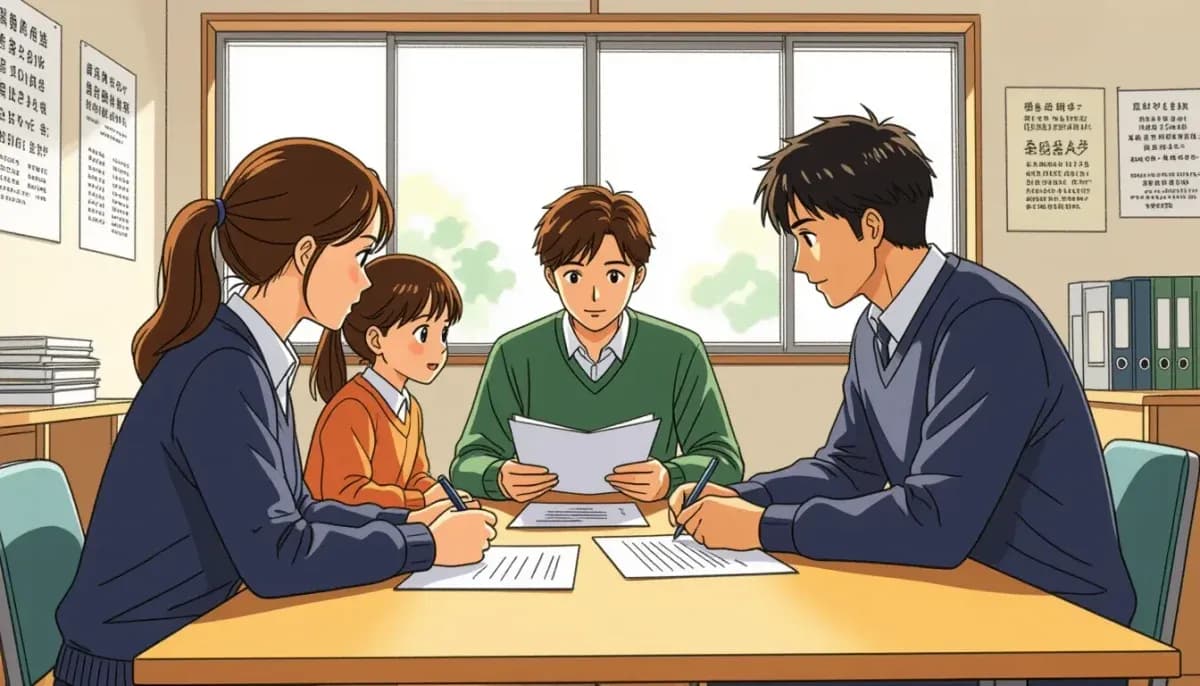
Complete guide to transferring schools in Japan for foreign families. Learn the required documents, step-by-step process, best timing, and tips for a smooth school transition in Japan.
How to Transfer Schools in Japan as a Foreign Family
Moving within Japan or relocating from overseas with school-age children can feel overwhelming, especially when you need to navigate the Japanese school transfer system. The good news is that foreign children have the same right to attend public schools as Japanese children, and the process, while paperwork-heavy, is straightforward once you understand the steps. This guide walks you through everything you need to know about transferring schools in Japan as a foreign family, from required documents to timing tips.
Understanding the Japanese School Transfer System (Tenkougaku)
The school transfer process in Japan is called tenkougaku (転校学). Whether you are moving between cities within Japan or arriving from abroad, the basic framework involves notifying your current school, registering at your new municipal office, and enrolling at the assigned school in your new district.
Japan's public school system assigns students to schools based on residential address. This means you cannot freely choose which public school your child attends — the local board of education determines the school based on where you live. For foreign families, this system applies equally, and the Japanese education system accommodates international students at every level.
Currently, over 114,853 foreign students are enrolled in Japanese public schools, with enrollment increasing by 23.3% year-over-year. About 41.5% of these students require Japanese language instruction, so schools are increasingly equipped to support non-native speakers.
Required Documents for School Transfer
The paperwork is a critical part of transferring schools in Japan. Here is a breakdown of the documents you will need:
| Document (Japanese Name) | English Name | Where to Get It |
|---|---|---|
| 在学証明書 (Zaigaku Shoumeisho) | Certificate of Student Enrollment | Current school |
| 教科用図書給与証明書 (Kyokayou Tosho Kyuuyo Shoumeisho) | Textbook Receipt Certificate | Current school |
| 転入学通知書 (Tennyuugaku Tsuuchisho) | Transfer Notification Form | New municipal office |
| 転出届 (Tenshutsu Todoke) | Move-Out Notification | Current municipal office |
| 転入届 (Tennyu Todoke) | Move-In Notification | New municipal office |
| Passport / Residence Card | Identity verification | Already in your possession |
Important: All enrollment documents are in Japanese and must be filled out in Japanese. If you are not confident in Japanese, bring a friend, hire a translator, or ask the municipal office if they offer multilingual support. Many larger cities now provide assistance in English, Chinese, Portuguese, and other languages.
For families arriving from overseas, you will also need documents proving your child's date of birth (passport) and your residential registration in Japan.
Step-by-Step Transfer Process
Transferring Within the Same Municipality
- Notify your current school — Tell the homeroom teacher and school office that your child will be transferring. They will issue the Certificate of Student Enrollment and the Textbook Receipt Certificate.
- Visit your local government office — Submit a change of address notification. You will receive a Transfer Notification Form for the new school.
- Contact the new school — Submit all documents and complete enrollment paperwork.
- Confirm supplies needed — The new school may have different requirements for gym clothes, indoor shoes (uwabaki), and school bags.
Transferring to a Different Municipality
- Notify your current school — Same as above; collect required certificates.
- File a move-out notification — This must be submitted to your current municipal office within 14 days before your departure.
- File a move-in notification — Submit this at your new municipal office within 14 days of arriving at your new address.
- Visit the new board of education — They will determine which school your child is assigned to and issue the Transfer Notification Form.
- Enroll at the new school — Bring all documents and complete the admission process.
For families moving between municipalities, you will also need a new resident certificate (juminhyo) from your new city or ward office. You can find more details about daily life logistics for families on Living in Nihon.
Transferring from Overseas to Japan
If you are relocating to Japan from another country, the process begins once you register your address at the municipal office. Visit the board of education with your passport, residence card, and proof of your child's age. They will assign a school and provide enrollment instructions. Check our guide on the education system overview for a deeper understanding of grade placement by age.
Best Timing for a School Transfer
Timing matters when transferring schools in Japan. The Japanese academic year starts in April and is divided into three terms:
| Term | Months | Notes |
|---|---|---|
| First Term | April – July | Best time to transfer; classes reshuffled |
| Second Term | September – December | Acceptable; mid-year integration |
| Third Term | January – March | Least ideal; exams and graduation prep |
April is the best time to transfer. At the start of the school year, class rosters are reshuffled, so every student is adjusting to new classmates. This makes it significantly easier for transfer students to form friendships and settle in.
If you must transfer mid-year, September (the start of the second term) is the next best option. Avoid transferring during January through March, as this period involves final exams and graduation preparations, especially at junior high school and high school levels.
For practical guidance on working and living logistics around a family move, For Work in Japan provides helpful resources.
Public School vs. International School Transfers
When transferring, you may want to reconsider your school type. Here is a comparison to help you decide:
| Factor | Public School | International School |
|---|---|---|
| Tuition | Nearly free (~¥9,900/month covered by subsidy) | ¥1.5M–¥3M+ per year |
| Language | Japanese instruction | English or other languages |
| Transfer flexibility | Assigned by district; must follow procedures | Rolling admissions; more flexible |
| Japanese language support | Available in many schools (41.5% of foreign students use it) | Limited or not needed |
| Cultural integration | Full immersion in Japanese culture | International environment |
| Curriculum | Japanese national curriculum | IB, American, British, or other systems |
If your child has limited Japanese ability and you need a smoother transition, international schools may be the better fit. However, public schools offer excellent language immersion opportunities and your child will gain Japanese proficiency quickly.
Some prefectures, like Saitama, offer special selection exams for foreign students at up to 12 schools, with assessments available in Japanese or English. This makes public high school accessible even for recent arrivals. Learn more about study strategies at Chuukou Benkyou.
Language Support for Transfer Students
One of the biggest concerns for foreign families is whether their child will receive adequate language support. Japanese public schools have expanded their support systems significantly:
- Individual tutoring — One-on-one Japanese language lessons during or after school hours
- Small group instruction — Language classes with other non-native speakers
- Peer mentoring — Japanese classmates assigned to help with daily school life
- Specialized curriculum — Structured Japanese language instruction frameworks introduced in 2014 (elementary/middle) and 2023 (high school)
The major language groups among foreign students are Portuguese (9,851 students), Chinese (8,427), and Filipino (6,755) speakers. Schools in areas with larger foreign populations tend to have more robust support programs.
For tips on building your child's language skills at home while adjusting to school, see our guides on teaching Japanese to foreign children and raising bilingual children in Japan.
Common Challenges and How to Overcome Them
Paperwork in Japanese
All school documents are in Japanese. Bring a Japanese-speaking friend or use your municipal office's free consultation services. Many city halls have international resident support desks.
Grade Placement Differences
Japan may place your child based on age rather than academic level. If your child was in a different grade abroad, discuss this with the board of education. They may allow flexibility in special cases.
School Supplies and Uniforms
Each school has specific requirements. Before buying anything, check with the new school about required items. Some items like randoseru (school backpacks) and uniforms can be purchased secondhand to save costs.
Social Adjustment
Transferring mid-year can be socially challenging. Encourage your child to join school clubs (bukatsu) and participate in school events, which are key to making friends in Japanese junior high and high school environments.
Approximately 20,000 Foreign Children with Unconfirmed Enrollment
Unfortunately, around 20,000 foreign children in Japan have unconfirmed school enrollment status. If you know foreign families who have not enrolled their children, encourage them to contact their local board of education — education is a right available to all children in Japan, regardless of nationality.
Practical Tips for a Smooth School Transfer
- Start early — Begin the transfer process as soon as you know your moving date. Do not wait until the last week.
- Visit the new school beforehand — If possible, arrange a visit so your child can see the school and meet the teacher before the first day.
- Prepare a self-introduction — Japanese schools often ask transfer students to introduce themselves (jikoshoukai) to the class. Practice a simple introduction in Japanese.
- Label everything — Japanese schools require names on all belongings, from pencils to gym clothes.
- Connect with other foreign families — Local international associations and parent groups can provide invaluable support during the transition.
- Keep copies of all documents — Make photocopies of every form you submit, in case anything is lost.
For a comprehensive overview of the school transfer procedures and timeline, this detailed guide covers the entire process step by step. Additional procedural information is available from Imagination Procedure in Japan and E-Housing's guide for foreign students.
Conclusion
Transferring schools in Japan as a foreign family requires patience and preparation, but it is entirely manageable. The key steps are: notify your current school, handle your municipal registration, and complete enrollment at the new school with all required documents. Time your move for April if possible, take advantage of language support programs, and do not hesitate to ask for help from your local board of education or international community groups. Your child's right to education in Japan is protected, and schools across the country are becoming better equipped to welcome foreign students every year.

Originally from Vietnam, living in Japan for 16+ years. Graduated from Nagoya University, with 11 years of professional experience at Japanese and international companies. Sharing practical information for foreign parents raising children in Japan.
View Profile →Related Articles
Recent Japanese Education Reforms That Affect Foreign Children
Comprehensive guide to recent Japanese education reforms that affect foreign children, including free high school tuition, GIGA School program, JSL support expansion, and special exam pathways for expat families.
Read more →
School Fees and Education Costs in Japan Breakdown
Complete breakdown of education costs in Japan for foreign families. Compare public, private, and international school fees from kindergarten through high school with real cost data.
Read more →
Understanding Japanese Report Cards and Academic Evaluation
Understand Japanese report cards (tsushinbo), grading scales, evaluation criteria, and naishoten scores. A complete guide for foreign parents navigating academic assessment in Japanese schools.
Read more →
Homework and Study Habits in Japan: What to Expect
A complete guide to homework and study habits in Japanese schools for foreign families. Learn about daily homework amounts, summer assignments, juku cram schools, and tips for supporting your child.
Read more →
Japanese Classroom Culture and Etiquette Your Child Should Know
A complete guide to Japanese classroom culture and etiquette for foreign families. Learn about bowing rituals, school cleaning duties, lunch customs, dress codes, and how to prepare your child for school in Japan.
Read more →
Essential School Supplies for Japanese Schools: Complete Checklist
Complete checklist of school supplies needed for Japanese schools, from randoseru backpacks to uwabaki shoes. Costs, where to buy, and tips for foreign parents in Japan.
Read more →