
Recent Japanese Education Reforms That Affect Foreign Children

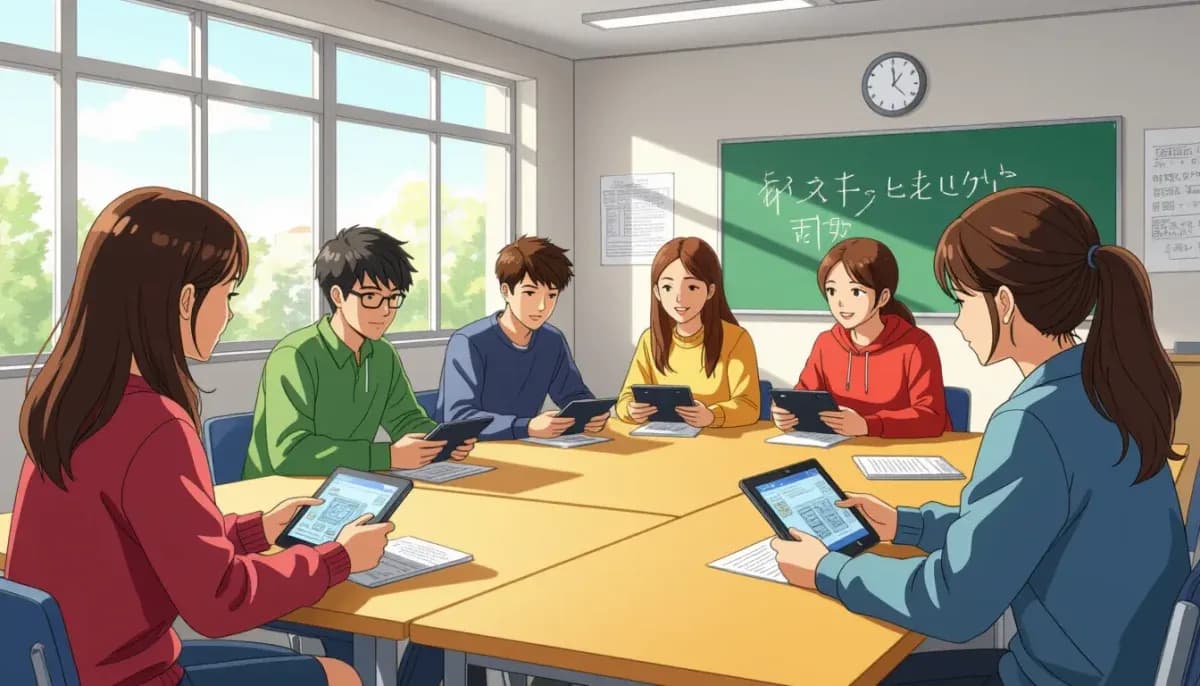
Comprehensive guide to recent Japanese education reforms that affect foreign children, including free high school tuition, GIGA School program, JSL support expansion, and special exam pathways for expat families.
Recent Japanese Education Reforms That Affect Foreign Children
Japan's education system is undergoing significant transformation, and these changes have direct implications for the growing number of foreign families raising children in the country. With 3.77 million foreign nationals living in Japan as of late 2024 and 129,000 foreign children enrolled in public schools, understanding recent reforms is essential for every expat parent. This guide breaks down the most impactful education policy changes and what they mean for your family.
The Growing Need for Education Reform
The number of foreign residents in Japan has surged dramatically, reaching 1.8 times the level recorded a decade ago. This rapid growth has placed unprecedented pressure on Japan's education system to accommodate diverse learners. In fiscal 2024 alone, foreign student enrollment in public elementary and junior high schools increased by 9% year-over-year.
Despite this growth, significant challenges remain. A troubling 970 foreign children of school age were not enrolled in any school during fiscal 2023, representing a 24.6% increase from the previous year. When including children whose enrollment status could not be confirmed, MEXT estimates the number may reach 8,601 children who are potentially missing from the education system entirely.
These statistics underscore why recent reforms are so critical. If you are navigating the Japanese education system as a foreign family, staying informed about these changes can make a real difference in your child's educational experience.
Free High School Education: A Game-Changing Reform
One of the most significant recent reforms is the introduction of free public high school education, effective from April 2025. Under this landmark policy, every student enrolled in a public high school receives a government subsidy of ¥118,800 (approximately $800), which fully covers annual tuition fees.
Previously, the tuition support system was means-tested, excluding families earning above ¥9.1 million annually. More importantly for foreign families, the old system posed bureaucratic obstacles that were particularly challenging for immigrant households, low-income families, and those with unstable documentation.
Starting April 2026, support for private high schools will also increase to approximately ¥457,000 (around $3,000) per student annually, with income caps being lifted entirely.
| Reform Detail | Public High School | Private High School |
|---|---|---|
| Effective Date | April 2025 | April 2026 |
| Annual Subsidy | ¥118,800 (~$800) | ¥457,000 (~$3,000) |
| Income Cap | Removed | Being lifted |
| Previous Cap | ¥9.1 million | ¥9.1 million |
| Coverage | Full tuition | Partial tuition |
This reform is especially relevant if you are considering high school options for your foreign family in Japan. The financial barrier that once pushed many families toward international schools has been significantly reduced.
The GIGA School Program: Digital Learning for All
Japan's Global and Innovation Gateway for All (GIGA) School Program represents a $2.2 billion investment in digital education infrastructure. Launched in response to COVID-19 challenges, this program achieved its goal of providing one digital device per student across all compulsory education levels.
Key components of the GIGA School Program include:
- One-to-one device deployment — Every student in compulsory education now has access to a personal tablet or laptop
- ICT infrastructure upgrades — Schools received high-speed internet connections and digital classroom equipment
- AI-powered digital textbooks — MEXT began piloting AI-enhanced digital textbooks in 2022, starting with English language courses
- Online learning capabilities — Schools can now offer remote and hybrid learning options
For foreign children, the GIGA program offers particular advantages. Digital tools can provide multilingual support and translation features that help bridge language gaps. AI-powered learning platforms can adapt to individual student levels, which is especially beneficial for children still developing Japanese proficiency.
The Digital Education Roadmap released by the Digital Agency in 2025 further expands on these initiatives, focusing on personalized learning experiences and data-driven education policy. You can read more about how education reforms are reshaping the examination landscape at Chuukou Benkyou.
Enhanced Japanese Language Support (JSL Programs)
Perhaps the most directly relevant reform for foreign families is the expansion of Japanese as a Second Language (JSL) support programs. Approximately 70,000 students required JSL instruction in fiscal 2023, a number that has doubled over the past decade. Currently, about 30% of all Japanese public schools (9,241 schools) have students needing language support.
School Readiness Program (Fiscal 2024)
From fiscal 2024, MEXT established a dedicated school readiness program for foreign children. This program provides 20 days of intensive instruction before children enter school, covering essential Japanese language skills for school life, including:
- Basic greetings and classroom instructions
- Health reporting and emergency communication
- School rules and daily routines
- Academic vocabulary foundations
This pre-entry program addresses a critical gap that many foreign parents have struggled with, giving children a foundation before they face the full immersion of a Japanese classroom. If your child is preparing to enter the Japanese school system, understanding how elementary schools work alongside these new support programs is essential.
Regional Variations in Support
Support levels vary significantly across Japan. Urban areas like Tokyo and Aichi provide more comprehensive JSL programs, while rural prefectures face steeper challenges. Tottori Prefecture, for example, saw a 2.4-fold growth in foreign student numbers between 2021 and 2023 without proportional increases in support staff.
One notable example is Saitama Prefecture, which now has 12 schools offering special selection examinations for foreign students. These exams consider each student's unique circumstances regardless of nationality and allow assessments to be completed in either Japanese or English.
Curriculum Revision and Future-Oriented Skills
Japan's next major curriculum revision is expected to be finalized in 2026 and implemented by 2028. This revision will reshape what and how children learn across all grade levels.
Current priorities for the new curriculum include:
- Digital literacy and programming — Building on the GIGA School foundation, coding education is expanding at all levels
- English language proficiency — Enhanced English instruction beginning from earlier grades
- Global citizenship education — Geography and cross-cultural understanding receive greater emphasis
- Critical thinking and problem-solving — Moving away from rote memorization toward analytical skills
For foreign children, the increased emphasis on English and global perspectives may create a more inclusive classroom environment. Children who are raised bilingually may find their language skills increasingly valued rather than seen as a barrier.
Additionally, reforms to teacher working conditions are being implemented beginning in 2026, including limiting after-school work hours, reducing class sizes, and promoting community-staffed after-school clubs. Smaller class sizes particularly benefit foreign students who need more individualized attention.
Special Examination Systems for Foreign Students
Several prefectures have introduced or expanded special entrance examination pathways for foreign students entering junior high and high school. These alternative pathways recognize that foreign students may face language-related disadvantages in standard examinations.
The returnee and foreign student exam system typically includes:
- Extended time allowances for test completion
- Simplified Japanese or bilingual exam options
- Consideration of the student's length of residence in Japan
- Portfolio-based assessment alternatives
- Interview components conducted with interpreter support
Families planning for their children's educational future should also consider education fund planning early, as costs can vary significantly depending on the educational pathway chosen.
How These Reforms Affect Daily Family Life
Understanding policy changes is one thing, but knowing how they affect your daily life as a foreign family is what truly matters. Here is a practical summary:
| Situation | Before Reforms | After Reforms |
|---|---|---|
| Enrolling in public high school | Means-tested subsidies, complex paperwork | Free tuition for all, simplified process |
| Starting elementary school | Immediate full immersion | 20-day readiness program available |
| Language support availability | Limited, inconsistent | Expanding JSL programs nationwide |
| Digital learning access | Varied by school/region | One device per student guaranteed |
| High school entrance exams | Standard exams only | Special pathways in multiple prefectures |
| Private high school costs | Full tuition responsibility | Up to ¥457,000 subsidy from 2026 |
For comprehensive guidance on family life in Japan as foreigners, including education-related topics, For Work in Japan offers valuable resources.
What Foreign Parents Should Do Now
To make the most of these reforms, here are concrete steps you can take:
- Contact your local Board of Education — Ask about JSL support availability and the school readiness program in your municipality
- Research prefecture-specific programs — Some areas offer significantly more support than others; this may influence where you choose to live
- Register your children properly — Ensure your children's school enrollment is confirmed with your local ward office to avoid falling into the "unconfirmed" category
- Explore special exam pathways — If your child is approaching high school age, investigate whether your prefecture offers modified entrance examinations
- Take advantage of free tuition — The public high school tuition subsidy is available regardless of nationality or income level
- Engage with digital learning tools — Help your child become comfortable with the devices and platforms provided through the GIGA program
Staying informed about ongoing changes is crucial. The education landscape in Japan continues to evolve, and reforms planned through 2028 will bring further shifts. By understanding and leveraging these changes, you can ensure your child receives the best possible education in Japan.
For more information about raising children in Japan, explore our complete guide to the Japanese education system for foreign families and learn about teaching Japanese to your foreign children to support their academic success.

Originally from Vietnam, living in Japan for 16+ years. Graduated from Nagoya University, with 11 years of professional experience at Japanese and international companies. Sharing practical information for foreign parents raising children in Japan.
View Profile →Related Articles
How to Transfer Schools in Japan as a Foreign Family
Complete guide to transferring schools in Japan for foreign families. Learn the required documents, step-by-step process, best timing, and tips for a smooth school transition in Japan.
Read more →
School Fees and Education Costs in Japan Breakdown
Complete breakdown of education costs in Japan for foreign families. Compare public, private, and international school fees from kindergarten through high school with real cost data.
Read more →
Understanding Japanese Report Cards and Academic Evaluation
Understand Japanese report cards (tsushinbo), grading scales, evaluation criteria, and naishoten scores. A complete guide for foreign parents navigating academic assessment in Japanese schools.
Read more →
Homework and Study Habits in Japan: What to Expect
A complete guide to homework and study habits in Japanese schools for foreign families. Learn about daily homework amounts, summer assignments, juku cram schools, and tips for supporting your child.
Read more →
Japanese Classroom Culture and Etiquette Your Child Should Know
A complete guide to Japanese classroom culture and etiquette for foreign families. Learn about bowing rituals, school cleaning duties, lunch customs, dress codes, and how to prepare your child for school in Japan.
Read more →
Essential School Supplies for Japanese Schools: Complete Checklist
Complete checklist of school supplies needed for Japanese schools, from randoseru backpacks to uwabaki shoes. Costs, where to buy, and tips for foreign parents in Japan.
Read more →