
Japanese Classroom Culture and Etiquette Your Child Should Know

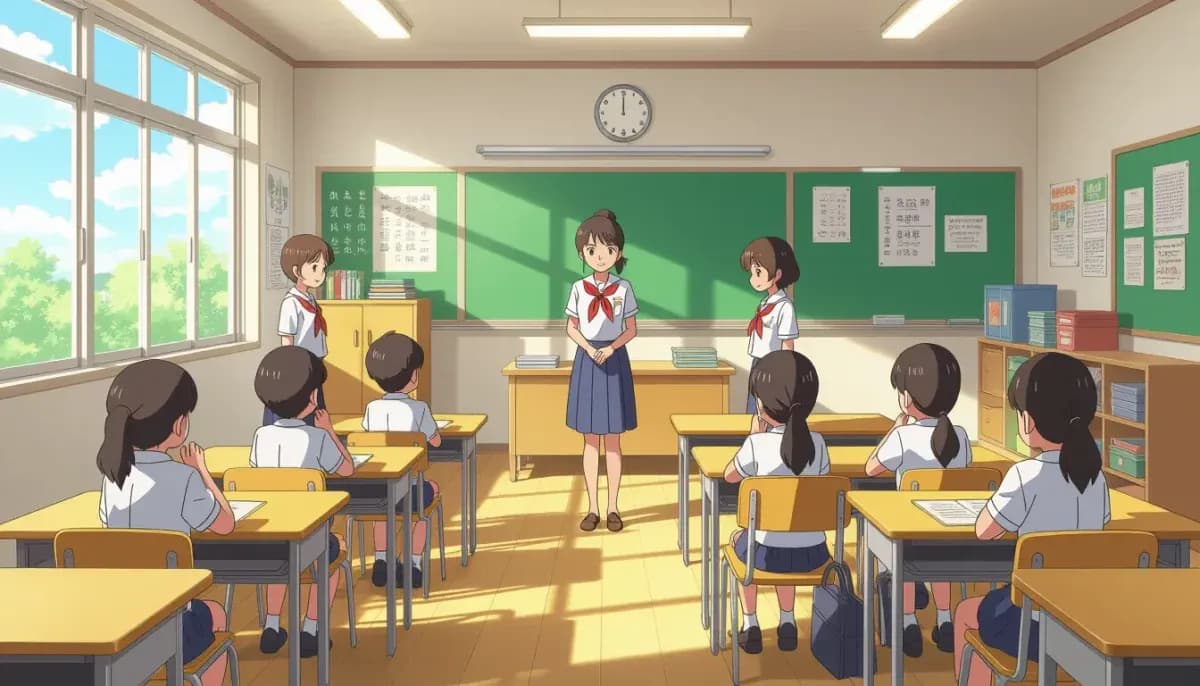
A complete guide to Japanese classroom culture and etiquette for foreign families. Learn about bowing rituals, school cleaning duties, lunch customs, dress codes, and how to prepare your child for school in Japan.
Japanese Classroom Culture and Etiquette Your Child Should Know
Moving to Japan means your child will encounter a school culture unlike anything they have experienced before. Japanese classrooms operate on deeply rooted traditions of respect, responsibility, and group harmony that shape every part of the school day. Understanding these customs before your child's first day can make the transition smoother and help them feel confident in their new environment.
This guide covers everything from daily greetings and cleaning duties to lunch routines and dress codes, so your family knows exactly what to expect in a Japanese classroom.
The Art of Greeting: Bowing and Formal Classroom Rituals
One of the most distinctive aspects of Japanese classroom culture is the formal greeting ritual that bookends every lesson. When the teacher enters the classroom, a designated student leader (called the nichoku or daily monitor) calls out "Kiritsu!" (Stand up!), and every student rises from their seat. The leader then says "Rei!" (Bow!), and the entire class bows together while saying "Onegaishimasu" — a phrase that roughly translates to "please teach us" or "we look forward to learning."
At the end of each class, the same ritual is repeated, but students say "Arigatou gozaimashita" (Thank you very much) as they bow. This practice teaches children to show gratitude and respect for their teachers from a very young age.
Your child should also know that teachers are always addressed as "Sensei" — never by their first name. Even outside the classroom, students are expected to greet teachers and staff with a polite bow when they pass in the hallways.
For a broader look at how these values fit into the Japanese school system, see our complete guide to education in Japan for foreign families.
Souji: Why Students Clean Their Own School
Perhaps the biggest surprise for foreign families is that Japanese students clean their own school every day. This practice, known as souji (掃除) or o-soji, is not a punishment — it is a core part of the educational philosophy. Schools in Japan believe that cleaning teaches responsibility, teamwork, and respect for shared spaces.
Every day, usually after lunch, students spend about 15-20 minutes cleaning. Tasks are divided among students on a rotating basis and include:
- Sweeping and mopping classroom floors
- Wiping desks and windows
- Cleaning hallways and staircases
- Scrubbing restrooms
- Tidying the school grounds
Students bring their own cleaning cloth, called a zoukin (雑巾), from home. Many parents sew or purchase these cloths specifically for school use. Your child will need one from their first day.
This system means there are no janitors handling daily classroom cleaning — the students themselves maintain their learning environment. It is a powerful lesson in collective responsibility that most children come to appreciate over time.
Uwabaki: The Indoor Shoe System
When your child arrives at school each morning, they will need to change from their outdoor shoes into uwabaki (上履き) — special indoor slippers worn only inside the school building. This is a strict rule at every Japanese school, designed to keep the building clean.
Each student has a designated shoe cubby (called a getabako) at the school entrance. Outdoor shoes go in the cubby, and uwabaki come out. Your child will need:
| Item | Description | Where to Buy | Approximate Cost |
|---|---|---|---|
| Uwabaki (indoor shoes) | White canvas slip-on shoes, sometimes with colored toe caps | Shoe stores, Amazon Japan, school supply shops | ¥1,000 - ¥2,500 |
| Outdoor shoes | Sturdy walking shoes for the commute | Any shoe store | ¥3,000 - ¥6,000 |
| Zoukin (cleaning cloth) | Cotton cleaning rag, often with loops | 100-yen shops, sewing at home | ¥100 - ¥300 |
| Taikukan shoes | Separate shoes for the gymnasium | School supply shops | ¥2,000 - ¥4,000 |
| Randoseru or school bag | Backpack (elementary) or approved bag | Department stores, online | ¥30,000 - ¥80,000 |
Many schools also require separate taikukan shoes (gym shoes) that are only worn in the gymnasium. Make sure to label everything with your child's name, as required by most schools.
For more on what to prepare for elementary school specifically, check out our elementary school guide for foreign parents.
Kyushoku: The School Lunch Experience
School lunch in Japan, called kyushoku (給食), is far more than just a meal — it is treated as an educational experience. Menus are designed by professional nutritionists to ensure balanced, healthy meals, and the entire class eats together in their classroom.
Here is what makes kyushoku unique:
- Student-served meals: Students take turns as lunch monitors (touban), wearing white coats and caps to serve food to their classmates from large pots and trays delivered to the classroom.
- Saying grace: Before eating, the entire class says "Itadakimasu" (I humbly receive this food). After finishing, they say "Gochisousama deshita" (Thank you for the meal).
- No food waste: Students are encouraged to eat everything on their plate. While this is not always strictly enforced for younger children, the culture strongly discourages wasting food.
- Cleanup duty: After lunch, students clean up, wash dishes, and return serving equipment to the kitchen.
Monthly lunch fees typically range from ¥4,000 to ¥5,000. If your child has food allergies or dietary restrictions due to religious beliefs, it is essential to discuss this with the school early — many schools can accommodate needs, but advance notice is required. For families new to the Japanese healthcare system, our guide on healthcare and medical care for children in Japan covers allergy documentation.
You can find more details about raising children in Japan in this comprehensive guide for foreign families.
Dress Code and Appearance Rules
Japanese schools enforce strict appearance standards that may surprise families from Western countries. While elementary schools are generally more relaxed, junior high and high schools have detailed regulations.
Common rules across most Japanese schools:
- No jewelry, earrings, necklaces, or bracelets
- No nail polish or manicures
- No hair dye — natural hair color is expected (some schools require students with naturally non-black hair to submit proof)
- No makeup
- Hair must be kept neat; long hair is often required to be tied back
- Uniforms are mandatory at most junior high and high schools
Items typically not allowed at school:
- Snacks or candy
- Drinks other than water (and sometimes tea)
- Mobile phones (some schools allow them but require they stay turned off)
- Toys, games, or manga
These rules reflect the Japanese educational emphasis on equality and minimizing distractions. While some rules may seem strict, they are applied equally to all students. A recent survey found that 79.1% of Japanese students feel their school has at least some rules they consider unusual or overly strict — so even Japanese kids find some rules challenging!
For families considering alternatives, our guide to international schools in Japan outlines different approaches to dress codes and rules.
Walking to School: The Tsuugaku-han System
Unlike many Western countries, Japanese elementary school children walk to school independently — and this is by design. Most schools organize tsuugaku-han (通学班), neighborhood walking groups where children of different ages walk together along designated routes.
Key points about school commuting:
- No parent drop-offs: Schools generally discourage parents from driving children to school. Walking is considered part of the child's education in independence.
- Safety volunteers: Local community members, often elderly residents, stand at key intersections during commuting hours to help children cross safely.
- Yellow hats and covers: First-grade students typically wear bright yellow hats or backpack covers so they are easily visible to drivers.
- Rain gear: Children walk rain or shine. A good raincoat and umbrella are essential items.
This system can be anxiety-inducing for foreign parents who are not used to their young children walking alone. However, Japan's exceptionally low crime rate and the organized group walking system make it one of the safest countries for children to commute independently.
For more about family life in Japan as a foreigner, including community support systems, this guide offers helpful insights.
PTA and Parent Involvement
Parent involvement in Japanese schools goes well beyond occasional parent-teacher conferences. The PTA (Parent-Teacher Association) plays an active role in school life, and participation is often strongly expected — sometimes to the point of feeling mandatory.
Common PTA responsibilities include:
- Organizing school events and festivals (undoukai, cultural festivals)
- Supervising safety patrols during commuting hours
- Coordinating community clean-up days
- Attending regular meetings (often monthly)
- Managing fundraising activities
Many foreign parents find PTA involvement challenging due to language barriers. However, participating even partially shows goodwill and helps build relationships with other parents. Some schools with higher numbers of foreign students provide translated materials or interpreter support.
Parent-teacher meetings (sankanbi or mendan) happen several times a year. During sankanbi, parents observe their child's class in action. During mendan, they have private meetings with the teacher to discuss their child's progress.
Understanding the cultural identity challenges for mixed-race children in Japan can also help parents navigate school social dynamics more effectively.
After-School Activities and Gakudo
Japanese schools offer a rich selection of after-school activities, and many families rely on supervised after-school care programs:
Club Activities (Bukatsu) Starting in junior high school, students are strongly encouraged to join a club — either a sports club (undoubu) or a cultural club (bunkabu). Common options include baseball, soccer, basketball, brass band, art, and science clubs. Club activities often run until 5-6pm and can include weekend practice.
After-School Care (Gakudo) For elementary school children, gakudo (学童) programs provide supervised care after school hours, typically until 5-6pm. Costs range from free (in some municipalities) to approximately ¥4,000-7,000 per month. These programs offer homework time, snacks, and supervised play.
Juku (Cram Schools) Many Japanese children attend juku (塾) — private after-school tutoring academies — especially as they approach entrance exams for junior high or high school. While not required, juku attendance is extremely common. For more on entrance exams, see this exam preparation guide.
For more about the transition into junior high, read our guide on junior high school in Japan for foreign families.
Tips for Helping Your Child Adjust
Adjusting to Japanese classroom culture takes time, but there are practical steps you can take to help your child:
- Practice bowing at home — Make the greeting ritual feel natural before the first day.
- Prepare all required items early — Uwabaki, zoukin, labeled supplies. Check with the school for a complete list.
- Discuss the cleaning routine positively — Frame souji as a team activity, not a chore.
- Try Japanese school lunch foods at home — Expose your child to common dishes like curry rice, miso soup, and grilled fish.
- Walk the school route together — Practice the commuting path multiple times before school starts.
- Learn basic Japanese phrases — Even simple greetings will help your child feel less overwhelmed. Our guide on teaching Japanese to foreign children has practical strategies.
- Connect with other parents — Ask the school if there are other foreign families who can share their experiences.
Remember that Japanese teachers are generally very supportive of foreign students. Many schools provide Japanese language support classes and volunteer interpreters for children who need extra help. The emphasis on group harmony means that classmates are often encouraged to help new students settle in.
For additional guidance on supporting your child emotionally through this transition, see our article on mental health and emotional wellbeing for foreign children in Japan.
Frequently Asked Questions
What if my child does not speak Japanese? Many public schools offer Japanese language support (nihongo shien) classes. Some schools have volunteer interpreters. Starting with basic phrases and building from there is the recommended approach.
Can my child bring their own lunch instead of eating kyushoku? This depends on the school. Some schools allow bento boxes for children with allergies or dietary restrictions, but you should discuss this with the administration in advance.
Are the rules the same at international schools? No. International schools typically follow Western-style classroom culture. See our international schools guide for details.
What happens if my child struggles with the strict rules? Teachers are usually understanding with foreign students during the adjustment period. Communication with the homeroom teacher is key — most will work with you to help your child adapt gradually.
Do all schools require uniforms? Most elementary schools do not require uniforms (though some do). Junior high and high schools almost universally require uniforms. Check with your specific school for requirements.
For additional details on Japanese school customs, the Japan Living Guide provides a thorough overview, and GaijinPot's school etiquette guide covers rules and manners in detail.

Originally from Vietnam, living in Japan for 16+ years. Graduated from Nagoya University, with 11 years of professional experience at Japanese and international companies. Sharing practical information for foreign parents raising children in Japan.
View Profile →Related Articles
Recent Japanese Education Reforms That Affect Foreign Children
Comprehensive guide to recent Japanese education reforms that affect foreign children, including free high school tuition, GIGA School program, JSL support expansion, and special exam pathways for expat families.
Read more →
How to Transfer Schools in Japan as a Foreign Family
Complete guide to transferring schools in Japan for foreign families. Learn the required documents, step-by-step process, best timing, and tips for a smooth school transition in Japan.
Read more →
School Fees and Education Costs in Japan Breakdown
Complete breakdown of education costs in Japan for foreign families. Compare public, private, and international school fees from kindergarten through high school with real cost data.
Read more →
Understanding Japanese Report Cards and Academic Evaluation
Understand Japanese report cards (tsushinbo), grading scales, evaluation criteria, and naishoten scores. A complete guide for foreign parents navigating academic assessment in Japanese schools.
Read more →
Homework and Study Habits in Japan: What to Expect
A complete guide to homework and study habits in Japanese schools for foreign families. Learn about daily homework amounts, summer assignments, juku cram schools, and tips for supporting your child.
Read more →
Essential School Supplies for Japanese Schools: Complete Checklist
Complete checklist of school supplies needed for Japanese schools, from randoseru backpacks to uwabaki shoes. Costs, where to buy, and tips for foreign parents in Japan.
Read more →