
Toddler Safety in Japanese Homes: Practical Tips

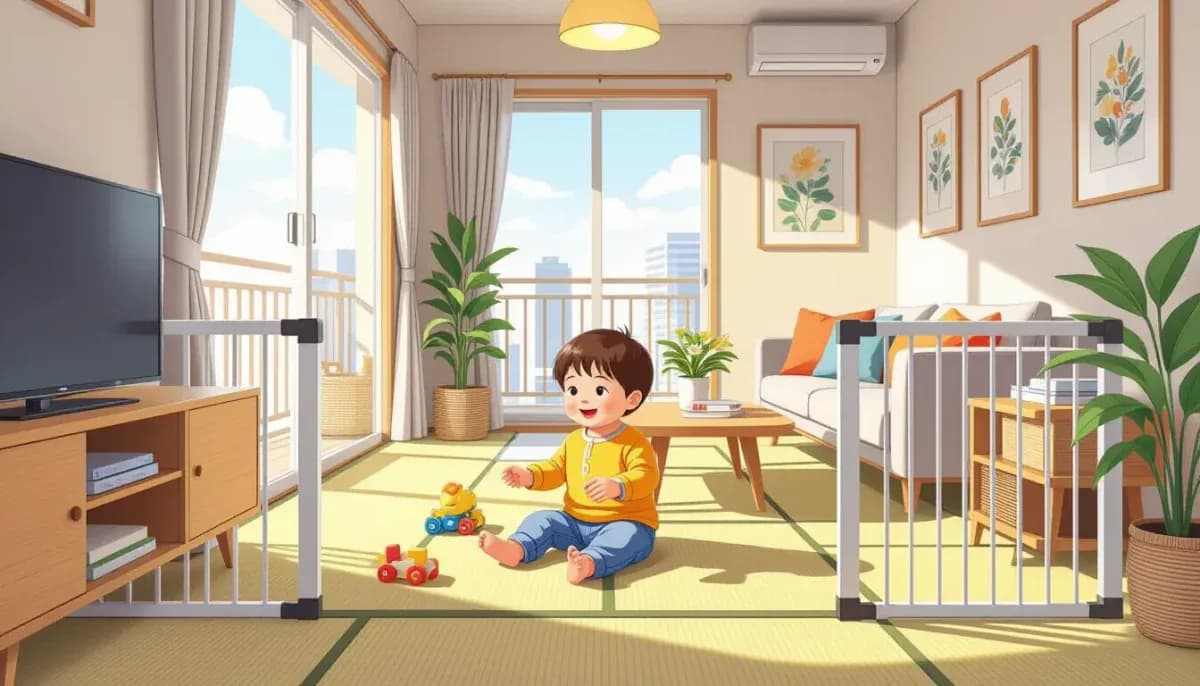
Keep your toddler safe in a Japanese home with our practical guide covering sliding doors, earthquake furniture anchoring, balcony safety, kitchen hazards, and where to buy childproofing products in Japan.
Toddler Safety in Japanese Homes: Practical Tips for Foreign Parents
Raising a toddler in Japan is a wonderful experience, but Japanese homes come with unique safety challenges that foreign parents may not expect. From fragile sliding doors to earthquake-related furniture risks, keeping your little one safe requires understanding the specific features of Japanese residential design. This guide covers everything you need to know about toddler-proofing a Japanese home — combining earthquake preparedness with everyday childproofing best practices.
Understanding the Unique Safety Challenges of Japanese Homes
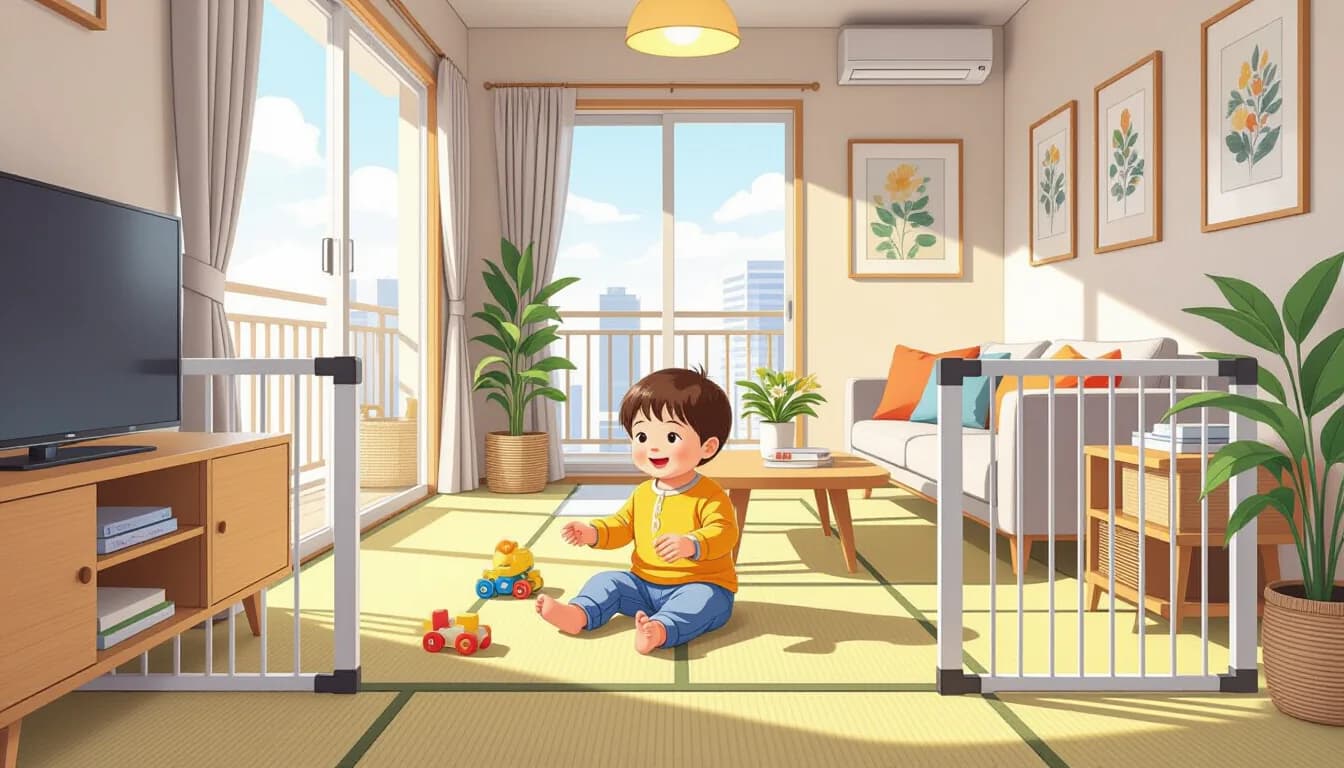
Japanese homes differ significantly from Western houses in ways that directly affect toddler safety. Before you childproof, it helps to understand what makes these spaces distinct.
Shoji and Fusuma Sliding Doors Shoji (障子) are translucent paper-panel doors, while fusuma (襖) are thicker opaque sliding panels used to divide rooms. Both are beautiful architectural features — but they're fragile. A toddler who leans against or runs into a shoji panel can easily fall through the paper. These doors also slide open easily, giving curious toddlers unsupervised access to other rooms, stairwells, or balconies.
Low-Level Furniture and Floor Living Japanese homes often feature floor-level living: low tables (chabudai), floor cushions (zabuton), and futon mattresses placed directly on tatami. While this reduces the risk of falls from high furniture, it introduces different hazards — floor-level power outlets, cords running along the baseboard, and easy access to low shelves.
Balconies and Outdoor Spaces Most Japanese apartments include a balcony used for hanging laundry. These spaces often lack sufficient barriers for toddlers. The standard railing may not prevent a curious child from squeezing through or climbing.
Earthquake Risk Japan experiences seismic activity constantly — roughly one tremor every five minutes somewhere in the country. Securing furniture against tipping is not just a childproofing measure; in Japan, it's a survival priority. During the 1995 Great Hanshin-Awaji Earthquake, approximately 90% of deaths resulted from being crushed by furniture or collapsed structures.
Understanding these risks is the first step. Now let's look at practical solutions.
Securing Furniture Against Tipping: The Earthquake-Childproofing Overlap
One of the most important things you can do for toddler safety in Japan is anchor heavy furniture to walls or ceilings. This protects your child from furniture falling on them during both everyday accidents and earthquakes.
Tension Poles (Tsuppari Bou / つっぱり棒)
Tension poles are spring-loaded rods that wedge between the top of a bookshelf or cabinet and the ceiling, preventing the furniture from tipping forward. They are widely available at home centers like Cainz, Konan, and Nitori, as well as at large 100-yen shops like Daiso. Look for heavy-duty versions designed for furniture stabilization (家具転倒防止突っ張り棒).
L-Bracket Wall Anchors
L-brackets (L字金具) screw into the wall stud and the back of the furniture. This is the most secure method but requires drilling. If you're renting (as most expats do), check your rental agreement before drilling. Some landlords allow it if you patch the holes when you leave; others do not.
Anti-Tip Straps
Furniture anchor straps loop around the furniture and attach to a wall bracket. They are less visible than tension poles and work well for dressers, shelving units, and refrigerators. Products like the Seismo Furniture Anchor and Pro-7 gel pads (specifically engineered to withstand Japan's seismic intensity level 7) are sold at home improvement stores and online.
| Method | Best For | Renter-Friendly | Cost |
|---|---|---|---|
| Tension poles | Bookshelves, tall cabinets | Yes | ¥1,000–¥3,000 |
| L-bracket anchors | All furniture types | No (requires drilling) | ¥500–¥2,000 |
| Anti-tip straps | Dressers, shelving | Yes (wall pin only) | ¥800–¥2,500 |
| Anti-slip mats | Tables, chairs, appliances | Yes | ¥300–¥1,000 |
| Pro-7 gel pads | Small appliances, decor | Yes | ¥2,000–¥5,000 |
Despite the risks, only about 10% of international residents in Japan have attached fall prevention devices to furniture — a serious safety gap. As a foreign parent, making this a priority can be life-saving.
For more on earthquake preparedness as a family, the Plaza Homes Earthquake-Proof Checklist is an excellent resource.
Childproofing Japanese Sliding Doors and Entryways
Shoji and fusuma doors require a different approach than the swinging doors typical in Western homes. Here's how to manage them safely:
Door Stoppers and Guards Place rubber door stoppers or sliding door guards (引き戸ストッパー) on the tracks to limit how far a door can open. This prevents toddlers from accessing dangerous rooms without completely blocking the door.
Protective Film on Shoji Panels Apply reinforced shoji paper or a protective laminate film to the lower panels. This won't make the door toddler-proof, but it will slow down penetration if your child leans or falls against it. Replacement shoji paper is cheap and available at any home center.
Baby Gates at Room Entrances For rooms you want to keep completely off-limits — such as the kitchen, bathroom, or a room with a balcony — install a pressure-mounted or wall-mounted baby gate. Japanese-compatible gates that fit flush with sliding door tracks are available from brands like Nihonikuji and West Tokyo Baby.
The Genkan (Entryway) The sunken entryway (玄関/genkan) is a uniquely Japanese feature that creates a sudden step down. This small height difference is a tripping hazard for toddlers who are still developing balance. Use a non-slip mat on the raised floor side and consider a small ramp or step to bridge the gap.
If you're also exploring how to manage your toddler's development in Japan, our guide to Toddler Parenting in Japan: Ages 1 to 3 covers routines, milestones, and cultural expectations.
Kitchen and Bathroom Safety in Japanese Apartments
Kitchen Safety
Japanese kitchens are often compact and open to the living area, making it easy for a toddler to wander in while you cook.
- Cabinet locks: Magnetic cabinet locks (マグネットロック) are the most discreet option and work well on Japanese-style cabinet doors.
- Stove knob covers: Most Japanese stoves have front-mounted knobs at toddler height. Use silicone stove knob covers or keep a baby gate at the kitchen entrance.
- Rice cooker placement: Rice cookers emit steam that can scald a toddler reaching up. Keep it on a counter out of reach or inside a locked cabinet.
- Hot water dispensers: Many Japanese households have a hot water dispenser (ポット) for green tea. These are a serious burn hazard for toddlers — store them in a locked cabinet or high shelf.
Bathroom Safety
Japanese bathrooms are fully waterproof rooms with a soaking tub (ofuro/お風呂) separate from the toilet. This creates unique risks:
- Ofuro tub: Always drain the tub when not in use. Toddlers can drown in just a few centimeters of water. Install a childproof tub lock if the bathroom door doesn't have a latch out of reach.
- Toilet: Japanese squat toilets and Western-style toilets both require toilet seat locks. Install them immediately.
- Heated toilet seats: Many Japanese toilets have electronic functions. While not dangerous, curious toddlers may press buttons or spill water.
- Floor drains and water: Japanese bathrooms often have floor drains and tend to stay damp. Use non-slip bath mats everywhere.
For guidance on Japanese healthcare and what to do if your child has an accident, see our guide to Healthcare and Medical Care for Children in Japan.
Electrical and Cord Safety in Japanese Homes
Japan uses 100-volt electricity with two-flat-pin outlets. The outlets are generally at standard wall height, but floor-level power strips (たこ足配線) are extremely common in Japanese homes and are a significant hazard for toddlers.
Outlet Covers Use plug-in outlet covers (コンセントカバー) on all unused outlets. These are available at home centers and 100-yen shops. For outlets in use, use outlet covers with cord pass-throughs.
Cord Management Use spiral cable organizers or cable clips to bundle and route cords along walls or behind furniture. Keep cords out of crawling paths.
Air Conditioner Drain Hoses Every room in Japan has a wall-mounted air conditioner with an exterior drain hose. The unit itself is mounted high on the wall, but the remote control and cords at the bottom can attract toddlers. Mount the remote out of reach.
Kotatsu Tables Kotatsu (こたつ) — the heated tables with a blanket trap — are wonderful but potentially dangerous for toddlers. The heating element underneath gets warm, and the enclosed blanket environment is an entrapment risk. Keep toddlers supervised at all times around a kotatsu, or store it until they are older.
Balcony Safety and Outdoor Areas
Most Japanese apartments have a narrow balcony used for laundry. These spaces are not designed with child safety in mind.
- Check the railing gaps: Japanese safety standards may allow gaps large enough for a small child to squeeze through. Measure the gaps — anything over 10 cm poses a risk.
- Install balcony safety nets: Transparent safety nets (ベランダネット) attach to railings and create a mesh barrier. They're widely available online and designed for use with children and pets.
- Block access entirely: If your child cannot yet understand boundaries, the safest option is a baby gate at the balcony door.
- No climbing furniture near railings: Keep all chairs, tables, and boxes away from balcony railings.
For more context on family life in Japan and navigating daily safety, the team at Living in Nihon offers comprehensive guidance for foreign families raising children in Japan.
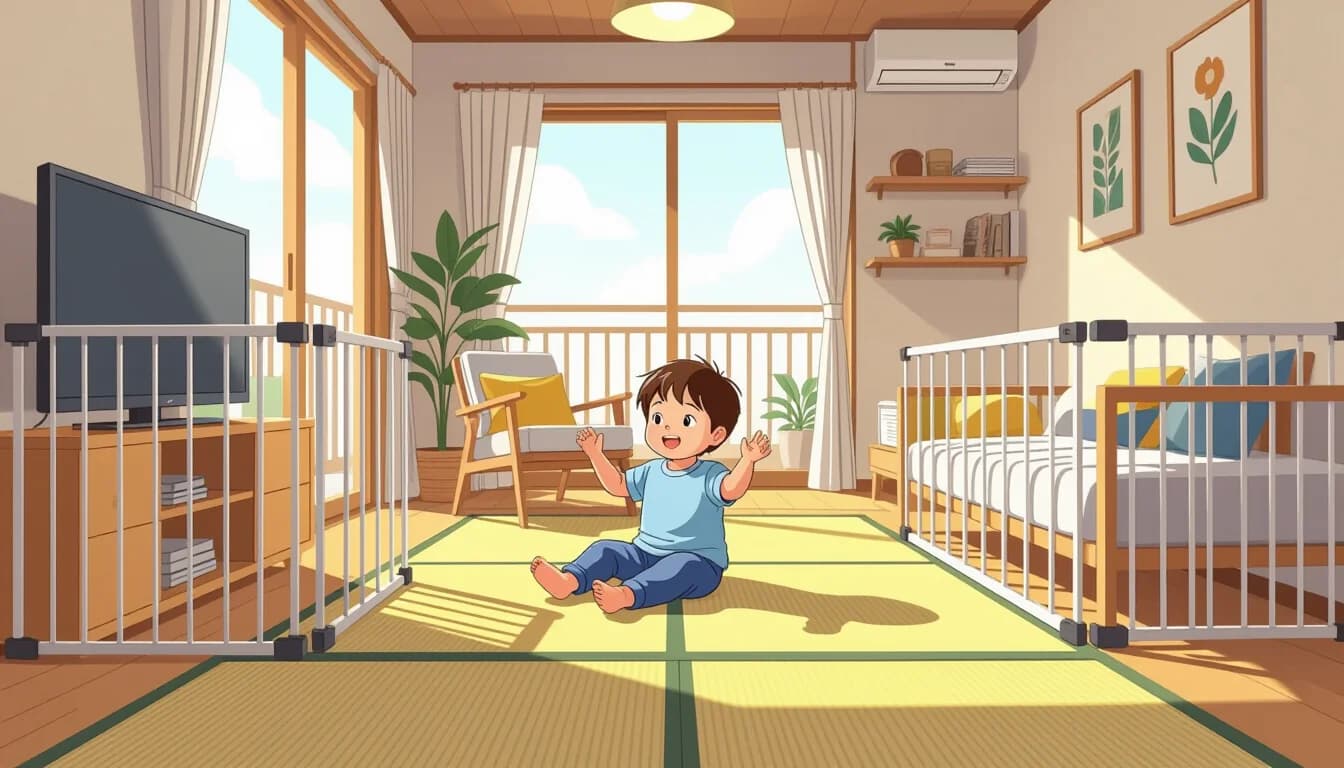
Shopping for Baby Safety Products in Japan
Japan has excellent childproofing products, but navigating stores in Japanese can be challenging. Here's a quick guide:
| Japanese Term | English | Where to Buy |
|---|---|---|
| 転倒防止グッズ | Furniture anti-tip products | Nitori, Cainz, Amazon JP |
| コンセントカバー | Outlet covers | Daiso, Seria, home centers |
| 引き戸ストッパー | Sliding door stopper | Home centers |
| マグネットロック | Magnetic cabinet lock | Motherways, BabySmile, Amazon JP |
| ベビーゲート | Baby gate | Buy Baby, Akachan Honpo |
| 転落防止ネット | Fall prevention net | Nitori, Amazon JP |
| 浴槽ロック | Bathtub lock | Motherways, Amazon JP |
Where to Shop
- Akachan Honpo (アカチャンホンポ): Japan's largest baby goods retailer with dedicated safety sections
- Nitori: Affordable home furnishings including furniture anchors and anti-slip products
- Amazon Japan: Best for hard-to-find items; search in Japanese for better results
- Daiso/Seria: 100-yen shops carry basic outlet covers, drawer stops, and cord organizers
- Home centers (Cainz, Konan, Joyful Honda): Full range of furniture anchors and professional safety hardware
For comprehensive guidance on the financial aspects of raising children in Japan, including budgeting for home safety equipment, check out our Financial Planning for Expat Families guide. You can also explore For Work in Japan's family guide for broader advice on family life as a foreigner in Japan.
Cultural Context: Japanese Safety Culture and What Foreigners Should Know
Japan is generally considered one of the safest countries in the world for children, and that safety culture extends to home life. However, there are a few cultural nuances worth knowing:
Community Watch Japanese neighborhoods practice a form of mutual watch (地域の見守り) where neighbors, especially elderly residents, naturally look out for children. While this is reassuring, don't rely on it for toddler safety at home.
Minimalist Design Philosophy Many Japanese homes are intentionally minimal — less clutter means fewer hazards. This minimalist approach aligns well with toddler-proofing principles: less on shelves, less on counters, and less on the floor.
School Disaster Drills From daycare onward, children in Japan participate in regular disaster drills. Starting this conversation about safety early — even with toddlers — fits naturally into Japanese cultural practice. For parents researching early education, our Daycare and Hoikuen Guide explains what to expect.
Expat Community Resources Connect with local expat parent communities through Facebook groups, Meetup, and platforms like The Tokyo Chapter to exchange Japan-specific parenting tips. Other parents who've navigated childproofing in Japan are an invaluable resource.
If you're also planning your child's educational journey, Chuukou Benkyou provides insight into the parental support role in Japan's education system.
Quick Checklist: Toddler-Proofing Your Japanese Home
Use this checklist as you move through each room:
Living Room / Main Room
- [ ] Secure all tall furniture with tension poles or anchor straps
- [ ] Cover all unused electrical outlets
- [ ] Remove or secure floor-level power strips
- [ ] Install sliding door stoppers on shoji/fusuma
- [ ] Pad sharp corners on low tables
Kitchen
- [ ] Install magnetic cabinet locks
- [ ] Add stove knob covers
- [ ] Move rice cooker and hot water dispenser out of reach
- [ ] Install a baby gate at the kitchen entrance
Bathroom
- [ ] Always drain the ofuro tub after use
- [ ] Install a toilet seat lock
- [ ] Add non-slip mats throughout
- [ ] Keep cleaning products in locked cabinets
Balcony
- [ ] Install a safety net on railings
- [ ] Add a baby gate at the balcony door
- [ ] Remove all climbing surfaces near railings
Entryway (Genkan)
- [ ] Add a non-slip mat on the raised floor
- [ ] Consider a step or ramp to minimize the height drop
- [ ] Keep outdoor shoes stored out of reach
General
- [ ] Bundle and route all electrical cords
- [ ] Secure the refrigerator with an anchor strap
- [ ] Remove or store the kotatsu until child is older
- [ ] Keep emergency contacts posted in the kitchen
Conclusion
Childproofing a Japanese home takes a bit more planning than a standard Western apartment, but the core principles remain the same: eliminate fall hazards, prevent access to dangerous areas, and anchor everything that could tip. The earthquake risk in Japan makes furniture anchoring doubly important — it's not optional, it's essential.
Start with the highest-risk areas (bathroom, balcony, kitchen) and work your way through the checklist room by room. Most of what you need is available at local stores and 100-yen shops. Connect with expat parent communities for Japan-specific tips that aren't always in guidebooks.
For more support on raising children in Japan, explore our full guide to Baby and Infant Care in Japan and our coverage of Pregnancy and Giving Birth in Japan to get the full picture of parenthood in Japan from day one.

Originally from Vietnam, living in Japan for 16+ years. Graduated from Nagoya University, with 11 years of professional experience at Japanese and international companies. Sharing practical information for foreign parents raising children in Japan.
View Profile →Related Articles

Discipline Approaches for Toddlers: Japan vs Western Methods
A practical guide for foreign parents on Japanese vs Western discipline methods for toddlers — including shitsuke, mimamoru, ma no nisai, and how to blend both approaches living in Japan.
Read more →
Seasonal Outdoor Activities for Toddlers in Japan
Discover the best seasonal outdoor activities for toddlers in Japan — from spring cherry blossom picnics to winter snow play. A practical guide for expat families with young children.
Read more →
Toddler Sleep Routines and Challenges in Japan
Navigate toddler sleep in Japan with confidence. Understand co-sleeping norms, late bedtimes, and cultural differences—plus research-backed strategies for better sleep routines for your child.
Read more →
Preparing Toddlers for Daycare or Preschool in Japan
Complete guide for foreign parents on preparing toddlers for Japanese daycare (hoikuen) or preschool (yochien). Covers enrollment, narashihoiku, packing lists, labeling, food introduction, and emotional preparation tips.
Read more →
Best Toddler Toys and Games Available in Japan
Discover the best toddler toys and games available in Japan for foreign parents. From Anpanman to Tomica cars, wooden educational toys to where to buy them — your complete expat guide.
Read more →
Toddler Groups and Parent Meetups in Japan
Find toddler playgroups and parent meetups in Japan as an expat. Complete guide to English-language groups in Tokyo, Osaka, and across Japan for foreign families with young children.
Read more →