
Toddler Sleep Routines and Challenges in Japan

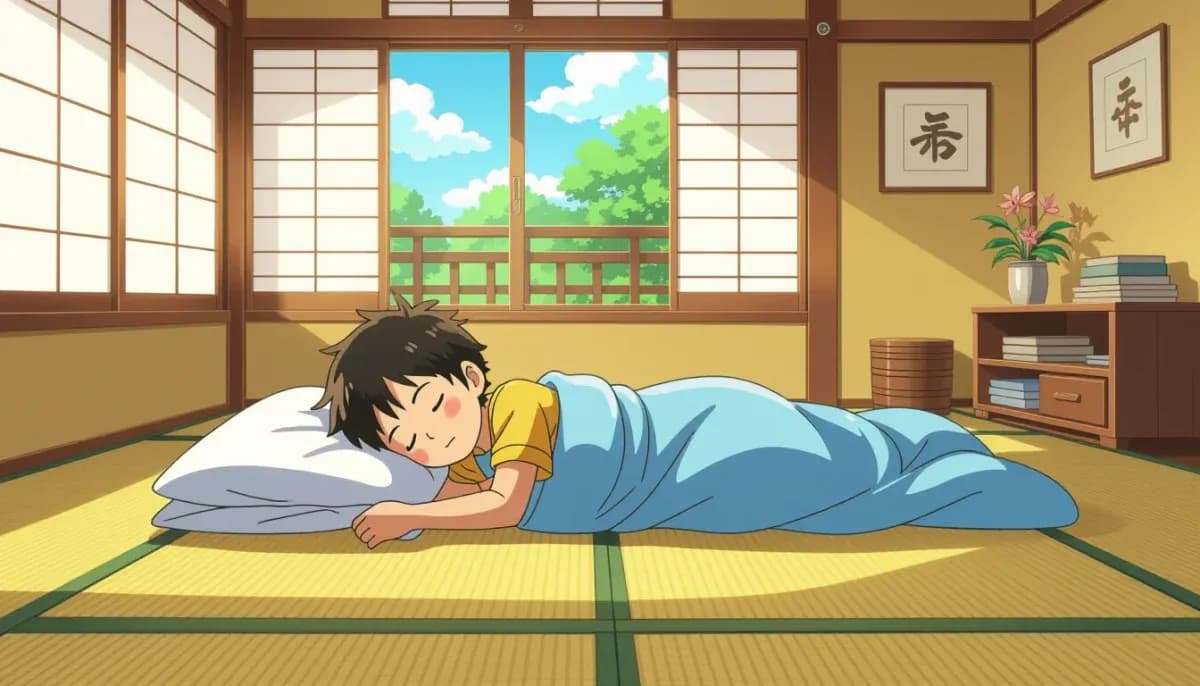
Navigate toddler sleep in Japan with confidence. Understand co-sleeping norms, late bedtimes, and cultural differences—plus research-backed strategies for better sleep routines for your child.
Toddler Sleep Routines and Challenges in Japan: A Guide for Foreign Parents
If you are raising a toddler in Japan, you have probably noticed that bedtime here looks quite different from what you were used to back home. Japanese families often keep young children up well past 10 pm, co-sleeping is the norm rather than the exception, and the cultural relationship with sleep is shaped by deeply rooted social values. For foreign parents, navigating toddler sleep in Japan can feel confusing, even isolating—especially when your approach differs from what neighbors, daycare staff, or in-laws consider normal.
This guide walks you through the realities of toddler sleep culture in Japan, the research behind it, the unique challenges expat families face, and practical strategies to help your toddler sleep better while living in this country. Whether you are a long-term resident or newly arrived, understanding the landscape makes it much easier to find an approach that works for your family.
The Reality of Toddler Sleep in Japan: What Research Reveals
Japan is consistently ranked among the countries where children sleep the least. A major study published in the Journal of Clinical Sleep Medicine surveyed 2,124 Japanese toddlers and found that the mean nocturnal sleep duration was less than 10 hours per night—well below the National Sleep Foundation's recommendation of 11 or more hours for toddlers.
The same study introduced the "Nenne-Criteria," a minimal benchmark for healthy toddler sleep defined as: bedtime before 10 pm, at least 9 hours of nocturnal sleep, and fewer than one awakening per night. Strikingly, only 35.4% of toddlers in the study met all three criteria. An additional 39.3% of the children went to bed after 10 pm.
For foreign parents accustomed to Western pediatric sleep guidelines—typically recommending 11 to 14 hours of total sleep for toddlers and a bedtime around 7 to 8 pm—Japan's norms can come as a shock.
Key statistics from research on Japanese toddler sleep:
| Metric | Japan Average | International Recommendation |
|---|---|---|
| Nocturnal sleep duration | < 10 hours | ≥ 11 hours |
| Toddlers meeting sleep criteria | 35.4% | — |
| Toddlers sleeping with caregivers | 86.2% | Varies by culture |
| Toddlers going to bed after 10 pm | 39.3% | Rare in Western countries |
| Toddlers sleeping < 9 hours | ~47% | Below recommended |
These numbers reflect a systemic cultural pattern, not parental negligence. Understanding why Japanese toddlers sleep this way is essential before judging or trying to change what you observe.
For more context on raising children in Japan as a foreigner, the Complete Guide to Raising Children in Japan on Living in Nihon covers education, childcare options, and broader parenting considerations that affect your family's daily routines.
Why Japanese Toddlers Stay Up So Late
The late bedtimes common in Japan are not random—they are directly tied to how Japanese society is structured. Several cultural and logistical factors push children's sleep schedules later than international norms.
Long working hours: Many Japanese fathers (and increasingly mothers) work long hours and do not return home until 9 or 10 pm. Rather than having their child already asleep when they arrive, many parents deliberately keep the child awake so the family can spend time together. This creates an emotional logic that prioritizes connection over sleep schedules.
Social jetlag: When a toddler's biological clock is regularly shifted later than optimal—because the household is active late at night—researchers call this "social jetlag." It reduces sleep quality and total duration even when the child eventually gets enough hours.
Cultural attitudes toward sleep: Japanese culture has historically valued hard work and perseverance over rest. The Bushidō concept of self-sacrifice and endurance permeates societal attitudes, and sleep has often been undervalued. This extends to children: getting enough sleep is not always framed as a health priority in the same way it is in many Western countries.
Media and screen exposure: Research has consistently found that TV and smartphone use in the evening significantly delays bedtimes in Japanese toddlers. Japan's widespread availability of late-night children's programming and family screen habits contribute to the problem.
Nap overlap: Long afternoon naps push nighttime sleep later. A toddler who naps for two hours in the late afternoon may simply not be tired at 8 pm, making an early bedtime a battle rather than a routine.
Co-Sleeping Culture and What It Means for Your Family
One of the most striking features of Japanese toddler sleep is the prevalence of co-sleeping. The PMC research study found that 86.2% of Japanese toddlers sleep with their caregivers. This is not seen as a safety risk or a bad habit in Japan—it is the cultural norm and is supported by most pediatricians and childcare professionals in the country.
The Japanese practice of sharing a sleep space is called kawaii sleeping or kawa no ji (川の字)—meaning the family sleeps in the shape of the character for river, with the child between both parents. This practice is deeply embedded in Japanese parenting philosophy, which emphasizes close physical bonding well into early childhood.
For foreign parents from Western backgrounds—where independent sleep is often a goal from infancy—this creates a dilemma:
- Daycare staff may express surprise if your toddler sleeps independently in a crib
- Family members or neighbors may suggest co-sleeping if your child wakes frequently
- It can be difficult to find pediatricians who advise against co-sleeping or who support sleep training methods common in other countries
This does not mean you must co-sleep if it does not suit your family. But being aware of the cultural context helps you have informed conversations with local caregivers and medical providers. If you are navigating these cultural differences alongside work and family life in Japan, For Work in Japan's Family Life Guide offers useful context on balancing Japanese expectations with your family's own values.
Common Sleep Challenges for Expat Families in Japan
Foreign families raising toddlers in Japan face a distinct set of sleep challenges that combine the universal difficulties of toddlerhood with Japan-specific factors.
1. The Early Sunrise Problem
Japan's geographical position means the sun rises extremely early in summer—sometimes as early as 4 to 5 am. Most Japanese homes are not designed with heavy blackout curtains, and traditional shoji (rice paper sliding doors) allow light to filter through well before dawn. A toddler who finally fell asleep at 10:30 pm may be wide awake at 4:45 am, resulting in dangerously short sleep.
Solution: Invest in quality blackout curtains or portable travel blackout blinds. These are available at shops like Nitori or IKEA Japan. In a pinch, black fabric and clothing pegs can cover shoji screens effectively.
2. Small Living Spaces
Tokyo and other Japanese cities are famous for compact apartments. Having a separate room for your toddler to sleep—which many Western parents consider standard—may simply not be possible. This pushes many families toward co-sleeping arrangements even if they had planned to use independent sleep methods.
Solution: If a separate room is not feasible, room dividers, sound machines, and consistent sleep cues (a specific song, story, or blanket) can help your toddler understand that sleep time is beginning even within a shared space.
3. Conflicting Advice from Japanese Healthcare Providers
Japanese pediatricians often do not advise sleep training and may be unfamiliar with methods like the Ferber method or graduated extinction. The cultural bias toward responsive parenting and co-sleeping means that asking for sleep training advice at a Japanese clinic may result in confusion or gentle discouragement.
Solution: Seek out international clinics in major cities (Tokyo, Osaka, Nagoya) where English-speaking doctors may be more familiar with a variety of parenting approaches. Online communities of foreign parents in Japan are also a valuable source of recommendations. You can also refer to healthcare guidance for children in Japan to understand how to navigate the local medical system.
4. Daycare Nap Schedules
Hoikuen (daycare centers) in Japan often enforce a nap time until children are 3 or 4 years old. While naps are developmentally appropriate for young toddlers, some children who are ready to drop their nap by age 2.5 or 3 are required to rest at daycare. A child who naps for 90 minutes at 1 pm may then push bedtime to 10:30 pm.
Solution: Speak with daycare staff about your child's specific sleep needs. While they cannot always accommodate exceptions, many will allow a shorter rest time for children who struggle with nighttime sleep. For more on the daycare system in Japan, our guide to daycare and hoikuen for foreign parents covers what to expect.
5. Jet Lag and Travel
For families visiting home countries, or new arrivals adjusting from drastically different time zones, jet lag with a toddler is one of the most exhausting experiences imaginable. Japan's position means that arrivals from Europe or the Americas typically involve 8 to 13 hours of time difference.
Solution: Aim to shift the schedule by 30 to 60 minutes per day rather than forcing an immediate adjustment. Morning light exposure helps reset the circadian clock. Avoid long naps in the afternoon during the adjustment period, and keep one familiar bedtime cue—a specific book, lullaby, or stuffed animal—as a consistent sleep signal.
Building a Healthy Toddler Sleep Routine in Japan
Despite the cultural differences, research offers clear evidence of what helps Japanese toddlers sleep better. These same strategies work for foreign families living in Japan.
Evidence-Based Strategies
The PMC study identified four key daily factors that significantly improve toddler sleep outcomes:
- Earlier media cutoff: Ending TV and smartphone exposure at least one hour before bed was one of the strongest predictors of earlier, better-quality sleep.
- Morning outdoor activity: Toddlers who played outside in the morning had better nighttime sleep. Japan's parks, playgrounds, and hoikuen outdoor time support this naturally.
- Controlling nap timing and duration: Earlier nap endings (by 2 pm for most toddlers) were associated with better nighttime sleep. If your child naps at daycare until 3:30 pm, consider a short car or stroller ride home as downtime rather than an additional nap opportunity.
- Bedtime routine with books: Reading picture books before sleep was significantly more common in well-sleeping toddlers. Japan has a wonderful tradition of children's picture books (ehon), and building a short reading ritual is both culturally fitting and sleep-positive.
Additionally, nighttime breastfeeding was found to be associated with more nighttime awakenings—25% of toddlers in the poor sleep group were still nursing at night, compared to 4.4% in the good sleep group. This does not mean you must wean, but it is useful context if your toddler wakes frequently.
A Sample Routine for Toddlers in Japan
| Time | Activity |
|---|---|
| 7:00 am | Wake up, open curtains for morning light |
| 8:00 am | Breakfast, then outdoor play at park or hoikuen |
| 12:30 pm | Lunch |
| 1:00–2:30 pm | Nap (end by 2:30 pm at the latest) |
| 5:30 pm | Dinner |
| 6:30 pm | Bath time (Japanese ofuro ritual is excellent sleep prep) |
| 7:00 pm | Screens off; quiet play |
| 7:30 pm | Bedtime stories (ehon) and wind-down |
| 8:00–8:30 pm | Sleep |
This schedule aligns with both international sleep recommendations and Japanese daily rhythms. It may run earlier than most Japanese families but can be adjusted based on your working hours and daycare pickup times.
Japan's Ofuro as a Sleep Advantage
One uniquely Japanese advantage for toddler sleep is the evening bath ritual (ofuro). Most Japanese families bathe together in the evening in a deep soaking tub. The rise and subsequent fall of body temperature after a warm bath is one of the most effective natural sleep inducers—and the ritual is already built into Japanese daily life.
If you use the ofuro consistently as part of your toddler's bedtime wind-down, you have a culturally natural and scientifically supported sleep trigger. Keep the bath around 30 to 45 minutes before your target sleep time for maximum effect.
When to Ask for Help
Some sleep challenges go beyond cultural adjustment and warrant professional guidance. Consider speaking with a healthcare provider if:
- Your toddler consistently sleeps fewer than 9 hours total per 24-hour period
- Night wakings occur more than 3 to 4 times per night past 18 months of age
- Your child shows signs of sleep apnea (snoring, gasping, restless sleep)
- Sleep deprivation is significantly affecting your toddler's daytime behavior or development
- You as a parent are experiencing severe sleep deprivation that affects your wellbeing
International clinics in Tokyo such as the Tokyo Medical and Surgical Clinic and Roppongi Hills Clinic have English-speaking pediatricians who can provide advice grounded in international standards. Building a good relationship with a trusted pediatrician is one of the most valuable steps for overall healthcare for children in Japan.
For families thinking about the broader developmental picture, it is also worth understanding how sleep intersects with mental health and emotional wellbeing for foreign children in Japan—especially if your child is adjusting to a new country, language, or school environment.
Navigating the Cultural Gap With Confidence
The core tension for many foreign parents is managing the gap between what Japanese culture normalizes and what you believe is best for your child. There is no single right answer. Some expat families fully adapt to later Japanese schedules and find it works fine. Others maintain earlier Western-style routines and find support in the expat community. Many land somewhere in between.
What matters most is consistency. Whatever schedule you adopt, a predictable sequence of events—bath, stories, dim lights, quiet—tells your toddler's nervous system that sleep is coming. Children are remarkably adaptable, and a calm, consistent caregiver is the strongest sleep cue of all.
For families exploring the full picture of what it means to raise children in Japan, Living in Nihon's Complete Guide to Raising Children in Japan is a strong starting point covering education, childcare, and cultural navigation. The Family Life in Japan Guide at For Work in Japan also covers work-life balance and parental leave, which directly impacts how your evenings and bedtime routines can be structured.
For Japanese families focused on their children's academic preparation and the intersection of healthy sleep habits with study performance, Chuukou Benkyou's Exam Student Lifestyle and Health Management Guide discusses how sleep plays a critical role in children's cognitive performance and learning outcomes.
Conclusion
Toddler sleep in Japan is shaped by cultural values, working patterns, housing realities, and a deeply different relationship with rest than what most Western countries promote. For foreign parents, the path forward is not about forcing Japan to match your expectations or abandoning your approach entirely—it is about understanding the landscape, finding what works for your child, and building consistency wherever you land.
Research is clear: earlier bedtimes, limited evening screen time, morning outdoor play, afternoon nap management, and a calm bedtime routine (ideally including books) all improve toddler sleep quality. These strategies transcend cultural differences and give you a foundation to work from regardless of where you live. Combine them with Japan's own ofuro ritual, some good blackout curtains, and a healthy dose of patience—and your toddler can thrive.
For more on parenting toddlers in Japan, explore our full guide to toddler parenting in Japan for ages 1 to 3, and our overview of baby and infant care in Japan for foreign parents.

Originally from Vietnam, living in Japan for 16+ years. Graduated from Nagoya University, with 11 years of professional experience at Japanese and international companies. Sharing practical information for foreign parents raising children in Japan.
View Profile →Related Articles

Discipline Approaches for Toddlers: Japan vs Western Methods
A practical guide for foreign parents on Japanese vs Western discipline methods for toddlers — including shitsuke, mimamoru, ma no nisai, and how to blend both approaches living in Japan.
Read more →
Seasonal Outdoor Activities for Toddlers in Japan
Discover the best seasonal outdoor activities for toddlers in Japan — from spring cherry blossom picnics to winter snow play. A practical guide for expat families with young children.
Read more →
Preparing Toddlers for Daycare or Preschool in Japan
Complete guide for foreign parents on preparing toddlers for Japanese daycare (hoikuen) or preschool (yochien). Covers enrollment, narashihoiku, packing lists, labeling, food introduction, and emotional preparation tips.
Read more →
Toddler Safety in Japanese Homes: Practical Tips
Keep your toddler safe in a Japanese home with our practical guide covering sliding doors, earthquake furniture anchoring, balcony safety, kitchen hazards, and where to buy childproofing products in Japan.
Read more →
Best Toddler Toys and Games Available in Japan
Discover the best toddler toys and games available in Japan for foreign parents. From Anpanman to Tomica cars, wooden educational toys to where to buy them — your complete expat guide.
Read more →
Toddler Groups and Parent Meetups in Japan
Find toddler playgroups and parent meetups in Japan as an expat. Complete guide to English-language groups in Tokyo, Osaka, and across Japan for foreign families with young children.
Read more →