
Preparing Toddlers for Daycare or Preschool in Japan

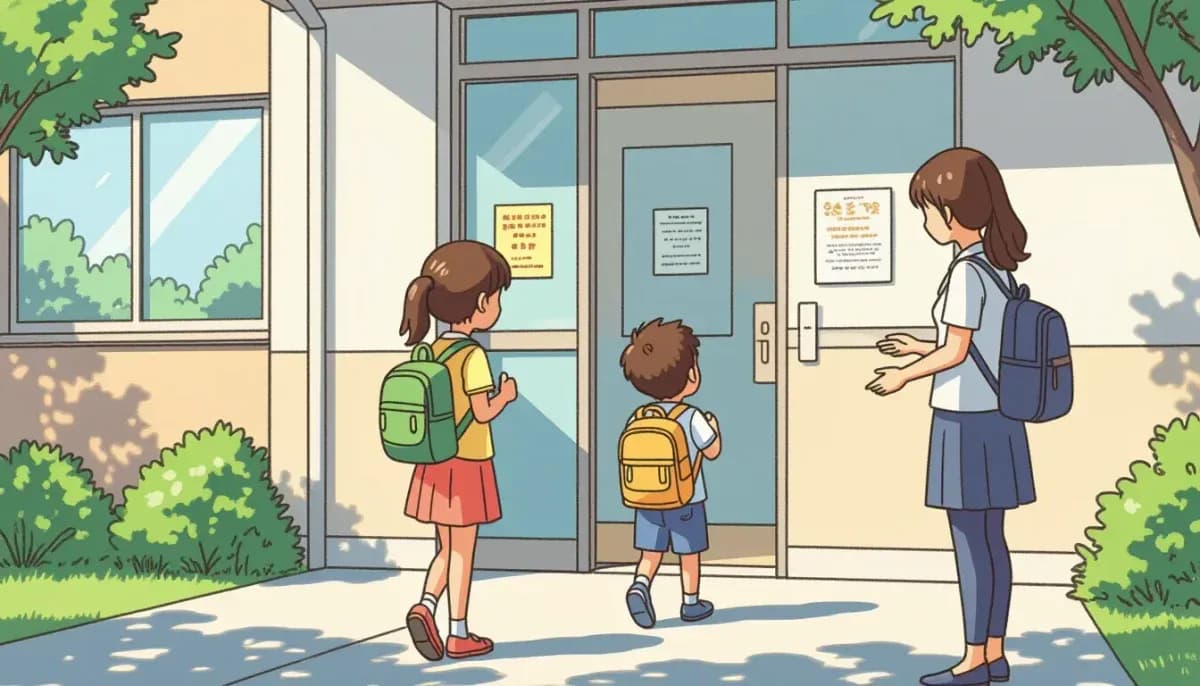
Complete guide for foreign parents on preparing toddlers for Japanese daycare (hoikuen) or preschool (yochien). Covers enrollment, narashihoiku, packing lists, labeling, food introduction, and emotional preparation tips.
Preparing Toddlers for Daycare or Preschool in Japan: A Complete Guide for Foreign Parents
Starting daycare or preschool in Japan is a significant milestone for any toddler — and for foreign parents, it comes with an extra layer of complexity. Between navigating Japanese paperwork, understanding the cultural expectations around childcare, and helping your child emotionally adjust to a new environment, the preparation process can feel overwhelming. This guide walks you through everything you need to know to get your toddler ready for hoikuen (daycare) or yochien (preschool/kindergarten) in Japan, from the enrollment timeline to practical packing tips and strategies for easing the transition.
Understanding Japan's Childcare Options for Toddlers
Before you can prepare your child, you need to understand the system. Japan offers two primary childcare pathways for toddlers:
Hoikuen (保育園) — Daycare Hoikuen are welfare facilities designed for families where both parents work, a parent is ill, or there is another recognized reason the child cannot be cared for at home during the day. They accept children from as young as 0 months to 5 years old and operate year-round with extended hours.
Yochien (幼稚園) — Kindergarten/Preschool Yochien are educational institutions focused on school readiness. They generally accept children from ages 3 to 5 and operate on a school-year schedule with shorter hours (typically 9am–2pm), making them better suited for families with a stay-at-home parent or flexible work arrangements.
Kodomoen (こども園) — Combined Facility A hybrid of hoikuen and yochien, kodomoen accept children from ages 0 to 5 and serve both working and non-working families. They have grown in popularity and offer more flexibility.
As a foreign parent, you are fully eligible to enroll your child in any of these institutions, provided you have valid resident status in Japan. Your child does not need to be a Japanese citizen.
| Facility Type | Age Range | Hours | Best For |
|---|---|---|---|
| Hoikuen (保育園) | 0–5 years | 7am–7pm | Dual-income families |
| Yochien (幼稚園) | 3–5 years | 9am–2pm | One parent at home |
| Kodomoen (こども園) | 0–5 years | 7am–7pm | Flexible / mixed needs |
| Hoikuen (private/international) | 0–5 years | Varies | English-speaking families |
Enrollment Timeline: When and How to Apply
One of the most important things foreign parents need to know is that Japan's childcare system runs on a strict annual calendar. Missing deadlines can mean waiting another full year.
For Hoikuen (Public Daycare): Applications for the April enrollment cycle (the start of the Japanese school year) typically open in October and November of the previous year. The application deadline is usually late November to early December.
- October: Application forms become available at your local city or ward office (市区町村役所)
- November: Submit your application with all required documents
- February–March: Results announced
- April: New school year begins
If you apply mid-year (hoping for a spot in May, September, etc.), availability is extremely limited and depends entirely on vacancies.
For Yochien (Kindergarten): Yochien applications also tend to open in October for April enrollment, but private yochien may have their own timelines. International or English-medium yochien often have rolling admissions.
Key advice: Start researching daycare options at least 6 months before your target enrollment date. Visit multiple facilities, attend open days, and tour the premises before submitting any applications.
For more information on the full yochien enrollment process, see our complete guide to kindergarten in Japan for foreign parents.
What Documents You'll Need
Public hoikuen applications require you to demonstrate that your child needs care (i.e., you cannot care for them at home full-time). Required documents typically include:
- Application form (申込書) — available at your ward/city office
- Proof of employment — employment certificates (在職証明書) for both parents
- Income verification — recent pay stubs or tax documents (used to calculate fees)
- Child's health record — vaccination history and health checkup results
- Residence card — to confirm your legal status in Japan
- Child's My Number — Japan's individual identification number
Some wards may require additional documents. Always check with your specific local government office (and ask about English support — many major wards in Tokyo including Minato, Shinjuku, and Shibuya have multilingual staff or can arrange interpreters).
For detailed guidance on government subsidy applications alongside enrollment, visit Living in Nihon's guide to children's education fund planning in Japan.
Understanding Costs and Subsidies
Japan has made significant strides in reducing the financial burden of early childhood education.
Ages 3–5: Since October 2019, all licensed daycare and kindergarten programs for children aged 3 to 5 are free of charge under national policy. Families still pay for meals, uniforms, supplies, and extracurricular activities, but base tuition is covered.
Ages 0–2: Costs are calculated on a sliding scale based on household income (住民税). For public hoikuen, monthly fees typically range from ¥0 to ¥70,000, with lower-income families paying nothing or very little. As of September 2025, Tokyo Metropolitan Government extended free daycare to all children aged 0–2 (first child) in licensed nurseries, regardless of income.
Private and International Daycares: These are not covered by government subsidies in the same way. Monthly fees can range from ¥50,000 to ¥200,000 or more, depending on the facility and language of instruction.
For a full breakdown of childcare subsidies available to foreign families, see our guide on government benefits and subsidies for families in Japan.
For more resources on managing childcare costs and financial planning, For Work in Japan offers useful guidance for expat families navigating life and work in Japan.
The Narashihoiku: Japan's Adjustment Period Explained
Once your child is accepted into a hoikuen, the first weeks of April are dedicated to narashihoiku (慣らし保育) — a structured, gradual adjustment period designed to help your child get comfortable with their new environment.
This is a concept unique to Japan's childcare culture, and foreign parents are often caught off guard by it. Here is how it typically works:
- Days 1–2: Parents drop the child off and pick them up after 1–2 hours
- Days 3–5: Child stays for half a day, including snack time
- Week 2: Child stays through lunch
- Week 3: Full days, including nap time
- End of narashihoiku (usually mid-May): Normal schedule begins
Why it matters for foreign parents: You will likely need to take time off work or arrange flexible scheduling during this 2–4 week period. Some workplaces in Japan understand narashihoiku, but it is worth communicating with your employer in advance.
The narashihoiku period is also an excellent opportunity for you to observe how the staff interact with children, ask questions, and build a relationship with your child's teachers.
For more on toddler development in Japan, see our toddler parenting guide for ages 1–3 in Japan.
Practical Preparation: What to Pack and Label
Japanese daycares have a very specific list of required items, and the labeling requirements alone can take parents several hours to complete. Start preparing your supplies at least two weeks before your child's first day.
Clothing (Minimum 3 Spare Sets) Daycares require multiple spare outfits due to messy eating, outdoor play, and toilet training accidents. Keep in mind:
- No buttons — teachers encourage independence, and buttons are too difficult for small children
- No hoods — safety hazard on play equipment
- No skirts or dresses for girls — impractical for active play
- Easy-to-pull-on elastic waistbands are ideal
- Plan for frequent laundry — some daycares send home wet/soiled clothes daily
Daily Supplies Checklist
| Item | Quantity | Notes |
|---|---|---|
| Spare clothes (tops + bottoms) | 3 sets | No buttons, no hoods |
| Oshibori (hand towel) | 3 per day | Returned daily for washing |
| Apron/smock | 3 per day | For mealtimes |
| Diapers | Pack per day | Must be labeled individually |
| Bibs | 2–3 | For younger toddlers |
| Indoor shoes | 1 pair | Often required at facility |
| Water bottle/thermos | 1 | Must be labeled |
| Backpack | 1 | Sized for toddlers |
Labeling: The Most Time-Consuming Task Every single item must have your child's name written on it — including individual diapers. Many Japanese parents use a name stamp (お名前スタンプ) to speed up this process. You can order custom name stamps online or at stationery stores like Loft or Tokyu Hands. Iron-on name labels are another popular option for clothing.
Food Introduction and Allergy Communication
One of the most important pre-enrollment tasks is introducing your child to the foods served at the hoikuen. At the initial parent briefing (説明会 / setsumeikai), you will receive:
- A list of all ingredients, herbs, and spices used in the facility's meal preparation
- Instructions to introduce each food to your child before enrollment begins
- An allergy declaration form to complete
This process exists because hoikuen take food allergy safety extremely seriously. If your child has never tried sesame oil, dashi (fish stock), or miso, introduce these gradually in the weeks before enrollment and note any reactions.
Tips for foreign parents:
- If your child has any food allergies or dietary restrictions, communicate this in writing to the facility as early as possible
- If you have religious or cultural dietary restrictions (e.g., no pork, no beef), discuss accommodation options with the facility director — not all facilities can accommodate these, but it is worth asking
- English menus are not standard; ask if the facility can provide a translated version or use a translation app
Communicating with the Hoikuen in Japanese
Japanese daycares conduct almost all communication in Japanese — forms, notices, the daily diary, and verbal communication with teachers. This is one of the biggest challenges for foreign parents.
The Renrakucho (連絡帳) — Daily Communication Diary Every day, the renrakucho goes back and forth between home and daycare. Teachers write notes about what your child ate, how they slept, what they played with, and any notable behavior. Parents are expected to write back each morning with:
- Morning body temperature
- How the child slept the night before
- Anything the teacher should know that day (e.g., "slight runny nose")
Strategies for managing Japanese communication:
- Use Google Translate's camera function to read handwritten notes
- Prepare a set of common phrases and responses you can write regularly
- Ask a Japanese-speaking friend or your child's other parent to help initially
- Some facilities allow brief communication in English if you explain your situation
- Many major ward offices and school liaison offices have multilingual support
For broader guidance on bilingual communication strategies for your family, see our article on raising bilingual children in Japan.
For additional support resources and community guidance for expat families, Chuukou Benkyou covers educational resources for families in Japan.
Illness Policies: Preparing for Sick Days
Japan's daycare illness policies are strict and non-negotiable. Foreign parents who are used to more flexible approaches should be aware:
- Fever threshold: A temperature of 37.5°C (99.5°F) or above means your child cannot attend daycare
- 24-hour rule: Children must be fever-free for 24 hours before returning
- Contagious conditions: Illnesses like hand-foot-mouth disease, chickenpox, and influenza have mandatory exclusion periods (often 5–7 days) certified by a doctor
- Emergency pickup: If your child develops a fever during the day, you will receive a call and must pick them up within an hour or two
Practical advice: Keep paid leave or flexible working arrangements available for illness-related pickups. Many expat parents use a combination of grandparent support, babysitters, or sick-child care facilities (病児保育) for coverage.
Our guide on healthcare and medical care for children in Japan explains how to navigate the Japanese medical system when your child is sick.
Emotional Preparation: Helping Your Toddler Transition
Beyond the logistics, preparing your toddler emotionally is just as important. Japanese daycare culture is warm but structured, and most children go through a settling-in period regardless of nationality.
Before enrollment:
- Visit the facility with your child at least once before the first day — let them see the space, meet a teacher, and feel comfortable
- Read books about going to daycare (in English or Japanese) to normalize the experience
- Practice routines — establish morning wake-up and drop-off routines that mirror what daycare life will look like
- Teach basic Japanese words — greet teachers with "ohayou gozaimasu" (good morning), say "itadakimasu" before meals, and "tadaima" when coming home
During narashihoiku:
- Keep goodbyes short and confident — prolonged goodbyes increase anxiety for both parent and child
- Trust the teachers — Japanese daycare teachers are trained professionals who are skilled at settling upset children
- Resist the urge to peek back in after drop-off
Building community: Connecting with other foreign parents through online groups, international community centers, or your ward's international residents support program can provide invaluable peer support and practical advice.
For more resources on your child's overall wellbeing during this transition, see our guide on mental health and emotional wellbeing for foreign children in Japan.
Final Checklist: Are You Ready?
Use this checklist to ensure you're fully prepared before your toddler's first day at daycare or preschool in Japan:
| Task | Done? |
|---|---|
| Researched hoikuen/yochien options in your area | ☐ |
| Submitted application with all required documents | ☐ |
| Attended facility open day or tour | ☐ |
| Purchased and labeled all required supplies | ☐ |
| Introduced all allergen foods from facility list | ☐ |
| Submitted allergy declaration form | ☐ |
| Arranged flexible schedule for narashihoiku period | ☐ |
| Set up renrakucho communication strategy | ☐ |
| Practiced morning drop-off routine at home | ☐ |
| Connected with other foreign parent community | ☐ |
Starting daycare or preschool in Japan is a big step, but with preparation and the right support, both you and your toddler can thrive. The Japanese childcare system is nurturing, structured, and designed to help children grow — and with a little patience and cultural understanding, it can be a wonderful experience for your whole family.
For a broader look at your child's educational journey ahead, explore our complete guide to the Japanese education system for foreign families.
Additional resources:
- Daycare in Japan: Essential Guide for Foreign Parents — JoynTokyo
- 7 Things to Know Before Starting Daycare in Japan — Metropolis Japan

Originally from Vietnam, living in Japan for 16+ years. Graduated from Nagoya University, with 11 years of professional experience at Japanese and international companies. Sharing practical information for foreign parents raising children in Japan.
View Profile →Related Articles

Discipline Approaches for Toddlers: Japan vs Western Methods
A practical guide for foreign parents on Japanese vs Western discipline methods for toddlers — including shitsuke, mimamoru, ma no nisai, and how to blend both approaches living in Japan.
Read more →
Seasonal Outdoor Activities for Toddlers in Japan
Discover the best seasonal outdoor activities for toddlers in Japan — from spring cherry blossom picnics to winter snow play. A practical guide for expat families with young children.
Read more →
Toddler Sleep Routines and Challenges in Japan
Navigate toddler sleep in Japan with confidence. Understand co-sleeping norms, late bedtimes, and cultural differences—plus research-backed strategies for better sleep routines for your child.
Read more →
Toddler Safety in Japanese Homes: Practical Tips
Keep your toddler safe in a Japanese home with our practical guide covering sliding doors, earthquake furniture anchoring, balcony safety, kitchen hazards, and where to buy childproofing products in Japan.
Read more →
Best Toddler Toys and Games Available in Japan
Discover the best toddler toys and games available in Japan for foreign parents. From Anpanman to Tomica cars, wooden educational toys to where to buy them — your complete expat guide.
Read more →
Toddler Groups and Parent Meetups in Japan
Find toddler playgroups and parent meetups in Japan as an expat. Complete guide to English-language groups in Tokyo, Osaka, and across Japan for foreign families with young children.
Read more →