
Vaccination Schedule for Babies and Infants in Japan


A complete guide to Japan's baby vaccination schedule for foreign parents — free routine vaccines, timing, coupons, and tips for expats navigating the system.
Vaccination Schedule for Babies and Infants in Japan: A Complete Guide for Foreign Parents
If you're a foreign parent raising a baby in Japan, navigating the vaccination system can feel overwhelming — especially when paperwork arrives in Japanese and the clinic staff may not speak English. The good news is that Japan has one of the most comprehensive and well-subsidized childhood immunization programs in the world. Once you understand how the system works, keeping your baby up to date with their shots is straightforward.
This guide walks you through everything you need to know: which vaccines are required, when they're given, how to access free vaccinations as a foreign resident, and what to do if your child started their shots in another country.
Japan's Routine Vaccination Program: What's Covered and What It Costs
Japan's Ministry of Health, Labour and Welfare (MHLW) maintains a routine immunization schedule for all children living in Japan, regardless of nationality. All routine vaccines are completely free of charge — you receive vaccination coupons (予防接種券, yobosesshu ken) mailed to your registered address by your local municipality.
To receive these coupons, you must be registered at your local ward or city hall. Foreign residents who complete their resident registration (住民登録, jūmin tōroku) are included in exactly the same system as Japanese families, so you should receive your coupons in the mail once your baby is old enough for each vaccine.
The routine (free) vaccines covered in Japan include:
- BCG (tuberculosis)
- Hepatitis B (HB)
- Hib (Haemophilus influenzae type b)
- PCV (Pneumococcal)
- DPT-IPV (Diphtheria, Pertussis, Tetanus, Polio) — now also combined as DPT-IPV-Hib (5-in-1) since April 2024
- Rotavirus
- MR (Measles and Rubella)
- Varicella (Chickenpox)
- Japanese Encephalitis
- HPV (Human Papillomavirus — routine but with a complicated history, see below)
For a comprehensive overview of raising children in Japan as a foreign parent, see The Complete Guide to Daycare and Hoikuen in Japan and our guide to Baby and Infant Care in Japan.
Detailed Vaccine Schedule: Age-by-Age Breakdown
Japan follows the immunization schedule recommended by the Japan Pediatric Society (JPS). Below is an overview of the key milestones:
| Vaccine | When to Start | Total Doses | Notes |
|---|---|---|---|
| Rotavirus | By 14 weeks 6 days | 2–3 doses | Must start early — strict deadline |
| Hepatitis B | 2 months | 3 doses | Series completed by 9 months |
| Hib (or DPT-IPV-Hib) | 2 months | 4 doses | 5-in-1 combo available since Apr 2024 |
| PCV (Pneumococcal) | 2 months | 4 doses | |
| DPT-IPV | 2 months | 3 primary + 1 booster | Booster at ~12–18 months |
| BCG | 5–7 months | 1 dose | Must be given before 12 months |
| MR (Measles/Rubella) | 12 months | 2 doses | 2nd dose at 5–6 years |
| Varicella | 12 months | 2 doses | 2nd dose 6–12 months later |
| Japanese Encephalitis | 3 years | 3 doses (primary) | 1 booster at 9 years |
| HPV | 12 years | 3 doses | Routine but check current status |
Key rule: Live vaccines (BCG, MR, Varicella, Rotavirus) require a 27-day interval between doses. For inactivated vaccines, there is generally no required interval, so multiple shots on the same day are safe and common.
As of April 1, 2024, Japan introduced the DPT-IPV-Hib combination vaccine (5-in-1) as a routine option. This reduces the total number of injections your baby needs, since Hib is now bundled with the standard DPT-IPV series.
The Rotavirus Vaccine: Why Timing Is Critical
Out of all vaccines on the Japanese schedule, Rotavirus has the strictest timing deadline, and many foreign parents are caught off guard. The first dose must be given no later than 14 weeks and 6 days after birth. If your baby misses this window, they can no longer receive the rotavirus vaccine at all.
There are two rotavirus vaccines available in Japan:
- Rotarix (monovalent): 2 doses total
- RotaTeq (5-valent): 3 doses total
Both are free under the routine program. Your clinic will decide which brand to use, and you should stick with the same brand throughout the series — switching mid-series may reduce effectiveness.
If you were abroad during the early weeks after your baby was born or delayed registering at the ward office, contact your local health center (保健所, hokenjo) immediately to confirm whether your baby is still within the eligible window.
How to Get Vaccination Coupons as a Foreign Resident
Getting started with vaccinations as a foreign parent involves a few administrative steps:
- Register your baby's birth at the local ward or city office (区役所 / 市役所)
- Obtain the Mother and Child Health Handbook (母子手帳, boshi techō) — this is given when you register your pregnancy or your child's birth, and it's the official record for all vaccinations and health checkups
- Wait for coupons to arrive by mail — your local municipality will send vaccination booklets (予防接種手帳) with coupons for each vaccine, timed approximately when each vaccine is due
- Book an appointment at a designated pediatric clinic in your area. You can find participating clinics through your ward office or municipal website
- Bring your coupons and the Mother and Child Health Handbook to every appointment
If coupons don't arrive (this can happen if registration was delayed or your address wasn't updated after moving), visit your local ward office or health center and request them in person.
For more on navigating the Japanese healthcare system with children, see our guide on Healthcare and Medical Care for Children in Japan.
Voluntary (Paid) Vaccines
In addition to the routine free vaccines, several voluntary vaccinations are available at pediatric clinics for a fee. These are not covered by the routine public health program:
- Seasonal Influenza — recommended annually from 6 months of age; costs vary by clinic (typically ¥2,000–¥4,000 per dose; two doses needed for first-timers under 13)
- Mumps — not included in the routine MR vaccine in Japan; recommended at 1–2 years old
- Hepatitis A — relevant for families who travel internationally
- Meningococcal — not routine in Japan; may be required for international school enrollment
The HPV vaccine deserves special mention: it is technically part of the routine schedule, but its recommendation was suspended from 2013 to 2022 due to reported side effects. As of 2022, proactive recommendation was resumed. Discuss the current status with your pediatrician.
For information on government subsidies that may help offset costs, see our article on Government Benefits and Subsidies for Families in Japan.
What to Do If Your Child Started Vaccinations Abroad
Many expat families arrive in Japan with a baby who has already received some vaccines in another country. Here's how to handle the transition:
Bring your full vaccination records — in whatever language they're in. Japanese pediatricians experienced with international patients can usually work with English-language records. You can also request an English translation of your Japanese vaccination history from your local health center.
Vaccines received abroad generally count toward the Japanese schedule, but your pediatrician will review the timing and brands used. Some vaccines may need to be repeated if the brand differs significantly or if the interval requirements weren't met.
Catch-up schedules are available — if your child is behind on any vaccines, Japan has catch-up protocols. Talk to your pediatrician about the best plan for completing all necessary doses.
For detailed guidance on managing your baby's health as a foreign parent, the SEMI Sapporo English Medical Interpreters website provides an excellent bilingual vaccine schedule chart. Japan Healthcare Info also has a helpful overview of the routine vaccination program for international residents.
Finding an English-Speaking Pediatrician in Japan
One of the most common challenges for foreign parents in Japan is finding a pediatric clinic where staff speak English — or at least where they're accustomed to working with international patients. Here are some strategies:
- Ask your ward office for a list of international-friendly clinics in your area
- Search through JMIP-accredited hospitals — these are hospitals certified for providing medical services to international patients
- Use Tokyo's Himawari medical information service (if you're in the Tokyo metropolitan area) to find English-speaking pediatricians
- Join expat parent groups (Facebook groups, local international community groups) — other foreign parents are usually the best source of clinic recommendations
- Contact your embassy — many embassies maintain lists of medical services for their nationals
Even if a clinic doesn't have English-speaking staff, the vaccination coupons are standardized, and showing up with your boshi techō and the relevant coupon is usually enough to communicate what you need.
For more resources on navigating life in Japan as a foreign family, check out Living in Nihon's guide to raising children in Japan and For Work in Japan's family life guide.
You can also find additional parenting guides on Joyn Tokyo's vaccine information page and the comprehensive Japan Handbook guide to vaccinations for expats.
Tips for Staying on Track with the Vaccination Schedule
Japan's vaccination schedule is denser than many Western countries — multiple vaccines are often given at the same appointment, and the timing windows for certain vaccines (especially Rotavirus) are strict. Here are some practical tips:
- Register your baby immediately after birth to start receiving coupons on time
- Keep your *boshi techō* safe — it's the single official record of all your child's vaccinations and health checkups, and you'll need it throughout their childhood
- Note the Rotavirus deadline on your calendar as soon as your baby is born
- Don't skip appointments because of mild colds — most pediatricians will still vaccinate a baby with a minor illness; ask your doctor
- If you move municipalities, contact both your old and new ward offices to ensure coupon records are transferred
- Request English documentation proactively if you plan to move abroad — records in English can be obtained from your local health center
For more on supporting your child's wellbeing and development at different ages, see our guides on Toddler Parenting in Japan: Ages 1 to 3 and Pregnancy and Giving Birth in Japan as a Foreign Parent.
For further reading on middle and high school education in Japan and comprehensive exam preparation resources, Chuukou Benkyou covers academic topics for older children in Japan.
Conclusion
Japan's childhood vaccination program is among the most thorough and accessible in the world. As a foreign resident, you are fully entitled to the same free routine vaccinations as Japanese families — the key is to register your baby promptly and watch for coupons arriving by mail. The Mother and Child Health Handbook (boshi techō) will be your most important document for tracking your child's health from birth through school age.
If you're ever unsure about the schedule, your local health center (保健所) is an excellent resource — they can explain which vaccines are due, help replace lost coupons, and often have multilingual support materials available. Don't hesitate to reach out.
With the right preparation, keeping your baby's vaccinations on track in Japan is very manageable — and it's one of the most important things you can do for their long-term health.

Originally from Vietnam, living in Japan for 16+ years. Graduated from Nagoya University, with 11 years of professional experience at Japanese and international companies. Sharing practical information for foreign parents raising children in Japan.
View Profile →Related Articles
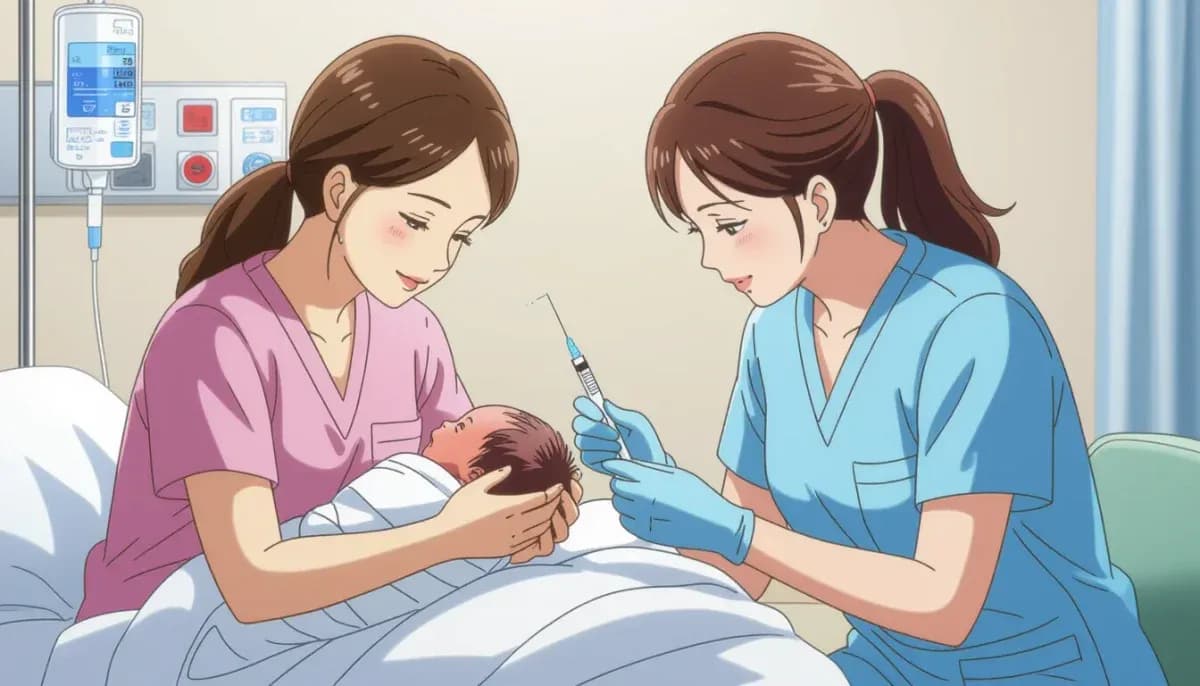
Newborn Care Tips for First-Time Parents in Japan
Complete guide to newborn care in Japan for foreign parents: hospital stays, Boshi Techo handbook, free vaccinations, health checkups, breastfeeding tips, and postpartum support programs.
Read more →
Baby Swimming and Early Activities in Japan
Complete guide to baby swimming lessons and early activities in Japan for foreign parents. Enrollment tips, costs, English options, and top swim schools explained.
Read more →
Popular Baby Brands and Stores in Japan
Discover the most popular baby brands and stores in Japan, from Akachan Honpo and Nishimatsuya to Japanese brands like Pigeon, Combi, and Miki House. Complete guide for expat parents shopping for baby products in Japan.
Read more →
Baby Clothing: Seasons, Sizing, and Shopping in Japan
Complete guide to baby clothing in Japan for foreign parents. Learn how Japanese sizing works (cm-based), what to buy each season, and where to shop from budget to premium stores like Nishimatsuya and Miki House.
Read more →
Registering Your Newborn at City Hall in Japan
A complete guide for foreign parents on registering a newborn at city hall in Japan. Learn about the 14-day deadline, required documents, child allowance, and immigration procedures.
Read more →
Baby-Friendly Facilities and Nursing Rooms in Japan
Complete guide to nursing rooms and baby-friendly facilities in Japan for foreign parents. Where to find them, what to expect, useful apps like Mama Papa Map, and practical tips for getting around with a baby.
Read more →