
Walking to School Alone in Japan: The Tsugaku System

Discover Japan's tsugaku walking-to-school system: how children walk solo safely, the han group structure, Kodomo 110-ban safe houses, and tips for expat parents preparing their child for the Japanese school commute.
Walking to School Alone in Japan: The Tsugaku System Explained
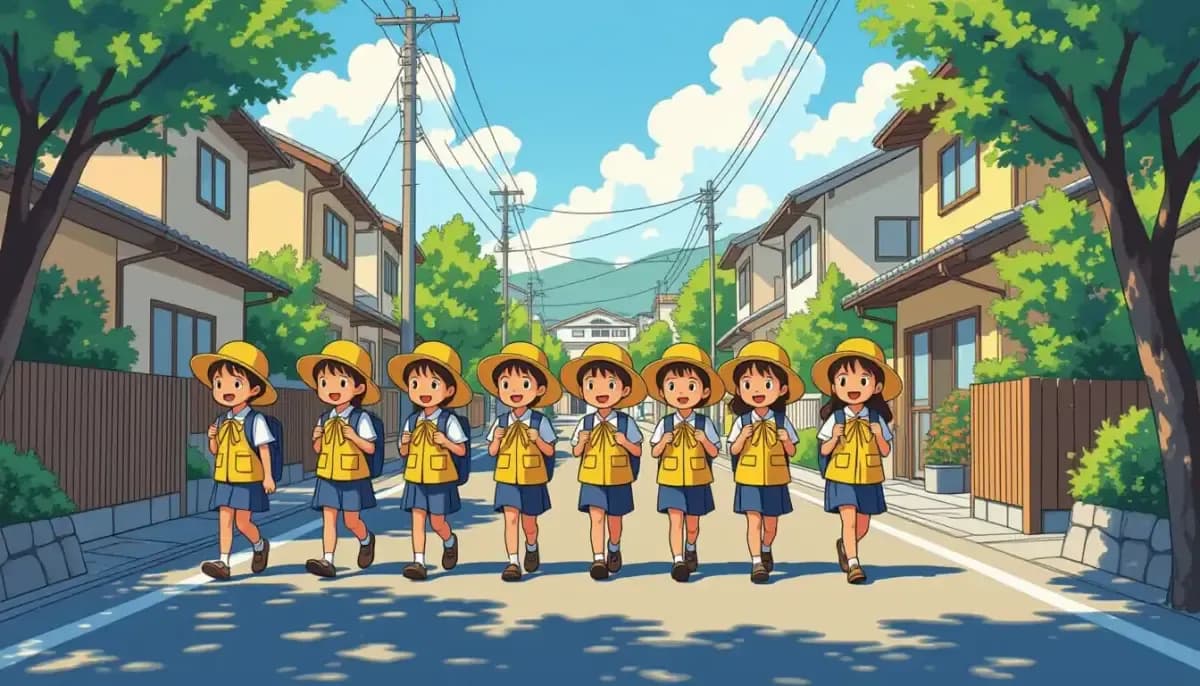
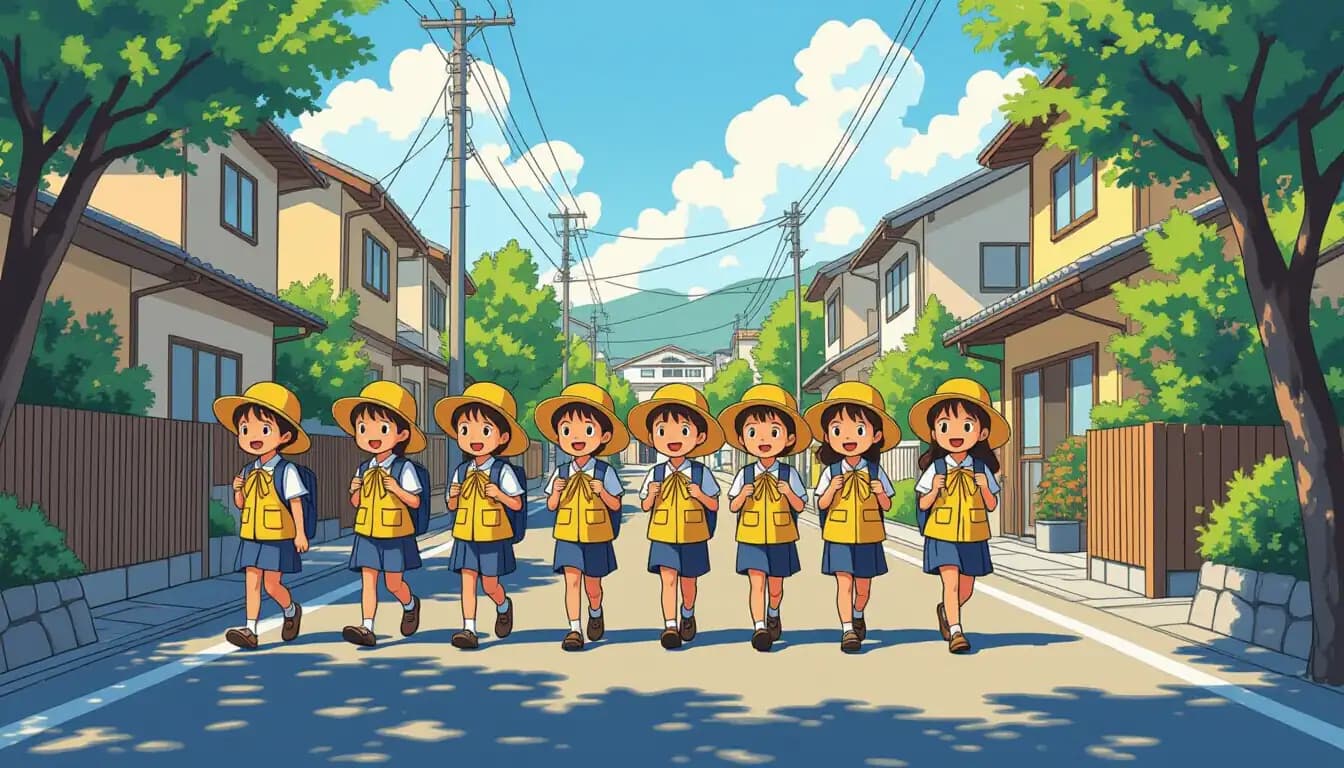
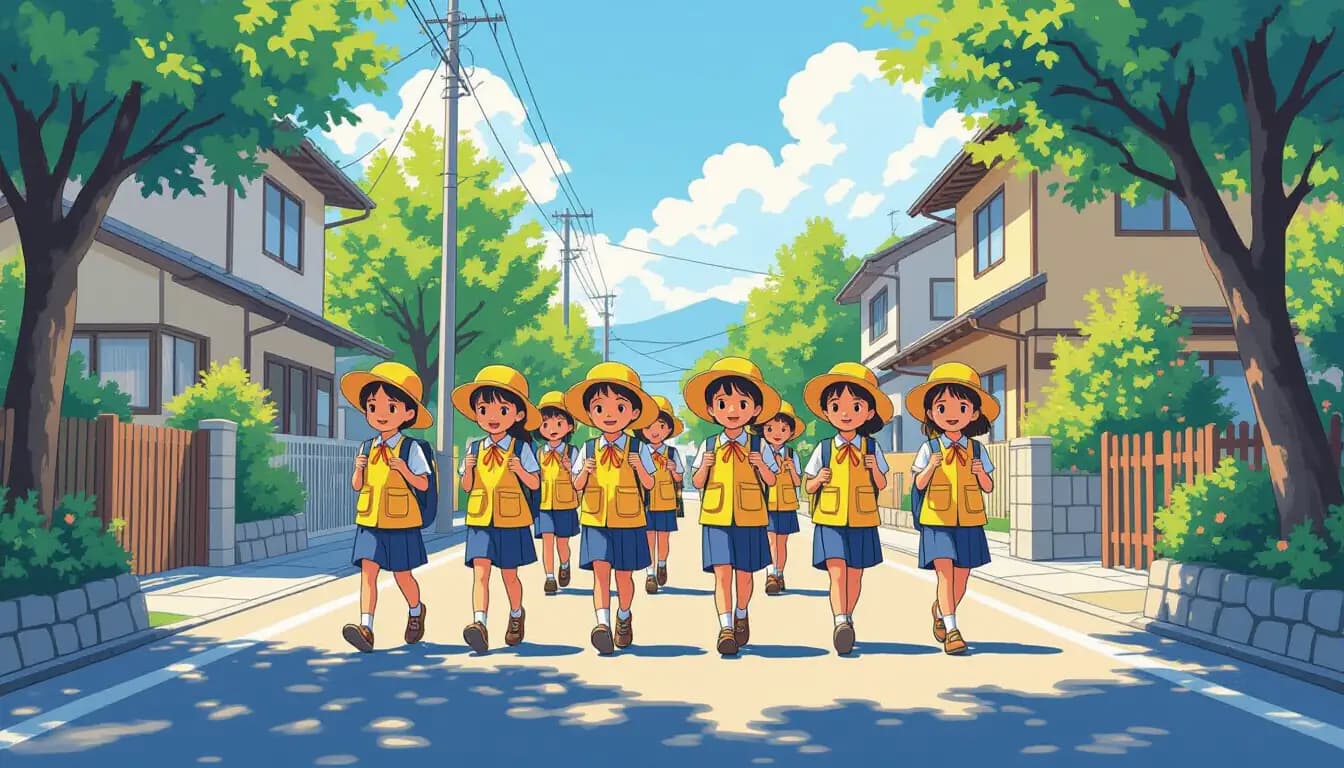
One of the first things that surprises foreign parents moving to Japan is seeing young children — some as young as six years old — walking to school completely on their own, without a parent or guardian in sight. They wear matching yellow hats, carry oversized randoseru backpacks, and navigate busy city streets with remarkable confidence. This is the tsugaku (通学) system, and it's one of Japan's most fascinating cultural traditions.
Whether you're an expat parent preparing your child for Japanese elementary school or simply curious about how this works, this guide covers everything you need to know — from the history and structure of Japan's school commute culture to practical safety tips for your family.
What Is the Tsugaku System?
Tsugaku (通学) simply means "school commute" in Japanese, but it represents a deeply ingrained social system that extends far beyond simply walking to school. Formally established as national policy in 1953, Japan's walking-to-school approach was designed to keep children active, build community bonds, and foster independence from an early age.
Today, an estimated 98.3% of Japanese children use active transportation — walking or cycling — to reach school. Compare this to countries like the United States or Australia, where the vast majority of children are driven to school by parents, and you begin to understand just how unique Japan's approach is.
The system works because of three key pillars:
- Proximity: By law, elementary schools must be located within 2–4 km of students' homes (junior high schools within 3–6 km), making the commute physically manageable even for young children.
- Community safety networks: A robust system of volunteers, safe houses, and neighborhood watch groups keeps children protected.
- Cultural values: Japanese society places great emphasis on group responsibility and fostering children's independence.
For foreign families living in Japan, understanding and embracing this system is an important part of integrating into Japanese school life. You can learn more about general school preparation in our guide to Elementary School in Japan for Foreign Parents.
The Han Group System: Children Looking Out for Each Other
One of the most charming aspects of Japanese school commutes is the han (班) group system. Rather than walking alone, most elementary school children travel in small neighborhood walking groups organized by their school. These groups are sorted by geographical area and typically include children from multiple grade levels.
The genius of the han system is that older children are responsible for the younger ones. A fifth or sixth grader leads the group, ensuring everyone crosses safely, stays together, and arrives on time. This builds leadership skills in older children while giving younger ones a sense of security and community belonging.
For expat families, joining the local han group is highly recommended. It gives your child:
- Built-in social connections in the neighborhood
- Natural Japanese language practice every morning
- A safety net of peers and older mentors
- An immediate sense of belonging in the school community
Ask your child's school or the PTA about which han group your child should join. You can also connect with other parents in your neighborhood — check out our article on the Japanese Education System for Foreign Families for more tips on navigating school social structures.
Community Safety Infrastructure: How Japan Protects Children
Japan's ability to send young children on solo commutes isn't just about trust — it's backed by a sophisticated community safety infrastructure that has evolved over decades.
Kodomo 110-Ban Safe Houses
Throughout Japan's neighborhoods, you'll notice small stickers or signs on homes and shops displaying the Kodomo 110-ban (子ども110番) symbol. These are designated safe havens where any child in distress can seek immediate help. Shop owners and residents who display this sign have agreed to shelter children from danger and contact police until help arrives.
Teaching your child to recognize and remember the locations of Kodomo 110-ban houses on their route is one of the most important safety preparations you can make.
Volunteer Road Guards
Every school morning, you'll see adults stationed at major intersections near schools. These are community volunteers — often retired residents, PTA members, and school staff — who wave flags to guide children safely across crosswalks. They know the children in the neighborhood and can quickly notice if something is amiss.
Annual PTA Safety Maps
Each year, PTAs work with local city offices to produce detailed safety maps of the school neighborhood. These maps highlight:
- Recommended walking routes
- Locations of Kodomo 110-ban houses
- Known hazards to avoid
- Traffic danger zones
Request a copy of this map from your child's school as soon as they enroll.
Police Cooperation
Schools work directly with local police to monitor commute hours. Crimes against children in Japan most commonly occur during the 3pm–6pm window after school ends, so many schools enforce strict rules about children heading directly home after classes rather than lingering or detouring.
For more on keeping your child safe and healthy in Japan, see our guide to Healthcare and Medical Care for Children in Japan.
Health Benefits of the Tsugaku System
Japan's walking-to-school policy isn't just a cultural tradition — it delivers measurable health benefits. Research published in medical journals has shown that Japan maintains one of the lowest childhood obesity rates among developed nations, and the daily school walk is a significant contributing factor.
82% of Japanese children walk to school every single day — one of the highest rates in the world. For a child living 1 km from school, this translates to roughly 2 km of walking per day, adding up to over 400 km of walking per school year.
| Health Benefit | Details |
|---|---|
| Daily physical activity | 20–45 minutes of walking per day depending on distance |
| Reduced obesity risk | Japan has one of the lowest childhood obesity rates globally |
| Mental wellbeing | Independent activity builds confidence and resilience |
| Social development | Daily group interaction strengthens peer bonds |
| Environmental awareness | Children learn to navigate real-world environments |
The physical benefits extend to parents too — without school drop-off duties, families save significant time each morning, and children develop the independence that makes daily life smoother for everyone.
Preparing Your Foreign Child for the Tsugaku System
For foreign families, the idea of letting a 6-year-old walk to school alone can feel daunting. Here's a practical step-by-step approach to help both you and your child feel ready.
1. Walk the Route Together First
Before the school year begins (which starts in April in Japan), walk the route with your child at the same time they'll be commuting. This lets you:
- Spot potential hazards
- Identify Kodomo 110-ban safe houses
- Time how long the walk takes
- Practice crossing each intersection
2. Introduce Gradual Independence
You don't have to send your child completely alone from day one. Many expat parents walk partway with their child for the first few weeks, gradually reducing their presence as the child gains confidence. The key is not to go all the way to the school gate — let your child practice the final stretch independently.
3. Teach Key Japanese Phrases
Your child should know how to say:
- "助けてください" (Tasukete kudasai) — "Please help me"
- "警察を呼んでください" (Keisatsu wo yonde kudasai) — "Please call the police"
- Their home address and parents' phone numbers
For more on helping your child master Japanese, see our guide on Teaching Japanese to Foreign Children: Methods and Resources.
4. Consider a GPS Device or Kids' Phone
Many Japanese parents use GPS trackers or keitai (kids' mobile phones) with restricted features. These devices typically:
- Only allow calls to pre-registered family numbers
- Have no internet, camera, or games
- Include emergency buttons that notify parents
- Allow location tracking via smartphone apps
Popular brands include Dokoiruka and Secom's GPS services.
5. Establish Clear Rules
Japanese schools provide explicit rules about the school commute. Common rules include:
- Always walk the same route
- Go directly home after school
- Never accept rides from strangers
- Put school bags away before going out to play after school
The Cultural Philosophy Behind Independent Childhood
Understanding why Japan does this helps foreign parents embrace the system rather than simply endure it. Japan has a proverb that captures the cultural attitude perfectly:
"可愛い子には旅をさせよ" (*Kawaii ko ni wa tabi o saseyo*) "Send the beloved child on a journey."
This proverb reflects the Japanese belief that true love for a child means allowing them to face challenges, build resilience, and develop real-world competence — rather than shielding them from every difficulty. It's a fundamentally different approach to child-rearing than what many Western families are accustomed to.
Japan's low crime rate provides the structural foundation that makes this philosophy viable in practice. For context, Japan consistently ranks among the world's safest countries, with violent crime rates dramatically lower than most other developed nations. This safety environment, combined with the community support systems described above, creates conditions where independent childhood mobility is genuinely safe.
For expat families navigating the cultural dimensions of raising children in Japan, our guide on Cultural Identity for Hafu and Mixed-Race Children in Japan offers valuable perspective on cultural integration and identity.
What Happens If Your Child Cannot Join the Han Group?
Some situations make han group participation difficult — a child with special needs, an unusual school schedule, or a home location that falls outside a natural group. In these cases:
- Talk to the school immediately: Teachers and the PTA coordinator can often find flexible solutions
- Connect with other foreign families: International parent networks often have parents who live nearby and can share commute arrangements
- Check if the school has a designated gathering point: Many schools have a central location where students from outlying areas can meet other walkers
If your child attends an international school rather than a Japanese public school, the tsugaku system may not apply — many international schools offer bus services instead. See our International Schools in Japan Guide for more details.
Tsugaku Tips for Expat Parents: Summary
Adjusting to Japan's school commute culture takes time, but most foreign parents report that their children adapt quickly and actually enjoy the independence. Here's a quick reference summary:
| Situation | Recommended Action |
|---|---|
| First week of school | Walk partway with child; reduce gradually |
| Child is nervous | Practice route together on weekends |
| No han group nearby | Contact school PTA for guidance |
| Safety concerns | Register Kodomo 110-ban locations on child's route |
| Communication gap | Buy a kids' GPS device or restricted phone |
| After-school activities | Confirm route home and expected arrival time |
For broader guidance on navigating family life in Japan as a foreigner, Living in Nihon's raising children guide is an excellent comprehensive resource. The team at For Work in Japan also covers family life considerations for working expats. For Japanese-language resources about school systems, Chuukou Benkyou provides accessible study materials that can help you understand official school communications.
Additional resources worth bookmarking include Savvy Tokyo's guide on preparing your child for the school commute and the academic research on walking to school and childhood health in Japan.
Conclusion
The tsugaku system is one of Japan's most distinctive and admirable social institutions. What might look alarming to a newly arrived foreign parent — six-year-olds navigating city streets alone — is actually the product of decades of careful policy design, community investment, and cultural value-building.
By understanding the han group system, the Kodomo 110-ban safe house network, the PTA safety maps, and the cultural philosophy of fostering independence, foreign families can not only accept the tsugaku system but genuinely appreciate what it offers their children: daily exercise, social connection, growing confidence, and a sense of belonging in their Japanese community.
Take it one step at a time — literally. Walk the route, meet the neighbors, join the han group, and trust the system that has safely delivered millions of Japanese children to school every day for over 70 years.
For more guides on raising children in Japan as a foreign parent, explore our complete series on Japanese education and family life.

Originally from Vietnam, living in Japan for 16+ years. Graduated from Nagoya University, with 11 years of professional experience at Japanese and international companies. Sharing practical information for foreign parents raising children in Japan.
View Profile →Related Articles
Elementary School Graduation Ceremony in Japan
Everything foreign parents need to know about Japan's elementary school graduation ceremony (sotsugyo-shiki): ceremony format, dress code, songs, traditions, and tips for expats.
Read more →
Swimming Lessons at Japanese Elementary Schools
Complete guide to swimming lessons at Japanese elementary schools: schedule, required gear, exemptions, grading, and tips for foreign parents navigating suiei season.
Read more →
Music and Arts Education in Japanese Elementary Schools
A complete guide for foreign families on music and arts education in Japanese elementary schools. Learn what subjects are taught, what instruments children use, school festivals, and practical tips for expat parents.
Read more →
Moral Education (Doutoku) at Japanese Elementary Schools
A complete guide to Doutoku (道徳), Japan's moral education class, for foreign parents. Learn what's taught, how classes work, and how to support your child.
Read more →
School Field Trips and Excursions in Japanese Elementary Schools
Everything foreign parents need to know about school field trips in Japanese elementary schools — ensoku day trips, shugakuryoko overnight trips, costs, packing lists, and cultural significance.
Read more →
Parent-Teacher Meetings at Japanese Elementary Schools
A complete guide for foreign parents on navigating parent-teacher meetings at Japanese elementary schools: types, what to expect, language tips, and how to prepare.
Read more →