
Best Children's Books in Japan by Age Group

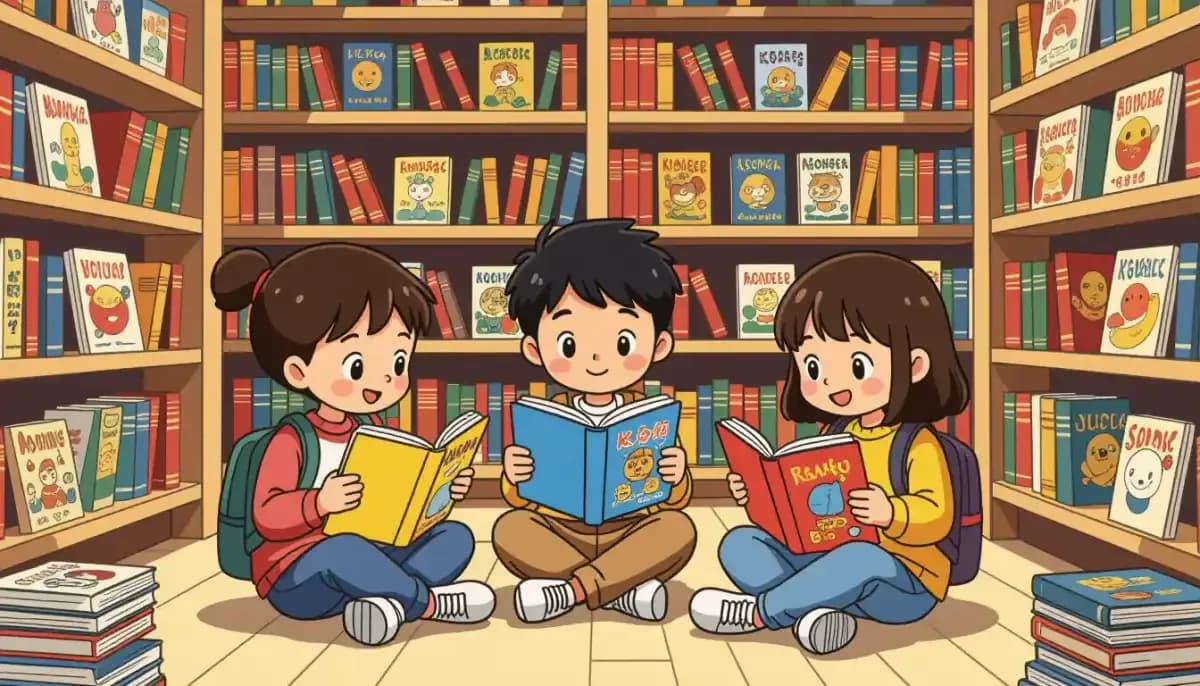
Discover the best children's books in Japan by age group—from Japanese baby board books to beloved classics for older kids. Expert picks for expat and bilingual families.
Best Children's Books in Japan by Age Group
Finding the right books for your child is one of the most rewarding things you can do as a parent—and in Japan, you have access to one of the world's richest traditions in children's literature. Whether you're raising bilingual children, helping your kids connect with Japanese culture, or simply looking for high-quality stories to share at bedtime, Japan's children's book market has something extraordinary to offer at every stage of development.
Japan publishes approximately 6,474 children's titles annually, with picture books alone accounting for over 2,000 new releases each year. Researchers from the Japan Environment and Children's Study (2025) found that shared storybook reading positively correlates with child developmental scores across all domains—making book time both an educational and bonding investment. This guide walks you through the best children's books in Japan, organized by age group, to help you build a wonderful reading life for your child.
Why Japanese Children's Books Are Special
Japanese children's literature is celebrated worldwide for its unique aesthetic sensibility, emotional depth, and respect for children's intelligence. From whimsical picture books that use playful onomatopoeia to teach language, to richly illustrated chapter books that explore complex themes of identity and belonging, Japanese books for children are rarely "dumbed down."
What makes Japanese children's books stand out:
- Visual storytelling: Japanese illustrators often use minimal text with maximally expressive images, making books accessible to young children and language learners alike
- Emotional authenticity: Books about everyday life—eating, playing, making friends, feeling sad—are treated with the same seriousness as adventure stories
- Curriculum integration: Many classic Japanese children's books are taught in elementary schools, giving children shared cultural reference points
- Bilingual availability: A growing number of Japanese classics are available in bilingual editions, perfect for families raising children in both Japanese and another language
For expat and foreign families in Japan, children's books serve a dual purpose: helping children acquire Japanese language naturally, and providing cultural touchstones to help them feel connected to their surroundings. As Rita Kar, librarian at Summerhill International School in Tokyo, notes: "Familiar books can be a great source of comfort to children when they see them in their new unfamiliar surroundings."
If you're raising bilingual children in Japan, building a home library of Japanese books is one of the most effective and enjoyable ways to support language development.
Best Books for Babies and Toddlers (Ages 0–2)
The earliest years are when children develop their relationship with language and reading, and Japanese baby books excel at making this process joyful.
じゃあじゃあびりびり (Jaa Jaa Biribiri)
by Noriko Matsui | Age: 0+
First published in 1983, this beloved board book is a staple in Japanese nurseries. The pages feature bold, simple images paired with expressive onomatopoeia words—the sounds things make in Japanese. Water goes "jaa jaa," paper tears "biribiri," and a dog barks "wan wan." With an EhonNavi community rating of 4.74/5, this is one of Japan's most-recommended first books.
だるまさんが (Daruma-san ga)
by Hiroshi Kagakui | Age: 0+
Rated 4.82/5 on EhonNavi, Daruma-san ga follows a round daruma doll who wobbles, stretches, and falls. The repeated phrase "daruma-san ga..." builds anticipation, and the simple vocabulary introduces hiragana and basic Japanese particles. The interactive read-aloud format makes it ideal for babies who love participation and movement.
はらぺこあおむし (The Very Hungry Caterpillar — Japanese Edition)
by Eric Carle, translated by Hisashi Mori | Age: 0+
The Japanese edition of this international classic is enormously popular in Japan and serves as an excellent bridge for bilingual households. With an EhonNavi rating of 4.80/5, the book also gently introduces katakana through food names. Many expat parents use this book because children already familiar with the English version can enjoy "reading along" in Japanese.
しろくまちゃんのほっとけーき (Shirokuma-chan's Hotcakes)
by Ken Wakayama | Age: 1+
This charming picture book follows a little polar bear making hotcakes with mama, filled with delightful cooking sound effects ("toro toro," "puu puu," "awa awa"). The onomatopoeia-rich text rated 4.74/5 builds phonological awareness and introduces kitchen vocabulary in a cozy domestic setting.
きんぎょがにげた (Where's the Goldfish?)
by Taro Gomi | Age: 1+
A goldfish escapes from its bowl and hides throughout the book—children search each spread to find it. This EhonNavi 4.78/5 classic introduces color words, location vocabulary, and the joy of discovery. Simple, bold illustrations make it perfect for young eyes.
Best Picture Books for Preschoolers (Ages 2–5)
The preschool years are a golden age of picture books, when children can follow longer stories and begin to understand more complex emotions.
ぐりとぐら (Guri and Gura)
by Rieko Nakagawa & Yuriko Yamawaki | Age: 2+
One of Japan's all-time bestselling picture books, Guri and Gura follows two field mice who find an enormous egg in the forest and decide to bake a giant sponge cake to share with all the forest animals. Rated 4.83/5 on EhonNavi, this story beautifully models generosity and community. It has been continuously in print since 1963 and is part of Japan's cultural fabric in the way that Goodnight Moon is in the United States.
みんなうんち (Everyone Poops)
by Taro Gomi | Age: 2+
Author Taro Gomi has a gift for turning everyday experiences into philosophical inquiries. This potty-training classic (rated 4.67/5) presents the simple fact that all animals—elephants, whales, birds, and people—poop. Practical for potty training and surprisingly funny, it's a staple in Japanese preschools.
It Might Be an Apple (りんごかもしれない)
by Shinsuke Yoshitake | Age: 4+
A boy finds an apple on the table and begins imagining all the things it might really be. Perhaps it's a planet. Perhaps it has a family. Perhaps it turns into other fruits. Shinsuke Yoshitake's books are beloved for encouraging imaginative and philosophical thinking in young children. This book is perfect for children who love to ask "why" and "what if."
You Look Yummy! (おまえうまそうだな)
by Tatsuya Miyanishi | Age: 3+
A baby ankylosaurus hatches and mistakes a T-Rex for his father. Instead of eating the little dinosaur, the T-Rex takes him under his wing. This heartwarming story about chosen family and unconditional love has launched an entire beloved dinosaur series. It's frequently cited by expat parents as a book that moves adults to tears as much as it delights children.
Best Books for Early Readers (Ages 5–8)
As children enter elementary school, they're ready for stories with more complex plots and deeper themes.
Hi, Butterfly! (ちょうちょうのおうち)
by Taro Gomi | Age: 4+
In this search-and-find adventure, a child chases a butterfly through different environments—a garden, a forest, a field. Taro Gomi's signature bold, textured illustrations make the butterfly delightfully challenging to find on each page. The simple repetitive text is excellent for beginning readers.
Crow Boy (やまのたろう)
by Taro Yashima | Age: 6+
This award-winning classic tells the story of Chibi, a shy, isolated boy in a Japanese village school who is bullied and ignored for years—until a teacher discovers his remarkable ability to imitate bird calls. A story of compassion, patience, and the tragedy of missed connection, Crow Boy is based on the author's own childhood memories. It remains one of the most recommended books for children experiencing social challenges.
A Friend (ともだち)
by Shuntaro Tanikawa | Age: 6+
Used in Japanese elementary school classrooms, this gentle but profound meditation on friendship and bullying asks children to think carefully about what it means to be a good friend. The simple text masks deep emotional intelligence, making it equally valuable for classroom discussion and bedtime reading.
The Beckoning Cat (まねきねこのはなし)
by Koko Nishizuka | Age: 5+
The origin story of Japan's famous maneki-neko (beckoning cat) lucky charm, this picture book weaves together history, folklore, and kindness. Children learn about a genuine piece of Japanese cultural heritage while enjoying a moving story about gratitude and unexpected fortune.
Best Chapter Books for Middle Grade Readers (Ages 8–12)
When children are ready for longer stories, Japan's middle grade literature offers compelling adventures and profound coming-of-age narratives.
Kiki's Delivery Service (魔女の宅急便)
by Eiko Kadono | Age: 8+
Published in 1985 and adapted into a beloved Studio Ghibli film in 1989, Kiki's Delivery Service follows 13-year-old Kiki as she leaves home to complete her year of training as a witch, setting up a delivery service in a new town. The story beautifully captures the universal experience of finding your place in the world and learning what your unique gift really is. Author Eiko Kadono won the prestigious Hans Christian Andersen Award in 2018—the highest international honor in children's literature.
Totto-Chan: The Little Girl at the Window (窓ぎわのトットちゃん)
by Tetsuko Kuroyanagi | Age: 9+
One of Japan's most beloved books of any genre, Totto-Chan is a memoir about the author's unconventional elementary school experience at Tomoe Gakuen, run by the progressive educator Sosaku Kobayashi. The school held classes in old railway cars and let children learn through curiosity and play. This book sold over 5 million copies at first publication in 1981 and has been part of the Japanese school curriculum since 1983. It's an essential read for any family interested in Japanese education philosophy.
Night on the Milky Way Train (銀河鉄道の夜)
by Kenji Miyazawa | Age: 10+
A boy named Giovanni boards a mysterious train that travels through the stars, picking up passengers along the way in a journey that becomes increasingly dreamlike and profound. Kenji Miyazawa's masterpiece is one of Japanese literature's most celebrated works, combining scientific wonder with Buddhist philosophical themes. Multiple editions and translations make it accessible to both Japanese-language readers and those reading in translation.
For children experiencing the challenges of adapting to Japanese junior high school, books like Night on the Milky Way Train offer both an escape and a vocabulary for processing big emotions.
Best Books for Expat and Internationally-Minded Families
If you're raising children in Japan as a foreign family, these books bridge cultures and help children see their bicultural experience as a gift rather than a burden.
I Live in Tokyo (わたしはとうきょうにすんでいます)
by Mari Takabayashi | Age: 4+
A 7-year-old girl named Mimiko takes readers through Tokyo month by month, sharing traditional celebrations, seasonal foods, and everyday life. The book is informative enough to be genuinely educational for foreign children learning about their new home, and culturally authentic enough to feel real to Japanese-raised readers.
The Last Kappa of Old Japan (日本最後の河童)
by Sunny Seki | Age: 5+
A bilingual (English/Japanese) story about a kappa—a traditional Japanese water sprite—who must adapt as the world changes around him. Themes of environmental stewardship and cultural continuity are handled with lightness and humor. The bilingual format makes it ideal for language-learning families.
Tea with Milk (ミルクとおちゃ)
by Allen Say | Age: 6+
Based on the true story of the author's parents, a Japanese-American woman returns to Japan and struggles to feel at home in either culture until she finds her own path. Allen Say's luminous illustrations and deeply personal narrative make this book an invaluable tool for discussing cultural identity with hafu or mixed-race children.
Magic Ramen (マジックラーメン)
by Andrea Wang | Age: 5+
The illustrated biography of Momofuku Ando, the inventor of instant ramen, this book presents a genuine story of perseverance and creative problem-solving set in postwar Japan. Children learn about a real Japanese innovation that changed the world while absorbing messages about not giving up in the face of failure.
Where to Buy Children's Books in Japan
| Store Type | Options | Best For |
|---|---|---|
| Tsutaya Books | Nationwide branches, large children's sections | Browsing physical books, bilingual editions |
| Amazon Japan | amazon.co.jp | Convenience, wide selection, delivery |
| Kinokuniya Bookstore | Major cities; foreign language sections | English books, bilingual editions |
| Book Off | Second-hand bookstores nationwide | Budget shopping, classic Japanese titles |
| Ehon no Mori | Online specialty store for picture books | Curated recommendations by age and theme |
| Local libraries (図書館) | Free, nationwide network | Trying before buying; borrowing classics |
Japan's public library system is excellent, and most libraries (図書館, toshokan) have substantial children's sections. Many also offer read-aloud story times (読み聞かせ, yomikikase) which are fantastic for young children learning Japanese.
For more on supporting your child's language development through reading, Living in Nihon has extensive resources for expat families navigating bilingual life in Japan.
Tips for Reading Japanese Books with Your Child
Building a successful reading habit in Japanese—especially for children learning Japanese as an additional language—requires consistency and creativity:
- Start with picture books that use onomatopoeia: These make Japanese sound fun and memorable, and onomatopoeia is deeply embedded in everyday Japanese speech
- Read the same book repeatedly: Children learn through repetition, and familiar books become a source of confidence and comfort
- Visit your local library: Japanese librarians (司書, shisho) are often specialists in children's literature and can make excellent personalized recommendations
- Use bilingual editions strategically: For children who already read in their first language, bilingual editions allow them to decode meaning while learning vocabulary in Japanese
- Connect books to real experiences: Books like Guri and Gura can be followed by actually making pancakes together; I Live in Tokyo can accompany visits to the neighborhoods and festivals it describes
For more detailed strategies on teaching Japanese to foreign children, including how to use children's books as language learning tools, see our comprehensive language development guide.
You can also find recommended reading lists and educational resources for expat families at For Work in Japan and Chuukou Benkyou, which both offer valuable content for families navigating life in Japan.
Building Your Home Library: A Recommended Starter Collection
Starting a home library can feel overwhelming. Here's a curated starter set covering the essentials at each stage:
Ages 0–2 (4 books):
- だるまさんが (Daruma-san ga)
- じゃあじゃあびりびり (Jaa Jaa Biribiri)
- きんぎょがにげた (Where's the Goldfish?)
- The Very Hungry Caterpillar (Japanese edition)
Ages 2–5 (3 books):
- ぐりとぐら (Guri and Gura)
- You Look Yummy! (おまえうまそうだな)
- みんなうんち (Everyone Poops)
Ages 5–8 (3 books):
- Crow Boy (やまのたろう)
- The Beckoning Cat
- A Friend (ともだち)
Ages 8+ (3 books):
- Kiki's Delivery Service
- Totto-Chan: The Little Girl at the Window
- Night on the Milky Way Train
These 13 books will give your child an excellent foundation in Japanese children's literature, covering picture books, early readers, and chapter books across a wide range of themes and styles.
Conclusion
Japan's children's literature tradition is one of the world's richest, and choosing the right books for your child's age and interest level opens a door to language, culture, and imagination that no other medium can quite replicate. From the playful sound effects of baby board books to the philosophical depth of Kenji Miyazawa's starry train journey, there is genuinely extraordinary reading waiting for children of every age.
Whether you're an expat family using books to help your children feel at home in Japan, or a family raising children to love Japanese language and culture, the books recommended in this guide are a wonderful place to start.
For support with all aspects of raising children in Japan—from choosing the right school to understanding healthcare—our site is here to help you navigate every stage of family life in Japan.
Explore more curated children's book recommendations and reading lists at Savvy Tokyo and Tiny Whale Tales.

Originally from Vietnam, living in Japan for 16+ years. Graduated from Nagoya University, with 11 years of professional experience at Japanese and international companies. Sharing practical information for foreign parents raising children in Japan.
View Profile →Related Articles
Birthday Party Ideas and Venues for Kids in Japan
Plan the perfect birthday party for your child in Japan. Discover top venues, cultural etiquette, cake options, entertainment ideas, and budget tips for expat families in Japan.
Read more →
Traditional Japanese Toys and Games for Kids
Discover traditional Japanese toys and games for kids living in Japan. From kendama to karuta, this complete expat guide covers history, where to buy, and how to use traditional play for cultural integration.
Read more →
Educational Toys and Learning Materials in Japan
Discover the best educational toys and learning materials in Japan for foreign parents. From STEM kits to bilingual tools, find where to buy, what to choose by age, and how to save money.
Read more →
Subscription Boxes and Services for Children in Japan
Discover the best subscription boxes and services for children in Japan. From toy rentals like Toysub! to educational services like Kodomo Challenge, find the perfect options for your foreign family raising kids in Japan.
Read more →
Music and Podcasts for Kids in Japan
Discover the best music, podcasts, and streaming resources for kids in Japan. From warabe uta to anime songs and bilingual podcasts — a complete guide for expat families.
Read more →
Best Children's TV Programs in Japan
Discover the best children's TV programs in Japan for foreign families. From Doraemon to NHK for School, learn what to watch and how Japanese TV helps kids learn Japanese.
Read more →