
Dropping Out of High School in Japan: Alternatives and Support

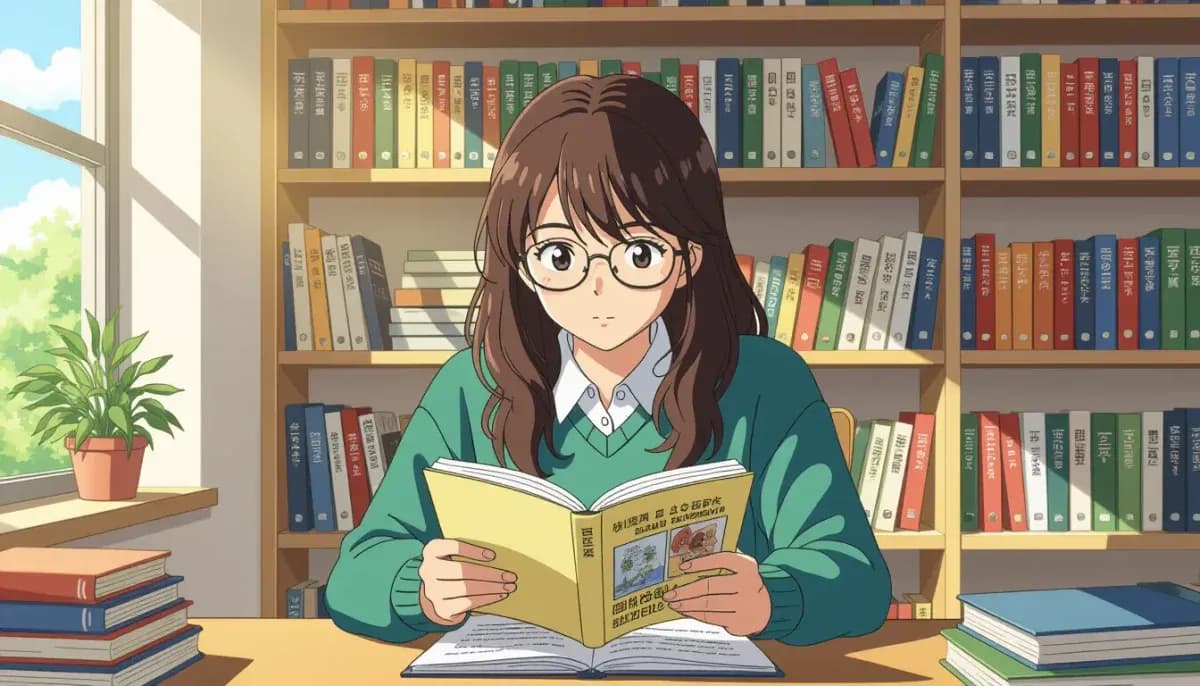
Foreign students drop out of Japanese high schools at 7x the national rate. Learn about correspondence school, free schools, the equivalency exam, and support systems available to foreign families in Japan.
Dropping Out of High School in Japan: Alternatives and Support
For foreign families in Japan, high school is compulsory in the cultural sense — while technically optional compared to elementary and junior high, almost all students attend. But what happens when a child struggles to continue? Whether it's due to academic pressure, language barriers, bullying, mental health challenges, or simply not fitting into the traditional school system, dropping out of high school in Japan is more common than the statistics suggest — and it affects foreign students at dramatically higher rates.
This guide is designed to help foreign parents understand the reality of high school dropout in Japan, what alternatives exist, and how to find the right support to keep your child's future on track.
Understanding High School Dropout in Japan: The Real Numbers
Japan often boasts one of the world's highest high school attendance rates, with the national dropout rate sitting at just 1.27% for public high school students. But for foreign students — particularly those still developing Japanese language skills — the situation is drastically different.
According to data reported by the Ministry of Education (MEXT), 9.61% of public high school students who lack sufficient Japanese communication skills dropped out in 2017. That's 7 times higher than the national average. These numbers likely understate the true scale, as Japan's education statistics don't fully capture students who transfer to correspondence programs rather than officially withdrawing.
| Student Group | Dropout Rate | Relative Rate |
|---|---|---|
| All public high school students (Japan) | 1.27% | Baseline |
| Non-Japanese students with limited Japanese | 9.61% | 7x higher |
| Students in correspondence/night school | Not tracked | Not publicly reported |
What makes this especially concerning is the downstream impact. Fewer than 60% of non-Japanese high school dropouts go on to pursue higher education, compared to far higher rates among Japanese students. Those who enter the workforce often end up in irregular employment at rates 9 times higher than among Japanese graduates — a cycle that limits long-term earning potential and social stability.
For foreign parents, understanding these risks makes finding the right alternative all the more important.
Why Foreign Students Are More Likely to Drop Out
The reasons foreign students struggle disproportionately in Japanese high schools are both structural and social:
Language barriers are the most obvious challenge. High school in Japan is conducted entirely in Japanese, and academic content at this level — including literature, social studies, and sciences — requires advanced Japanese literacy. Students who arrived in Japan during or after middle school are especially vulnerable.
A critical institutional gap compounds this problem: while 58 out of 62 prefectures and major cities offer special admissions accommodations for non-Japanese applicants (such as allowing dictionary use during entrance exams), only 6 regions provide dedicated Japanese language support after admission. Students get in the door but then receive little ongoing help to stay enrolled.
Social isolation is another major factor. Japanese high school culture emphasizes group belonging, conformity, and peer relationships. Foreign students who look different, speak differently, or struggle with cultural norms can find themselves isolated or, in the worst cases, targets of bullying (ijime).
Academic pressure in Japanese high schools is intense. The expectation of long hours, club activities (bukatsu), and preparation for university entrance exams creates an environment that can overwhelm students who are simultaneously managing language acquisition. See our guide on types of high schools in Japan for more context on how different school tracks vary in intensity.
Mental health struggles are increasingly recognized as a driver of school refusal and dropout. Japan has seen its 12th consecutive year of rising futoko (school refusal) rates, with over 244,000 elementary and middle school students refusing to attend school in 2022 alone. Many of these students eventually face similar challenges in high school.
The Main Alternatives to Traditional High School in Japan
If your child is struggling or has already left regular high school, there are several legitimate pathways that still lead to a high school diploma and open doors to further education or employment.
1. Correspondence High School (通信制高校, Tsushin-sei Koko)
Correspondence high school is Japan's most widely used alternative to full-time attendance. Students submit reports and coursework by mail or online, attend school periodically for face-to-face sessions (scooling), and take exams to earn credits toward graduation.
Key facts:
- Students can graduate in the same 3 years as traditional high school, or take longer
- Many correspondence schools offer flexible scheduling and online coursework
- Both public and private options exist; tuition at private correspondence schools varies widely
- Graduation grants the same high school diploma (koukou sotsugyou shomeisho) as regular schools
Correspondence high schools have expanded significantly in recent years, and some now specifically cater to students with special circumstances, including those with school refusal histories or who need extra support. Read our dedicated guide on night school and correspondence high schools in Japan for detailed enrollment steps and costs.
2. Part-Time High School (定時制高校, Teijisei Koko)
Part-time or night schools (teijisei) allow students to attend classes in the evening (and increasingly, in the morning or afternoon). These were originally created for working youth but now primarily serve students who need more flexibility than a traditional school can offer.
- Classes are typically held 4-5 days a week but for fewer hours
- Graduation usually takes 4 years rather than 3
- Tuition is subsidized at public part-time schools
- The learning environment tends to be more diverse and less rigid than regular high schools
3. Free Schools (フリースクール, Furii Sukuuru)
Free schools are privately operated alternative learning environments that don't follow the standard Japanese curriculum. They emphasize the student's pace, emotional wellbeing, and personal development. Many have open enrollment and accept students regardless of previous school history.
While free schools don't directly grant high school credentials, students attending them often simultaneously study for the High School Equivalency Exam (see below) or enroll in correspondence school to earn their diploma. The focus is on rebuilding confidence and reestablishing a relationship with learning.
Tokyo Shure is one of Japan's most well-known free schools and accepts students from elementary through high school age. Private alternative schools like these typically cost approximately 50% of international school tuition — making them more accessible than many families expect.
For a broader overview of alternative schools, see Alternative Educational Opportunities in Japan at Diverse Needs Japan.
4. High School Equivalency Exam (高等学校卒業程度認定試験, Koto Gakko Sotsugyou Teido Nintei Shiken)
Often called the Daiken or Koken, this national exam allows students who did not graduate from high school to demonstrate high school-level knowledge and earn an official credential recognized by universities and employers.
- Offered twice a year by MEXT
- Passing grants eligibility to apply to Japanese universities and professional schools
- Does not require any attendance record at a school
- Can be combined with correspondence school or independent study
This pathway is especially relevant for older teens or young adults who dropped out some time ago and want to resume their education or improve their career prospects.
5. International Schools
For foreign families, international schools in Japan offer an English-medium education that may be far more accessible to students who never became fully fluent in Japanese. International schools generally follow the curriculum of the student's home country or an international standard such as the IB Diploma Programme.
The main drawback is cost — international high school tuition in Tokyo typically ranges from ¥2,300,000 to over ¥3,500,000 per year. However, some families find that the language-appropriate environment dramatically reduces stress and dropout risk compared to continuing in a Japanese school system where their child is struggling.
Support Systems in Japan for Struggling Students
Japan's support infrastructure for students at risk of dropping out has improved in recent years, though gaps remain.
Education Support Centers (教育支援センター): Run by prefectural and municipal governments, these centers provide counseling, academic instruction, and recreational activities for young people who have left or are refusing to attend school. MEXT has increased funding for these centers and plans to expand their capacity.
Diversified Learning Schools: As of February 2025, the Japanese government has established 21 public and 14 private "Diversified Learning Schools" across elementary, junior high, and high school levels. These schools provide the same graduation credentials as regular schools but in a more flexible, supportive environment — a significant step toward institutionalizing alternative education.
Online Learning Credits (from April 2024): MEXT introduced a system allowing high school students to earn credits through fully online courses. This makes it more feasible for students who cannot attend in person to still progress toward graduation at their own pace.
School Counselors and Youthwork Support: Many schools employ school counselors (sukuuru kaunseraa), and MEXT continues to fund school social workers who can connect families to community resources. If your child is struggling with mental health or emotional wellbeing, these professionals can be a critical first point of contact.
Practical Steps for Foreign Parents
If your child is considering dropping out or has already left high school, here is a practical action plan:
Step 1: Contact the school immediately. Request a meeting with the homeroom teacher, school counselor, and if needed, the vice principal. Ask specifically about fukouki shien (re-enrollment support) and whether your child's situation qualifies for special accommodation.
Step 2: Consult your local Board of Education (教育委員会). Every municipality has an education board that can direct you to the nearest Education Support Center and explain what alternative school options are available in your area.
Step 3: Explore correspondence school enrollment. Most correspondence high schools in Japan accept students mid-year and do not require a perfect attendance or academic record. Some specifically advertise futoko or transfer student support.
Step 4: Consider whether language is the core issue. If Japanese language proficiency is the primary barrier, supplemental Japanese language tutoring, a switch to international school, or a temporary break with structured language study may be more effective than pushing through a Japanese-medium curriculum.
Step 5: Look into financial aid. Japan's Jugyoryo Mushouka (tuition-free high school) program covers public high school tuition and extends some support to approved correspondence and private schools. Your local government office or school can advise on eligibility.
For useful resources on education funding and financial planning for foreign families in Japan, see Living in Nihon's guide on education fund planning and For Work in Japan's coverage of education and career pathways.
What Dropping Out Means for University and Career
One of the biggest concerns parents have is whether dropping out will permanently close doors. The answer in Japan is nuanced.
University admission: Passing the High School Equivalency Exam opens most university pathways. National and public universities accept it, as do most private universities. Students who complete correspondence or part-time high school receive the same diploma as students from regular high schools.
Employment: Japan's job market is strongly credential-based, and a high school diploma (or equivalency) is typically the minimum requirement for most full-time positions. Without it, job seekers are disproportionately channeled into irregular or part-time work — a pattern that data confirms is already affecting foreign students at high rates.
Social stigma: While attitudes are slowly shifting, dropping out without pursuing an alternative still carries a degree of stigma in Japanese society. Families who frame an alternative path (correspondence school, equivalency exam) as a deliberate educational choice rather than a failure tend to navigate these social perceptions more successfully.
For long-term planning, see our guide on university and higher education planning in Japan to understand how different high school credentials affect university applications.
Resources and Further Reading
- Diverse Needs Japan – Alternative Educational Opportunities
- Non-Japanese students' dropout rates in Japan (Imagination Procedure)
- Japan explores quality alternative education beyond free schools – Zenbird
- PMC Research: High School Dropout Risk Factors in Japan
- Chuukou Benkyou – Japanese exam preparation support
- School Refusal in Japanese Junior High Schools
- Academic Pressure in Japanese Junior High Schools

Originally from Vietnam, living in Japan for 16+ years. Graduated from Nagoya University, with 11 years of professional experience at Japanese and international companies. Sharing practical information for foreign parents raising children in Japan.
View Profile →Related Articles
High School Tuition Costs and Financial Aid in Japan
Complete guide to high school tuition costs and financial aid in Japan for foreign families. Learn about public vs private school costs, the 2025 free tuition program, government subsidies, and eligibility for foreign residents.
Read more →
Night School and Correspondence High Schools in Japan
A complete guide to night school (定時制) and correspondence high school (通信制) in Japan for foreign families — enrollment, costs, language support, and tips.
Read more →
International Baccalaureate High Schools in Japan
Complete guide to IB high schools in Japan for foreign families. Learn about costs (¥1.5M-3M/year), top schools, admission process, and how the IB Diploma opens doors to universities worldwide.
Read more →
Ronin Year: When Students Retake University Entrance Exams
Learn what the ronin year means in Japan, how yobiko prep schools work, what it costs, the mental health impact, and how foreign students navigate university entrance exam retakes.
Read more →
High School Graduation Requirements in Japan
Complete guide to high school graduation requirements in Japan for foreign families. Learn about the 74-credit system, 2023 reforms for foreign students, costs, and support resources.
Read more →
Study Abroad Programs from Japanese High Schools
Everything foreign families need to know about study abroad programs from Japanese high schools — types, costs, destinations, scholarships, and how to apply.
Read more →