
School Refusal (Futoukou) in Japanese Junior High Schools

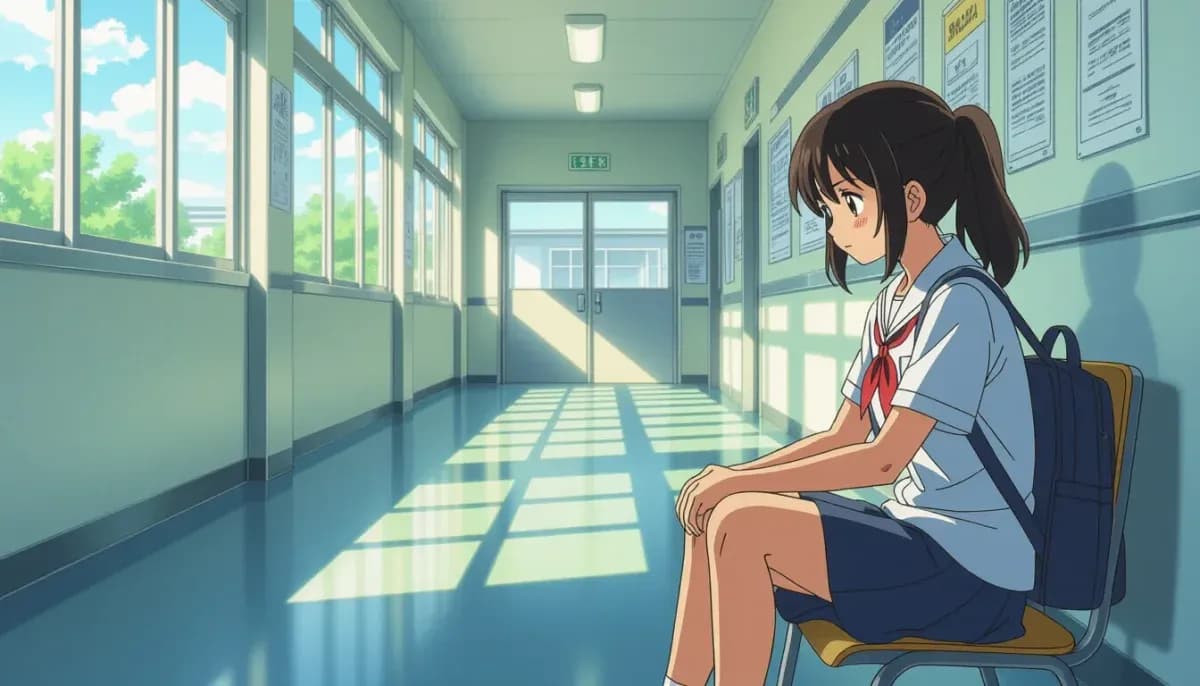
Learn about futoukou (school refusal) in Japanese junior high schools: causes, statistics, warning signs, and practical steps for foreign parents to support their child.
School Refusal (Futoukou) in Japanese Junior High Schools: A Guide for Foreign Parents
If your child is refusing to go to school in Japan, you are not alone. Futoukou (不登校) — Japan's term for school refusal — has reached record highs, with over 216,000 junior high students missing 30 or more school days in FY2024. As a foreign parent navigating Japan's education system, facing this challenge can feel especially overwhelming. This guide explains what futoukou is, why it happens, and what you can do to support your child.
What Is Futoukou? Understanding School Refusal in Japan
Futoukou (不登校) is the official Japanese term for school refusal. The Ministry of Education, Culture, Sports, Science and Technology (MEXT) defines it as:
"Students in compulsory education who are absent for 30 or more days in a school year for reasons other than illness or financial hardship, and who are judged to be psychologically, emotionally, or socially refusing or unable to attend school."
Unlike simple truancy, futoukou recognizes that a student's reluctance to attend school often stems from genuine emotional, psychological, or social distress — not laziness or defiance. In Japan's highly structured educational environment, junior high school (chugakko, grades 7–9, ages 12–15) is often the most difficult transition point.
Key distinction for foreign families: Japan legally mandates school attendance for Japanese nationals through junior high school. However, this legal obligation does not apply to children with foreign citizenship. That said, enrollment and attendance are strongly encouraged, and local boards of education can assist your family in finding solutions.
The Scale of Futoukou: Japan's School Refusal Crisis
Japan's school refusal numbers have been rising steadily for over a decade, and FY2024 set yet another record.
| Year | Junior High Students Refusing School | % of Enrolled Students |
|---|---|---|
| FY2014 | ~98,000 | ~2.8% |
| FY2019 | ~127,000 | ~3.3% |
| FY2022 | ~193,000 | ~3.6% |
| FY2023 | ~216,000 | ~3.8% |
| FY2024 | 216,266 | 3.9% (record high) |
Source: MEXT Annual Survey on School Non-Attendance, as reported by Nippon.com
Some additional alarming statistics:
- 54.2% of school-refusing students were absent for over 90 days — more than half a school year
- Non-attendance among junior high students has risen 2.2 times compared to a decade ago
- 80% of parents of futoukou children reported their employment was negatively impacted
- 1 in 4 parents of school-refusing children resigned from their jobs
For foreign families, the situation has its own dimension: a 2025 Japan Times report identified 8,432 foreign children in Japan not attending school, and a 2019 MEXT survey found that 15.8% of eligible foreign students were not enrolled in elementary or junior high schools.
Why Do Students Refuse School? Common Causes in Junior High
The transition to junior high school in Japan is a significant stress point. Students face new social hierarchies, intense club activity (bukatsu) commitments, more rigorous academics, and pressure to conform. For foreign children, the challenges can be even greater.
Top causes cited by schools in FY2024:
- Lack of motivation (30.1%) — feeling disengaged or purposeless at school
- Breakdown in daily routines (25.0%) — often linked to lifestyle disruptions or anxiety
- Anxiety or depression (24.3%) — mental health struggles, often undiagnosed
- Poor academic performance (15.6%) — falling behind and feeling unable to catch up
- Friendship issues (13.2%) — social difficulties, exclusion, or peer conflict
Additional causes specific to foreign children:
- Language barriers — difficulty following lessons taught entirely in Japanese
- Cultural adjustment — unfamiliar social norms, group dynamics, and school rules
- Bullying (ijime) — foreign or hafu children may be targeted for being "different"
- Cultural identity conflict — feeling caught between Japanese expectations and home culture
To understand how junior high school works in Japan and what challenges to expect, see our comprehensive guide on Junior High School in Japan for Foreign Families.
Warning Signs: How to Recognize Futoukou Before It Becomes Serious
School refusal rarely appears suddenly. It typically develops gradually, and early intervention makes a significant difference.
Physical warning signs:
- Frequent stomachaches or headaches on school days (that disappear on weekends)
- Difficulty sleeping the night before school
- Loss of appetite in the morning
- Complaints of fatigue or dizziness without clear medical cause
Emotional and behavioral warning signs:
- Increased irritability or emotional outbursts related to school
- Withdrawal from friends and social activities
- Sudden drop in academic performance or homework completion
- Excessive time playing video games or on devices to escape
- Crying or panic attacks when preparing for school
Key red flag: Symptoms that appear specifically on school days and resolve on weekends or holidays are classic signs of school-related anxiety.
For deeper support on your child's emotional health, see Mental Health and Emotional Wellbeing for Foreign Children in Japan.
What To Do: Practical Steps for Foreign Parents
Step 1: Talk to Your Child Without Pressure
Begin with open-ended, non-judgmental conversations. Avoid phrases like "You have to go to school" or "What will people think?" Instead:
- Ask: "What feels hardest about school right now?"
- Listen without immediately trying to fix things
- Validate their feelings: "It sounds really difficult"
Many children who refuse school feel misunderstood — especially foreign children who may struggle to articulate social or cultural difficulties even to their own parents.
Step 2: Contact the School Early
In Japan, schools take attendance seriously and have designated staff to assist families facing futoukou:
- Homeroom teacher (tanninsei) — your first point of contact for attendance concerns
- School counselor (sukuuru kaunseraa) — a trained mental health professional available at most junior high schools
- Yogo teacher (yogo kyouin) — the school nurse/welfare teacher who handles health and wellbeing
Request a meeting and share what your child has told you. Schools are legally required to report futoukou cases and provide support plans.
Step 3: Visit the Local Education Support Center
Every city or ward in Japan has a Futoukou Tokubetsu Shien Shitsu (不登校特別支援室) or similar educational support center. These are alternative learning spaces where students can:
- Study at a slower pace
- Receive counseling
- Gradually re-engage with school life without the pressure of a full classroom
Ask your local Board of Education (Kyouiku Iinkai) for information. Most have staff who can communicate in your language or arrange interpretation services.
Step 4: Explore Alternative Education Options
Japan now officially recognizes multiple alternative pathways for students experiencing futoukou:
| Option | Description | Best For |
|---|---|---|
| Futoukou support room (tokubetsu shien shitsu) | In-school separate room with counselors | Students with mild anxiety |
| Free school (furiisukuuru) | NPO-run alternative schools with flexible learning | Students needing a fresh environment |
| Home learning with tutors | Private tutors, correspondence courses | Students with severe anxiety or health issues |
| Online/metaverse school | Virtual classrooms and digital learning programs | Tech-comfortable students |
| International school | Full switch to English-language curriculum | Students struggling with Japanese language |
For more information on alternative education options, visit International Schools in Japan: The Definitive Guide and consult our guide to Japanese education for foreign families.
For financial support considerations when changing schools, the Living in Nihon education planning guide provides useful context on school costs and available subsidies.
Support Resources for Foreign Families in Japan
Navigating futoukou support systems as a foreigner can be confusing. Here are key resources:
Government and official channels:
- MEXT (文部科学省) — Japan's Ministry of Education publishes guidelines on futoukou support
- Local Board of Education (教育委員会) — Contact your city/ward office for local support center locations
- Child Guidance Center (Jidou Soudan-jo) — Offers free counseling for children under 18
English-language resources and communities:
- NPO Japan Intercultural Intelligence — Supports foreign families; their UN Counter Report on Japan's School Refusal provides in-depth analysis
- Zenbird Media — Covers emerging solutions like free schools and metaverse classrooms in English: Futoko: Identifying the Real Problem
- For Work in Japan — Resources for working parents dealing with school-related challenges: forworkinjapan.com
- Chuukou Benkyou — Japanese-language study support resources for junior high students: chuukoubenkyou.com
Online expat communities:
- Facebook groups such as "Expats in Japan" and "Foreign Parents in Japan" often have parents who have navigated futoukou firsthand
Special Considerations: When Language Is the Core Issue
For children who are struggling primarily because of Japanese language difficulties, futoukou may not be a mental health issue at all — it may be a language access problem.
What you can do:
- Request a Japanese language support teacher (JSL support) through your school or board of education
- Enroll in after-school Japanese language programs (many are free through local governments)
- Consider part-time enrollment in both a Japanese school and an international school
- Use Japanese language learning resources specifically designed for children — see Teaching Japanese to Foreign Children: Methods and Resources
Important: If your child's school is not providing adequate Japanese language support, you can escalate to the local Board of Education. Japan's educational guidelines require reasonable accommodation for non-Japanese speaking students.
Long-Term Outlook: Recovery and Moving Forward
Most children who experience futoukou do eventually return to school or find alternative paths. Research and anecdotal evidence from Japan's education community suggests:
- Early intervention dramatically improves outcomes — acting within the first few weeks matters
- Avoiding pressure to return immediately often leads to faster recovery than forced attendance
- Building daily structure at home during the refusal period supports gradual re-engagement
- Peer reconnection — even one good friendship can be enough to draw a child back to school
Japan's society and school system are slowly evolving. Free schools, metaverse classrooms, and official recognition of alternative education pathways show that Japan is beginning to acknowledge that the traditional school environment does not work for every child.
For further reading on raising children through Japan's education system, explore our guides on raising bilingual children in Japan and healthcare and medical care for children in Japan.
Conclusion
School refusal (futoukou) is one of the most stressful challenges a parent can face, and for foreign families in Japan it comes with the added complexity of language barriers, cultural differences, and unfamiliar support systems. The most important things to remember are:
- You are not alone — over 216,000 junior high students in Japan face this every year
- Act early — the sooner you engage with school staff and counselors, the better
- Listen to your child — their experience, not school attendance metrics, is what matters most
- Explore all options — Japan now offers more alternative pathways than ever before
With patience, persistence, and the right support, your child can find their way through this difficult period.

Originally from Vietnam, living in Japan for 16+ years. Graduated from Nagoya University, with 11 years of professional experience at Japanese and international companies. Sharing practical information for foreign parents raising children in Japan.
View Profile →Related Articles
Part-Time Rules and Responsibilities for Junior High Students
Can junior high school students work part-time in Japan? Learn the legal restrictions, school regulations, and what foreign families need to know about teen employment rules in Japan.
Read more →
Preparing for High School Entrance Exams in Japan
Complete guide for foreign families preparing for Japanese high school entrance exams (koukounyuushi). Covers special provisions for foreign students, naishinsho, juku, study strategies, and exam timeline.
Read more →
Student Council and Leadership in Japanese Junior High
A complete guide to student council (seitokai) in Japanese junior high schools — how elections work, leadership roles, responsibilities, and how foreign children can participate in school governance.
Read more →
Technology and Computer Education in Junior High Japan
Discover how technology and computer education works in Japanese junior high schools. Learn about Gijutsu Katei, the GIGA School Program, mandatory programming, and what foreign families can expect.
Read more →
English Education in Japanese Junior High Schools
Comprehensive guide to English education in Japanese junior high schools: curriculum, ALT teachers, proficiency data, tips for foreign families, and entrance exam preparation advice.
Read more →
Private Junior High School Entrance Exams in Japan
Everything foreign families need to know about private junior high school entrance exams in Japan: subjects, competition ratios, returnee pathways, costs, and how to prepare.
Read more →