
Earthquake Preparation for Families with Children in Japan

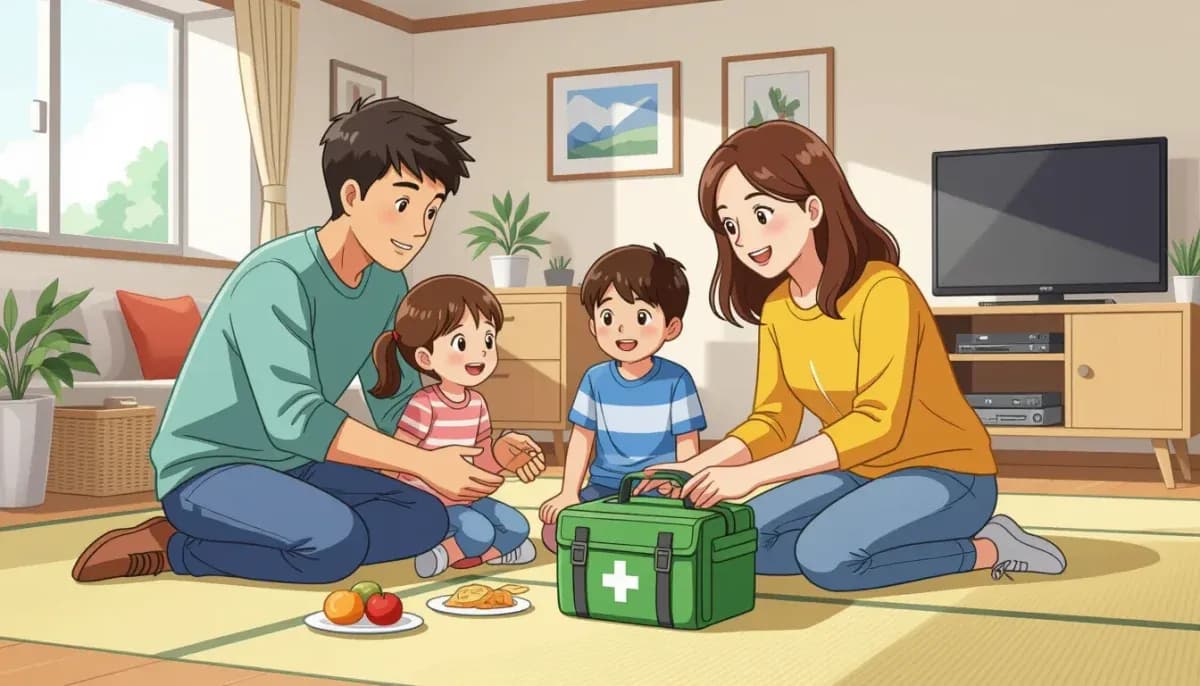
Complete guide to earthquake preparation for foreign families with children in Japan. Learn how to build a bosai bag, childproof your home, create a family communication plan, and help children cope.
Earthquake Preparation for Families with Children in Japan
Living in Japan means accepting that earthquakes are part of daily life. Japan sits on the Pacific Ring of Fire and experiences approximately 1,500 earthquakes per year, ranging from minor tremors to catastrophic events. For families raising children here, earthquake preparedness is not optional — it is a fundamental responsibility. The good news is that Japan has one of the world's most sophisticated disaster-readiness systems, and with the right preparation, you and your children can feel confident and safe.
This guide walks foreign families through every aspect of earthquake preparation in Japan: building your emergency kit, childproofing your home, creating a family communication plan, understanding the school system's role, and helping children cope emotionally.
Understanding Earthquake Risk in Japan
Japan accounts for roughly 20% of the world's magnitude-6.0 or greater earthquakes, making it one of the most seismically active countries on earth. According to government estimates, there is a 70% probability of a major earthquake striking directly below Tokyo within the next 30 years. The 2011 Great East Japan Earthquake (magnitude 9.0) remains the deadliest natural disaster in Japan's recent history, killing over 15,000 people and triggering a massive tsunami along the Tohoku coast.
However, Japan's response to this ever-present risk is unmatched. Building codes are among the strictest in the world, evacuation systems are meticulously planned, and disaster preparedness (bousai, 防災) is woven into everyday life. Children participate in drills from kindergarten onward, and neighborhoods hold annual disaster events. As a foreign family, your job is to plug into this system, understand how it works, and fill in the gaps that may not be obvious to newcomers.
Key risk facts for families:
- Tokyo has approximately 3,000 designated evacuation sites, mostly at schools and public facilities
- Since 2011, all schools from elementary through high school must conduct earthquake drills at least twice per year
- A major academic survey found only 32.5% of international residents in Japan had prepared an emergency bag, compared to much higher rates among Japanese nationals
- Only 50% of international residents knew the location of their nearest evacuation site
Building Your Family Emergency Kit (Bosai Bag)
Your bosai bag (防災バッグ, disaster preparedness bag) is your family's lifeline in the hours and days after a major earthquake. The Japanese government recommends enough supplies for 3 days minimum, with up to 7 days recommended for families who may be isolated. For families with young children, thoughtful packing can make the difference between a manageable emergency and a crisis.
Water and Food Essentials
The single most critical item is water. Plan for 4 liters (roughly 1 gallon) per person per day — and remember children need their share too. Infants and toddlers on formula need extra water. Keep sealed water bottles stored in your bag and replace them every 6–12 months.
For food, focus on high-calorie, non-perishable items that require minimal preparation:
| Item | Notes | Available At |
|---|---|---|
| Calorie Mate bars | High-energy, compact | Convenience stores, pharmacies |
| Instant rice/noodles (alpha-mai) | Just add water | Disaster prep shops, Amazon Japan |
| Canned goods | Tuna, beans, vegetables | Any supermarket |
| Energy bars/granola bars | Kid-friendly, easy to eat | Supermarkets, Costco Japan |
| Baby formula/pouches | For infants and toddlers | Pharmacies, baby stores |
| Dried fruit and nuts | Nutritious snacks for children | Supermarkets |
| Comfort foods for children | Familiar snacks reduce stress | Tailor to your kids |
Store enough food for at least 72 hours for your entire family, including pets.
Emergency Supplies Checklist
Beyond food and water, a complete family bosai bag should include:
- Flashlights with extra batteries (hand-crank or solar preferred)
- Portable radio for NHK emergency broadcasts (hand-crank/solar)
- First-aid kit including antiseptic, bandages, and any prescription medications (keep a 5-day supply)
- Work gloves for handling debris
- Helmet or protective hood for each family member (children's sizes available at hardware stores)
- Emergency blankets/sleeping bags
- Cash — ATMs often fail during disasters; keep ¥10,000–¥50,000 in small coins and bills
- Copies of important documents: passports, visas, health insurance cards, bank info (in a waterproof pouch)
- Portable toilet bags and toilet paper
- Wet wipes, hand sanitizer, antibacterial soap
- Whistle (to signal for help if trapped)
For children specifically:
- A small comfort toy or stuffed animal (reduces anxiety)
- Books, card games, or small puzzles
- Change of clothes in their size
- Diapers, wipes, and rash cream for infants and toddlers
- Portable baby carrier for quick evacuation with small children
Commercial bosai bag kits are available at major retailers — Aeon, Don Quijote, and MUJI sell sets ranging from approximately ¥5,000 to ¥14,000. However, pre-made kits rarely include child-specific items or account for your family's unique needs, so customizing your own kit is strongly recommended.
Storage tip: Keep your bosai bag near the front door (genkan) for fast access. Do NOT store it only in a car — you may need to evacuate on foot.
For more advice on settling into Japanese life with children, see our guide on healthcare and medical care for children in Japan.
Childproofing Your Home for Earthquakes
After the emergency kit, securing your home is the most impactful thing you can do. Most earthquake-related injuries inside homes come from falling furniture, broken glass, and blocked exits — all of which are preventable.
Furniture and Appliance Safety
Japanese homes, especially older apartments, are full of tall, heavy furniture that becomes dangerous projectiles during strong shaking. Secure every tall piece of furniture with metal L-brackets (tsuppari bou, 突っ張り棒) mounted to studs in the wall. Items to prioritize:
- Bookshelves, wardrobes, and storage cabinets
- Refrigerator (use dedicated anti-tip straps)
- Television and monitor stands
- Microwave ovens (use non-slip mats and anchor straps)
- Water dispensers and large appliances
Move children's beds and play areas away from heavy items that could topple onto them. Relocate heavy objects to lower shelves throughout the home. Install child-safety latches on cabinet doors to prevent items flying out during shaking.
Window and Glass Safety
Apply shatterproof safety film (garassu hibi wari boshi film) to windows and glass doors throughout your home. This film holds broken glass together, dramatically reducing the risk of lacerations during and after an earthquake. It is widely available at home centers (home center) like Cainz, Kohnan, and DCM for a few hundred yen per roll.
Exit Planning
Keep all doorways and hallways clear of clutter. During a strong earthquake, door frames can warp, trapping you inside. Open interior doors during strong shaking to ensure you can exit. Keep old sneakers or slip-on shoes under the bed — broken glass on floors after an earthquake makes barefoot movement dangerous.
For more on safety and wellbeing in Japan, visit Living in Nihon for comprehensive expat living guides.
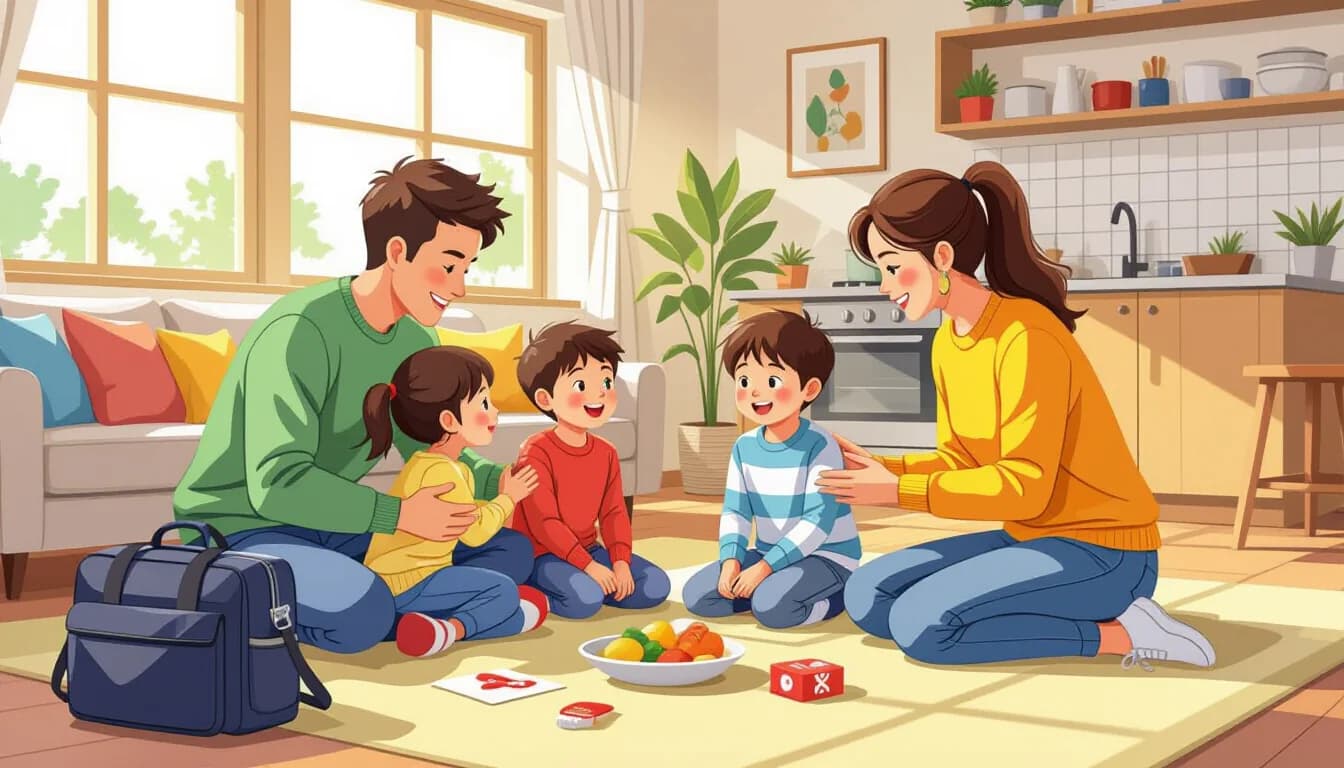
Creating a Family Earthquake Communication Plan
During a major earthquake, phone lines and internet networks become severely congested. You may not be able to reach your spouse, children's school, or relatives for hours. Having a pre-established plan prevents panic and confusion.
Designate Meeting Points
Choose two family meeting points:
- Primary point: Just outside your home (e.g., in front of your building entrance or a specific lamppost)
- Secondary point: A nearby landmark — a park, convenience store, or public building — in case your immediate area is inaccessible
Make sure all family members, including older children, know both locations. Draw a simple map and keep a paper copy in each family member's school bag and wallet.
Emergency Communication Methods
During a large earthquake, regular voice calls often fail due to network overload. Use these alternatives:
- SNS messaging apps (LINE, WhatsApp): Text-based messages often get through when calls cannot
- Emergency Free WiFi — 00000JAPAN: This network is activated by major carriers during declared disasters; any device can connect without a password
- Disaster Message Dial 171: Record and retrieve voice messages using a landline or mobile phone — dial 171, press 1 to record, press 2 to play back messages
- Web171: Text-based version of Disaster Message Dial at https://www.web171.jp/
Know Your Children's School Policy
Every school in Japan has an earthquake response policy, and this policy directly affects when and how you can pick up your children. Visit your children's school and confirm in advance:
- What happens to students during and after an earthquake drill?
- Under what conditions will the school shelter students overnight?
- Who is authorized to pick up your child and what ID is required?
- How will the school communicate with parents (school app, LINE group, public address)?
If your children attend a Japanese public school and your Japanese is limited, ask the school office for an English summary of their disaster response policy, or ask another parent to help translate. This is also a good conversation topic at your first PTA meeting.
For guidance on navigating Japanese schools as a foreign parent, see our guide on elementary school in Japan for foreign parents.
Essential Apps to Download
Install these apps on all adult smartphones in your household:
| App | Function | Language |
|---|---|---|
| Yurekuru Call | 30-second advance earthquake warning | Japanese/English |
| Safety Tips | Earthquake, tsunami, and weather alerts | 14 languages including English |
| NHK World | Emergency news broadcasts in English | English |
| Life360 / Find My Friends | Real-time family location tracking | English |
| Yahoo! Weather Japan | Severe weather and disaster alerts | Japanese |
For more on working and living in Japan as a foreigner, check For Work in Japan for practical guides covering daily life essentials.
What to Do During and After an Earthquake
Knowing the correct actions to take during shaking reduces injuries dramatically. Go over these procedures with your children regularly — make it a routine, not a scary lecture.
During Shaking
At home:
- Drop to the floor immediately
- Get under a sturdy table or desk — hold the legs firmly
- If no table is available, cover your head and neck with your arms and move to an interior corner away from windows
- Do NOT run outside — falling glass and debris are most dangerous immediately outside buildings
- Stay away from windows, bookshelves, and large appliances
- After strong shaking stops, turn off gas at the meter (gasmeter, usually outside) to prevent fire
In a high-rise apartment:
- Do not attempt to use elevators during or immediately after an earthquake
- High-rise buildings in Japan are designed to sway — this is intentional and safe
- Follow your building's evacuation announcement system
Outside:
- Move away from buildings, power lines, fences, and vending machines
- Head to the nearest open space — a park, school grounds, or wide street
After Shaking: Immediate Steps
- Check family members for injuries; administer first aid if needed
- Turn off gas if you smell any leaking gas — open windows for ventilation
- Grab your bosai bag and head to your designated meeting point
- Do NOT re-enter a damaged building
- Monitor NHK (or NHK World in English) for official information and tsunami warnings
- If a tsunami warning is issued and you are in a coastal area, move to high ground immediately — do not wait
Aftershocks
Strong aftershocks often follow major earthquakes. Continue taking cover during each aftershock, and be aware that aftershocks can sometimes be stronger than the initial quake. Japanese authorities typically continue broadcast warnings for days or weeks after a major event.
For support around your children's emotional wellbeing following a traumatic event, see our guide on mental health and emotional wellbeing for foreign children in Japan.
Helping Children Cope with Earthquake Fear
Earthquakes can be deeply frightening for children, especially young children who lack context for what is happening. Foreign children who are already navigating cultural and language adjustment may find the experience particularly overwhelming.
Before an Earthquake: Building Confidence
- Practice drills at home regularly — once per quarter is sufficient for most families. Make it calm and matter-of-fact, not a source of anxiety.
- Explain what earthquakes are in simple, age-appropriate terms: "The ground moves sometimes because Japan is special that way. We have a plan to stay safe."
- Reassure children about Japan's strong preparedness systems — the buildings are very strong, there are lots of helpers, and their teachers know what to do.
- Practice the "Drop, Cover, Hold On" technique as a family, including at the dinner table.
- Show children where the bosai bag is stored and what's in it — including their comfort toy inside.
After an Earthquake: Emotional Support
- Maintain routine as much as possible — structure helps children feel safe after disruption
- Listen to their concerns without dismissing or minimizing them
- Watch for behavioral changes in the days and weeks following a significant earthquake: sleep disturbances, clinginess, loss of appetite, or regression to younger behaviors are all normal responses
- Avoid excessive exposure to disaster news and images, especially graphic footage
- Model calm behavior — children look to adults for cues about how serious a situation is
For bilingual and bicultural families, it can be particularly valuable to discuss preparedness in both languages, reinforcing the messages at school in your home language as well. See our guide on raising bilingual children in Japan for strategies on supporting your child's language and emotional development.
For additional resources on earthquake preparedness specifically for expat families, Chuukou Benkyou offers study support and resources for children navigating life in Japan.
Key Earthquake Resources for Foreign Families
Having the right information sources before a disaster strikes is critical. Here are the most important resources for English-speaking families in Japan:
| Resource | Details |
|---|---|
| NHK World Radio | Emergency broadcasts in English — 693 kHz AM and online |
| Inter FM 89.7 MHz | English-language radio in Tokyo |
| AFN Tokyo 810 kHz AM | American Forces Network, broadcasts in English |
| Japan Visitor Hotline | +81 (0)50-3816-2787 (24/7, multilingual) |
| Tokyo Bousai App | Official Tokyo disaster prep app (Japanese/English) |
| US Embassy Emergency Line | +81 (3) 3224-5000 |
| JNTO Disaster Safety | www.jnto.go.jp/safety-tips |
Know your local evacuation site: Check your ward (ku) or city hall website for the map of designated evacuation areas near your home. Most local government websites have English pages with this information. Alternatively, look for the green evacuation route signs in your neighborhood — they are posted on utility poles and walls throughout residential areas.
For a comprehensive academic perspective on international residents' earthquake preparedness in Japan, the study published at PMC (PubMed Central) provides valuable data on knowledge gaps among foreign residents.
Conclusion
Earthquake preparation for families with children in Japan is a manageable, step-by-step process. Start with the basics — build your bosai bag, secure your furniture, download the key apps, and confirm your children's school policy. Then move to the more nuanced work: establishing a family communication plan, practicing drills at home, and building your children's emotional resilience.
Japan's disaster preparedness infrastructure is world-class. By plugging into it, learning its tools, and filling in the gaps specific to foreign families, you can raise your children here with genuine confidence. The goal is not to eliminate fear, but to replace it with preparation — so that when the ground shakes, your family knows exactly what to do.
For more guides on raising children in Japan as a foreign family, explore our resources on visa and legal issues for foreign families with children in Japan and financial planning for expat families raising children in Japan.
For more expat family resources, visit Tiny Tot in Tokyo and GaijinPot's survival kit guide.

Originally from Vietnam, living in Japan for 16+ years. Graduated from Nagoya University, with 11 years of professional experience at Japanese and international companies. Sharing practical information for foreign parents raising children in Japan.
View Profile →Related Articles
Helping Children Recover After a Natural Disaster
A practical guide for foreign parents on helping children recover emotionally and mentally after a natural disaster in Japan, with evidence-based strategies and available support resources.
Read more →
Creating a Family Disaster Communication Plan
Learn how to create a family disaster communication plan in Japan as a foreign resident. Covers 171 dial, Safety Tips app, school protocols, and multilingual strategies for expat families.
Read more →
Emergency Contacts and Helplines for Families in Japan
Complete guide to emergency contacts and helplines for families in Japan. Police 110, ambulance 119, English hotlines, disaster messaging, and mental health support for expat families.
Read more →
Fire Safety at Home with Children in Japan
Essential fire safety guide for foreign families in Japan. Learn about smoke detectors, evacuation hatches, emergency procedures, teaching children fire safety, and protecting your home.
Read more →
Water Safety and Drowning Prevention for Kids in Japan
Essential water safety guide for parents raising kids in Japan. Learn about beach rip currents, river dangers, bathtub risks, emergency contacts, and Japan's drowning prevention resources for expat families.
Read more →
Teaching Children About Stranger Danger in Japan
A complete guide for foreign parents on teaching children about stranger danger in Japan, covering the Kodomo 110-ban safety house system, evening chimes, age-appropriate safety conversations, and how Japan's approach differs from Western stranger-danger messaging.
Read more →