
Japanese University vs Foreign University: Helping Your Child Choose


Help your child decide between Japanese and foreign universities. Compare tuition, admission requirements, career paths, and long-term opportunities for expat families in Japan.
Japanese University vs Foreign University: Helping Your Child Choose
As a foreign parent raising children in Japan, one of the most consequential decisions you will face is where your child attends university. Should they pursue higher education at a Japanese institution — immersing fully in the local system — or attend a foreign university abroad, preserving ties to your home country and education system? This decision has enormous implications for your child's career trajectory, language development, cultural identity, and future opportunities. This guide breaks down the key differences, advantages, and considerations to help you make an informed decision.
Understanding the Japanese University Landscape
Japan's higher education system is vast and well-established. As of 2024, the country has 86 national universities, 101 public universities, and 620 private universities, giving families a wide range of options from elite research institutions to community-focused colleges.
At the top tier sit the seven "imperial universities" (旧帝国大学, Kyu Teikoku Daigaku): the University of Tokyo, Kyoto University, Osaka University, Tohoku University, Nagoya University, Kyushu University, and Hokkaido University. Graduates from these institutions command significant respect in Japan's corporate and government hiring culture. Many top Japanese companies conduct so-called "campus recruitment" (就活, shukkatsu) almost exclusively from this pool of prestigious institutions.
According to the Japan Student Services Organization (JASSO), there were 336,708 international students enrolled in Japan as of May 2024 — a 20.6% increase year-over-year, with 87,421 of those enrolled in undergraduate programs. Japan clearly welcomes international students, and your child — especially if they have grown up in Japan — may be very well positioned to succeed here.
For comprehensive information on navigating student life in Japan, the Living in Nihon Study in Japan Guide is an excellent starting resource for foreign families.
Admission Pathways for Foreign-Born and Returnee Students
One of the most important things to understand is that your child does not necessarily need to follow the same path as Japanese students. Several special admission tracks exist for foreign-born students and returnees.
Standard Admission (一般入試)
The most competitive pathway, requiring the same entrance examinations as Japanese students. For most national and public universities, this means:
- JLPT N1 or N2 Japanese language proficiency
- EJU (Examination for Japanese University Admission) with a score of 250+ in Japanese and relevant subjects
- The EJU is held twice yearly in June and November, with registration fees of ¥13,000–¥18,000 per sitting
International Student Admission (外国人留学生入試)
Many universities offer a separate track for students holding foreign nationality, often accepting EJU scores in lieu of the standard Center Test (共通テスト). Competition is generally lower for these spots.
Returnee Student Admission (帰国子女入試)
If your child spent significant time abroad, they may qualify as a returnee student (帰国子女). As explained in detail at Chuukou Benkyou's guide to returnee and foreign student admission systems, private universities typically hold returnee admissions in September–October, relying on:
- TOEFL/IELTS scores
- Essays and personal statements
- Interviews
- High school transcripts
This pathway is often significantly less competitive than standard entrance exams and may be ideal for children who attended international schools or lived abroad.
Japanese University vs Foreign University: A Side-by-Side Comparison
| Factor | Japanese University | Foreign University |
|---|---|---|
| Tuition (Annual) | ¥535,800 (national); ¥1M–¥2M+ (private) | Varies widely: US $30k–$70k+, UK £9k–£40k+ |
| Language Requirements | JLPT N2/N1 + EJU (unless English-track) | English proficiency (TOEFL/IELTS/SAT) |
| Duration | 4 years (6 for med/dental) | 3–4 years typical |
| Job Market | Strong in Japan; shukkatsu system well-established | Strong internationally; less recognized in Japan |
| Campus Life | Club culture, group-oriented | More individualistic, diverse |
| Degree Recognition | Highly respected in Japan | Less recognized by Japanese employers |
| English Programs | 1,000+ English-taught programs available | Core curriculum in English |
| Entry Difficulty | Variable; competitive at top schools | Variable; very competitive at top schools |
| Living Costs | ¥70,000–¥120,000/month in Japan | Higher in US/UK/Australia |
Career Paths and Long-Term Opportunities
This is often the deciding factor. Where does your child want to build their career?
If Japan is the goal: A Japanese university education is almost essential for entering the mainstream Japanese job market through shukkatsu. Most major Japanese corporations recruit from on-campus job fairs at Japanese universities, and a foreign degree — especially from a less-known institution — may not carry the same recognition. The imperial universities and Waseda, Keio, and other top-tier private schools open doors that foreign degrees often cannot.
If an international career is the goal: A foreign university education provides a globally recognized credential, often stronger networks in specific countries or industries, and a more international mindset. If your child wants to work in finance in New York, engineering in Germany, or research in Australia, a foreign degree from a respected institution will serve them better.
Hybrid option: Some students pursue a Japanese undergraduate degree and then study abroad for a master's degree — or vice versa. This can provide the best of both worlds, combining local credential recognition with international exposure.
For parents considering the transition from student status to professional life in Japan, For Work in Japan provides valuable resources on career development and employment for foreigners.
Language Development and Cultural Identity
Growing up in Japan, your child has likely developed some level of Japanese language ability. A Japanese university education will deepen this significantly — a student who graduates from a Japanese university with native-level reading, writing, and business communication skills in Japanese is an extraordinarily valuable asset in any internationally facing organization.
However, if your home language is English (or another language), attending a foreign-language university may be the only opportunity to develop academic and professional proficiency in that language. Heritage language maintenance is a real concern for many expat families, as discussed in our guide on heritage language maintenance for children in Japan.
Japan now offers more than 1,000 English-taught programs, concentrated especially at the graduate level. Several universities — including Ritsumeikan Asia Pacific University (APU), International Christian University (ICU), and Tokyo International University — have strong English-medium undergraduate tracks designed for students who are not yet fluent in Japanese but want to study in Japan.
Financial Considerations
Cost is a significant factor in this decision.
Japanese national universities offer the best value in Japan at approximately ¥535,800/year in tuition. When combined with modest living costs (¥70,000–¥120,000/month), a four-year national university education in Japan may cost considerably less than one year at many US universities.
Private Japanese universities vary widely — top schools like Waseda and Keio cost ¥1,000,000–¥1,800,000/year in tuition, making them comparable to mid-tier foreign institutions in some countries.
Foreign universities, particularly in the United States, United Kingdom, and Australia, can be very expensive — annual costs including tuition, accommodation, and living expenses may reach $50,000–$100,000 USD or more. However, scholarships, financial aid, and affordable options in countries like Germany (where public university is often free) can change this calculation significantly.
Families should also consider the availability of Japanese government and university scholarships for foreign students, such as the MEXT (Monbukagakusho) Scholarship for international students, which covers tuition and provides a living stipend. For a broader look at financial planning as an expat family, see our guide on financial planning for expat families raising children in Japan.
How to Evaluate What Is Right for Your Child
There is no universal right answer. The best choice depends on a combination of your child's:
- Academic strengths and weaknesses — How is their Japanese language ability? How are they performing in school?
- Career goals — Do they want to work in Japan or internationally?
- Personal identity — Do they feel more Japanese or more connected to your home country?
- Family circumstances — Are you planning to stay in Japan long-term, or return to your home country?
- Financial situation — What can the family realistically afford?
Practical steps to take now:
- Research specific programs at Japanese universities that offer returnee or international student admission tracks
- Begin JLPT preparation early if a Japanese university is a realistic goal
- Request information from your target foreign universities about scholarship opportunities for international students
- Talk with other expat families who have been through this decision — community networks are invaluable
For detailed information on the broader Japanese education system and how it fits together, our comprehensive guide to the Japanese education system for foreign families is a great starting point.
Frequently Asked Questions
Can my child attend a Japanese university if they do not speak perfect Japanese? Yes. Many universities offer English-medium programs, and the international student admission track may have less stringent Japanese requirements. Additionally, the returnee track emphasizes English skills and personal statements.
Will a Japanese university degree be recognized abroad? Major Japanese national universities (especially the imperial universities) are recognized globally. However, lesser-known Japanese private universities may not be well-known outside Japan. Specific recognition depends heavily on the industry and country.
What about graduate school? Many students choose to complete an undergraduate degree in Japan (or abroad) and then pursue a graduate degree in the other location. This is an increasingly common and effective strategy for building both local and international credentials.
Is the shukkatsu job-hunting system compatible with foreign students? Yes, though it requires preparation. Foreign students at Japanese universities can participate in shukkatsu. Many major Japanese companies now actively recruit international students. However, business-level Japanese is generally expected.
Conclusion
Choosing between a Japanese university and a foreign university is one of the most important educational decisions your family will make. Both paths offer genuine advantages — Japan's universities provide access to one of the world's most sophisticated job markets, while foreign universities offer international credentials and global networks. The key is to match the choice to your child's unique situation: their language abilities, career aspirations, cultural identity, and your family's long-term plans.
Start the conversation early, research specific programs and admission requirements, and involve your child in the decision. With the right preparation, either path can lead to a fulfilling and successful future.
For more information on high school preparation and options that feed into university admission, see our guide on high school in Japan for foreign families. For further research on international student admission statistics, the JASSO International Student Survey provides comprehensive annual data. For a complete look at university options in Japan, GaijinPot's university guide is also a helpful resource.

Originally from Vietnam, living in Japan for 16+ years. Graduated from Nagoya University, with 11 years of professional experience at Japanese and international companies. Sharing practical information for foreign parents raising children in Japan.
View Profile →Related Articles

Community College and Junior College Options in Japan
Everything foreigners need to know about junior colleges (tanki daigaku) in Japan: costs, admission requirements, language requirements, career paths, and how to apply as an international student.
Read more →
Career Prospects After University in Japan
A complete guide to career prospects after university in Japan — covering the shinsotsu system, job-hunting timeline, top industries for foreign graduates, visa options, JLPT requirements, and practical job search resources for 2025.
Read more →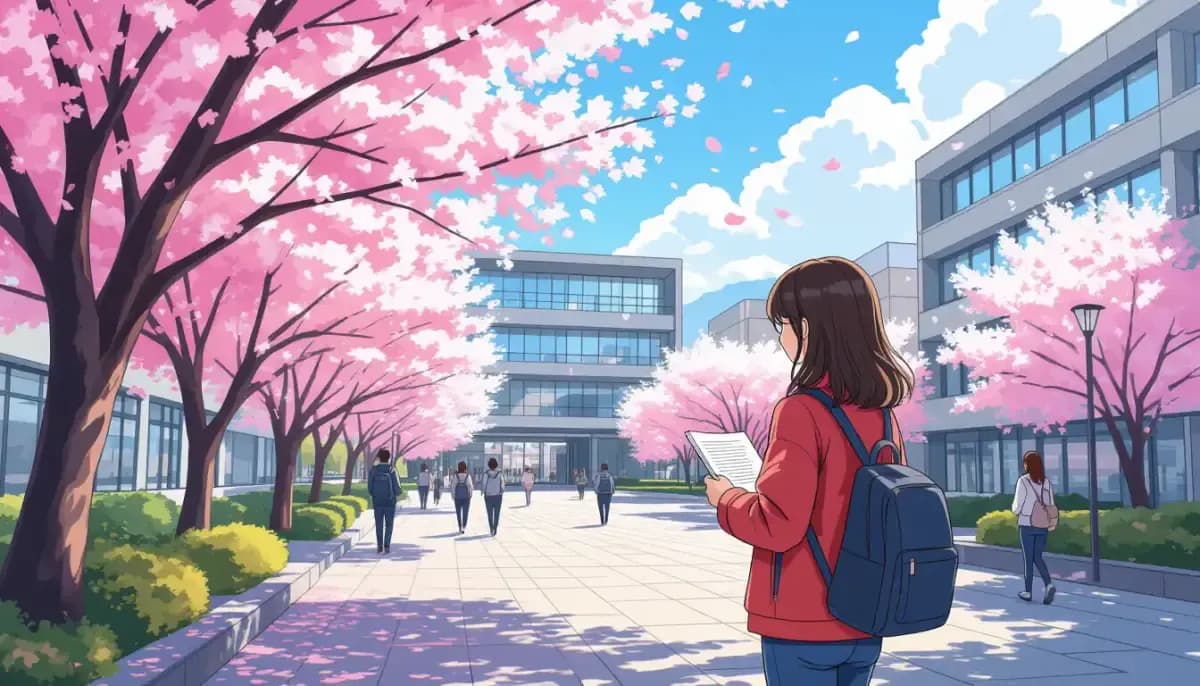
Student Life at Japanese Universities: What to Expect
Everything foreign students need to know about university life in Japan — from club culture, part-time work rules, and housing costs to scholarships, job hunting (shūkatsu), and cultural adjustment tips.
Read more →
University Costs: Tuition and Living Expenses in Japan
Complete guide to university tuition fees and living expenses in Japan for foreign students. Covers national vs private costs, scholarships, part-time work rules, and money-saving strategies.
Read more →
Gap Year Options for Students in Japan
Discover the best gap year options for students in Japan—working holiday visas, language schools, teaching English, volunteer programs, and structured gap year programs. Includes visa details and costs.
Read more →
Vocational Schools and Alternatives to University in Japan
A complete guide to senmon gakko (vocational schools) and alternatives to university in Japan for foreign students and expat families. Covers enrollment, costs, language requirements, and career outcomes.
Read more →