
Community College and Junior College Options in Japan

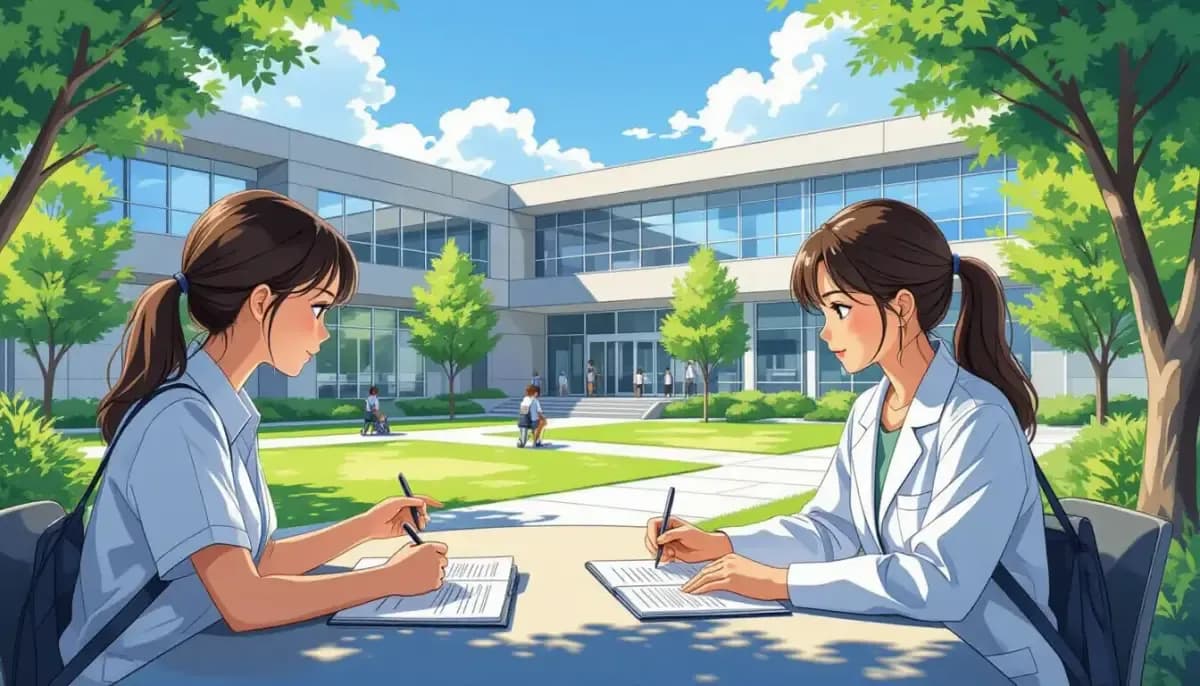
Everything foreigners need to know about junior colleges (tanki daigaku) in Japan: costs, admission requirements, language requirements, career paths, and how to apply as an international student.
Community College and Junior College Options in Japan: A Complete Guide for Foreigners
Japan offers a unique higher education pathway that sits between vocational training and a full four-year university degree: the junior college, known in Japanese as Tanki Daigaku (短期大学). For foreigners and expats in Japan — whether you are planning for your own studies, guiding a young adult child, or exploring affordable higher education options — understanding junior colleges is essential. This guide covers everything you need to know about community and junior college options in Japan, from costs and admission to career outcomes and language requirements.
What is a Junior College in Japan?
A Japanese junior college (短期大学, tanki daigaku) is a university-level institution regulated by the Ministry of Education, Culture, Sports, Science and Technology (MEXT). It is not a vocational school (senmon gakko), though the two are sometimes confused. Junior colleges offer a more academically oriented curriculum compared to vocational schools, while providing a shorter, more practical path than a four-year university.
Key features:
- Program length: 2 years (3 years for nursing and medical technology programs)
- Degree awarded: Associate degree (equivalent to completing 62+ credits for 2-year; 93+ for 3-year programs)
- Governing body: MEXT — same as four-year universities
- Academic orientation: Research-based curriculum with professional application focus
There is no direct equivalent to the American "community college" in Japan, but junior colleges fill a similar role: affordable, shorter-duration higher education with strong ties to regional employment.
For broader context on how the Japanese education system works as a whole, see our guide to The Complete Japanese Education System for Foreign Families.
The State of Junior Colleges in Japan (2024)
Japan's junior college sector has experienced significant contraction over the past three decades. Understanding this trend is important for students considering enrollment.
| Statistic | Data |
|---|---|
| Total junior colleges (2024) | ~309 institutions |
| Public junior colleges | 14 |
| Private junior colleges | 295 |
| Peak institutions (1996) | 598 |
| Total student enrollment | ~78,000 students |
| International students enrolled | 3,265 (May 2024) |
| YoY change in international students | +67.0% |
| % of 18-year-olds attending junior college | 4.7% |
The number of junior colleges has dropped by more than half since the 1990s peak, primarily because more Japanese women — historically the core demographic — now choose four-year universities for better career access. Japan's declining birth rate compounds this trend.
However, international student enrollment is bucking this decline, surging 67% in a single year (2023 to 2024). For foreigners and expats, junior colleges represent an increasingly recognized pathway into Japan's higher education system.
Source: MEXT AY2024 School Basic Survey – NIC-Japan
Fields of Study at Japanese Junior Colleges
Junior colleges are concentrated in specific subject areas. Unlike four-year universities that span a vast range of disciplines, most junior colleges specialize in a smaller set of programs.
Most common fields:
- Early childhood education and childcare (hoiku, kyoiku)
- Nursing and healthcare
- Nutrition and dietetics
- Social welfare (fukushi)
- Home economics
- Liberal arts and humanities
- Business administration
- English language and international studies
Approximately 30% of Japan's junior colleges are women's colleges — a legacy of the sector's historic role in women's education before broader university access became common. However, most institutions today are co-educational and welcoming to international students of any background.
If your child is preparing for higher education in Japan after completing high school, see our related guides on High School in Japan for Foreign Families and International Schools in Japan.
Costs: How Much Does Junior College in Japan Cost?
Junior college is significantly more affordable than a four-year Japanese university — one of its strongest selling points for international families on a budget.
| Institution Type | Approximate First-Year Total Cost |
|---|---|
| Public junior college | ¥604,973 (~$4,000 USD) |
| Private junior college (lower range) | ¥847,348 (~$5,600 USD) |
| Private junior college (higher range) | ¥1,349,001 (~$9,000 USD) |
| National 4-year university (for comparison) | ~¥820,000 (~$5,400 USD) |
| Private 4-year university (for comparison) | ~¥1,100,000+ (~$7,300 USD+) |
Note: Costs include enrollment fees, tuition, and facility fees but not living expenses. Living costs vary widely by region — Tokyo is significantly more expensive than rural areas.
For help managing education costs as an expat family, see our guide on Financial Planning for Expat Families in Japan.
Living in Japan as a foreign family comes with many financial considerations. Living in Nihon provides practical guides for expats navigating daily life and expenses in Japan.
Admission Requirements for International Students
Japanese junior colleges do not use a centralized application system like many Western countries. Each institution manages its own admissions independently, so the process requires more research.
Academic Prerequisites
To be eligible for junior college admission in Japan as a foreigner, you must meet at least one of these conditions:
- Completed 12 or more years of formal schooling (in Japan or abroad)
- Passed an equivalent examination and is at least 18 years old
- Holds internationally recognized qualifications: International Baccalaureate (IB), French Baccalauréat, German Abitur, or UK GCE A-Level
- Graduated from a MEXT-accredited international school in Japan (ACSI, WASC, or ECIS-certified), age 18+
- Passed a pre-university level entrance exam recognized by MEXT, age 18+
Students from education systems that complete before 12 years (e.g., some countries with 11-year school systems) must complete a university preparatory course (daigaku nyugaku shikaku nintei) before applying.
For more on admissions requirements, see: Admission Requirements for Universities and Junior Colleges in Japan
Language Requirements
This is the most significant hurdle for most international students. Almost all junior college instruction is in Japanese only. English-medium programs at this level are extremely rare.
- Minimum recommended: JLPT N2
- Strongly recommended for success: JLPT N1
- Standard entrance exam: EJU (Examination for Japanese University Admission for International Students) — covers Japanese language, mathematics, science, and Japan and the world
For help supporting your child's Japanese language development before higher education, see our guide to Teaching Japanese to Foreign Children: Methods and Resources.
The Application Process: Step by Step
Because there is no centralized portal, applying to Japanese junior colleges requires direct engagement with each institution. Here is the standard process:
- Research and shortlist — Identify schools with programs matching your goals; check their websites for international student admission policies
- Request application materials — Contact each school directly to obtain their application forms and guidance documents
- Prepare and submit your application including all required documents
- Undergo institutional screening — Some schools require entrance exams, interviews, or both
- Receive results — Results are typically communicated by email and posted on the school's website
- Submit post-acceptance documents and enrollment fees
- Obtain a Certificate of Eligibility (CoE) and apply for a student visa at your local Japanese embassy
Required Documents (Typical)
- Completed institution-specific application form
- Curriculum vitae (education history, skills, activities)
- High school diploma and official transcripts
- Two letters of recommendation from school officials or teachers
- Medical certificate
- Proof of financial ability to cover tuition and living expenses
- Passport copy and photos
- Japanese proficiency test scores (EJU or JLPT)
For visa guidance for your family, see our article on Visa and Legal Issues for Foreign Families with Children in Japan.
After Junior College: Transfer and Career Pathways
A junior college degree is not a dead end — it opens several pathways:
Transfer to a Four-Year University
- Approximately 10% of junior college graduates continue on to four-year universities
- Junior college graduates account for ~50% of all university transfer students in Japan
- Transfer credit recognition varies — each university decides independently how many credits to accept
- Competitive transfer programs exist at national and private universities; strong academic performance at junior college is key
Employment
- Junior colleges maintain strong ties to regional employers, particularly in:
- Healthcare and nursing facilities - Childcare centers and kindergartens - Food service and nutrition industry - Local government and social welfare organizations
- Graduates are often preferred by local employers who value the practical focus of junior college programs
- Career placement rates vary significantly by institution and field
For foreign graduates planning to work in Japan after graduation, For Work in Japan offers resources on finding employment and navigating the Japanese job market as a foreigner.
Pros and Cons of Japanese Junior College for Foreigners
| Pros | Cons |
|---|---|
| Lower tuition than 4-year universities | Almost entirely Japanese-language instruction |
| Shorter time to degree (2 years) | Shrinking sector — fewer institution choices |
| Strong regional job placement networks | Limited recognition overseas compared to bachelor's degrees |
| MEXT-accredited degree (not vocational) | Fewer scholarship programs than 4-year universities |
| Transfer pathway to 4-year universities | Programs concentrated in specific fields |
| Good option for practical career entry | Admission process requires direct contact with each school |
Resources for Researching Junior College Options
Finding the right junior college requires careful research. Here are the most useful starting points:
- Study in Japan Official Website – MEXT/JASSO — Official government resource with institution directories and admission guides
- Complete Guide to Higher Education in Japan for Foreigners — Comprehensive overview of all higher education pathways
- BridgeU – Japanese University System Explained — Clear breakdown of Japanese higher education for international students
- Chuukou Benkyou — Resources for academic preparation and study strategies in Japan
For expat families raising children in Japan and considering all education options, our main pillar guide on The Complete Japanese Education System for Foreign Families provides a comprehensive overview of the full educational journey from daycare to higher education.
Is Japanese Junior College Right for You?
Junior college is a good fit if you (or your child):
- Want a shorter, more affordable path to a degree-level qualification in Japan
- Are interested in fields like healthcare, childcare, nutrition, or business
- Have strong Japanese language skills (JLPT N2 or N1) or are committed to achieving them
- Want to enter the Japanese regional job market quickly after graduation
- Are considering it as a stepping stone toward transferring to a four-year university
It may not be the right fit if:
- Japanese language proficiency is below N2 (you'll struggle with coursework)
- You need a bachelor's degree recognized internationally
- You want to study STEM, law, medicine, or other fields underrepresented at junior colleges
The 67% surge in international student enrollment at Japanese junior colleges in 2024 signals that more foreigners are discovering this pathway. With lower costs, shorter duration, and solid career connections, it deserves serious consideration as part of your higher education planning in Japan.
For guidance on other aspects of raising and educating children in Japan as a foreign family, explore our complete resource library including topics on mental health support for foreign children and government benefits available to families in Japan.

Originally from Vietnam, living in Japan for 16+ years. Graduated from Nagoya University, with 11 years of professional experience at Japanese and international companies. Sharing practical information for foreign parents raising children in Japan.
View Profile →Related Articles

Career Prospects After University in Japan
A complete guide to career prospects after university in Japan — covering the shinsotsu system, job-hunting timeline, top industries for foreign graduates, visa options, JLPT requirements, and practical job search resources for 2025.
Read more →
Student Life at Japanese Universities: What to Expect
Everything foreign students need to know about university life in Japan — from club culture, part-time work rules, and housing costs to scholarships, job hunting (shūkatsu), and cultural adjustment tips.
Read more →
University Costs: Tuition and Living Expenses in Japan
Complete guide to university tuition fees and living expenses in Japan for foreign students. Covers national vs private costs, scholarships, part-time work rules, and money-saving strategies.
Read more →
Gap Year Options for Students in Japan
Discover the best gap year options for students in Japan—working holiday visas, language schools, teaching English, volunteer programs, and structured gap year programs. Includes visa details and costs.
Read more →
Vocational Schools and Alternatives to University in Japan
A complete guide to senmon gakko (vocational schools) and alternatives to university in Japan for foreign students and expat families. Covers enrollment, costs, language requirements, and career outcomes.
Read more →
English-Taught Degree Programs at Japanese Universities
Complete guide to English-taught degree programs at Japanese universities: top schools, tuition costs, application requirements, scholarships, and student life tips for international students.
Read more →