
School Lunch (Kyushoku) at Japanese Elementary Schools

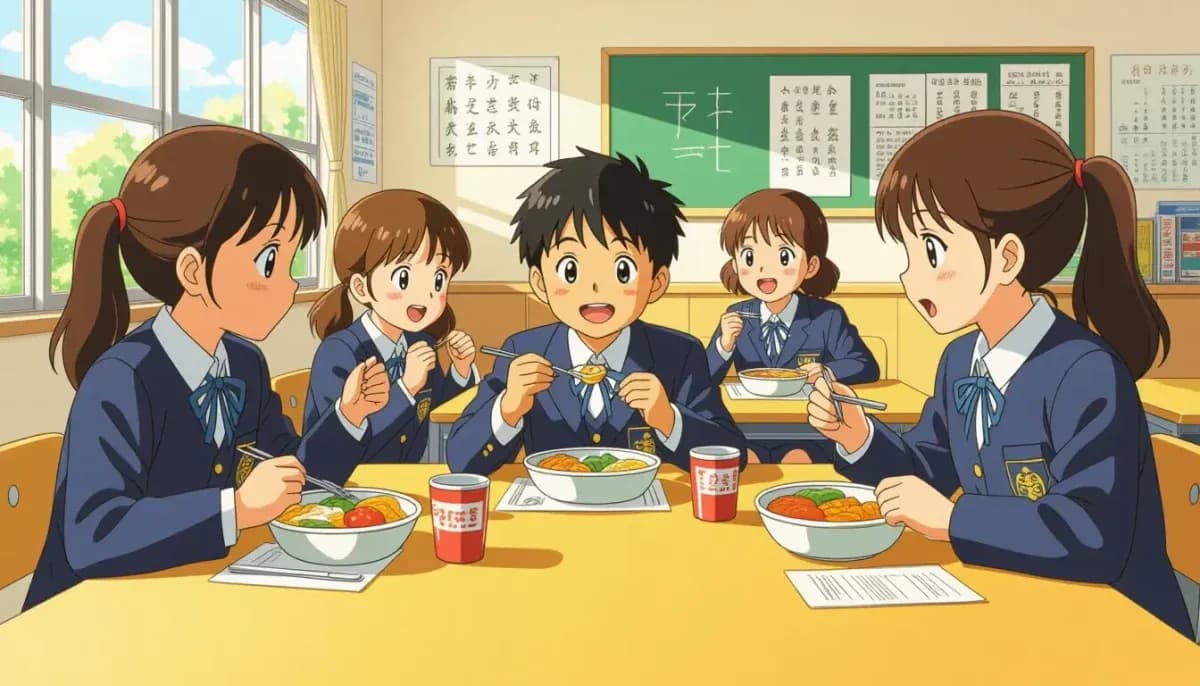
Discover how Japan's kyushoku school lunch system works, what children eat, how much it costs, and tips for helping your foreign child adjust to Japanese elementary school meals.
School Lunch (Kyushoku) at Japanese Elementary Schools: A Complete Guide for Foreign Families
If you have a child enrolled at a Japanese public elementary school, one of the most memorable parts of their day will be kyushoku (給食) — Japan's beloved school lunch program. Far more than just a meal, kyushoku is a cultural institution woven into the fabric of Japanese education. For foreign families, understanding how it works, what to expect, and how to support your child can make the transition to Japanese school life significantly smoother.
This guide covers everything you need to know about kyushoku at Japanese elementary schools — from its history and how it's served, to costs, dietary accommodations, and tips for helping your child adapt.
What Is Kyushoku (給食)?
Kyushoku literally means "provision of food" and refers to the hot, nutritionally balanced school lunches served daily at nearly all public elementary schools across Japan. Unlike systems in many other countries where children buy food from a cafeteria or bring their own packed lunches, kyushoku is a structured, curriculum-integrated meal served directly in the classroom.
As of 2021, 99.7% of all public elementary schools and 98.2% of junior high schools in Japan provide school meals. This near-universal coverage means that practically every child attending a public school in Japan participates in the same system, regardless of family background or income level.
What makes kyushoku unique is that it's not merely a nutritional program — it is formally recognized as part of the educational curriculum. The meal teaches children about nutrition, food culture, teamwork, hygiene, and respect for food and those who prepare it. This philosophy is rooted in shokuiku (食育), or "food education," which was enshrined in Japan's Basic Act on Shokuiku in 2005.
For more on what life is like at a Japanese public elementary school, see our Elementary School in Japan: A Complete Guide for Foreign Parents.
A Brief History of Kyushoku
Japan's school lunch program has surprisingly deep roots. The first recorded school meal was served in 1889 at a Buddhist temple school in Tsuruoka City, Yamagata Prefecture, to support children from poor families. The program expanded slowly over the following decades.
After World War II, widespread food shortages created an urgent need to feed schoolchildren. With support from international aid organizations including UNICEF and the United States, a national school lunch program was launched. The National School Lunch Program Act was passed in 1954, establishing the legal framework that still governs kyushoku today.
Over the decades, the program evolved from simple relief meals to the sophisticated, nutritionally designed system seen today. In 2005, the Basic Act on Shokuiku formalized food education as an integral part of Japanese schooling, giving kyushoku its current curriculum status.
How Kyushoku Works: The Daily Lunchtime Routine
Lunchtime in Japanese elementary schools is an orderly, community-centered affair. Here's what typically happens each day:
Kyushoku-Toban (給食当番) — Lunch Duty Students
A rotating group of students called the kyushoku-toban (lunch duty team) is responsible for serving the meal to their classmates. These students don white aprons, caps, and masks — resembling miniature kitchen workers — and travel to the school kitchen or distribution point to collect the food carts. They then carry heavy containers back to the classroom and carefully portion and serve each dish to their classmates.
This rotation means every child takes a turn. It teaches responsibility, fairness, and respect for food service workers. The routine is taken seriously, and students learn to handle food hygienically and serve others with care.
Eating Together in the Classroom
Unlike many countries where students eat in a separate cafeteria, Japanese students eat at their own desks or in a rearranged classroom. Crucially, the teacher eats the same meal as the students, reinforcing a sense of community and equality. There is no separate "teacher's menu."
The atmosphere during kyushoku time is calm and focused. In many schools, a no-talking rule (introduced or reinforced during COVID-19) still applies, making mealtimes quiet and almost meditative.
Cleaning Up Together
After eating, students work together to clean up — collecting trays, washing dishes, wiping tables, and returning everything to the kitchen. This communal cleanup is another important lesson in shared responsibility and cleanliness.
What's on the Menu? Typical Kyushoku Meals
Kyushoku menus are carefully designed by licensed nutritionists (栄養士, eiyōshi) to meet government-mandated nutritional standards. A typical school lunch includes:
| Component | Examples |
|---|---|
| Staple food (主食) | Rice, bread, or noodles (e.g., udon, ramen) |
| Soup (汁物) | Miso soup, vegetable soup, cream soup |
| Main dish (主菜) | Grilled fish, chicken karaage, tofu stew, hamburger patty |
| Side dish (副菜) | Stir-fried vegetables, salad, pickled vegetables |
| Milk (牛乳) | A carton of milk (served daily) |
| Dessert/fruit | Seasonal fruit, yogurt, jelly (occasional) |
Menus are published monthly, typically at the start of each month, so families always know what their child will be eating. Schools pride themselves on seasonal variety and regional specialties, and some schools serve international cuisine once a month to introduce children to global food cultures.
A key principle is that the same meal is served to all students — including those who may not like certain foods. The cultural concept of mottainai (もったいない, "nothing goes to waste") means children are gently encouraged to finish their plates, though outright forced eating is becoming less common in progressive schools.
Research shows that children who eat kyushoku regularly have significantly higher protein, fiber, vegetable, and fruit intake compared to children who bring lunch from home.
Cost of Kyushoku: How Much Do Parents Pay?
Kyushoku is not free — parents pay a monthly fee that covers the cost of ingredients. The national average is:
| School Level | Monthly Cost (Average) |
|---|---|
| Elementary school (小学校) | ¥4,000 – ¥4,500 |
| Junior high school (中学校) | ¥4,500 – ¥5,000 |
Some municipalities subsidize or even fully cover the cost for low-income families. In recent years, several major cities including Tokyo have moved toward providing free kyushoku to reduce the burden on families. If cost is a concern, ask the school's administrative office (jimu-shitsu, 事務室) about available subsidies.
Payment is typically made via bank auto-transfer (furikomi) or school-designated bank account at the start or middle of each month. You'll receive instructions from the school upon enrollment.
Kyushoku and Shokuiku: Food as Education
Japan takes food education — shokuiku — extremely seriously. The Basic Act on Shokuiku (2005) mandates that schools incorporate food education into the curriculum, and kyushoku is the cornerstone of this effort.
In practical terms, shokuiku through kyushoku means:
- Learning where food comes from: Children study the origins of ingredients, often visiting local farms or meeting the farmers who grow their food
- Understanding nutrition: Each month's menu comes with nutritional explanations that teachers discuss with students
- Appreciating food culture: Schools feature regional Japanese cuisine and international dishes to broaden food horizons
- Reducing food waste: Schools track and celebrate low food waste, reinforcing environmental responsibility
Notably, 56% of food purchases by Japanese schools came from local sources in 2021, reflecting the deep commitment to seasonal, locally grown ingredients. This farm-to-table philosophy is built into the system.
For more on how Japan's approach to education differs from Western systems, see our Complete Guide to the Japanese Education System for Foreign Families.
Handling Food Allergies and Dietary Restrictions
For foreign families — particularly those with children who have food allergies, religious dietary restrictions, or strong food preferences — kyushoku can present challenges. Here's what you need to know:
Food Allergies Japanese schools take allergies seriously. Before your child starts school, inform the teacher and school nurse about any allergies in writing. Schools can often provide an alternative menu (除去食, jokyo-shoku) that omits specific allergens. However, not all schools have the capacity to handle severe allergies, so it's critical to discuss your child's specific needs directly with the school.
Religious Dietary Restrictions (Halal, Kosher, Vegetarian, Vegan) This is an area where Japan's public school system still has limited flexibility. Most schools cannot accommodate religious dietary restrictions within the standard kyushoku framework. Options in this case may include:
- Bringing a packed lunch (obento, お弁当) — some schools allow this with documentation
- Enrolling at an international school with more flexible meal options
- Advocating through the board of education (kyoiku iinkai, 教育委員会) for accommodations
Picky Eaters and Unfamiliar Foods Many foreign children encounter unfamiliar flavors and textures — from natto (fermented soybeans) to strongly flavored fish dishes. Teachers generally work with children who are struggling, but the expectation is that children try everything. Communication with the classroom teacher is key.
See also our guide on Teaching Japanese to Foreign Children: Methods and Resources for broader tips on school adaptation.
Tips for Helping Your Foreign Child Adjust to Kyushoku
The adjustment to kyushoku is real, but most children manage it within a few months. Here are practical strategies:
Before School Starts
- Review upcoming monthly menus together to familiarize your child with what they'll eat
- Prepare similar dishes at home to reduce the "first time" reaction at school
- Discuss the cultural significance of kyushoku: it's a shared experience, not just food
At the Start of the School Year
- Communicate clearly with the homeroom teacher about your child's food concerns
- If your child has medical issues affecting appetite, obtain written documentation from a doctor
- Ask the teacher to be patient and not force your child to eat everything immediately
Ongoing Support
- Ask your child about their favorite kyushoku dishes — this turns the experience into something fun to discuss
- Celebrate adaptation milestones (e.g., "You tried the fish today — great job!")
- If problems persist, request a meeting with the school nutritionist or counselor
Many expat parents report that kyushoku becomes one of their children's favorite parts of the school day within a few months. The structured routine, the sense of belonging, and the delicious variety of food often win children over in time.
For more general advice on supporting foreign children in Japanese public school, visit Savvy Tokyo's guide to helping your kids adjust to Japan's school lunches and Japan Today's practical tips for expat families.
How Kyushoku Compares to School Meals in Other Countries
Many foreign parents are pleasantly surprised by the quality and philosophy behind kyushoku once they understand it fully.
| Feature | Japan (Kyushoku) | USA (Cafeteria) | UK (School Dinners) |
|---|---|---|---|
| Where eaten | In the classroom | In the cafeteria | In the cafeteria |
| Menu choice | Fixed (same for all) | Multiple choices | Some choices |
| Teacher involvement | Teachers eat same meal | Separate | Separate |
| Student participation | Students serve meals | No | No |
| Monthly cost | ¥4,000–¥5,000 | Varies (subsidized) | £2.65/day (free for some) |
| Curriculum integration | Mandatory (shokuiku) | Not standard | Limited |
| Local sourcing emphasis | Strong (56% local) | Variable | Increasing |
The unique combination of nutritional excellence, student responsibility, and educational depth makes kyushoku internationally admired. The Global Child Nutrition Foundation has highlighted Japan's system as a global model for other countries to emulate.
Resources and Further Reading
If you're raising children in Japan and want to deepen your understanding of the school system, we recommend the following resources:
- Living in Nihon: Raising Children and Education in Japan Guide — A comprehensive resource for foreign parents navigating Japanese education
- For Work in Japan: Daily Life Resources for Foreigners — Practical information for working and living in Japan with a family
- Chuukou Benkyou: Japanese School Information — Insights into the Japanese school curriculum and system
- Our guide on Raising Bilingual Children in Japan for language support strategies
- Our guide on Mental Health and Emotional Wellbeing for Foreign Children in Japan for adjustment support
Conclusion
Kyushoku is one of Japan's most admired educational institutions — a daily practice that nourishes children's bodies, builds community, instills responsibility, and teaches deep respect for food and the people who produce it. For foreign families, it can initially seem unfamiliar or even challenging. But with preparation, communication, and patience, most children come to love kyushoku as a highlight of their school day.
By understanding how the system works — from the kyushoku-toban rotation to the monthly menus and allergy procedures — you can help your child embrace this uniquely Japanese experience with confidence and curiosity.

Originally from Vietnam, living in Japan for 16+ years. Graduated from Nagoya University, with 11 years of professional experience at Japanese and international companies. Sharing practical information for foreign parents raising children in Japan.
View Profile →Related Articles
Elementary School Graduation Ceremony in Japan
Everything foreign parents need to know about Japan's elementary school graduation ceremony (sotsugyo-shiki): ceremony format, dress code, songs, traditions, and tips for expats.
Read more →
Swimming Lessons at Japanese Elementary Schools
Complete guide to swimming lessons at Japanese elementary schools: schedule, required gear, exemptions, grading, and tips for foreign parents navigating suiei season.
Read more →
Music and Arts Education in Japanese Elementary Schools
A complete guide for foreign families on music and arts education in Japanese elementary schools. Learn what subjects are taught, what instruments children use, school festivals, and practical tips for expat parents.
Read more →
Moral Education (Doutoku) at Japanese Elementary Schools
A complete guide to Doutoku (道徳), Japan's moral education class, for foreign parents. Learn what's taught, how classes work, and how to support your child.
Read more →
School Field Trips and Excursions in Japanese Elementary Schools
Everything foreign parents need to know about school field trips in Japanese elementary schools — ensoku day trips, shugakuryoko overnight trips, costs, packing lists, and cultural significance.
Read more →
Parent-Teacher Meetings at Japanese Elementary Schools
A complete guide for foreign parents on navigating parent-teacher meetings at Japanese elementary schools: types, what to expect, language tips, and how to prepare.
Read more →