
Using Anime and TV Shows to Help Kids Learn Japanese

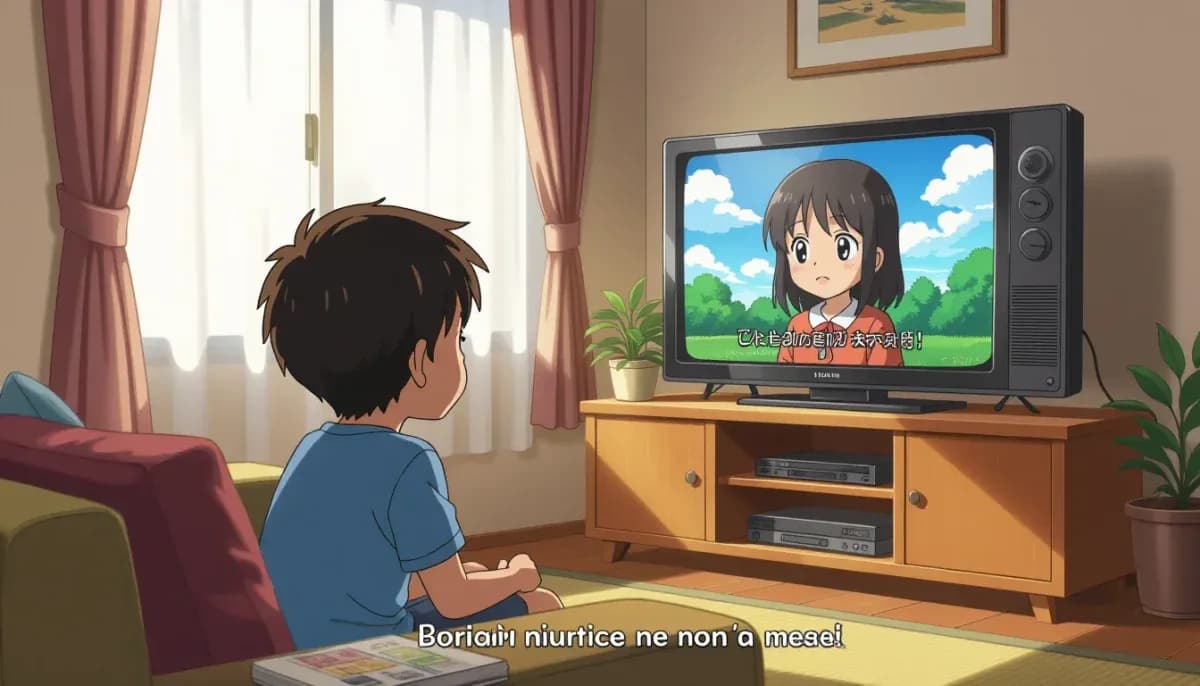
A complete guide for foreign parents in Japan on using anime and children's TV shows to build kids' Japanese skills. Includes recommended shows by age, subtitle strategies, and practical daily habits that actually work.
Using Anime and TV Shows to Help Kids Learn Japanese
If you are a foreign parent raising children in Japan, you already know that getting kids to study a language can be an uphill battle. Textbooks feel like homework, flashcard apps get abandoned after a week, and structured lessons can quickly kill a child's enthusiasm. But there is one tool that children will actually beg you to use: anime and Japanese TV shows.
Anime is not a shortcut or a passive activity — when used strategically, it is one of the most effective tools available for building Japanese listening comprehension, vocabulary, and cultural fluency in children. This guide walks you through exactly how to use anime and kids' TV programming to accelerate your child's Japanese, which shows to choose by age and level, and the proven strategies that make the difference between passive entertainment and real language acquisition.
Why Anime and TV Shows Work for Language Learning
The science behind using media for language learning is well-established. Linguist Stephen Krashen's Comprehensible Input Theory argues that we acquire language fastest when we encounter content that is slightly above our current level but still mostly understandable. Children's anime hits this sweet spot perfectly: it uses visual storytelling to convey meaning even when words are unfamiliar, and it features the clearest, most learner-friendly Japanese you can find.
Japanese children's programming has several specific advantages for learners:
- Slower speech rate compared to adult shows and real-world conversations
- Standard Japanese without heavy regional dialects or slang
- High vocabulary repetition — the same words appear in episode after episode
- Clear enunciation so syllables are distinct and audible
- Short episodes (typically 10–25 minutes) ideal for focused, repeatable study sessions
Research backs this up. Studies have found that 81.5% of regular anime viewers self-reported at least beginner-level Japanese listening skills, and multiple academic studies have documented statistically significant vocabulary gains when anime is incorporated into language learning. One study recorded a 100% approval rating among participants for anime as a learning motivator — something no textbook has ever achieved.
For more on the cultural context of anime in Japan, see Living in Nihon's guide to manga, anime, and otaku culture.
Understanding Age and Level: The Right Show for the Right Stage
Not all anime is created equal for language learning. Choosing the wrong show — one that is too difficult, too abstract, or uses too much colloquial slang — will frustrate your child and produce minimal benefit. Here is a structured breakdown of recommended shows by age and proficiency level.
| Show | Best Age | Level | Why It Works |
|---|---|---|---|
| Anpanman (アンパンマン) | 0–4 | Pre-A1 | Simplest Japanese in any anime; predictable, repetitive dialogue |
| Shimajiro (しまじろう) | 2–5 | A1 | Designed for preschoolers; teaches daily routines and manners |
| Hamtaro (ハムたろう) | 4–7 | A1 | Soft, clear pronunciation; short episodic format |
| Chi's Sweet Home (チーズスイートホーム) | 4–8 | A1 | 7–10 minute episodes; home vocabulary from a kitten's perspective |
| Old Enough! (はじめてのおつかい) | Any age | A1 | Real children speaking natural Japanese; unscripted and authentic |
| Doraemon (ドラえもん) | 6–12 | A2 | Most iconic beginner anime; school, family, and neighborhood vocabulary |
| Shirokuma Cafe (しろくまカフェ) | 6–10 | A2 | Very clear speech; polite and casual registers both modeled |
| Cardcaptor Sakura (カードキャプターさくら) | 8–12 | A2 | School vocabulary, emotional language, friendship expressions |
| Chibi Maruko-chan (ちびまる子ちゃん) | 8–12 | A2–B1 | Elementary school life; culturally rich; real conversational Japanese |
| My Neighbor Totoro / Kiki's Delivery Service | 6–10 | A1–A2 | Studio Ghibli: simple, clear dialogue universally loved by children |
| Sazae-san (サザエさん) | 10+ | B1 | World's longest-running anime; deep cultural insight; multigenerational family |
| NHK for School | All ages | Structured | Free, grade-level educational content made for Japanese children |
Important note on Crayon Shin-chan: This popular show uses crude humor and heavy colloquialisms that even native Japanese parents find inappropriate for young children. While it can be useful for understanding natural informal speech at a later stage, it is not recommended as a starting point.
The Subtitle Strategy: The Difference Between Watching and Learning
Here is the single most important insight about anime-based language learning: passive watching does not work. If your child is watching with English subtitles and letting the Japanese wash over them as background noise, they are simply watching TV. The subtitle strategy determines everything.
The recommended progression, validated by language learning researchers and expat parents, is:
Stage 1 — Beginners: Japanese audio + English subtitles. The child is hearing authentic Japanese while understanding the story. This builds listening familiarity and allows the brain to start pattern-matching sounds to meaning.
Stage 2 — Intermediate: Japanese audio + Japanese subtitles. Now the child is connecting the spoken sounds to written characters. This is excellent for simultaneously building reading ability (hiragana, katakana, then kanji).
Stage 3 — Advanced: No subtitles at all. Full immersion with the language as it is intended to be heard.
Do not rush your child through these stages. Spending months or even a year at Stage 1 is completely normal and builds a strong listening foundation.
According to the For Work in Japan guide on children's Japanese learning methods, ages 9–12 represent the prime window when anime becomes a powerful motivational driver for language acquisition. Younger children (ages 0–5) benefit more from NHK educational programming, songs, and interactive activities — the narrative complexity of most anime is simply too high for toddlers to leverage for learning.
For broader strategies on raising bilingual children in Japan, see our guide on raising bilingual children in Japan.
Practical Strategies That Produce Real Results
Watching anime every day is a good start, but these structured approaches dramatically increase language gains:
The 3 Words Per Episode Rule Have your child identify and write down 3 words or phrases they heard in each episode, then look them up together. This low-pressure exercise builds vocabulary without textbook fatigue. Over the course of a 25-episode season, that is 75 new words — learned in context, through content the child already loves.
The Rewind and Repeat Method For beginners, choose a 3–5 minute clip from a favorite episode. Watch it once with English subtitles, then rewind and watch it again with Japanese subtitles, then once more without subtitles. This triple-exposure technique is proven to dramatically increase retention.
The Daily Habit (Not the Occasional Marathon) Consistency beats intensity for language acquisition. The jolii.ai guide on kids' shows for learning Japanese recommends a minimum of 30 minutes daily. Research consistently shows that 15 minutes every day produces better results than a 3-hour binge once a week. Build the habit around a consistent time — after school, before dinner, or as a morning routine on weekends.
Switch Device Menus to Japanese This tip from the For Work in Japan bilingual parenting guide is deceptively powerful: set your child's tablet, phone, and streaming app menus to Japanese. When your child wants to find their favorite show, they have to navigate in Japanese. This creates daily low-stakes reading practice with real motivation.
Use NHK for School as a Structured Complement NHK for School (NHKフォースクール) is a free streaming service from Japan's national broadcaster, producing educational content at every grade level from first grade through junior high. It covers the same subjects taught in Japanese elementary schools — science, social studies, Japanese language arts — using the same vocabulary your child will encounter in school. Pair entertainment anime with 10–15 minutes of NHK for School content daily for a complete informal learning system.
For more on supporting your child through Japanese elementary school, read our complete guide to elementary school in Japan for foreign parents.
Setting Realistic Expectations: What Anime Can and Cannot Do
Anime is a powerful tool, but it has limits that foreign parents need to understand clearly.
Conversational fluency vs. academic language proficiency are completely different timelines. Conversational ability — the kind built through anime, TV, and daily interaction — typically takes 1–2 years to develop in a child fully immersed in Japan. But academic language proficiency, the kind needed for reading textbooks, writing essays, and participating fully in Japanese school, requires 5–7 years of sustained exposure. Anime helps enormously with the former but only marginally with the latter.
This means anime should be part of a broader strategy that includes:
- Reading hiragana and katakana books and practice
- Regular interaction with Japanese-speaking peers
- Japanese supplementary schoolwork alongside school
- Family reading time in Japanese (picture books, manga, graded readers)
The chuukoubenkyou.com guide on Japanese study methods offers structured approaches for children working toward academic Japanese proficiency, especially useful as children reach middle school age.
Do not force it. Multiple child language learning experts emphasize this point strongly. If anime becomes homework — an obligation rather than a pleasure — children will rebel against it and develop aversion toward the language. The moment watching becomes mandatory, you lose the most powerful aspect of the tool: intrinsic motivation. Your role as a parent is to make access easy, be interested and engaged when they want to talk about what they watched, and occasionally suggest new shows. Let the child lead.
For additional support on helping foreign children thrive in the Japanese school system, see our guide on teaching Japanese to foreign children: methods and resources.
Building a Japanese Media Environment at Home
Individual anime sessions are more effective within a home environment deliberately shaped for Japanese exposure. Here are practical ways to build that environment:
- Label household items in Japanese: Post hiragana labels on the refrigerator, doors, windows, and common objects. Children absorb these casually over months.
- Japanese-language audiobooks and music: Playing Japanese children's songs, audiobooks, and podcasts as background audio during cooking, driving, or playtime creates passive immersion.
- Japanese picture books at bedtime: Reading aloud from Japanese picture books — even if your own Japanese is imperfect — creates positive associations with the language and builds literacy alongside spoken proficiency.
- Find Japanese friends: No media tool replaces actual conversation with peers. Encourage friendships with Japanese children in your neighborhood, school, or local community center.
- Watch together: When you watch anime with your child and show genuine interest — asking "what did that character say?" or "what do you think will happen?" — you deepen engagement and model active listening.
For broader guidance on how foreign children navigate cultural identity and language in Japan, see our article on cultural identity for hafu and mixed-race children in Japan.
Where to Find Japanese Children's Shows
| Platform | Content Available | Cost | Notes |
|---|---|---|---|
| YouTube (Japanese search) | Doraemon, Anpanman, Chibi Maruko-chan, more | Free | Search in Japanese (ドラえもん) for best results |
| NHK for School (www.nhk.or.jp/school/) | Full educational curriculum content | Free | Grade-level content for all elementary subjects |
| Netflix Japan | Old Enough!, Ghibli films, international anime | Subscription | Switch account region to Japan for more titles |
| Amazon Prime Video Japan | Doraemon, Crayon Shin-chan, classic anime | Subscription | Wide catalog with Japanese-only titles |
| Disney+ Japan | Studio Ghibli, Japanese dubbed Disney | Subscription | Disney classics dubbed in Japanese are excellent for learners |
Pro tip from Tofugu's comprehensive anime learning guide: Search YouTube in Japanese (using Japanese characters, not romaji) for dramatically better availability of classic shows that may be geo-restricted or hard to find through English searches.
For shows available on Netflix with Japanese subtitles, the lingopie guide to Japanese anime for kids organizes recommendations by CEFR language level, making it easy to match shows to your child's current proficiency.
Conclusion
Anime and Japanese TV shows are not a guilty pleasure — for foreign children growing up in Japan, they are a legitimate, research-backed language learning tool that textbooks and apps simply cannot match for motivation and engagement. The key is using them strategically: choose the right show for your child's age and level, implement the subtitle progression method, add active learning techniques like the 3-words-per-episode rule, and embed media time within a broader Japanese-rich home environment.
Most importantly, keep it enjoyable. A child who genuinely loves watching Doraemon every evening will absorb more Japanese over a year than one who grudgingly completes structured lessons. Your job is to give them access, show interest, and stay out of the way while they discover that Japanese is not a subject — it is a world of stories waiting to be explored.
For more on supporting your child's language journey, explore our full pillar guide on teaching Japanese to foreign children and the complete resource on raising bilingual children in Japan.

Originally from Vietnam, living in Japan for 16+ years. Graduated from Nagoya University, with 11 years of professional experience at Japanese and international companies. Sharing practical information for foreign parents raising children in Japan.
View Profile →Related Articles
Summer Immersion Programs for Japanese Language Learning
Discover the best summer immersion programs for Japanese language learning for children and teens. From in-Japan schools to US-based camps, find the right program with costs, age requirements, and tips for expat families.
Read more →
Overcoming Japanese Language Barriers in School
A complete guide for foreign families on overcoming Japanese language barriers in school. Learn practical strategies, support resources, and what to expect for your child in Japan's education system.
Read more →
How Long Does It Take Kids to Become Fluent in Japanese?
Wondering how long it takes expat children to become fluent in Japanese? This guide covers realistic timelines by age group, immersion strategies, and tips to help your child thrive in Japan.
Read more →
Kumon and Learning Programs for Japanese Language
Explore Kumon's Japanese Language Program and other top learning options for foreigners in Japan. Costs, enrollment tips, and how to choose the right program for your child or yourself.
Read more →
Japanese Language Playgroups and Immersion Activities
A complete guide to Japanese language playgroups and immersion activities for foreign children in Japan. Find the best programs, strategies, and tips for raising bilingual kids.
Read more →
Best Japanese Children's Books for Language Learning
Discover the best Japanese children's books for language learning. From classic ehon like Guri and Gura to intermediate reads like Kaiketsu Zorori — a complete guide for foreign families in Japan.
Read more →