
How Long Does It Take Kids to Become Fluent in Japanese?

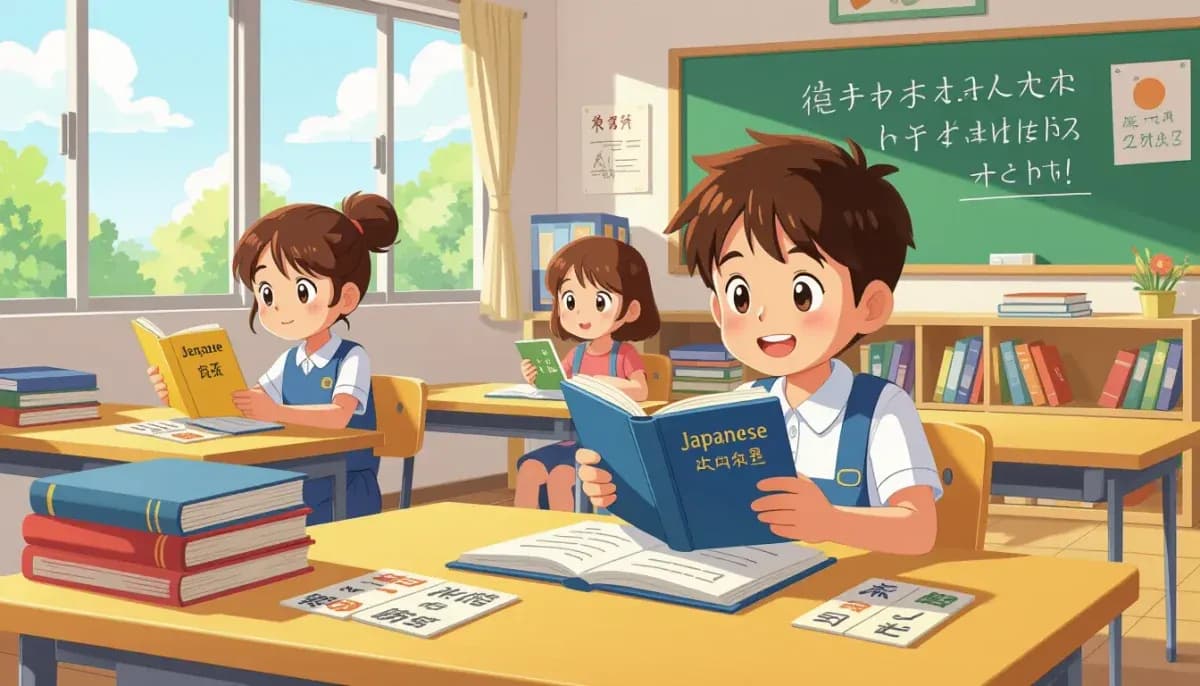
Wondering how long it takes expat children to become fluent in Japanese? This guide covers realistic timelines by age group, immersion strategies, and tips to help your child thrive in Japan.
How Long Does It Take Kids to Become Fluent in Japanese?
One of the most common questions expat parents ask when moving to Japan is: how long will it take my child to become fluent in Japanese? The honest answer depends on several factors — your child's age, how much immersion they receive, and what "fluency" actually means to you. The good news is that children are remarkably capable language learners, and most kids who are fully immersed in Japanese life will reach conversational fluency faster than you might expect.
This guide breaks down realistic timelines, factors that influence acquisition speed, and practical strategies to help your child thrive linguistically in Japan.
Understanding Fluency: What Are We Actually Measuring?
Before diving into timelines, it's worth clarifying what we mean by "fluent." Language fluency exists on a spectrum:
- Survival Japanese — asking for help, ordering food, basic classroom commands (a few weeks to 2 months)
- Conversational fluency — chatting with classmates, following daily instructions, expressing needs (6–18 months)
- Academic Japanese — reading and writing at grade level, understanding complex lessons (2–4 years)
- Native-like proficiency — indistinguishable from Japanese peers in speech and writing (4–7+ years)
Most expat parents aim for conversational fluency first, then academic proficiency. Research shows that children in full Japanese immersion environments typically reach conversational fluency within 6 to 18 months, though academic language takes considerably longer.
Fluency Timeline by Age Group
Age at arrival is probably the single biggest factor in how quickly a child picks up Japanese. Younger children benefit from neuroplasticity — their brains are literally wired for language acquisition.
| Age at Arrival | Conversational Fluency | Academic Fluency | Notes |
|---|---|---|---|
| Under 2 years | 6–12 months | N/A (learning alongside peers) | Learn naturally like native speakers |
| 2–5 years | 6–12 months | 1–2 years | Slight initial frustration, then rapid progress |
| 6–8 years (early elementary) | 6–12 months | 2–3 years | Good adaptation; minimal kanji catch-up |
| 9–11 years (late elementary) | 12–18 months | 3–4 years | More kanji and academic content to catch up on |
| 12–14 years (junior high) | 12–24 months | 3–5 years | Harder socially; academic pressure high |
| 15+ years (high school) | 18–36 months | 4–6 years | Most challenging; strong motivation needed |
The pattern is clear: the younger the child, the faster and more naturally they acquire Japanese. A toddler starting Japanese daycare will absorb the language almost effortlessly, while a teenager enrolling in a Japanese junior high faces a much steeper climb.
What the Research Says About Child Language Acquisition
Scientific research on bilingual development gives us useful benchmarks. Studies show that researchers generally consider a child bilingual if they receive at least 10–25% of daily exposure to each language — though this level of exposure doesn't guarantee full functional bilingualism.
Key research findings relevant to expat children in Japan:
- Bilingualism does not cause language disorders. Many parents worry that learning two languages simultaneously will confuse their child. Research consistently shows this is a myth. Bilingual children simply follow a different developmental trajectory — not a worse one.
- Immersion dramatically accelerates acquisition. Three months of total immersion in Japan can be equivalent to two full years of home study. For children enrolled in Japanese schools, this immersion effect is powerful.
- Approximately 57% of consistent learners progress from beginner to intermediate level within six months.
- Cognitive benefits are real. Bilingual children tend to outperform monolingual peers on tasks requiring task-switching and inhibitory control.
As of recent years, approximately 70,000 foreign students in Japan require Japanese language instruction — double the figure from a decade ago. This has pushed Japanese public schools to develop better support systems, including pullout Japanese language classes and bilingual support staff.
For a broader look at how the Japanese school system supports foreign children, see our Complete Guide to the Japanese Education System for Foreign Families.
The Immersion Factor: Japanese vs. International School
One of the biggest decisions expat parents face is whether to enroll their child in a Japanese public school or an international school. This choice has a massive impact on language acquisition speed.
Japanese Public School:
- Provides maximum immersion — your child will be surrounded by Japanese speakers for 6–8 hours a day
- Most children in this environment reach conversational fluency within 6–12 months
- Academic Japanese (reading, writing, kanji) typically takes 2–3 years to catch up
- Cost: essentially free (with some small fees for materials and lunch)
- Japanese public schools provide Japanese language support classes, additional teaching staff, and sometimes native language support
International School:
- Instruction remains primarily in English (or another language)
- Japanese language development is slower — typically limited to formal Japanese classes
- Better option if your stay in Japan is short-term (under 2 years)
- Cost: ¥2–3 million per year
- Children may not gain Japanese graduation credentials
For most families planning to stay in Japan for 2+ years, especially those with younger children, Japanese public school offers unmatched language acquisition. For more on this decision, read our guide on International Schools in Japan.
The Living in Nihon guide to raising children in Japan offers excellent detail on educational options and the support systems available to foreign children in Japanese public schools.
Starting Age Breakdown: What to Expect
Under 2 Years (Daycare/Hoikuen)
Children who start Japanese daycare before age 2 are in the best possible position for language acquisition. They are still in the critical window for phonological development — meaning they can learn to hear and produce Japanese sounds that are difficult for adults. These children will grow up bilingual almost naturally, given consistent exposure to both Japanese and their home language.
Japanese daycare (hoikuen) costs roughly ¥30,000 per month and provides rich immersive language exposure during the most formative years. See our guide on Daycare and Hoikuen in Japan for enrollment details.
Ages 2–5 (Preschool/Kindergarten)
Children in this age group may experience some initial frustration when they cannot communicate with peers. However, they typically progress rapidly — most become conversationally fluent within 6–12 months. Children this age learn primarily through play and social interaction, meaning that simply attending Japanese kindergarten (yochien) is highly effective.
One important note: some children go through a silent period of 1–3 months where they listen and observe without speaking much. This is completely normal and part of the acquisition process, not a sign of a problem.
Read more about kindergarten options in our Kindergarten in Japan guide.
Ages 6–8 (Early Elementary)
First and second grade are relatively gentle entry points into Japanese elementary school. Kanji instruction is minimal at this stage, so children don't face an overwhelming written language backlog. Most kids in this age range reach conversational fluency within 6–12 months and academic fluency within 2–3 years. Schools provide Japanese support classes, often twice weekly, to help non-native speakers catch up.
Ages 9–11 (Late Elementary)
By fourth grade, the academic demands in Japanese schools increase significantly. Children are expected to handle substantial kanji, complex reading comprehension, and multi-subject content. A child entering at this stage will need more active support — both from the school and from parents at home. Conversational fluency still typically comes within 12–18 months, but academic catch-up in Japanese takes 3–4 years.
Middle School and Above
Junior high and high school entry is the most challenging. Academic content is dense, entrance exams loom, and social dynamics become more complex. That said, many teenagers do successfully learn Japanese in Japanese schools — it requires strong motivation, dedicated study, and family support. Japan Living Guide's research on Japanese language schools shows that consistent immersion combined with formal study accelerates progress significantly.
For details on what to expect, see our guides on Junior High School in Japan and High School in Japan.
Practical Strategies to Accelerate Japanese Fluency
The school environment does most of the heavy lifting, but parents can significantly speed up their child's acquisition with some focused effort:
1. Enroll in Japanese school as early as possible. Every additional month of immersion compounds. If you're moving to Japan with young children, get them into the local school or daycare quickly.
2. Encourage Japanese friendships. Peer interaction is the most powerful driver of conversational Japanese acquisition. Arrange playdates, encourage joining after-school clubs, and resist the urge to isolate your child in expat social circles.
3. Use Japanese media strategically. Japanese anime, YouTube for kids, and TV shows provide excellent comprehensible input. Let your child watch their favorite shows in Japanese — they'll absorb language patterns without even noticing.
4. Don't neglect the home language. Maintaining your home language is equally important. Research on bilingual development confirms that strong first-language literacy actually supports second-language acquisition. Read to your children in your native language and maintain that connection.
5. Supplement with structured Japanese study if needed. For older children especially, formal Japanese tutoring or language apps can help bridge gaps in grammar and kanji. See For Work in Japan's guide on effective Japanese study methods for practical study approaches that apply to older learners.
6. Be patient with the silent period. Many children go quiet in Japanese for a few weeks or months. This is not regression — it's deep processing. Avoid forcing output and trust the process.
For comprehensive strategies on raising bilingual children in Japan, see our dedicated article on Raising Bilingual Children in Japan.
Supporting Heritage Language While Learning Japanese
A concern many parents have is that their child will lose their native language as Japanese takes over. This is a real phenomenon — particularly for young children — and requires active effort to prevent.
Chuukou Benkyou's resources on Japanese language study highlight the importance of structured language learning for school-age children. For foreign families, applying the same structured, consistent approach to the home language is equally important.
Tips for heritage language maintenance:
- Read aloud in your home language every night
- Maintain regular video calls with grandparents and relatives who speak the home language
- Enroll in weekend heritage language school if available in your city
- Create emotional connections to the home language through cultural events and food
For more on this topic, see our guide on Heritage Language Maintenance for Children in Japan.
Setting Realistic Expectations
It's worth saying clearly: your child will almost certainly learn Japanese. Children are extraordinary language learners, and full immersion in Japan's school system is one of the most powerful language acquisition environments on earth. The question is not whether your child will become fluent, but when and to what level.
Set realistic milestones:
- Month 1–2: Survival words, classroom commands, basic greetings
- Month 3–6: Can follow classroom routines, communicates basic needs with classmates
- Month 6–12: Conversationally comfortable in social situations
- Year 2–3: Reading and writing catching up to grade level (younger children) or still developing (older children)
- Year 4–5+: Near-native proficiency for children who entered young
Also remember that research on bilingual children consistently shows cognitive advantages — your child is not just learning a language, they are developing a more flexible, adaptable brain.
Conclusion
Children are the best language learners on earth, and Japan's immersive environment gives them every opportunity to thrive. A toddler in Japanese daycare will grow up bilingual almost effortlessly. An elementary schooler will typically reach conversational fluency within a year. Even teenagers, with the right support and motivation, can achieve functional Japanese proficiency within 2–3 years.
The key ingredients are time, immersion, peer interaction, and parental support. Trust the process, advocate for your child within the school system, and make sure to nurture their home language alongside Japanese. The bilingual future waiting on the other side is well worth the journey.
For more on raising children in Japan, explore our Complete Guide to the Japanese Education System and our article on Teaching Japanese to Foreign Children.

Originally from Vietnam, living in Japan for 16+ years. Graduated from Nagoya University, with 11 years of professional experience at Japanese and international companies. Sharing practical information for foreign parents raising children in Japan.
View Profile →Related Articles
Summer Immersion Programs for Japanese Language Learning
Discover the best summer immersion programs for Japanese language learning for children and teens. From in-Japan schools to US-based camps, find the right program with costs, age requirements, and tips for expat families.
Read more →
Overcoming Japanese Language Barriers in School
A complete guide for foreign families on overcoming Japanese language barriers in school. Learn practical strategies, support resources, and what to expect for your child in Japan's education system.
Read more →
Kumon and Learning Programs for Japanese Language
Explore Kumon's Japanese Language Program and other top learning options for foreigners in Japan. Costs, enrollment tips, and how to choose the right program for your child or yourself.
Read more →
Japanese Language Playgroups and Immersion Activities
A complete guide to Japanese language playgroups and immersion activities for foreign children in Japan. Find the best programs, strategies, and tips for raising bilingual kids.
Read more →
Using Anime and TV Shows to Help Kids Learn Japanese
A complete guide for foreign parents in Japan on using anime and children's TV shows to build kids' Japanese skills. Includes recommended shows by age, subtitle strategies, and practical daily habits that actually work.
Read more →
Best Japanese Children's Books for Language Learning
Discover the best Japanese children's books for language learning. From classic ehon like Guri and Gura to intermediate reads like Kaiketsu Zorori — a complete guide for foreign families in Japan.
Read more →