
Balancing Japanese and Heritage Language Time

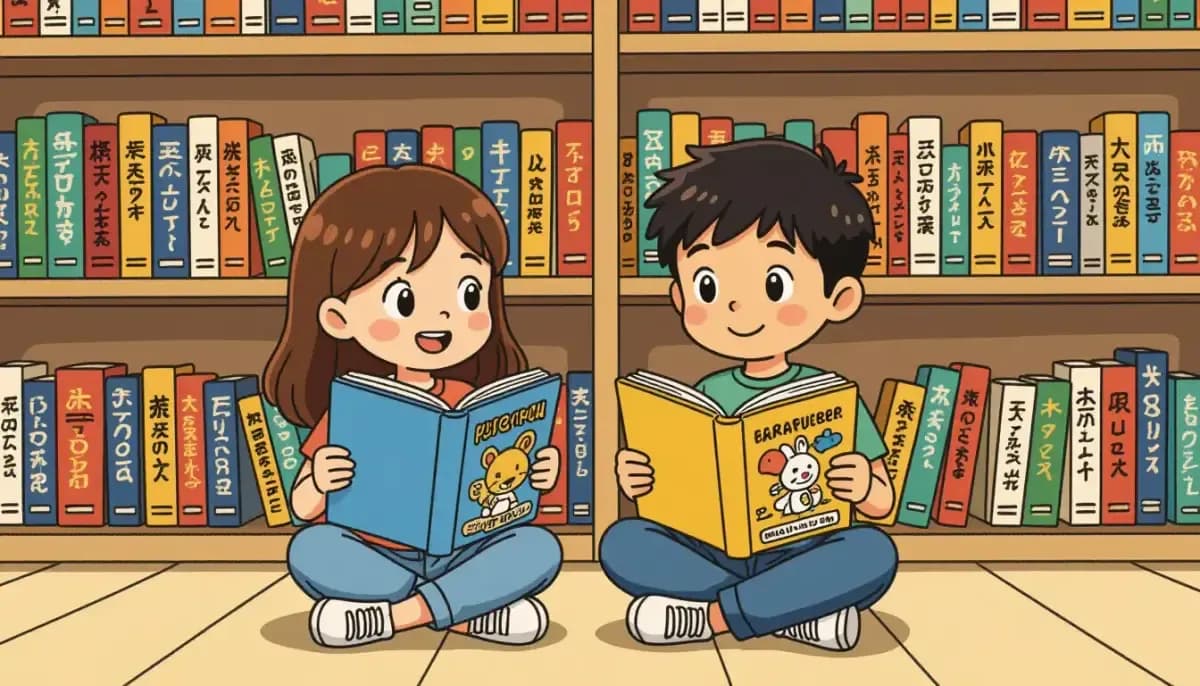
Learn how to balance Japanese and heritage language time for your children in Japan. Practical strategies, daily routines, and time allocation frameworks for bilingual families.
Balancing Japanese and Heritage Language Time: A Practical Guide for Families in Japan
Raising a child in Japan while keeping their heritage language strong is one of the most rewarding — and challenging — tasks a foreign parent can take on. Every day, your child is immersed in Japanese at school, with friends, and throughout daily life. Meanwhile, the language you speak at home, the language of your culture, your family, and your identity, risks getting pushed to the sidelines.
The good news: balance is absolutely achievable. Thousands of families across Japan have raised fully bilingual children without enrolling in expensive international schools. The key is intentional time allocation, consistent strategies, and a clear understanding of how language development actually works for children growing up in a linguistically dominant environment like Japan.
This guide gives you a practical framework for dividing language time in a way that supports both strong Japanese skills and a thriving heritage language — at every stage of your child's development.
Why Time Allocation Matters So Much
Language development in children is fundamentally about input. The more high-quality exposure a child gets in a language, the stronger their competence grows. Research consistently shows that children need at least 30% of their daily language input in the heritage language to achieve genuine bilingual fluency.
In Japan, this is the core challenge. Japanese dominates everywhere outside the home — school, sports clubs, neighborhood play, TV, social media. Without deliberate effort, the heritage language often drops well below that 30% threshold, leading to passive bilingualism at best, or gradual language loss at worst.
The critical developmental window runs roughly from birth to age 7. During these years, the brain is most receptive to building parallel language systems. Once elementary school begins, the Japanese environment intensifies dramatically, making it much harder to rebalance. This doesn't mean it's too late after age 7 — but early investment pays enormous dividends.
A large-scale study of 427 Japanese heritage speakers (average age 9.96) confirmed that home language exposure and active literacy engagement are the strongest predictors of heritage language vocabulary development — more than formal schooling or structured lessons alone.
Understanding Your Family's Language Ecosystem
Before setting a schedule, it helps to map your current language ecosystem — how much time your child currently spends in each language across different contexts.
| Context | Typical Language | Hours/Week (approx.) |
|---|---|---|
| School (public) | Japanese | 30–35 hrs |
| After-school clubs | Japanese | 3–6 hrs |
| Friends/play | Japanese | 5–10 hrs |
| Home (with parents) | Heritage language | 2–5 hrs |
| Grandparent video calls | Heritage language | 1–2 hrs |
| Heritage language school | Heritage language | 1–3 hrs |
| Media/screens | Mixed | 5–10 hrs |
This breakdown makes it immediately clear why heritage language time must be intentional. Japanese naturally fills 40–50+ hours per week. Heritage language exposure often falls to just 5–10 hours without deliberate action. Your goal is to expand that heritage language time to at least 15–20 hours per week.
The Foundation: Family Language Strategies
The single most important decision you'll make is your family language strategy — the consistent framework that determines when and how each language is used at home.
One Parent, One Language (OPOL)
The most widely recommended approach: one parent speaks exclusively in the heritage language, the other in Japanese (or both may use the heritage language if the child is getting sufficient Japanese elsewhere).
OPOL works because it creates predictable, reliable input sources. Your child learns that Dad speaks English, Mom speaks Korean, or however your family is structured. This removes ambiguity and builds strong associations between each language and its context.
Minority Language at Home (ML@H)
In this approach, both parents use the heritage language at home, relying on school and the outside world for Japanese input. Many families in Japan find this highly effective because it concentrates heritage language exposure during prime daily hours — meals, bedtime routines, homework help — when children are most engaged with parents.
Time-Based Splitting
Some families designate specific times or days for each language: heritage language at home until dinner, Japanese during homework help, or "English Sundays." This works well for families where one parent isn't a native heritage language speaker, or where children need Japanese language support at home for school subjects.
For a deeper look at proven strategies, see our guide on proven strategies to keep the heritage language alive in Japan.
Building a Weekly Heritage Language Time Budget
A practical approach is to treat heritage language time like a weekly budget you plan and protect. Here's a sample framework for a family with a primary school-age child:
| Activity | Frequency | Heritage Language Time |
|---|---|---|
| Daily reading aloud | 7x/week × 20 min | 2.3 hrs |
| Mealtime conversation | Daily (breakfast + dinner) | 3.5 hrs |
| Heritage language homework/tutoring | 3x/week × 30 min | 1.5 hrs |
| Saturday heritage language school | 1x/week × 3 hrs | 3 hrs |
| Screen time in heritage language | Daily × 30 min | 3.5 hrs |
| Video calls with grandparents/family | 2x/week × 30 min | 1 hr |
| Playdate with heritage language friend | 1x/week × 2 hrs | 2 hrs |
| Total | ~17 hrs/week |
Seventeen hours per week alongside 35+ hours of Japanese input puts your child comfortably above the 30% threshold. Not every week will hit this target — and that's okay. The goal is consistency over the long term, not perfection.
For more details on how to structure your home environment, read our guide on creating a heritage language environment at home.
Daily Routines That Maximize Heritage Language Time
The most effective heritage language time isn't additional "lessons" bolted onto an already full schedule — it's language woven naturally into existing daily routines.
Morning Routine
Start the day in the heritage language. Breakfast conversation, getting dressed, packing the school bag — these 30–45 minutes before school are pure heritage language time. Keep it light and positive; this sets the emotional tone for the language throughout the day.
After-School Debrief
When your child comes home from school, they've been in Japanese mode all day. Rather than immediately switching into homework mode, have a 15–20 minute heritage language conversation about their day. "What was the best part? Who did you play with? Did anything funny happen?" This reactivates the heritage language and creates a natural daily anchor point.
The 15-Minute Reading Rule
Research from experienced bilingual families in Japan consistently identifies daily read-aloud sessions as the single highest-impact practice. Reading aloud for just 15–20 minutes in the heritage language daily builds vocabulary, develops literacy instincts, and creates a cherished ritual that children associate positively with the language.
Start with picture books for young children, progress to chapter books, and eventually to children reading independently. A well-stocked home library in the heritage language is an investment that pays off for years.
Bedtime as Heritage Language Time
Bedtime routines — bath, getting ready for bed, story, conversation — are naturally calm, connected moments. Reserve these entirely for the heritage language. For many families, bedtime becomes the emotional heart of heritage language practice: the space where deeper conversations happen, stories are shared across generations, and language becomes inseparable from warmth and security.
Managing the Japanese School Pressure
Once your child starts elementary school in Japan, Japanese becomes the dominant force in their linguistic life. Teachers, textbooks, friendships, and social identity all operate in Japanese. This is normal and healthy — you want your child to thrive in Japanese society. But it requires proactive management to protect heritage language balance.
Common warning signs that Japanese is overwhelming the heritage language:
- Child consistently switches to Japanese even at home
- Reluctance or embarrassment to use the heritage language in front of Japanese friends
- Vocabulary gaps appearing in heritage language (especially academic terms)
- Reading level in heritage language falling significantly behind Japanese
If you notice these patterns, it's time to increase heritage language exposure, not discipline. Make the heritage language more fun, relevant, and socially connected — rather than framing it as an obligation.
For detailed strategies on this challenge, see why maintaining your child's heritage language matters and what to do when children refuse to speak their heritage language.
Heritage Language Schools and Community Support
Saturday heritage language schools are one of the most effective tools available to families in Japan. These weekly schools — run by community organizations, embassies, or dedicated educators — provide 2–4 hours of structured instruction in reading, writing, and conversation in the heritage language.
The benefits extend beyond language skills: children meet peers who share their cultural background, develop a sense that their heritage language has social value and community, and often develop stronger identities as bilingual individuals.
Many Japanese cities have heritage language schools for English, Korean, Chinese, Portuguese, Tagalog, and other major languages. Check with your country's embassy or consulate for recommendations.
Learn more about what's available in heritage language schools and Saturday schools in Japan.
Using Technology and Media Strategically
Screen time in the heritage language is one of the easiest ways to add daily exposure. The key is intentionality — choosing content in the heritage language rather than defaulting to Japanese.
High-impact options:
- Streaming services set to heritage language audio and subtitles
- YouTube channels in the heritage language geared toward children
- Video games set to heritage language menu and dialogue
- Apps for heritage language literacy (reading, phonics, vocabulary)
- Video calls with grandparents, cousins, and family overseas
Research cautions that technology should be supplemental, not a replacement for active parent-child language interaction. A child watching 30 minutes of heritage language TV while you're in the next room gets less benefit than 20 minutes of reading together. But as part of a balanced approach, media adds meaningful exposure hours.
Find curated tools in our guide on online resources for heritage language learning and heritage language books and media resources for kids.
Adjusting the Balance as Children Grow
Language balance isn't a fixed formula — it needs to evolve with your child's age, school level, and social development.
Ages 0–3 (Pre-school): Maximize heritage language immersion. Japanese input through playgrounds and neighborhood interaction is sufficient. This is the period for building deep heritage language foundations.
Ages 4–6 (Kindergarten): Begin more intentional Japanese support if your child will enter Japanese elementary school. Practice counting, colors, basic conversation. Continue heritage language as the home default.
Ages 7–12 (Elementary school): Japanese dominates school life. Protect heritage language time aggressively through daily routines, reading, and Saturday school. Don't reduce heritage language time during this period even if it feels like swimming upstream.
Ages 13–18 (Junior/Senior high school): Peer social life accelerates Japanese dominance. Find ways to make the heritage language socially relevant — heritage language friends, online communities, identity conversations about the value of bilingualism.
For information on supporting your child through the Japanese school system, see elementary school in Japan: a complete guide for foreign parents and junior high school in Japan: guide for foreign families.
Getting Support and Community
You don't have to figure this out alone. There are active communities of foreign parents in Japan navigating exactly this challenge.
Living in Nihon offers comprehensive guides for foreigners raising families in Japan, covering everything from school enrollment to language tips. For Work in Japan provides practical guidance on family life as a foreign resident. For parents of children navigating the Japanese exam system alongside heritage language maintenance, Chuukou Benkyou offers resources on study strategies that complement bilingual development.
For peer support, Japan Today's expat community forums (see 16 tips for raising a bilingual child in Japan) and Savvy Tokyo's family guides (see raising bilingual children in Japan) are both excellent starting points.
Key Takeaways
Balancing Japanese and heritage language time comes down to a few core principles:
- Protect heritage language time deliberately — Japanese will take care of itself in Japan's environment
- Start early — the birth-to-7 window is critical, but it's never too late to intensify heritage language investment
- Make it daily — small consistent habits (15 minutes of reading, mealtime conversations) outperform occasional intensive sessions
- Use community — heritage language schools, playgroups, and family video calls multiply the impact of home efforts
- Keep it joyful — language thrives when children associate it with warmth, connection, and positive experiences
The families who succeed in raising fully bilingual children in Japan aren't necessarily those with the most resources or the most rigorous schedules. They're the ones who stay consistent, stay flexible, and stay connected to the emotional heart of why the heritage language matters — identity, family, and belonging.
For a broader overview of heritage language maintenance for children in Japan, visit our complete heritage language maintenance guide.

Originally from Vietnam, living in Japan for 16+ years. Graduated from Nagoya University, with 11 years of professional experience at Japanese and international companies. Sharing practical information for foreign parents raising children in Japan.
View Profile →Related Articles

Heritage Language and Cultural Identity Connection
How to maintain your heritage language and build cultural identity for children in Japan. Practical strategies for multicultural families navigating bilingualism and dual identity in Japan.
Read more →
Summer Trips Abroad for Heritage Language Immersion
Discover how summer trips abroad can powerfully boost your child's heritage language in Japan. Research-backed strategies, program types, and planning tips for expat families.
Read more →
How to Assess Your Child's Heritage Language Level
Learn practical methods to assess your child's heritage language proficiency level in Japan. Includes home tests, formal assessments, proficiency frameworks, and action steps for bilingual families.
Read more →
Heritage Language Books and Media Resources for Kids
Discover the best heritage language books and media resources for kids in Japan. From classic Japanese picture books to streaming shows and apps, help your child stay connected to their mother tongue with our curated guide for bilingual families.
Read more →
Community Groups for Heritage Language Practice in Japan
Discover the best community groups, Saturday schools, and online resources for heritage language practice in Japan. A practical guide for multilingual and bilingual families raising children in Japan.
Read more →
When Children Refuse to Speak Their Heritage Language
Learn why children refuse to speak their heritage language in Japan and discover proven, research-backed strategies to encourage heritage language use at home and build bilingual confidence.
Read more →