
Summer Trips Abroad for Heritage Language Immersion

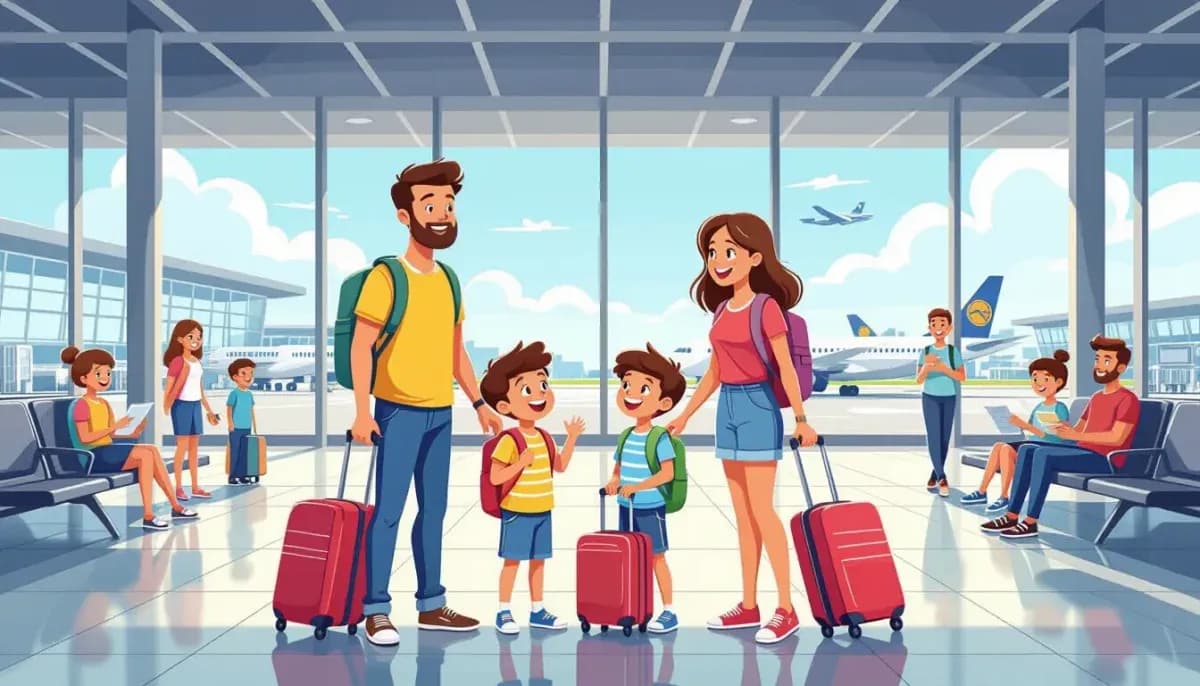
Discover how summer trips abroad can powerfully boost your child's heritage language in Japan. Research-backed strategies, program types, and planning tips for expat families.
Summer Trips Abroad for Heritage Language Immersion: A Complete Guide for Families in Japan
If your family lives in Japan and your children are growing up bilingual, you already know how challenging it can be to maintain their heritage language — the mother tongue that connects them to your culture, extended family, and roots. School, friendships, and daily life in Japanese keep Japanese front and center, while the heritage language can quietly fade into the background. One of the most powerful solutions families have discovered is the summer trip abroad for heritage language immersion.
Taking your child back to your home country — or enrolling them in a structured language immersion program overseas — during the summer holidays can have a dramatic and lasting impact on their language development. This guide covers everything you need to know: the science behind why these trips work, how to plan the most effective immersion experience, programs to consider, and how to sustain the gains after you return to Japan.
Why Summer Immersion Trips Work: The Science Behind the Strategy
Research consistently shows that exposure and use are the two greatest predictors of heritage language proficiency. Children raised in Japan spend the majority of their waking hours in Japanese-language environments, which creates natural pressure on their heritage language. The good news? Studies confirm that heritage language can be re-activated even after short re-immersion periods.
A landmark study published in Frontiers in Language Sciences found that short visits to the ancestral homeland provided meaningful boosts to heritage language proficiency — particularly for vocabulary acquisition and discourse-conditioned syntax, the exact areas most vulnerable to crosslinguistic pressure from Japanese. Even a few weeks in an environment where the heritage language is the primary medium of communication helps children reconnect with native speech patterns they rarely encounter in Japan.
Perhaps most strikingly, research by Greenheart Travel found that 4 weeks of full language immersion can be equivalent to an entire year of classroom language study, thanks to the intensity and breadth of daily exposure. Children aren't just learning grammar — they're absorbing tone, idiom, humor, slang, and the lived texture of the language in ways that textbooks and Saturday language schools simply cannot replicate.
For heritage language maintenance strategies you can use year-round in Japan, the summer trip works best as a powerful annual supplement to your everyday efforts at home.
Who Benefits Most from Heritage Language Immersion Trips?
Not every child benefits in exactly the same way. Understanding where your child stands can help you design the most effective experience.
| Child Profile | Immersion Benefit | Recommended Trip Length |
|---|---|---|
| Passive bilingual (understands but won't speak) | Activates speaking; removes social inhibition | 3–4 weeks minimum |
| Intermediate speaker (speaks but loses vocabulary) | Restores vocabulary; improves fluency | 2–4 weeks |
| Language refuser (refuses to use heritage language) | Cultural reconnection; peer motivation | 3–6 weeks in homeland |
| Strong speaker (maintains well at home) | Deepens literacy, idiom, cultural knowledge | 2+ weeks, literacy focus |
| Younger children (ages 4–8) | Rapid acquisition; establishes strong foundation | 4–6 weeks |
| Older children/teens (ages 10–17) | Peer connection; identity formation | 4–8 weeks |
Research on generational heritage language loss shows that performance typically declines across generations — second-generation children outperform mixed-generation, who outperform third-generation. However, consistent homeland visits partially offset this generational decline by providing exposure to the variety of the language spoken naturally by more speakers and across more contexts than can ever be created artificially in Japan.
You can use our guide on how to assess your child's heritage language level to identify where your child falls before planning your trip.
Planning Your Summer Immersion Trip: Key Strategies
A casual family visit and a purposeful immersion trip are two very different things. Both have value, but if language development is your primary goal, planning intentionally will multiply the results.
Choose Immersive Accommodation
Where your child sleeps and wakes up matters enormously. Staying with grandparents or extended family is one of the single most effective immersion strategies available to you. Research shows that grandparents play a central role in heritage language transmission, and the informal, emotionally rich conversations that happen naturally in a family home are irreplaceable. Studies have found strong correlations between grandparent involvement and children's ability to communicate fluently in their heritage language as adults.
If extended family is not available, consider:
- Homestay programs with local families
- Language summer camps in the home country that offer residential living with peers
- Extended stays with family friends who speak only the heritage language
Avoid hotels or resorts where English or Japanese may dominate, as these reduce the immersion effect significantly.
Structure the Days Around Language-Rich Activities
Immersion works best when children are engaged, not passive. The most effective summer language trips combine:
- Morning language or tutoring sessions (even 1–2 hours daily with a tutor or heritage language school dramatically accelerates gains)
- Afternoon activities with local peers (sports clubs, art classes, community events)
- Evening family time with grandparents, storytelling, cooking, and conversation
- Weekend cultural outings (museums, markets, festivals, traditional crafts)
The goal is to ensure your child is in the heritage language from morning to night, in contexts that are emotionally engaging rather than purely academic.
For complementary approaches you can use back in Japan, see our article on weekend language schools and Saturday schools in Japan.
Set Clear Language Goals Before You Go
Before leaving Japan, sit down with your child and set two or three concrete, age-appropriate language goals for the summer. These might include:
- "By the end of the trip, you will be able to read three children's books in [heritage language] independently"
- "You will learn to tell the story of your family to your cousin in [heritage language]"
- "You will write a postcard to Grandma entirely in [heritage language] without help"
Framing the trip around achievable goals turns it from a passive holiday into a purposeful language adventure — and children are far more motivated when they understand what they are working toward.
Types of Summer Immersion Experiences: Choosing What's Right for Your Family
There is no single correct model. The best immersion experience depends on your child's age, language level, personality, and your family's practical circumstances.
Family Visits to the Home Country
The most accessible and emotionally enriching option. These trips work best when:
- Extended family is available and willing to speak consistently in the heritage language
- Parents commit to speaking only the heritage language throughout the trip (see the One Parent One Language method)
- Local peers are actively included in your child's schedule
- You resist the temptation to use Japanese as a fallback
Even if your relatives speak some Japanese or English, establish a household rule: the heritage language only for the duration of the trip.
Heritage Language Summer Camps
Many countries offer summer camps specifically designed for diaspora children — second-generation or third-generation kids who have grown up abroad. These programs understand the exact challenges your child faces, provide peer community with children in similar situations, and often combine language instruction with cultural programming.
Search for programs in your heritage country using terms like:
- "Diaspora summer language camp [country]"
- "Heritage language summer school [country]"
- "Second-generation summer program [country/language]"
Some countries also offer government-sponsored programs for their overseas communities, which can be significantly subsidized or even free for eligible families.
Structured Language Immersion Programs in a Third Country
For some families — particularly those with rarer heritage languages or limited extended family — a structured language school in a country where the heritage language is spoken offers a viable alternative. Organizations like EF Education, Greenheart Travel, and local heritage community associations often run such programs with residential options for children aged 8 and up.
For Japanese-heritage families living abroad who want structured programs, resources like Greenheart Travel's Japan language camps provide a model for the kind of structured immersive environment that produces real language gains.
For comprehensive information on family life and education as a foreigner in Japan, For Work in Japan's guide to family life offers practical context for raising children across cultures.
Making the Most of the Trip: Practical Tips for Parents
The research is clear that parental involvement and attitude are strong predictors of immersion success. Here is what parents can do to maximize results.
Before the Trip
- Prepare your child with a preview: Read books, watch films, and listen to music in the heritage language in the weeks before departure to warm up passive vocabulary
- Contact tutors or language schools in advance: Book sessions early, especially if you want a qualified heritage language tutor who understands diaspora learners
- Brief grandparents and relatives: Ask them explicitly to speak only the heritage language and to be patient with imperfect grammar or limited vocabulary
- Pack heritage language books: Bring age-appropriate reading material to use during quieter moments
During the Trip
- Minimize Japanese and English: Remove devices that default to Japanese from your child's daily routine; switch streaming services, games, and apps to the heritage language
- Document the experience: Have your child keep a simple journal or video diary in the heritage language — even a few sentences per day reinforces production
- Celebrate small wins: Acknowledge every conversation completed, every new word used, every book finished — positive reinforcement accelerates acquisition
- Connect language to identity: Frame the trip explicitly as a journey of belonging — "This is where your grandparents grew up; this is where your language comes from"
After the Trip
The most common challenge families face is language regression when they return to Japan. You can significantly slow this decline by:
- Scheduling weekly video calls with grandparents using only the heritage language
- Enrolling in a heritage language Saturday school to maintain community and accountability
- Creating a heritage language home environment: certain times of day (dinner, bedtime stories) designated as heritage-language-only zones
- Using heritage language media — podcasts, audiobooks, children's TV — to maintain passive exposure
Our articles on creating a heritage language environment at home and online resources for heritage language learning provide detailed recommendations for sustaining gains after your return.
What the Research Says: Key Findings for Families
The academic evidence on summer immersion and homeland visits is increasingly robust. Here is a summary of what the research tells us:
A comprehensive 2023 study in Frontiers in Language Sciences examined how homeland visits affected heritage language performance. The findings were clear: visits to the ancestral country significantly boosted heritage language proficiency, particularly in areas like vocabulary and natural discourse patterns. These gains were especially pronounced in children who had limited access to native speakers in their country of residence — exactly the situation most children face in Japan.
A 2025 study in Frontiers in Psychology tracking immigrant families found that cultural heritage transmission was one of the two strongest predictors of successful heritage language maintenance, alongside consistent child-directed use of the heritage language. Families who combined summer homeland visits with daily home language use showed the most sustained outcomes across years.
For a deep dive into what the academic literature says about the link between heritage language and academic outcomes in Japan, see our article on heritage language and academic performance: what research says.
The Living in Nihon guide to raising children in Japan also provides useful context on the broader educational landscape foreign families navigate, including how Japanese schools handle multilingual children and what support services are available.
For returnee children who may face Japanese school entrance exams after spending summers abroad, Chuukou Benkyou's guide to returnee and foreign student exam systems explains how the Japanese education system accommodates children educated partly overseas.
Building a Long-Term Summer Immersion Routine
The families who achieve the most sustained heritage language outcomes are not those who take one special trip — they are those who build annual summer immersion into their family rhythm. Treating the summer trip as a regular family commitment, year after year, transforms language maintenance from a struggle into a cultural inheritance.
Consider creating a simple 5-year language plan for your child:
- Ages 4–6: Long family visits with grandparents; priority is oral fluency and cultural familiarity
- Ages 7–10: Add structured tutoring or summer language school sessions; begin basic literacy in heritage language
- Ages 11–14: Peer-focused immersion; summer camps or homestays with local families to build social language and confidence
- Ages 15–18: Deepening literacy, academic vocabulary, and cultural identity; consider longer independent stays
Each trip builds on the previous one, deepening your child's connection to the language and the culture it carries.
For your overall approach to heritage language maintenance in Japan, the summer trip abroad is one of the most powerful tools available — but it works best as part of a comprehensive, year-round strategy.
Conclusion: The Summer Trip as a Gift of Belonging
A summer trip abroad for heritage language immersion is more than a language lesson. It is an experience of belonging — of showing your child that the language you speak at home is alive, vibrant, and spoken by millions of people in a real place where they have roots. Research consistently shows that children who feel connected to their heritage language community are more motivated to maintain the language, more confident in their bilingual identity, and more open to the cultural richness that comes with growing up between worlds.
In Japan, where the linguistic environment is deeply and beautifully Japanese, that connection rarely happens by accident. It takes intentional planning, consistent effort, and — ideally — an annual summer trip to remind your child of who they are and where they come from.
Start planning early, involve your child in the process, and treat each summer as an investment not just in language, but in the full, complex, richly bilingual person your child is becoming.

Originally from Vietnam, living in Japan for 16+ years. Graduated from Nagoya University, with 11 years of professional experience at Japanese and international companies. Sharing practical information for foreign parents raising children in Japan.
View Profile →Related Articles

Heritage Language and Cultural Identity Connection
How to maintain your heritage language and build cultural identity for children in Japan. Practical strategies for multicultural families navigating bilingualism and dual identity in Japan.
Read more →
How to Assess Your Child's Heritage Language Level
Learn practical methods to assess your child's heritage language proficiency level in Japan. Includes home tests, formal assessments, proficiency frameworks, and action steps for bilingual families.
Read more →
Balancing Japanese and Heritage Language Time
Learn how to balance Japanese and heritage language time for your children in Japan. Practical strategies, daily routines, and time allocation frameworks for bilingual families.
Read more →
Heritage Language Books and Media Resources for Kids
Discover the best heritage language books and media resources for kids in Japan. From classic Japanese picture books to streaming shows and apps, help your child stay connected to their mother tongue with our curated guide for bilingual families.
Read more →
Community Groups for Heritage Language Practice in Japan
Discover the best community groups, Saturday schools, and online resources for heritage language practice in Japan. A practical guide for multilingual and bilingual families raising children in Japan.
Read more →
When Children Refuse to Speak Their Heritage Language
Learn why children refuse to speak their heritage language in Japan and discover proven, research-backed strategies to encourage heritage language use at home and build bilingual confidence.
Read more →