
Community Groups for Heritage Language Practice in Japan

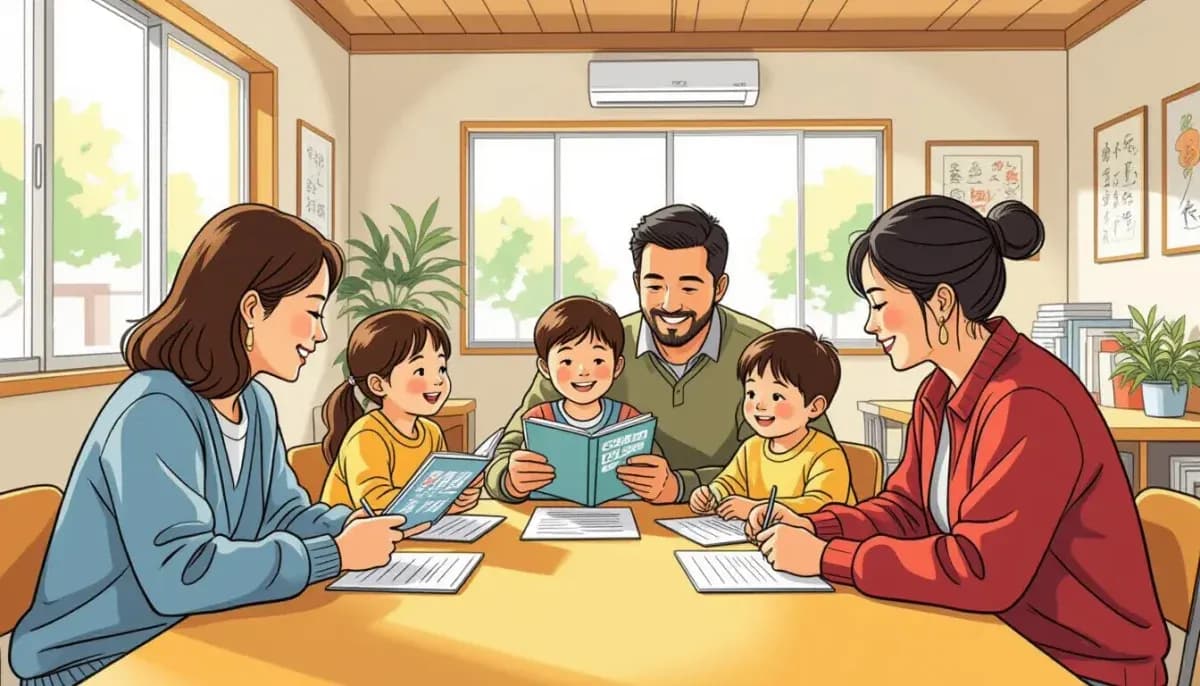
Discover the best community groups, Saturday schools, and online resources for heritage language practice in Japan. A practical guide for multilingual and bilingual families raising children in Japan.
Community Groups for Heritage Language Practice in Japan
Raising bilingual or multilingual children in Japan is one of the most rewarding — and challenging — things a foreign parent can do. While Japanese schools provide a rich education in the local language, maintaining your child's heritage language requires deliberate effort, consistent exposure, and community support. Fortunately, Japan has a growing ecosystem of community groups, language exchange networks, and cultural organizations specifically designed to help families preserve and strengthen the languages they bring from home.
This guide explores the best community groups and resources for heritage language practice in Japan, covering everything from in-person Saturday schools to online platforms, international centers, and practical strategies for staying connected to your heritage culture.
Why Heritage Language Maintenance Matters
Heritage language maintenance goes beyond just speaking another language — it's tied to identity, family connection, and cultural belonging. Research consistently shows that children who maintain their heritage language develop stronger cognitive flexibility, better academic outcomes, and a more secure sense of cultural identity.
In Japan, about one in fifty babies born annually between 2000 and 2021 had a non-Japanese parent, creating a substantial community of multilingual families. By 2018, the Japanese education system had enrolled 59,094 foreign children at the elementary level, 23,051 at junior high, and 9,614 at senior high school — numbers that have continued to grow.
Yet studies also highlight a troubling trend: mixed-ethnic children in Japan often fail to acquire the language of their non-Japanese parent, due to factors like social pressure, limited community exposure, and parents' reluctance to consistently use the minority language. This makes community groups all the more essential.
For more background on the broader challenges of raising bilingual children in Japan, see our guide on raising bilingual children in Japan and heritage language maintenance for children in Japan.
Types of Community Groups for Heritage Language Practice
Not all language groups are the same. Depending on your child's age, the language you're maintaining, and how much time you can commit, different formats will suit different families.
| Group Type | Best For | Time Commitment | Cost |
|---|---|---|---|
| Saturday Schools (Hoshuu-ko) | School-age children | Weekly (2-4 hrs) | ¥5,000–¥15,000/month |
| Playgroups / Parent Networks | Toddlers and preschoolers | Weekly or bi-weekly | Free – low cost |
| Language Exchange Meetups | Parents and older children | Flexible | Free – ¥1,000/session |
| International Centers | All ages | As needed | Free – low cost |
| Online Communities | All ages | Flexible | Free |
| Cultural Organizations | School-age and teens | Monthly or seasonal | Varies |
Each format has its strengths. Saturday schools provide structured academic instruction, while playgroups and parent networks offer informal immersion in a supportive social environment.
Saturday Schools (Hoshuu-ko) and Formal Language Schools
For many heritage language families in Japan, Saturday schools — known as hoshuu-ko (補習校) when they focus on Japanese returnee students, or simply as community language schools for other languages — are the backbone of heritage language education.
These schools typically meet once a week on Saturday mornings and teach children the language, literacy, and cultural knowledge of their home country. Research consistently identifies Saturday schools as one of the most effective methods for heritage language transmission, particularly when combined with home language use.
What to look for in a Saturday school:
- Age-appropriate curriculum aligned with home country standards
- Native-speaking teachers with experience teaching heritage learners
- Community events and cultural activities, not just language drills
- Parent involvement and communication in your native language
Many major cities in Japan — Tokyo, Osaka, Kobe, Nagoya, Fukuoka, and Yokohama — have a variety of community language schools for English, Chinese, Korean, Portuguese, Spanish, French, and other widely spoken languages. Check with your home country's embassy or consulate for accredited schools and official community programs.
International Centers and Government-Supported Resources
Japan's municipal international centers are often overlooked gems for heritage language families. These government-supported hubs offer multilingual services, cultural events, and community bulletin boards that can connect you with other families in your area.
Key centers by city:
- Tokyo (FRESC) — One-stop consultation in multiple languages, community event listings
- Osaka (OFIX) — Counseling in 11 languages, specialist consultation days
- Kobe (KICC) — Immigration consultations, cultural events, and multilingual programs
- Nagoya (NIC) — Multilingual event calendars and volunteer opportunities
- Fukuoka (FCIF) — Multilingual counseling and community integration programs
These centers often maintain bulletin boards (physical and digital) where families post about language exchange partnerships, informal playgroups, and heritage language tutoring. They're an excellent starting point if you're new to an area and looking to connect with other multilingual families.
For comprehensive guidance on navigating government resources as a foreign family, visit Living in Nihon for detailed, practical information on making Japan home.
Online and App-Based Communities
Physical proximity is not always possible, especially for families in rural Japan or smaller cities without established heritage language communities. Online and app-based communities fill this gap effectively.
Facebook Groups:
- Language-specific groups for English, Chinese, Korean, and other languages in Japan are active and welcoming. Search for "[your language] speakers in Japan" or "[your language] families Tokyo/Osaka" to find relevant communities.
- The Tokyo Expat Network (TEN) has 30,000+ members and regularly shares information about language practice groups and cultural events.
Apps for Language Practice:
- HelloTalk — Connects language learners with native speakers, with a large user base in Japan. Great for older children and parents.
- Tandem — Similar to HelloTalk, with structured conversation practice features.
Reddit Communities:
- r/japanlife (479,000+ members) — The largest Japan expat community, with regular discussions on raising multilingual children.
- Language-specific subreddits often have Japan-focused threads and regional meetup coordination.
For additional resources for working parents in Japan, For Work in Japan offers community-building guides and networking resources for international residents.
Language Exchange Meetups and Social Groups
Language exchange meetups are popular across Japan, especially in major cities, and they serve double duty: they help parents maintain their own language fluency while modeling active language use for their children.
Meetup.com hosts dozens of language exchange groups in Tokyo, Osaka, Kyoto, and Nagoya, with new events every week. Events range from casual coffee chat exchanges to structured conversation practice sessions. The Welcome Tokyo group on Meetup has 50,000+ members across platforms and organizes events weekly.
InterNations operates city hubs in Tokyo, Nagoya, and Osaka, with social events that attract international families and professionals. These mixers are great for networking with other heritage language families and finding informal playdate partners.
For heritage language practice specifically, look for groups organized around your language community — Chinese parents' groups, Korean cultural associations, Filipino community circles, and Brazilian Portuguese networks are among the most active in Japan.
For study groups and academic community resources, Chuukou Benkyou provides guidance on academic study and community learning strategies for students and families in Japan.
Building a Home Language Environment
Community groups are only one part of the equation. The research is clear: consistent home language use is the single most powerful predictor of heritage language success. Community groups amplify and reinforce what happens at home, but they cannot replace it.
Practical strategies for home heritage language environments:
- One Person–One Language (OPOL): Each parent consistently speaks their native language to the child. This is the most widely researched and recommended approach.
- Minority language at home: Both parents speak the heritage language at home, while Japanese is used outside.
- Book and media immersion: Stock your home with books, music, podcasts, cartoons, and films in the heritage language. Many streaming services now offer content in multiple languages.
- Regular video calls with grandparents and relatives: Real, emotionally meaningful conversations in the heritage language are highly motivating for children.
- Cultural celebrations: Celebrating home country holidays, cooking traditional foods, and marking cultural milestones keeps children emotionally connected to their heritage.
See our article on teaching Japanese to foreign children for complementary methods that help children navigate both language environments.
Tips for Finding the Right Community Group
With so many options, knowing where to start can be overwhelming. Here's a practical checklist for finding the right group for your family:
- Define your goal — Is the priority literacy, spoken fluency, cultural connection, or all three?
- Check your city's international center — They maintain the most current and localized lists of community groups.
- Contact your embassy or consulate — Most have community affairs staff who can recommend established schools and groups.
- Search Facebook Groups and Meetup — Use your heritage language as a search term along with your city.
- Ask at your child's school — Teachers and parent associations often know of existing multilingual family networks.
- Look for playdate networks — For young children, informal playdate groups in your heritage language can be just as effective as formal classes.
The most important thing is consistency. Even attending one community event per month, combined with daily home language use, makes a measurable difference in heritage language development over time.
Cultural Identity and Heritage Language: The Bigger Picture
Language is inseparable from identity. For children growing up in Japan with mixed cultural backgrounds — often called hafu (ハーフ) — the question of language is deeply intertwined with who they are and where they belong.
Community groups that combine language practice with cultural education — celebrating holidays, cooking traditional foods, sharing family stories, engaging with heritage arts and music — tend to produce stronger, more lasting connections to the heritage language. Children who understand why their language matters are more motivated to keep speaking it.
For more on supporting your child's cultural identity, read our guide on cultural identity for hafu and mixed-race children in Japan.
Summary: Key Resources for Heritage Language Practice in Japan
| Resource | Best Use | Where to Find |
|---|---|---|
| Saturday schools (hoshuu-ko) | Formal literacy and language education | Embassy/consulate, international centers |
| International centers (FRESC, OFIX, KICC) | Local community connections, multilingual support | City government websites |
| Meetup.com groups | Informal language exchange and social practice | meetup.com |
| InterNations | Networking events for international families | internations.org |
| HelloTalk / Tandem | App-based language practice | App Store / Google Play |
| Facebook language groups | Community networks, event announcements | Facebook search |
| r/japanlife | Advice and recommendations from Japan residents | reddit.com/r/japanlife |
Heritage language maintenance is a long-term commitment, but Japan's growing international community means you are never truly alone in this journey. With the right combination of community support, consistent home practices, and cultural engagement, your children can grow up truly bilingual — fluent in both the country they call home and the language that connects them to their roots.
For more on the Japanese education system and how to navigate it as a foreign family, see our complete guide to the Japanese education system for foreign families.

Originally from Vietnam, living in Japan for 16+ years. Graduated from Nagoya University, with 11 years of professional experience at Japanese and international companies. Sharing practical information for foreign parents raising children in Japan.
View Profile →Related Articles

Heritage Language and Cultural Identity Connection
How to maintain your heritage language and build cultural identity for children in Japan. Practical strategies for multicultural families navigating bilingualism and dual identity in Japan.
Read more →
Summer Trips Abroad for Heritage Language Immersion
Discover how summer trips abroad can powerfully boost your child's heritage language in Japan. Research-backed strategies, program types, and planning tips for expat families.
Read more →
How to Assess Your Child's Heritage Language Level
Learn practical methods to assess your child's heritage language proficiency level in Japan. Includes home tests, formal assessments, proficiency frameworks, and action steps for bilingual families.
Read more →
Balancing Japanese and Heritage Language Time
Learn how to balance Japanese and heritage language time for your children in Japan. Practical strategies, daily routines, and time allocation frameworks for bilingual families.
Read more →
Heritage Language Books and Media Resources for Kids
Discover the best heritage language books and media resources for kids in Japan. From classic Japanese picture books to streaming shows and apps, help your child stay connected to their mother tongue with our curated guide for bilingual families.
Read more →
When Children Refuse to Speak Their Heritage Language
Learn why children refuse to speak their heritage language in Japan and discover proven, research-backed strategies to encourage heritage language use at home and build bilingual confidence.
Read more →