
Choosing the Right Time to Move with Children

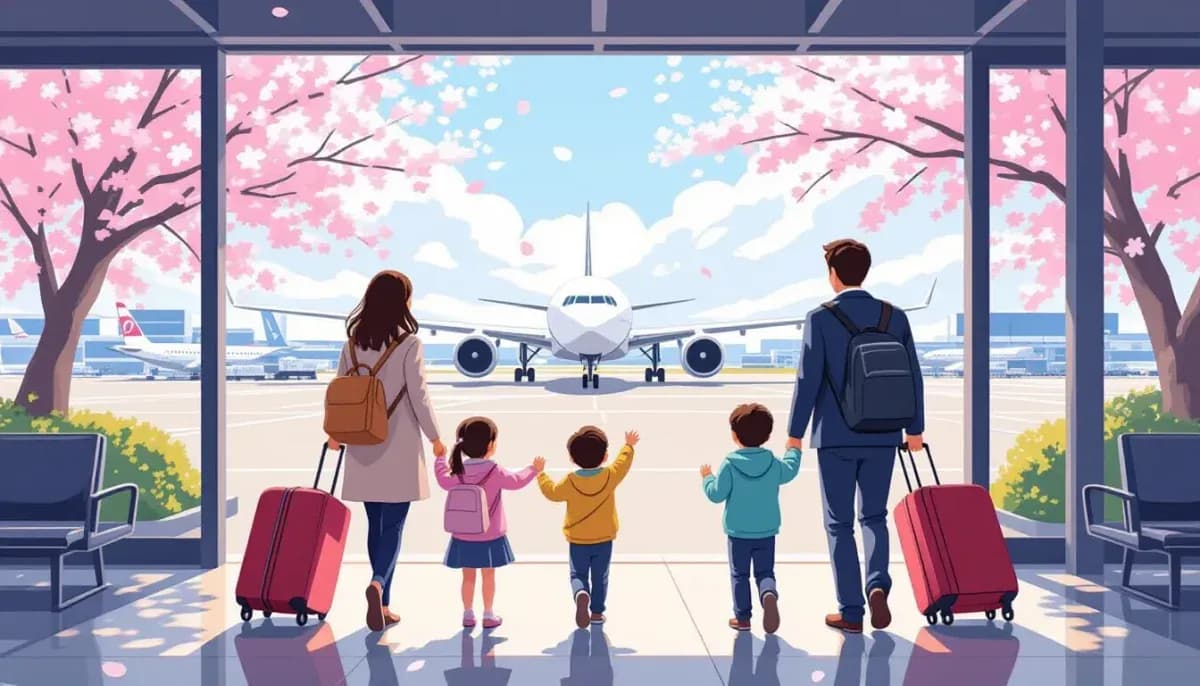
Timing your move to Japan with children is critical. Learn how Japan's April school year, enrollment deadlines, and seasonal factors affect your family's transition, with an age-by-age guide.
Choosing the Right Time to Move to Japan with Children
Relocating to Japan as a family is an exciting adventure — but timing your move strategically can make the difference between a smooth transition and months of stressful catch-up. Japan's rigid academic calendar, unique enrollment procedures, and seasonal rhythms all play a critical role in how well your children adapt. This guide walks you through everything you need to consider when choosing the right time to move to Japan with children.
Why Timing Your Move Matters for Families
When adults relocate, they can usually start a new job any time of year. For children, however, Japan's educational system operates on a strict April-to-March school year with fixed enrollment windows. Missing these windows — or arriving mid-year — can create a schooling gap that affects your child's learning, friendships, and emotional adjustment.
Beyond academics, seasonal factors also influence daily life. Arriving in the middle of a sweltering August or a cold February is far less pleasant than stepping off the plane when cherry blossoms are blooming. Smart timing helps your family hit the ground running instead of struggling to find footing.
Key timing factors for families include:
- Japan's school year start date (April 1)
- Enrollment application deadlines (often 3-6 months in advance)
- Seasonal climate comfort
- Visa processing timelines
- Rental market availability
Understanding Japan's School Year Calendar
The single most important thing to understand is that Japan's academic year begins in April and ends in March. This is true for:
- Public elementary schools (小学校)
- Junior high schools (中学校)
- High schools (高校)
- Most kindergartens and yochien (幼稚園)
- Many hoikuen (保育園) nurseries
Grade placement is determined by your child's age as of April 1. A child turning 7 before April 1 enters first grade (小学1年生) that April. Missing the April enrollment means waiting until the following year — or entering mid-year with significant language and social challenges.
| School Level | Enrollment Period | Application Deadline |
|---|---|---|
| Hoikuen (Nursery) | Year-round (varies by municipality) | 3-6 months in advance |
| Yochien (Kindergarten) | April start | October-November prior year |
| Elementary School | April start | January-February prior year |
| Junior High School | April start | January-February prior year |
| High School | April start | December-February prior year |
| International School | Rolling enrollment | 1-6 months in advance |
For a comprehensive breakdown of the enrollment process, see our guide to Elementary School in Japan for Foreign Parents.
The Best Month to Arrive: February or March
If you want your children to enter Japanese public school seamlessly, arriving in February or March is ideal. This gives your family time to:
- Register at the local municipal office (役所) and receive your residence card
- Meet with the school's international support coordinator if available
- Complete the enrollment paperwork before April 1
- Tour the school and let your children get comfortable before day one
- Secure housing in the school district of your choice
Arriving in January or even December of the prior year is even better if your children need time to pick up basic Japanese before starting school. Many municipalities offer free Japanese language support classes for newly arrived foreign children — the earlier you register, the sooner these services begin.
For guidance on visa requirements and documentation needed for family enrollment, see our Visa and Legal Issues for Foreign Families guide. The team at For Work in Japan also has a detailed family stay visa guide covering documentation and timelines.
What If You Must Arrive Mid-Year?
Life doesn't always cooperate with ideal timelines. Job transfers, visa approvals, and housing availability don't always align with April. If you must arrive mid-year, here are your options:
Option 1: Enroll in a Japanese public school immediately. This is possible at any time of year. The school will do a simplified enrollment. Your child may be behind classmates, but most Japanese teachers are experienced with foreign students arriving mid-year.
Option 2: Enroll in an international school. International schools generally offer rolling enrollment throughout the year. This buys your child time to adjust to Japan while continuing education in a familiar language. Read our International Schools in Japan Guide for a full comparison.
Option 3: Delay arrival of children. Some expat families choose for one parent to move ahead and establish housing and work, while the other parent and children remain in the home country until the April enrollment window opens. This is disruptive but can result in a smoother school transition.
Option 4: Homeschool temporarily. While not common among expats in Japan, some families use the gap period for Japanese language learning at home before formal enrollment.
According to Expat Arrivals' Japan education guide, mid-year enrollment is most challenging at the junior high level, where friendship groups and academic tracks are already established.
Best Seasons to Move: A Family Perspective
Beyond the school calendar, consider the season you're arriving in for practical quality-of-life reasons.
Spring (March–May) — Most Recommended Arriving in spring aligns perfectly with the school year start. Weather is mild (10–20°C), cherry blossoms make Japan feel magical, and neighborhoods are full of welcoming community events. This is widely considered the best time for families to arrive.
Autumn (September–November) — Second Best Autumn is comfortable (15–25°C), with beautiful foliage and fewer tourists. While it's mid-school year, it coincides with the second school semester start (September), making integration slightly smoother than other mid-year arrivals.
Summer (June–August) — Challenging but Manageable Japan's summer is hot and humid (30°C+). Arriving in summer means no school yet (summer break runs July–August), giving children time to adjust to the environment before school starts. However, the heat can be exhausting for families with young children. Use this time for neighborhood exploration, setting up home, and Japanese language practice.
Winter (December–February) — Most Difficult Cold, short days and the holiday rush make winter the least ideal time. If you arrive in December, your children face a mid-year entry right after winter break — a particularly difficult social time when friend groups are already formed.
For more on seasonal family life in Japan, Luni Travels has a helpful Japan seasonal family guide covering activities and considerations by season.
Age-by-Age Timing Considerations
The right timing also depends heavily on your children's ages.
Infants and Toddlers (0–3 years) Timing is most flexible for very young children. The main concern is securing hoikuen (nursery) placement, which in cities like Tokyo can require applications 6+ months in advance. Read our Complete Guide to Daycare and Hoikuen in Japan for application strategies. For nursery-age children, arriving in spring to start with the April enrollment wave is strongly recommended.
Preschool Age (3–6 years) Yochien (kindergarten) typically starts in April. Arriving in February-March gives time to complete the application, visit schools, and prepare your child emotionally. Living in Nihon's guide on elementary school preparation notes that enrollment preparation should ideally begin one year in advance.
Elementary School Age (6–12 years) This is where timing matters most. April arrival is strongly preferred. Children this age are highly adaptable to language learning — enrolling from day one of the school year means they learn alongside classmates rather than catching up. See our Elementary School in Japan guide for what to expect.
Junior High Age (12–15 years) Junior high is socially intense in Japan. Friend groups form quickly in April. Mid-year entry is possible but socially harder. If you cannot arrive in April, consider international school options or a bilingual school as a transitional step. For more on this stage, see our Junior High School in Japan guide.
High School Age (15–18 years) High school entrance in Japan is competitive and exam-based for public schools. Foreign students often enroll in international or private schools instead. Timing is less critical than for younger children, but April is still preferred for social integration. Our High School in Japan guide for Foreign Families covers all options.
Practical Checklist: Planning Your Move Timeline
Use this checklist to work backwards from your target April enrollment date:
12+ months before April arrival:
- Begin Japanese language lessons for children
- Research neighborhoods and school districts
- Contact international schools if relevant
- Start visa application process
6 months before:
- Apply for hoikuen if your children are under 3
- Contact target yochien or elementary school for pre-enrollment inquiries
- Confirm housing in desired school catchment area
3 months before:
- Complete residence registration (after arriving in Japan)
- Submit school enrollment application to municipal board of education
- Arrange Japanese language support through the municipality
1 month before April:
- Attend school orientation with your child
- Purchase required school supplies (uniform, indoor shoes, supplies list)
- Introduce children to neighborhood so they know their surroundings
For bilingual development strategies once your children are enrolled, see our guide on Raising Bilingual Children in Japan. The TokyoDev guide on bringing your family to Japan is also an excellent practical resource for tech-industry families navigating relocation logistics.
Additional resources on Japanese school systems and curriculum can be found at Chuukou Benkyou, a site dedicated to helping families understand Japanese middle school education.
Conclusion: The Right Time Is April — But Don't Let Timing Stop You
The ideal time to move to Japan with children is February or March, giving you time to prepare for the April school year start. But the right time is ultimately when your family is ready. Thousands of expat families arrive mid-year and thrive in Japan's welcoming, safe, and child-friendly environment.
The key is preparation: understand the enrollment system, connect with your local municipal office early, and use available language support resources. Whether you arrive in April or October, Japan has a strong support infrastructure for international families — and your children will adapt faster than you think.
For a complete overview of raising children in Japan as a foreign parent, start with our Complete Guide to the Japanese Education System for Foreign Families.

Originally from Vietnam, living in Japan for 16+ years. Graduated from Nagoya University, with 11 years of professional experience at Japanese and international companies. Sharing practical information for foreign parents raising children in Japan.
View Profile →Related Articles

Repatriation Planning: Preparing to Leave Japan with Your Family
Complete guide to repatriation planning when leaving Japan with family. Covers tenshutsu todoke, pension withdrawal, school documents, shipping, tax obligations, and emotional preparation.
Read more →
Moving with Teenagers to Japan: Unique Challenges
A complete guide to moving with teenagers to Japan — covering school enrollment, language barriers, social integration, visa rules, and emotional wellbeing for expat families.
Read more →
Documentation and Paperwork for Moving with Children to Japan
Complete guide to all documents needed for moving to Japan with children: dependent visa, COE, birth certificates, post-arrival registration, health insurance, school enrollment, and My Number setup.
Read more →
Settling Into a New Neighborhood with Kids in Japan
A practical guide for expat families settling into a Japanese neighborhood with children — from neighbor introductions and chonaikai to jidokan, schools, and building a support network.
Read more →
Helping Children Maintain Friendships After Moving
Practical strategies for helping expat children maintain friendships after moving to Japan, from video calls and memory albums to building new bonds at school and local community centers.
Read more →
Emotional Support for Children During Relocation
Moving to Japan with kids? Learn how to support your children emotionally during relocation — from pre-move preparation through adjustment, school choice, and mental health resources in Japan.
Read more →