
Settling Into a New Neighborhood with Kids in Japan

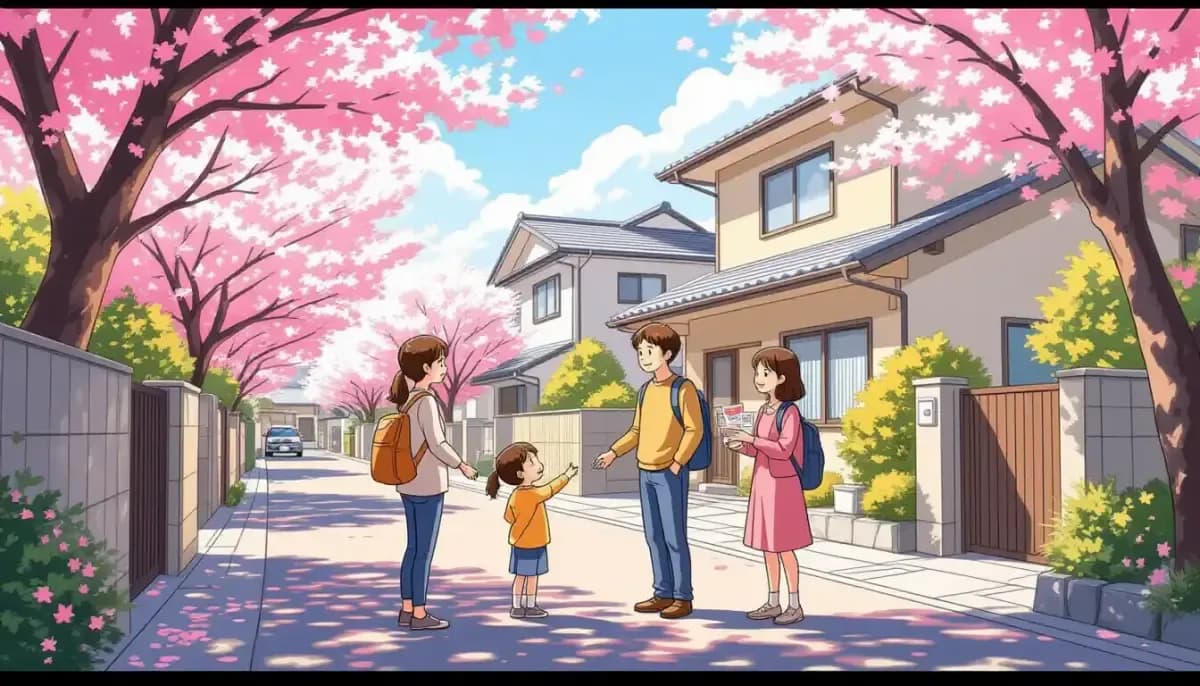
A practical guide for expat families settling into a Japanese neighborhood with children — from neighbor introductions and chonaikai to jidokan, schools, and building a support network.
Settling Into a New Neighborhood with Kids in Japan: A Practical Family Guide
Moving to Japan is an exciting adventure, but the real journey begins once you close the door to your new home and look out at an unfamiliar street. For foreign families with children, settling into a Japanese neighborhood can feel daunting — different customs, a language barrier, and social norms that are worlds apart from home. The good news? Japan is one of the world's most welcoming, safe, and family-friendly countries in which to raise children, and with the right approach, you and your kids can become a beloved part of your local community.
This guide walks you through everything you need to know — from the essential neighbor introduction ritual to finding playmates for your children, joining neighborhood groups, and building a support network that will carry your family through the years ahead.
The First 48 Hours: Hikkoshi no Aisatsu (Neighbor Introduction)
One of the most important things you can do when you arrive in Japan is something many Western countries have abandoned entirely: introducing yourself to your neighbors. In Japan, this ritual is called hikkoshi no aisatsu (引越しの挨拶), and it is taken seriously.
Within two to three days of moving in, you should visit the homes immediately surrounding yours — typically the units above and below you in an apartment, the homes to the left, right, and directly across the street in a house. Come as a family so your neighbors can see who they're living beside. Bring a small, practical gift worth approximately ¥500–¥1,500 — think individually wrapped snack packs, senbei crackers, a small box of chocolates, or dish soap. Consumables that disappear and leave no obligation are ideal.
When the door opens, bow, state your name and apartment number or house, mention that you have young children (so any future noise is pre-framed), and ask for their continued goodwill. The Japanese phrase "Yoroshiku onegaishimasu" (よろしくお願いします) — roughly meaning "I look forward to your kind support" — is the perfect closing line. Even if your Japanese is limited to that single phrase, neighbors will appreciate the effort immensely.
Why this matters for families: Mentioning your children upfront prevents misunderstandings. A crying baby at 3 a.m. is much more tolerable for a neighbor who has already met you and knows you're caring parents, rather than a mystery noise from unknown strangers.
| Item | Recommended Gift | Approximate Cost |
|---|---|---|
| Snack pack (assorted) | Senbei crackers, cookies | ¥500–¥800 |
| Sweets box | Individually wrapped chocolates | ¥800–¥1,500 |
| Household item | Dish soap, laundry detergent | ¥500–¥1,000 |
| Regional specialty | Omiyage from your home country | ¥1,000–¥2,000 |
Ideal visiting hours: 10:00 a.m. – 5:00 p.m. Avoid early mornings, evenings after 8 p.m., and weekends around noon when families eat together.
For more on Japanese etiquette for new residents, BelongingJapan has an excellent breakdown of neighbor introduction customs.
Joining the Chonaikai: Your Key to Neighborhood Life
Every neighborhood in Japan — whether urban or rural — is organized around a chonaikai (町内会) or jichikai (自治会), a voluntary resident association that manages community affairs. For families with children, joining your local chonaikai is one of the single most impactful things you can do.
What Does the Chonaikai Do?
- Organizes neighborhood street cleanups (typically monthly)
- Coordinates garbage schedule and rules — who collects what, when, and where
- Runs local festivals (summer matsuri, autumn harvest events, mochi-making)
- Manages disaster preparedness drills and emergency communication networks
- Operates safety patrols around school routes
- Distributes local government notices and multilingual community guides
- Hosts children's events — neighborhood sports days, New Year gatherings
Membership Costs
Membership fees vary by area but generally fall between ¥500 and ¥2,000 per month, paid quarterly or annually. Some rural areas charge as little as ¥200/month; upscale urban neighborhoods may charge ¥3,000/month or more.
Why You Should Join as a Foreign Family
Beyond community belonging, there is a practical reason to join: non-members may be denied access to the neighborhood garbage collection point. Japan's strict waste separation rules (burnable, non-burnable, glass, cardboard, oversized items) are administered locally, and in some neighborhoods, only registered members can use the communal garbage area.
For families, the social benefits are equally important. Your children will attend the same schools and play in the same parks as the other neighborhood kids. Being an active chonaikai member — showing up to clean the park, joining the festival committee, participating in disaster drills — signals to your neighbors that you are invested in the community. That goodwill pays off in a hundred small ways: a neighbor who watches your kids at the park, an elderly resident who teaches your child to fold origami, a word of warning about the strict teacher at the local school.
Japan Living Guide has a thorough overview of chonaikai for foreigners, including how to approach membership as a non-Japanese speaker.
Many local city halls now publish multilingual chonaikai introduction guides — check your ward office website or ask at the municipal counter when you register your address.
Navigating the Garbage Rules (and Why It Matters for Neighbors)
Nothing will endear or alienate you to your Japanese neighbors faster than how you handle garbage. Japan operates on one of the world's most rigorous waste separation systems, and the rules vary by city, ward, and even neighborhood block.
Standard Categories
| Category | What Goes In | Typical Collection Day |
|---|---|---|
| Moeru gomi (燃えるごみ) | Food scraps, paper, soiled packaging | 2–3x per week |
| Moenai gomi (燃えないごみ) | Glass, ceramics, small appliances | 1–2x per month |
| Shigen gomi (資源ごみ) | Plastic bottles, cans, cardboard | 1–2x per week |
| Sodai gomi (粗大ごみ) | Furniture, large items | By appointment + fee |
Practical tips for families:
- Pick up your neighborhood's garbage schedule card (gomi calendar) from your city hall or landlord. Many wards now offer these in English.
- Designated garbage bags are often required — usually sold at convenience stores and supermarkets. The color and brand vary by municipality.
- Garbage must be placed at the collection point by 8:00 a.m. on collection day. Leaving it the night before or late is a community grievance.
- Wash bottles and flatten cardboard before recycling — this is not optional in the eyes of your neighbors.
For families coming from countries with simpler waste systems, this takes adjustment. Build a small labeling system in your kitchen during the first week so your children can help sort correctly. Making it a family routine early prevents costly neighbor friction later.
Finding Your Jidokan: The Hidden Gem for Families with Young Children
If you have children under school age — toddlers, preschoolers, or babies — your most important local resource is the jidokan (児童館), Japan's network of community children's centers.
What Is a Jidokan?
A jidokan is a free or very low-cost public facility dedicated to children and their caregivers. They typically offer:
- Indoor play areas with toys, books, and climbing equipment
- Scheduled storytime, music, and craft activities
- A space for parents to meet and connect
- Advice from trained childcare workers
- Sometimes: English-language playgroups in larger cities
Jidokan operate under different names in different municipalities — you may also find them called kodomo no ie (子どもの家) or chiiki kodomo kan (地域子どもかん). Your ward's family support center can point you to the nearest one.
Why It Matters for Expat Families
One expatriate mother who relocated to Tokyo with a toddler described her neighborhood jidokan as "a life saver during rainy season" — somewhere she could take her child every weekday morning without spending money or speaking fluent Japanese. The staff were accustomed to foreign families and helped navigate preschool enrollment paperwork.
Jidokan are also where Japanese mothers in your neighborhood go. Regular attendance is one of the fastest ways to build genuine local friendships for both you and your young children. The kids who play together at the jidokan at age two often become classmates, then friends, through elementary school and beyond.
For a broader look at caring for young children in Japan, see our guide to daycare and hoikuen in Japan for foreign parents and our resource on baby and infant care in Japan.
Schools as Community Connectors
For families with school-age children, the local school becomes the center of your community life whether you intend it or not. Japanese schools are deeply embedded in the neighborhoods they serve, and participating actively in school life is one of the best ways to build connections.
PTA and School Events
Japan's PTA (PTA — the acronym is used in Japanese) is more active than in many Western countries. Schools organize:
- Undokai (運動会) — the school sports festival, a major community event
- Gakugeikai (学芸会) — talent shows and performances
- Seisou (清掃) activities — joint parent-child school cleanups
- PTA meetings and committees — planning school safety patrols, events, fundraising
You do not need fluent Japanese to show up and help set up chairs for a school festival. Your presence signals commitment, and other parents notice. Bring your children, bring snacks to share, and come early.
Choosing Between Local and International Schools
This is a major decision with long-term implications. Local Japanese public schools will immerse your children in the community but require Japanese language proficiency — expect a tough first six months. International schools offer English-language education and a built-in expat community, but your children will have less daily contact with the local neighborhood.
Many long-term expat families choose local school for elementary years to build language and community roots, then transition to international school for junior high or high school when academic demands increase. Our detailed guides to elementary school in Japan for foreign families and international schools in Japan can help you navigate this decision.
Healthcare: Finding Your Neighborhood Pediatrician
One of the first practical tasks for any family settling in Japan is finding a reliable pediatrician — ideally one who speaks at least some English.
Japan's Child Medical Subsidy System
Japan offers one of the most generous children's healthcare systems in the world. Under the kodomo iryohi josei (子ども医療費助成) scheme, doctor visits for children are free or capped at ¥500 per visit until at least age 15 in most municipalities. Some cities cover children up to age 18, and a few up to age 20. Medications, vaccinations, and routine health screenings are largely covered.
To access this benefit, you must register your child at your ward or city hall upon arrival and obtain the child medical subsidy card (医療証 — iryousho). Bring this card to every doctor's visit.
Finding English-Speaking Medical Care
Outside of major cities, English-speaking pediatricians are rare. In Tokyo, Osaka, Yokohama, and Nagoya, dedicated international medical clinics exist. Resources include:
- Your company's employee assistance program (if applicable)
- The expat parent Facebook groups for your city
- Your ward office's multilingual support desk
- International hospital patient liaison offices
For a comprehensive guide to children's healthcare in Japan, including vaccination schedules, dental care, and emergency procedures, see our article on healthcare and medical care for children in Japan.
Building Your Support Network as an Expat Family
Moving to a new country with children can be isolating, especially in the early months before language skills develop and friendships form. Building a deliberate support network is not optional — it is essential for your family's wellbeing.
Online Communities
- Facebook Groups: "Tokyo Families," "Expats in Japan," city-specific expat parent groups
- Meetup.com: International family meetups in major cities
- InterNations: Professional expat network with family-focused events
Local Resources
- TELL Japan: English-language mental health counseling (Tokyo, Okinawa, and online)
- Tokyo Child Guidance Center: Free consultations for families with children under 18
- CLAIR (Council of Local Authorities for International Relations): Multilingual support resources
The Long View: Integration Takes Time
Japan's population of foreign residents reached 3.76 million in 2024 — a record increase of 350,000 in a single year — and now stands at approximately 3% of the total population. With projections suggesting foreign residents could reach 10.8% of Japan's population by 2070, communities across the country are becoming increasingly accustomed to welcoming international families.
Full integration — the kind where your children's friends' parents invite you to their homes for dinner, where you're asked to join the neighborhood disaster response committee, where your kids are absorbed into the fabric of the street — typically takes two to three years of consistent, good-faith participation. Be patient with yourself and with Japan. The investment pays off in safety, belonging, and a genuinely extraordinary quality of life for your children.
For ongoing guidance on raising children in Japan as a foreign parent, Living in Nihon and For Work in Japan offer helpful resources for English-speaking residents navigating daily life. For Japanese language study support relevant to your children's schooling, Chuukou Benkyou provides study resources worth bookmarking.
Quick Checklist: First 30 Days in Your New Neighborhood
| Task | Priority | Notes |
|---|---|---|
| Do hikkoshi no aisatsu (neighbor introduction) | Within 48 hours | Bring small gift, go as a family |
| Register at city/ward hall | Within 14 days | Required for residency card update |
| Obtain child medical subsidy card | Week 1–2 | At ward hall after registration |
| Collect garbage schedule calendar | Week 1 | Ask landlord or check ward website |
| Locate nearest jidokan | Week 1–2 | For families with children under 6 |
| Join local chonaikai | Week 2–4 | Ask landlord or knock on neighbor's door |
| Find nearest pediatrician | Week 1–2 | Ask expat groups for English-speakers |
| Enroll children in school | Varies | Contact local board of education |
| Explore neighborhood parks and playgrounds | Week 1 | Great way to meet local families |
| Join at least one expat parent online group | Week 1 | For immediate support and advice |
Final Thoughts
Settling into a Japanese neighborhood with children is one of the most rewarding challenges an expat family can undertake. The rituals — the neighbor introduction gift, the early morning garbage run, the school sports day, the neighborhood festival — can feel foreign at first. But they are also the architecture of a community that looks after its children together.
Japan's remarkable safety, its investment in childhood, and its deeply social neighborhood culture mean that your children will have experiences here that they could not have anywhere else. Lean into the community, be patient with the language barrier, and show up — physically, consistently, with curiosity and goodwill. The neighborhood will meet you halfway.
For more on raising children in Japan, explore our guides on the Japanese education system for foreign families, raising bilingual children in Japan, and government benefits and subsidies for families in Japan.

Originally from Vietnam, living in Japan for 16+ years. Graduated from Nagoya University, with 11 years of professional experience at Japanese and international companies. Sharing practical information for foreign parents raising children in Japan.
View Profile →Related Articles
Repatriation Planning: Preparing to Leave Japan with Your Family
Complete guide to repatriation planning when leaving Japan with family. Covers tenshutsu todoke, pension withdrawal, school documents, shipping, tax obligations, and emotional preparation.
Read more →
Moving with Teenagers to Japan: Unique Challenges
A complete guide to moving with teenagers to Japan — covering school enrollment, language barriers, social integration, visa rules, and emotional wellbeing for expat families.
Read more →
Documentation and Paperwork for Moving with Children to Japan
Complete guide to all documents needed for moving to Japan with children: dependent visa, COE, birth certificates, post-arrival registration, health insurance, school enrollment, and My Number setup.
Read more →
Helping Children Maintain Friendships After Moving
Practical strategies for helping expat children maintain friendships after moving to Japan, from video calls and memory albums to building new bonds at school and local community centers.
Read more →
Emotional Support for Children During Relocation
Moving to Japan with kids? Learn how to support your children emotionally during relocation — from pre-move preparation through adjustment, school choice, and mental health resources in Japan.
Read more →
School Transitions During International Moves
Moving to or from Japan with school-age children? Learn how to navigate Japan's April school calendar, choose between public and international schools, manage academic records, and support your child through the transition.
Read more →