
Documentation and Paperwork for Moving with Children to Japan

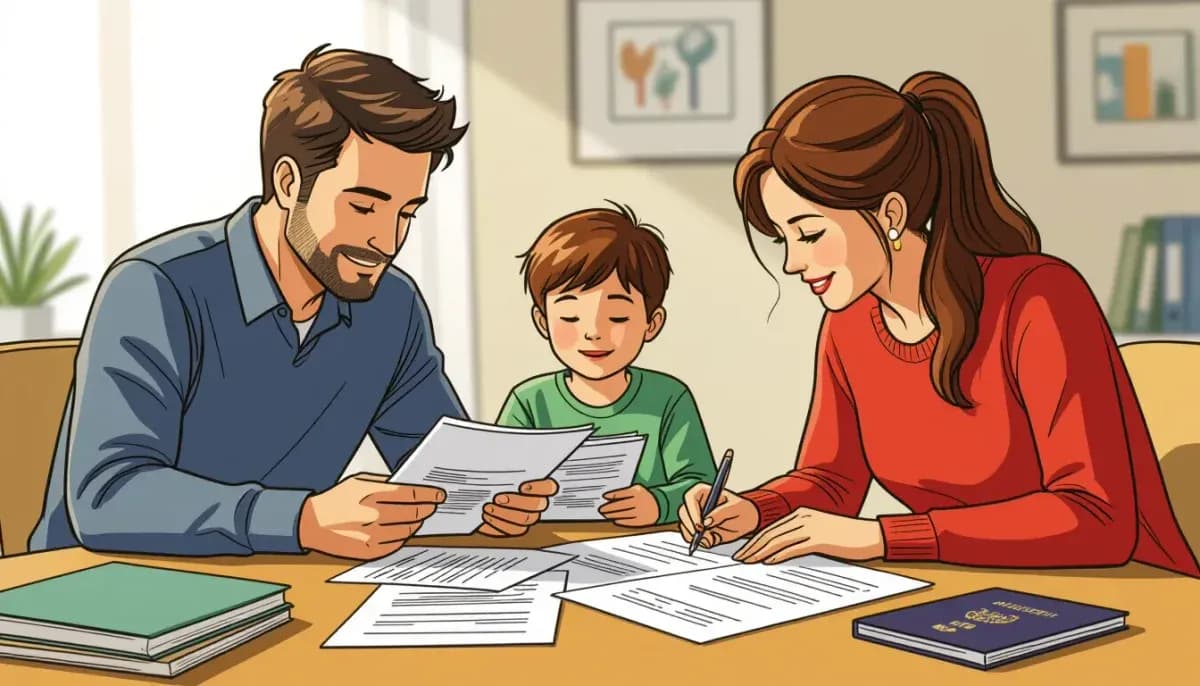
Complete guide to all documents needed for moving to Japan with children: dependent visa, COE, birth certificates, post-arrival registration, health insurance, school enrollment, and My Number setup.
Documentation and Paperwork for Moving with Children to Japan
Moving to Japan with children involves significantly more paperwork than moving alone. From securing dependent visas before departure to registering your entire family at the local ward office within days of arrival, the documentation process can feel overwhelming. This guide breaks down every document you need, in the right order, so your family's move to Japan goes as smoothly as possible.
Pre-Departure: Documents to Gather Before You Leave
Start collecting these documents months before your planned move. Many require official translations into Japanese, and some may take weeks to obtain from your home country government.
Passports and Identity Documents
Every family member needs a valid passport. Check that passports will remain valid for at least the duration of your intended stay in Japan — ideally with extra months as buffer. Children should have their own passports; adding a child to a parent's passport is not accepted by Japanese immigration.
Birth Certificates
Your children's birth certificates are the cornerstone of the dependent visa application. Japan requires:
- Official certified birth certificates (not photocopies)
- Apostille certification from your home country if Japan is a member of the Hague Convention with your nation
- Notarized Japanese translation prepared by a qualified translator
Apostille processing can take several weeks, so request these early. In countries where apostille is unavailable, consular legalization is required instead.
Family Register and Marriage Certificate
Japan's immigration system relies on verifying genuine family relationships. You will need to submit your home country's equivalent of a family register or marriage certificate, along with a certified Japanese translation. These documents prove that the children named in your visa application are biologically related to the sponsoring parent.
If you are a single parent, you may need a consent letter from the other biological parent (with translation) or documentation showing sole custody.
Academic and Medical Records
Bring your children's school transcripts and academic records — these are required for enrolling in Japanese public or private schools. Medical records, vaccination history, and any specialist care notes should also travel with you. Japan uses the Mother and Child Health Handbook (母子手帳) system for tracking infant health from birth, and your child's existing vaccination records will be needed to align with Japanese health requirements.
For a detailed overview of how children's healthcare works after arrival, see our guide to healthcare and medical care for children in Japan.
Understanding the Certificate of Eligibility (COE)
The Certificate of Eligibility (在留資格認定証明書, COE) is the most important immigration document for bringing children to Japan. The sponsoring parent — or the employer/university acting on their behalf — applies for the COE at a Japanese Immigration Bureau on behalf of the children and family.
How COE works for dependent children:
- The sponsor (working parent) applies at a Japanese regional immigration office
- Processing takes approximately 1–3 months for standard applicants; large multinational employers (Category 1/2 companies) may obtain COE for both employee and dependents in as little as two weeks
- Once COE is issued, the child and family apply for the actual dependent visa at a Japanese embassy or consulate in your home country
- Embassy/consulate visa processing takes approximately 1–2 weeks after COE submission
- Children must arrive in Japan within 3 months of the COE issue date
The COE application itself is free of charge. Dependent visa issuance fees range from ¥3,000 to ¥6,000 depending on the consulate and nationality.
For a comprehensive overview of visa categories and legal considerations, visit our article on visa and legal issues for foreign families with children in Japan.
You can also find detailed guidance on the Family Stay Visa and COE process at For Work in Japan's family life guide.
Which Visa Allows You to Bring Children?
Not all Japanese work visas permit dependent family members. Before applying, confirm your visa type is eligible:
| Parent's Visa Type | Family/Dependent Visa Allowed? |
|---|---|
| Engineer / Specialist in Humanities | Yes |
| Highly Skilled Professional | Yes (parents may conditionally qualify) |
| Business Manager | Yes |
| Professor / Researcher | Yes |
| Specified Skilled Worker (Type 1) | No |
| Specified Skilled Worker (Type 2) | Yes (since 2023 expansion) |
| Technical Intern Training | No |
| Student Visa (university/graduate) | Conditional (financial proof required) |
| Digital Nomad Visa (launched 2024) | Yes (spouse and children if eligible) |
Important: Specified Skill 1 and Technical Intern Training visa holders cannot bring dependent family members to Japan under the Family Stay visa. If your visa type does not permit dependents, you must change your residence status or wait until you qualify for a different category.
See TranSenz's dependent visa guide and Coto Academy's 2025 dependent visa guide for detailed application walkthroughs.
Post-Arrival Registration: What to Do in Your First Two Weeks
Once your family arrives in Japan, the clock starts immediately. Japanese law requires all foreign residents to complete resident registration within 14 days of establishing residence.
Step 1: Resident Registration (転入届) at the Municipal Office
Visit your local city hall (市役所) or ward office (区役所) with:
- Passports for all family members
- COE or residence cards
- Proof of address (rental contract, temporary accommodation address)
All family members — including infants and young children — must be registered. You will receive a Residence Card (在留カード) for each eligible family member. This card is required for all subsequent procedures.
For a broader look at navigating Japanese bureaucracy, see Living in Nihon's paperwork and documents guide.
Step 2: Health Insurance Enrollment
All residents of Japan, including foreign national children, are required to enroll in either:
- Employees' Health Insurance (健康保険) — if covered through the parent's employer
- National Health Insurance (国民健康保険 / NHI) — if the parent is self-employed or the employer's insurance does not cover dependents
Enroll at the ward office at the same time as resident registration. Children are covered under the family insurance plan, and premiums are calculated based on household income.
Note: As of December 2, 2024, Japan no longer issues new paper health insurance cards. The My Number Card now functions as the health insurance certificate. Apply for My Number Cards for all family members as soon as possible after arrival.
Step 3: My Number (マイナンバー) Application
Every registered resident — including children — is assigned a 12-digit My Number (social security number equivalent). A notification letter arrives at your registered address within a few weeks. You will then need to apply separately for the physical My Number Card at the ward office or via post.
Step 4: School Enrollment
Enrolling children in school requires:
- Resident registration certificate
- Previous school records / academic transcripts
- Health insurance documentation
- Health checkup records and vaccination history
Approximately 129,000 foreign students are enrolled in Japanese public schools as of 2024 — a 9% annual increase — and the process for enrollment has become more streamlined in many municipalities. Contact your local Board of Education (教育委員会) for school assignment and enrollment procedures.
For detailed guidance on each school level, see:
- Elementary school in Japan: a complete guide for foreign parents
- Junior high school in Japan: guide for foreign families
- The complete guide to the Japanese education system for foreign families
Special Situations: Children Born in Japan
If your child is born during your stay in Japan, different timelines apply:
- Birth registration (出生届) must be filed at the municipal office within 14 days of birth
- If the child will reside in Japan for more than 60 days, an application for Dependent residence status must be submitted within 30 days of birth
- The Mother and Child Health Handbook (母子手帳) is issued by the municipality upon early pregnancy notification
Foreign children born in Japan do not automatically receive Japanese citizenship (Japan follows the blood principle, not birthright citizenship), but they can receive dependent residence status tied to the parent's visa.
For full details on pregnancy and birth paperwork, read our guide on pregnancy and giving birth in Japan as a foreign parent.
You can also find additional context on this topic at Chuukou Benkyou, which covers various aspects of education and life in Japan.
Key Documents Checklist Summary
Use this checklist to organize your preparation:
Before Departure:
- [ ] Valid passports for all family members
- [ ] Certified birth certificates with apostille/notarization
- [ ] Certified Japanese translations of birth certificates
- [ ] Family register or marriage certificate (with translation)
- [ ] Consent letter from other biological parent (if applicable)
- [ ] Academic records for school-age children
- [ ] Medical records and vaccination history
- [ ] Certificate of Eligibility (applied in Japan by sponsor)
- [ ] Dependent visa (applied at embassy/consulate after COE)
Within 14 Days of Arrival:
- [ ] Resident registration (転入届) at municipal office — all family members
- [ ] Health insurance enrollment
- [ ] Residence Card collection
Within First Month:
- [ ] My Number Card application for all family members
- [ ] School enrollment (contact Board of Education)
- [ ] Bank account opening (requires residence card and My Number)
For more on daily life after settling in, explore the Japan Handbook moving checklist for 2025 for practical tips on the first weeks after arrival.
Working Rights for Dependent Visa Holders
A child on a dependent visa cannot work in Japan. As they grow older, this becomes relevant: a teenager on a Family Stay dependent visa cannot hold part-time employment without applying for Permission to Engage in Activity Other Than That Permitted Under the Status of Residence Previously Granted (資格外活動許可).
With this permission, dependent visa holders — including working-age children — may work a maximum of 28 hours per week. Applications are made at the regional immigration bureau.
This is an often-overlooked aspect of the dependent visa that becomes important as children reach working age. Planning for this transition is part of the longer-term visa strategy for families in Japan.
Moving with children requires careful coordination across multiple government systems — immigration, municipal registration, healthcare, and education — but thousands of foreign families complete this process every year. Start gathering documents early, obtain your COE well in advance, and plan your arrival to give yourself enough time to complete ward office registrations before work and school schedules begin.

Originally from Vietnam, living in Japan for 16+ years. Graduated from Nagoya University, with 11 years of professional experience at Japanese and international companies. Sharing practical information for foreign parents raising children in Japan.
View Profile →Related Articles

Repatriation Planning: Preparing to Leave Japan with Your Family
Complete guide to repatriation planning when leaving Japan with family. Covers tenshutsu todoke, pension withdrawal, school documents, shipping, tax obligations, and emotional preparation.
Read more →
Moving with Teenagers to Japan: Unique Challenges
A complete guide to moving with teenagers to Japan — covering school enrollment, language barriers, social integration, visa rules, and emotional wellbeing for expat families.
Read more →
Settling Into a New Neighborhood with Kids in Japan
A practical guide for expat families settling into a Japanese neighborhood with children — from neighbor introductions and chonaikai to jidokan, schools, and building a support network.
Read more →
Helping Children Maintain Friendships After Moving
Practical strategies for helping expat children maintain friendships after moving to Japan, from video calls and memory albums to building new bonds at school and local community centers.
Read more →
Emotional Support for Children During Relocation
Moving to Japan with kids? Learn how to support your children emotionally during relocation — from pre-move preparation through adjustment, school choice, and mental health resources in Japan.
Read more →
School Transitions During International Moves
Moving to or from Japan with school-age children? Learn how to navigate Japan's April school calendar, choose between public and international schools, manage academic records, and support your child through the transition.
Read more →