
Moving with Teenagers to Japan: Unique Challenges

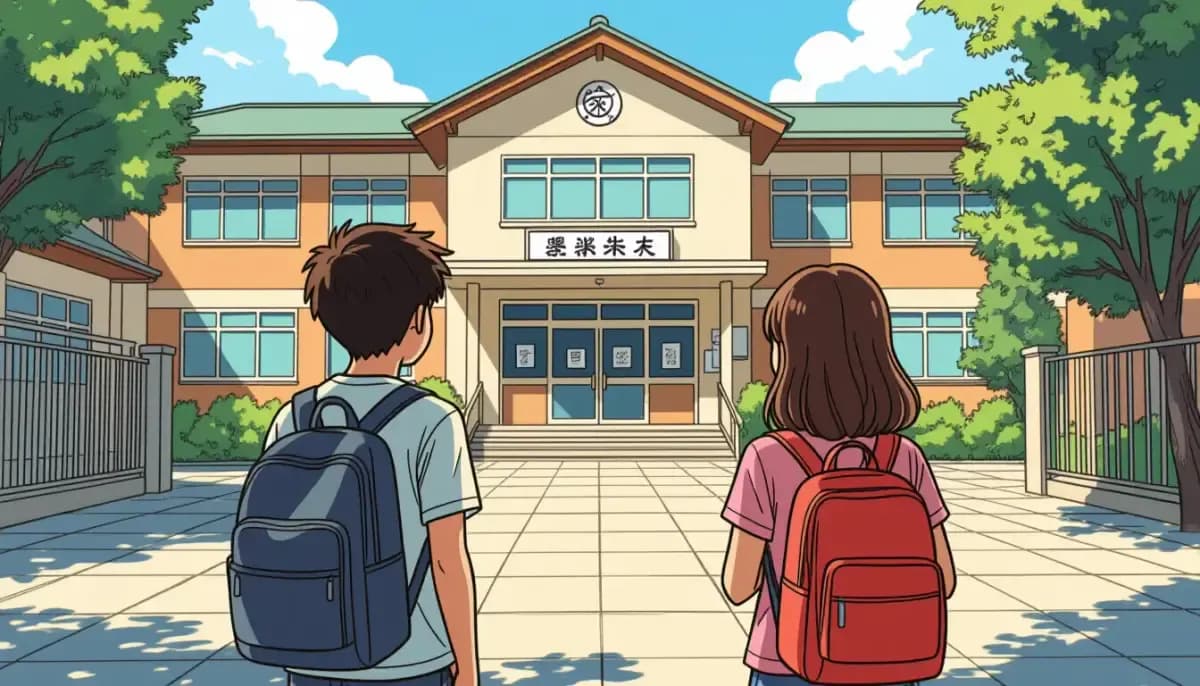
A complete guide to moving with teenagers to Japan — covering school enrollment, language barriers, social integration, visa rules, and emotional wellbeing for expat families.
Moving with Teenagers to Japan: Unique Challenges
Relocating to Japan is a life-changing experience for any family, but when you have teenagers in tow, the journey comes with a distinctive set of hurdles that parents of younger children rarely face. Unlike toddlers who adapt to new environments with relative ease, teenagers are at a critical stage of identity formation, social development, and academic progression. Uprooting them — even to one of the world's most fascinating countries — can be genuinely difficult. This guide walks you through the unique challenges of moving with teenagers to Japan and practical strategies to help your family navigate them successfully.
The School System: Where Teenagers Feel the Impact Most
For teenagers, school isn't just about academics — it's their entire social world. Japan's school system is rigorous, highly structured, and deeply embedded in Japanese cultural norms. When your teenager steps into a Japanese classroom, they're not just learning math in a new language; they're navigating an entirely different social ecosystem.
Japan's education structure follows a 6-3-3 model: six years of elementary, three years of junior high (chūgakko), and three years of high school (kōkōko). By the time a teenager arrives in Japan, they are typically entering junior high or high school — the two most socially pressured stages of Japanese schooling.
One of the starkest data points about foreign teenagers in Japan: while Japanese students advance to high school at a rate of 98.8%, foreign students do so at only 60% — a gap of nearly 39 percentage points. This dropout risk is driven by language barriers, social exclusion, and a system that was not designed with foreign students in mind.
Public junior high and high schools in Japan conduct classes almost entirely in Japanese, with little or no scaffolding for non-Japanese speakers. Even students with conversational Japanese often struggle with academic Japanese (kango-heavy vocabulary used in textbooks), which takes years to develop. Teenagers who arrive after middle school also face the challenge that they cannot repeat a grade to strengthen their language foundation — enrollment is strictly age-based.
For a full overview of high school options and how to navigate enrollment, see our guide on High School in Japan: Options and Guidance for Foreign Families.
| School Type | Annual Cost | Language of Instruction | Notes |
|---|---|---|---|
| Public Junior High/High School | Free | Japanese only | No English support guaranteed |
| Private Japanese School | ¥500,000–¥1,500,000 | Japanese | More resources, potentially more flexible |
| International School | ¥2,000,000–¥3,000,000 | English/bilingual | Does not fulfill Japanese compulsory ed. |
| Correspondence/Online School | Varies | Japanese/English | Option for students struggling to attend |
For comprehensive details on school enrollment and costs, Living in Nihon's guide for raising children in Japan is an excellent starting resource.
Social Integration: The Hardest Part for Teenagers
Adults can navigate social isolation in Japan with some degree of detachment — teenagers cannot. Social belonging is a developmental need at this age, and the barriers to social integration in Japanese schools are formidable.
Bukatsu (club activities) are the primary mechanism through which friendships form in Japanese schools. Students spend hours every day after school (and often on weekends) with their club teammates, forming bonds that become their central social identity. For a foreign teenager who lacks the language to participate effectively in club activities, this gateway to friendship is largely closed.
LINE dominance: Japanese teenagers communicate almost exclusively through LINE, Japan's dominant messaging app. Being outside the LINE group chats of your class is the social equivalent of not existing. Foreign teenagers often find themselves invisible in this digital social layer.
Pressure to conform: Japanese school culture places significant emphasis on conformity — uniform dress codes, standardized hairstyles, and group behavior norms are strictly enforced. Teenagers who stand out — whether through appearance, language, or behavior — often face social friction. Bullying (ijime) is a documented issue in Japanese schools, and foreign students can be particularly vulnerable.
Making friends outside school: Encouraging your teenager to find social connections outside the school system — through international community groups, language exchanges, or hobby-based clubs — can be a lifeline during the adjustment period.
For insight into how social and emotional wellbeing is affected, see Mental Health and Emotional Wellbeing for Foreign Children in Japan.
Language Challenges: A Teenager's Specific Burden
Young children acquire language through immersive play and classroom interaction. Teenagers face a different kind of language challenge: they are learning a language while simultaneously being expected to perform academically in it.
Japanese is widely considered one of the most difficult languages for English speakers to learn, requiring mastery of three writing systems (hiragana, katakana, and kanji) and a grammar structure entirely unlike European languages. For a teenager entering a Japanese school, the language gap is immediate and highly visible to peers.
Key language challenges for teenagers specifically:
- Academic vocabulary gap: Conversational Japanese and textbook Japanese are very different. Even students who achieve conversational fluency may take years to reach academic proficiency.
- Homework isolation: Most parents of foreign teenagers cannot assist with Japanese-language homework, leaving teenagers to struggle alone.
- Test-based advancement: High school entrance exams in Japan are conducted in Japanese. Foreign students must either take the standard exam or qualify for special foreign student admissions tracks.
The Japanese government offers dedicated Japanese language instruction in public schools, but availability and quality vary significantly by prefecture. As of 2024, over 70,000 foreign children require dedicated Japanese language instruction — double the number from a decade ago — yet schools in many areas lack adequate resources.
For structured approaches to building Japanese language skills, read Teaching Japanese to Foreign Children: Methods and Resources.
Visa and Legal Considerations for Teenager-Age Dependents
Moving with teenagers also involves specific visa and legal considerations that parents should understand before the move.
In Japan, dependent visas apply to unmarried children — which covers most teenagers. Children over 18 may need to apply for their own status of residence depending on their activity in Japan (studying, working, etc.). Parents on certain visa categories face restrictions:
- Specified Skill 1 (tokutei gino 1) visa holders cannot bring family dependents at all. If you are on this visa, your teenager cannot join you in Japan.
- Highly Skilled Professional (koudo jinzai) visa holders can bring parents and in-laws under specific conditions, in addition to spouses and children.
- Work visas (engineer, specialist, etc.) generally allow family dependents including children.
For teenagers close to age 18, it is critical to plan ahead. Dependent status typically ends when a child turns 18 unless they are enrolled in a recognized educational institution. For a full breakdown of family visa rules, For Work in Japan's family life guide covers this topic in detail.
See also our dedicated guide on Visa and Legal Issues for Foreign Families with Children in Japan.
Academic Continuity: Protecting Your Teenager's Future
A teenager's academic record is the foundation of their adult opportunities. Moving to Japan mid-secondary school raises important questions about academic continuity.
University entrance concerns: If your teenager will apply to universities in their home country, they need to maintain an academic record that meets those universities' requirements. Japanese public school curricula may not align with international qualifications like IB, A-levels, or AP courses. International schools in Japan offer these qualifications but at significant cost.
Japanese university pathways: For teenagers who will build their lives in Japan, Japanese university admission is the goal. Foreigners can apply through:
- Standard entrance exams (conducted in Japanese) — highly competitive
- Examination for Japanese University Admission (EJU) — designed for foreign students, available in English and Japanese
- Special foreign student selection — individual university programs, often requiring JLPT N2 or higher
The returnee and foreign student exam system offers strategic advantages for prepared students. As detailed on Chuukou Benkyou's guide to the returnee exam system, competition ratios in these specialized tracks are lower than standard Japanese admissions — a genuine opening for motivated foreign students.
Transcript and credit recognition: Before moving, work with your teenager's current school to document academic credits clearly. Japanese schools may not automatically recognize overseas credits, which can affect grade placement.
Practical Tips: Setting Your Teenager Up for Success
Moving with teenagers requires more active preparation than moving with younger children. Here is what experienced expat families recommend:
Before the move:
- Involve your teenager in the decision and planning process. Teenagers who feel agency over the move adapt significantly better than those who feel it was imposed on them.
- Begin Japanese language study at least 6–12 months before the move. Even basic conversational Japanese dramatically improves the initial school experience.
- Research school options thoroughly in your target city. Tokyo, Osaka, and Nagoya have many international school options; smaller cities do not.
After arrival:
- Visit the local Board of Education (kyōiku iinkai) as soon as possible to understand school enrollment options and available support services.
- Connect with established expat parent communities in your area — organizations like TELL (Tokyo English Life Line) provide English-language mental health support for expats.
- Encourage your teenager to join an extracurricular activity or interest group outside of school to build social connections on their own terms.
- Monitor your teenager's mental and emotional health closely during the first year. The adjustment period is real, and seeking support early is always better than waiting.
Financial planning: International school fees of ¥2–3 million per year represent a significant household expense. If your employer is not covering tuition, factor this into your total relocation cost calculation. For broader financial planning, see Financial Planning for Expat Families Raising Children in Japan.
Managing Emotional Wellbeing Through the Transition
The emotional dimension of the move is perhaps the most underappreciated challenge parents face. Teenagers are leaving behind their closest friendships, familiar routines, and their established sense of self — all at the moment in life when these things matter most.
Grief for what was left behind is normal and should be acknowledged, not minimized. Parents who dismiss their teenager's feelings ("You'll make new friends!") often find that dismissal damages trust. Validating the loss — even while building excitement for what's ahead — is a more effective approach.
Watch for warning signs: prolonged withdrawal, declining school performance, physical complaints without apparent cause, or expressed hopelessness. These may indicate adjustment disorder or depression, which are more common among teenage expats than among adults. The data from ABC Japan's children education research underscores how significant these gaps can be for foreign children. Japan-based English-language mental health services are available; the Tokyo English Life Line (TELL) and Tokyo Child Guidance Center (for under-18s) are two key resources.
For more on the research behind Raising Bilingual Children in Japan, including the emotional and cognitive dimensions, this guide provides useful context.
Also consult expat parenting resources on expat.com for community perspectives from parents who have been through the adjustment firsthand.
Conclusion
Moving with teenagers to Japan is not easy — but it is done successfully by thousands of families each year. The key is preparation, honest communication, and realistic expectations. Japan offers teenagers a genuinely extraordinary environment to grow up in: a safe country, a rich culture, excellent public infrastructure, and a world-class educational system that — with the right support — can become an asset rather than an obstacle.
The challenges are real: language barriers, social exclusion risks, academic continuity concerns, and the emotional weight of a major life transition. But with proactive planning, the right school choice, and consistent family support, your teenager's Japan relocation can become one of the most formative and positive experiences of their life.
For a comprehensive overview of all aspects of raising children in Japan, visit our Junior High School in Japan: Guide for Foreign Families guide for the specific challenges of the middle school years.

Originally from Vietnam, living in Japan for 16+ years. Graduated from Nagoya University, with 11 years of professional experience at Japanese and international companies. Sharing practical information for foreign parents raising children in Japan.
View Profile →Related Articles

Repatriation Planning: Preparing to Leave Japan with Your Family
Complete guide to repatriation planning when leaving Japan with family. Covers tenshutsu todoke, pension withdrawal, school documents, shipping, tax obligations, and emotional preparation.
Read more →
Documentation and Paperwork for Moving with Children to Japan
Complete guide to all documents needed for moving to Japan with children: dependent visa, COE, birth certificates, post-arrival registration, health insurance, school enrollment, and My Number setup.
Read more →
Settling Into a New Neighborhood with Kids in Japan
A practical guide for expat families settling into a Japanese neighborhood with children — from neighbor introductions and chonaikai to jidokan, schools, and building a support network.
Read more →
Helping Children Maintain Friendships After Moving
Practical strategies for helping expat children maintain friendships after moving to Japan, from video calls and memory albums to building new bonds at school and local community centers.
Read more →
Emotional Support for Children During Relocation
Moving to Japan with kids? Learn how to support your children emotionally during relocation — from pre-move preparation through adjustment, school choice, and mental health resources in Japan.
Read more →
School Transitions During International Moves
Moving to or from Japan with school-age children? Learn how to navigate Japan's April school calendar, choose between public and international schools, manage academic records, and support your child through the transition.
Read more →