
School Transitions During International Moves

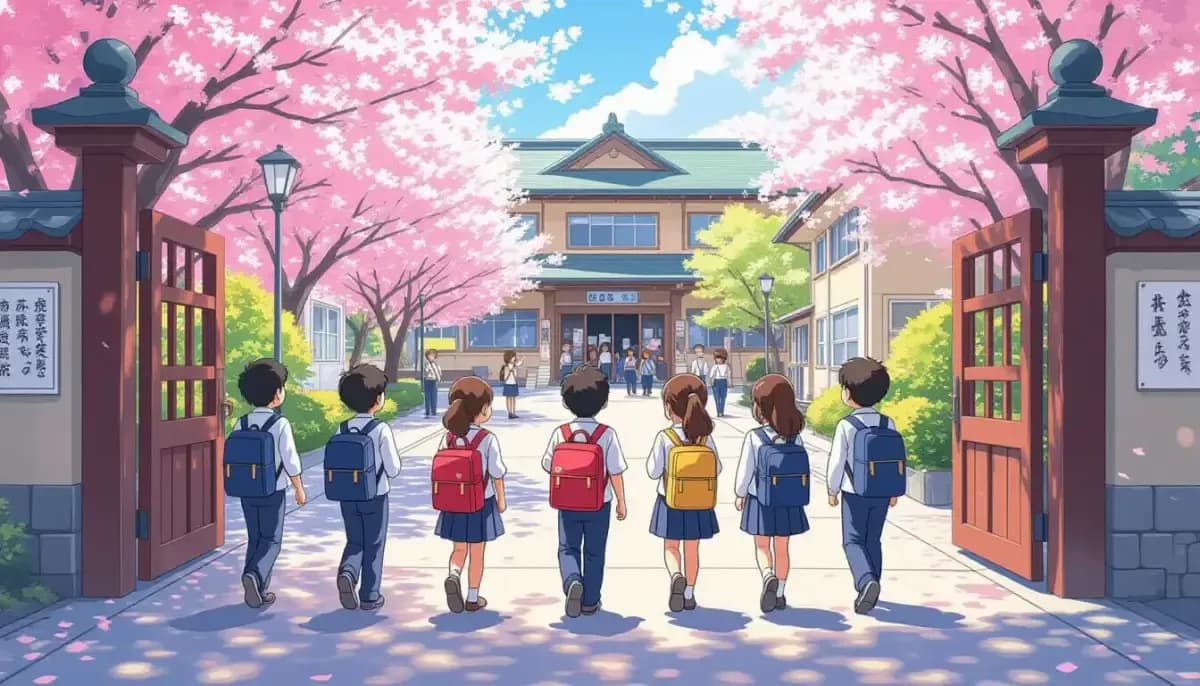
Moving to or from Japan with school-age children? Learn how to navigate Japan's April school calendar, choose between public and international schools, manage academic records, and support your child through the transition.
School Transitions During International Moves: A Complete Guide for Expat Families in Japan
Moving internationally with school-age children is one of the most emotionally and logistically complex challenges a family can face. Japan, with its rigorous academic culture, unique school calendar, and distinct language requirements, adds several layers of complexity to the transition process. Whether you are moving your family to Japan, relocating within Japan, or preparing to leave, understanding how school transitions work here is essential to protecting your children's education, emotional stability, and long-term opportunities.
This guide walks you through everything you need to know about school transitions during international moves involving Japan — from the critical April enrollment deadlines to choosing the right school system, managing culture shock, and keeping your children's academic records consistent across borders.
Understanding Japan's Unique School Calendar and Why Timing Matters
The single most important planning factor for school transitions in Japan is the academic calendar. Japan's school year runs from April to March, with the new academic year beginning in early April. This is opposite to many Western countries (September to August in the US, UK, and Australia) and means that nearly every aspect of enrollment, grade placement, and graduation is structured around springtime.
All Japanese public school students advance to the next grade in April. Entrance ceremonies for elementary, junior high, and high school are held in April. Students who miss this window face a genuinely difficult situation — especially in the public school system, where mid-year enrollment is technically possible but administratively complex, and where the student will enter a class already bonded and in mid-curriculum.
Key dates for enrollment in Japanese public schools:
- Late January to February: Submit enrollment application documents at your local ward or municipal office
- Early April: First day of school (始業式, shigyo-shiki) and entrance ceremony (入学式, nyuugaku-shiki)
- Late March: End of school year, graduation ceremonies
For children enrolling in public elementary school (shogakko), the Japanese system admits students in April of the year they turn 6 by April 1st. If your child's birthday is between April 2nd and March 31st of the following year, they are in the same school year cohort. Missing the April window typically means a full year of waiting — or a switch to international schooling.
For families arriving mid-year from abroad, international schools in Japan offer year-round admissions and are structured to accommodate students joining at any point, making them a more flexible option for families who cannot plan around Japan's April deadline.
The Two Main School Options for Expat Children in Japan
Families relocating to Japan have two primary educational paths for their children: the Japanese public school system and international private schools. Each comes with major trade-offs in cost, flexibility, language, and social integration.
Japanese Public Schools
Public schools in Japan are tuition-free and provide children with deep immersion in Japanese language, culture, and values. However, they assume zero prior Japanese knowledge by default — and they do not provide English instruction as a substitute. Your child will be placed in a class where instruction is conducted entirely in Japanese.
The Japanese government does not legally require non-Japanese residents to enroll their children in school. You will receive an enrollment invitation from your local municipality rather than a compulsory notice. This means families must take proactive steps to register their children; without action, some children fall entirely through the cracks.
According to a May 2024 MEXT (Ministry of Education, Culture, Sports, Science and Technology) survey, 8,432 foreign children of compulsory school age were not or may not have been enrolled in education — despite 163,358 being registered as eligible. The gap between eligible and enrolled children has been growing faster than it is being closed.
| Feature | Public School | International School |
|---|---|---|
| Annual cost | Free (some fees for meals, supplies) | ¥2,000,000–¥3,500,000+ |
| Language of instruction | Japanese | English (or other) |
| Mid-year enrollment | Limited / complex | Generally flexible |
| IB curriculum | No | Many offer IB |
| Cultural immersion | High | Moderate |
| Japanese language support | Varies by school | Limited |
| Social integration with local community | High | Lower |
| Portability to next country | Low | High (especially IB) |
For more on how public schools operate day-to-day, see our complete guide to elementary school in Japan for foreign parents.
International Schools
Japan has more than 80 international schools nationwide, with at least 60 in the greater Tokyo area alone. The most common curricula are American, British, and International Baccalaureate (IB). For families anticipating additional moves after Japan, the IB curriculum is the most internationally portable option — IB schools operate in over 150 countries, and the PYP (Primary Years Programme, ages 3–11), MYP (Middle Years Programme, ages 11–16), and IB Diploma (ages 16–19) are recognized by universities worldwide.
The cost of international schooling in Japan is substantial. As of 2025, annual tuition at Tokyo-area international schools ranges from ¥2,000,000 to over ¥4,000,000, with one-time enrollment and registration fees adding ¥800,000 to ¥2,075,000 in the first year. Schools in the Kansai region (Osaka, Kyoto, Kobe) typically run 20–30% lower than Tokyo.
Top-tier international schools operate at capacity. The standard recommendation is to begin research 12–24 months before your intended start date and submit applications 12 months in advance. Mid-year enrollment is possible but subject to grade-level availability.
For detailed school comparisons by curriculum and location, the Japan Handbook international schools guide is an excellent starting resource. You can also find school selection advice organized by family situation at Living in Nihon, which covers a wide range of Japan relocation topics for expat families.
Managing the Emotional and Cultural Transition for Your Child
Even before the academic challenges begin, children face profound cultural adjustment when entering school in Japan — whether in the public or international system. Japanese public school culture differs significantly from most Western norms:
- Classroom cleaning (souji): Students are expected to clean their own classrooms and school hallways after lunch each day. This is not optional; it's a core part of the school's community values.
- Group accountability: Japanese classrooms emphasize group responsibility. Students are often evaluated as a group and expected to support each other rather than focus on individual achievement.
- Uniforms and appearance standards: Most Japanese schools, including many public elementary schools, have strict rules about uniforms, hair color (no dyeing), and accessories.
- Punctuality: Being on time is a non-negotiable cultural value. Lateness reflects poorly on the student and the family.
- Summer homework: Summer vacation in Japan typically runs six weeks (late July to early September), but children are assigned extensive homework including math drills, research projects, and reading logs.
Research consistently shows that children develop basic conversational Japanese (BICS — Basic Interpersonal Communicative Skills) within about six months of immersive public school enrollment. However, academic language proficiency (CALP — Cognitive Academic Language Proficiency, the level needed to follow subject-matter instruction in science, history, and literature) takes two to three years to develop. Families should plan for a challenging two-to-three-year transition period if choosing public school.
For strategies on supporting Japanese language acquisition for your child during this period, see our guide on teaching Japanese to foreign children.
The emotional dimension is equally important. Children — especially school-age children — derive much of their identity and social belonging from their school community. Abrupt transitions can lead to loneliness, academic regression, and identity confusion. Our guide on mental health and emotional wellbeing for foreign children in Japan addresses these challenges in depth.
Transferring School Records and Academic Documentation
One of the most practically complex parts of an international school transition is managing academic records. Japan does not have a centralized system for receiving or recognizing foreign academic credentials in the K-12 system, so the process varies by school.
For enrollment in Japanese public schools:
- You will need your child's residence card (zairyu card) and family register documents
- Some municipalities request translated report cards or school records, but these are often advisory rather than determinative for grade placement
- Grade placement is typically based on age cohort rather than academic level — a child who is 9 years old will generally be placed in 3rd or 4th grade regardless of their academic history
For enrollment in international schools:
- Most international schools require official transcripts from the previous school
- Report cards, standardized test results (e.g., MAP, IOWA, ISA), and teacher recommendation letters are commonly requested
- IB schools require documentation of which IB program and level the student was enrolled in
- Some schools conduct their own assessment to determine appropriate class placement
What to prepare before leaving your current country:
- Certified copies of the last 2 years of report cards
- Official school transcripts
- Immunization and health records (Japan has its own immunization schedule; some vaccines may need to be retaken)
- Any IEP, 504, or learning support documentation (keep originals)
- Contact information of the child's current teachers for reference letters
For more on the administrative side of relocating to Japan, For Work in Japan covers visa processes, documentation requirements, and practical steps for families moving to Japan for work.
Planning Your Timeline: When to Act
The single biggest mistake families make during international school transitions is underestimating how much lead time is required. Here is a realistic planning timeline:
24 months before move:
- Research school options in Japan (international vs. public)
- Begin Japanese language study if planning public school enrollment
- For international schools: start shortlisting based on curriculum, location, and budget
18 months before move:
- Contact international schools directly to understand admissions timelines and availability
- Begin gathering academic records and documentation
- Confirm your move date relative to Japan's April enrollment deadline
12 months before move:
- Submit international school applications
- Schedule school visits or virtual tours
- If planning public school: research the ward/municipality you will live in and their support programs for foreign children
6 months before move:
- Confirm enrollment
- Begin Japanese language preparation if applicable
- Start preparing your child emotionally — books, videos, and conversations about Japanese school life
At arrival:
- Register at the local ward office immediately upon arrival and request school enrollment
- Coordinate with your school on a start date and orientation support
For younger children not yet of school age, Japan's daycare and kindergarten programs (hoikuen and yochien) have been essentially free for ages 3–5 since October 2019, reducing the cost burden during the initial settlement period. For details, see our guide on daycare and hoikuen in Japan for foreign parents and kindergarten options in Japan.
When You Are Leaving Japan: Preparing for the Next Transition
The reverse transition — from Japan to another country — also requires careful preparation. Children who have spent years in Japanese schools may face challenges re-entering their home country's education system:
- Grade level gaps: Japan's curriculum sequences differ from many countries. Math in Japan is typically 1–2 years ahead of equivalent grades in the US, while social studies and writing formats differ significantly.
- Language re-adjustment: Children who have become dominant in Japanese may need structured support re-developing academic fluency in English or another home language. Our guide on heritage language maintenance covers strategies for keeping home language skills strong during Japan years.
- Social re-entry: Children returning to their home country after years in Japan may find social norms jarring in reverse. Japanese behavioral expectations (silence, deference, group focus) can clash with the individualism and directness typical of Western classrooms.
- Documentation: Request official Japanese school records (seiseki-shomei and zairyu-shomei) from your school before departure. Get them translated by a certified translator if your next country requires official documents.
For planning the full arc of raising children across multiple countries, the analysis at Nippon.com's in-depth coverage provides valuable policy context on the systemic gaps that foreign families in Japan navigate.
Additional resources for expat families navigating Japan's broader educational system are available at Chuukou Benkyou, which focuses on middle and high school topics relevant to international students.
Conclusion: Plan Early, Stay Flexible, Prioritize Your Child's Wellbeing
School transitions during international moves are rarely smooth — and Japan's unique educational culture means they require especially careful planning. The April academic calendar, the language immersion challenge, the high cost of international schools, and the lack of legal compulsion for foreign children's enrollment all create potential pitfalls for unprepared families.
But with the right timeline, the right documentation, and a clear-eyed understanding of your child's specific needs and your family's plans, the transition can be managed successfully. Children are remarkably adaptable — with structure, emotional support, and realistic expectations, most children thrive even after significant disruption.
Start planning earlier than you think you need to. Keep records organized. Listen to your child's experience during the transition. And take advantage of Japan's strong expat community networks — many families before you have navigated this same process and are generous with their advice.
For a broader overview of how Japan's education system works from preschool through high school, see our complete guide to the Japanese education system for foreign families. For high school-specific options and university preparation, see our guide on high school in Japan for foreign families.

Originally from Vietnam, living in Japan for 16+ years. Graduated from Nagoya University, with 11 years of professional experience at Japanese and international companies. Sharing practical information for foreign parents raising children in Japan.
View Profile →Related Articles

Repatriation Planning: Preparing to Leave Japan with Your Family
Complete guide to repatriation planning when leaving Japan with family. Covers tenshutsu todoke, pension withdrawal, school documents, shipping, tax obligations, and emotional preparation.
Read more →
Moving with Teenagers to Japan: Unique Challenges
A complete guide to moving with teenagers to Japan — covering school enrollment, language barriers, social integration, visa rules, and emotional wellbeing for expat families.
Read more →
Documentation and Paperwork for Moving with Children to Japan
Complete guide to all documents needed for moving to Japan with children: dependent visa, COE, birth certificates, post-arrival registration, health insurance, school enrollment, and My Number setup.
Read more →
Settling Into a New Neighborhood with Kids in Japan
A practical guide for expat families settling into a Japanese neighborhood with children — from neighbor introductions and chonaikai to jidokan, schools, and building a support network.
Read more →
Helping Children Maintain Friendships After Moving
Practical strategies for helping expat children maintain friendships after moving to Japan, from video calls and memory albums to building new bonds at school and local community centers.
Read more →
Emotional Support for Children During Relocation
Moving to Japan with kids? Learn how to support your children emotionally during relocation — from pre-move preparation through adjustment, school choice, and mental health resources in Japan.
Read more →