
Emotional Support for Children During Relocation

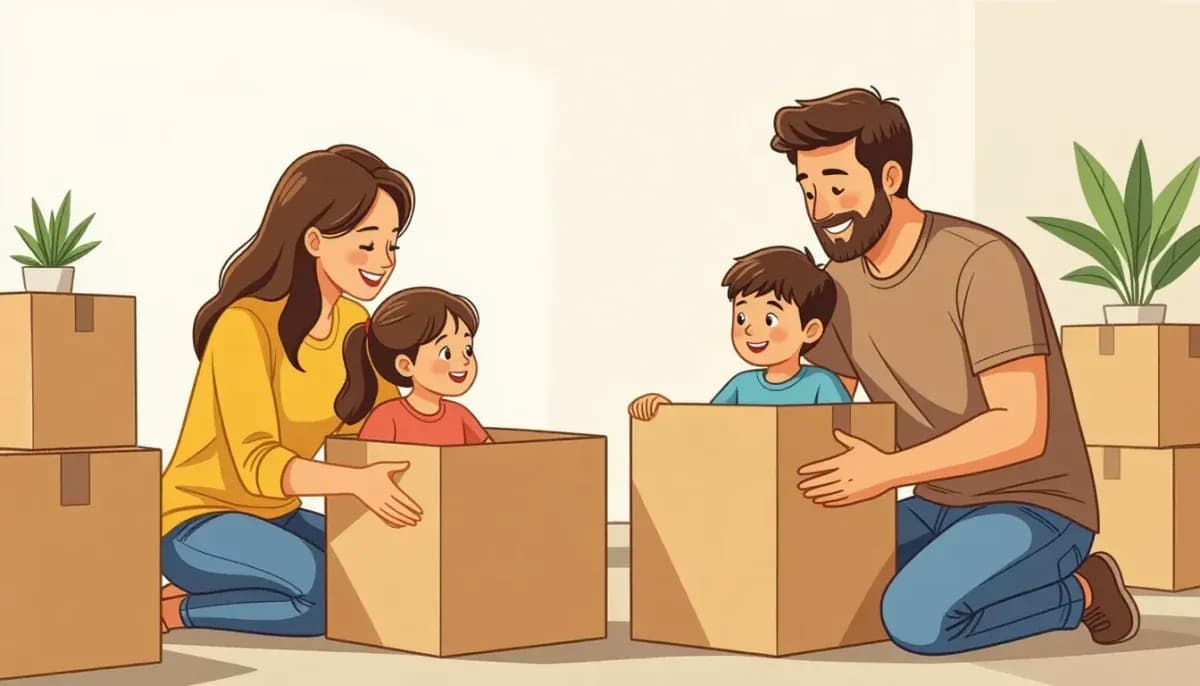
Moving to Japan with kids? Learn how to support your children emotionally during relocation — from pre-move preparation through adjustment, school choice, and mental health resources in Japan.
Emotional Support for Children During Relocation to Japan
Moving to a new country is one of the most significant upheavals a family can experience — and for children, the emotional stakes are especially high. When your family relocates to Japan, your kids face a cascade of losses all at once: familiar friends, beloved teachers, the school they know, their bedroom, and the neighbourhood they've grown up in. At the same time, they face a brand-new language, an unfamiliar culture, and a school system that works quite differently from anything they've known before.
Research published in the PMC/NIH journal confirms that 52% of expatriate employees relocating overseas bring their children, making family relocation to Japan far more common than many assume. The same research shows that family cohesion is the single strongest predictor of both quality of life and sociocultural adjustment for expatriate youth. In other words, how well your children adapt depends less on Japan itself and more on the emotional environment you create within your home.
This guide walks you through every stage of the relocation journey — before, during, and after the move — so you can give your children the emotional scaffolding they need to not just survive the transition, but genuinely thrive.
Understanding Why Relocation Is Hard for Kids
Before diving into strategies, it helps to understand why children struggle with relocation in the first place. The answer goes deeper than just missing friends.
Children's sense of security is built on predictability. They know what happens after school, who their friends are, where the corner shop is, and what language the teacher speaks. Relocation strips all of that away simultaneously. Developmentally, children lack the life experience to trust that things will get better — they can only feel what is happening right now.
Japan presents particular challenges that set it apart from other expatriate destinations. Academic researchers describe Japan as a "monocultural" host country, meaning the cultural distance is greater here than in more multicultural destinations like the UK or the USA. A 2025 SAGE journal study on immigrant children in Japanese schools found significant adjustment challenges, including instances of bullying (ijime) — a well-documented phenomenon in Japanese schools that can be particularly disorienting for foreign children who cannot yet read social cues in a new language.
Age matters enormously:
- Young children (under 8): Rely primarily on parents and siblings for emotional security. They tend to adapt more easily overall, but watch carefully for regressive behaviours such as bedwetting, nighttime crying, or clinginess — these are distress signals, not naughtiness.
- Pre-teens and teenagers (10+): Peer belonging becomes the primary source of emotional security at this age. These children suffer most intensely during relocation because their entire social identity is uprooted. They need extra emotional scaffolding and active help building new friendships.
Research also shows that children who experience repeated relocations face compounding risks: higher rates of depressive symptoms, lower academic performance, and reduced persistence over time. If your family has already moved multiple times, be especially attentive to these warning signs.
Before the Move: Preparation Is Everything
The emotional work begins long before the boxes are packed. How you introduce and manage the pre-move period sets the emotional tone for everything that follows.
Tell Your Children Early and Honestly
Children need time to process. Telling them about the move at the last minute denies them that processing time and breaks their trust. Explain the move clearly and honestly, in age-appropriate language. Acknowledge that it will be hard — do not promise that it will be easy — but express genuine confidence that your family will get through it together.
Involve Children in Decisions
Whenever possible, give children real choices. These might include:
- Which items to bring vs. store
- How to decorate their new bedroom
- Researching schools together (for older children)
- Choosing a new activity or club to try in Japan
Even small choices restore a sense of agency and control, which is precisely what relocation strips away.
Familiarise Children with Japan Before You Go
Reduce the "shock" of arrival by making Japan feel slightly familiar before you even land. Practical ideas include:
- Watching age-appropriate Japanese films or anime together
- Trying Japanese food at home or at a local restaurant
- Using basic Japanese language apps as a family
- Looking at photos and videos of your new neighbourhood, local parks, and school
- Learning the basics of Japanese school life (see our guide to elementary school in Japan for foreign families)
Create Meaningful Farewell Rituals
Goodbyes matter. Help your children mark the end of this chapter with intention:
- Host a farewell gathering with close friends
- Create a memory book or scrapbook together
- Take a final walk through your favourite neighbourhood spots
- Allow your child to leave a personal mark on their old home (a drawing inside a cupboard, signing a wall before painting)
- Make sure they have contact details for close friends, and schedule the very first video call before you leave
For more on raising bilingual children in Japan — including how to choose language learning approaches — we have a full guide that is worth reading before you depart.
During and After the Move: Building the New Normal
The first weeks in Japan are the most vulnerable period. Here is what the research and experienced expat families consistently recommend.
Maintain Familiar Routines
Routines are an anchor in an uncertain world. As much as possible, maintain familiar patterns:
- Same bedtime and morning routines
- Regular homework schedules
- Familiar meals interspersed with Japanese food exploration
- Weekly video calls with grandparents or old friends
The content of life will change enormously, but the structure can remain consistent. That structure communicates to children's nervous systems: we are still the same family.
Validate Emotions Without Trying to Fix Them
One of the most well-intentioned but counterproductive things parents do is immediately try to make their children feel better. "Don't worry, you'll make new friends!" shuts down emotional expression rather than encouraging it. Instead:
- Acknowledge what your child is feeling: "I know you really miss your friends. That makes complete sense."
- Name the emotion with them: "It sounds like you're feeling really lonely right now."
- Avoid silver linings in the immediate moment — there is a time for those, but not when a child is in the middle of grief.
- Check in regularly in ways that suit your child's personality: some children want to talk; others prefer drawing, playing, or quiet time together.
Balance Support with Space to Settle
In the first weeks, resist the urge to over-schedule new experiences in an attempt to accelerate adjustment. Children need some unstructured time to simply be in the new environment. Allow boredom — it is often when genuine curiosity and exploration begin.
At the same time, do take gradual steps to help children connect:
- Visit the local Jidokan (児童館), free community centres for children run by the local government. They are one of the best places to meet Japanese families in an informal, welcoming environment.
- Look for expat parent communities on social media (Facebook groups for expat families in your city are plentiful and active)
- Sign children up for one activity that genuinely interests them — a sport, a music class, an art club. Shared interests dissolve language barriers faster than anything else.
Bupa Global's research on supporting children's mental health when moving abroad emphasises that children who are allowed to gradually build new connections — rather than being rushed into social situations — adjust more successfully in the long term.
Choosing the Right School: Emotional Implications
School choice is one of the most consequential decisions you will make for your child's emotional wellbeing in Japan. Each option comes with genuine trade-offs:
| School Type | Benefits | Emotional Challenges |
|---|---|---|
| Japanese public school | Fastest cultural integration; free; local friendships | Language barrier; risk of ijime bullying; repatriation difficulties |
| International school | Home curriculum continuity; English-language environment | Cultural disconnection from Japan; different school calendar (often September start) |
| Japanese private school | Often more diverse than public schools | Significant fees; still primarily Japanese language |
| Online/hybrid school | Maximum flexibility; continuity for frequent movers | Less peer connection; limited Japan-based experience |
For a detailed comparison including costs, admission processes, and age-specific recommendations, see our comprehensive guide to international schools in Japan for families.
The Japanese school year runs from April to March, and grade placement is based on your child's age as of April 1. If your arrival date doesn't align with April, your child may start mid-year — which can be emotionally challenging. Discuss mid-year enrolment support with the school before committing.
For more information on enrolling in Japanese public schools, see our guide to the Japanese education system for foreign families.
Warning Signs: When to Seek Professional Help
Adjustment difficulties are normal and expected. However, some signs indicate that a child needs more support than family routines can provide:
Watch for:
- Persistent social withdrawal lasting more than 6–8 weeks
- Significant changes in appetite or sleep patterns
- Declining school performance that does not improve over time
- Frequent unexplained physical complaints (stomach aches, headaches — common stress manifestations in children)
- School refusal or intense anxiety around school
- In younger children: significant regression (bedwetting, nighttime crying) beyond the first 2–3 weeks
- In teenagers: defiance, self-isolation, or expressed hopelessness
Importantly, the American Academy of Child and Adolescent Psychiatry (AACAP) notes that children's difficulties are sometimes caused not by the move itself, but by parental conflict about the move. If you and your partner disagree about the relocation, or if one parent is clearly unhappy in Japan, children often absorb and act out that tension. Addressing adult emotional needs is therefore part of supporting your children.
Mental Health Resources in Japan for Families
If you do decide professional support is needed, Japan has more resources for English-speaking families than many people realise.
Tokyo Mental Health is a well-established English-language therapy clinic that explicitly includes "adjustment to relocation (new school, new home, moving country)" in its services for children and adolescents aged 13 and over.
TELL (Tokyo English Life Line) provides English-language mental health counselling and crisis support in Japan, available to both adults and families.
Tokyo Child Guidance Centers (子ども家庭支援センター) are run by each ward and offer consultations for children under 18 and their parents. While primarily Japanese-language, many centres can arrange interpretation services.
For a broader overview of emotional wellbeing resources, our guide to mental health and emotional wellbeing for foreign children in Japan covers the full landscape of available support.
Third Culture Kids: The Longer-Term View
Children who grow up moving between countries are often described as Third Culture Kids (TCKs) — they build deep connections to multiple cultures without having full ownership in any single one. This can be both a gift and a challenge.
TCKs often develop:
- Exceptional cross-cultural empathy and communication skills
- Resilience and adaptability
- A broad, international worldview
- Strong friendships forged in the intensity of shared expat experience
At the same time, identity questions can be especially acute during adolescence: Where am I from? Where do I belong? These are not questions with easy answers, and parents should not rush to provide them. The goal is to create a family environment where these questions are welcomed rather than dismissed.
Research from Living in Nihon, study resources at Chuukou Benkyou, and expat community networks consistently emphasises that families who actively discuss their TCK experience — naming it, normalising it, and celebrating what is unique about it — raise children with stronger identity foundations than families who avoid the topic.
For work-related resources that impact family relocation decisions, For Work in Japan provides useful guidance on employment contexts that shape why families move to Japan in the first place — understanding those pressures can help parents communicate more authentically with their children about why the move is happening.
Practical Checklist: Emotional Support Action Plan
Use this checklist as a living document throughout your relocation journey.
| Timing | Action |
|---|---|
| 3–6 months before | Tell children about the move honestly and early |
| 3–6 months before | Begin familiarising with Japanese culture and language |
| 1–3 months before | Involve children in school research and decision-making |
| 1 month before | Create farewell rituals; collect friends' contact details |
| Moving week | Keep comfort items accessible; maintain bedtime routine |
| First week | Explore neighbourhood together; visit local parks |
| First month | Identify one activity or club to join |
| First month | Visit local Jidokan; connect with expat parent groups |
| Ongoing | Weekly check-ins; maintain video calls with old friends |
| Ongoing | Watch for warning signs; seek help if needed |
For additional resources on government support available to your family in Japan, including child benefit programs and free medical care certificates, see our guide to government benefits and subsidies for families in Japan.
Conclusion
Relocating to Japan with children is genuinely challenging — and it is okay to say so. Pretending otherwise does not protect your children; it just leaves them feeling alone in their struggles. The research is clear that what matters most is not the absence of difficulty, but the presence of a warm, honest, emotionally available family environment.
Give your children the language to name what they are feeling. Give yourself permission to feel it too. Build routines, build community, and build in time — because adjustment to Japan takes time, and that is completely normal.
Your family will find its footing. And Japan, with all its extraordinary qualities, has a great deal to offer the children who are brave enough to make it their home.
For more expat parenting resources, explore our guides to healthcare and medical care for children in Japan, daycare and hoikuen in Japan, and heritage language maintenance for children in Japan.

Originally from Vietnam, living in Japan for 16+ years. Graduated from Nagoya University, with 11 years of professional experience at Japanese and international companies. Sharing practical information for foreign parents raising children in Japan.
View Profile →Related Articles

Repatriation Planning: Preparing to Leave Japan with Your Family
Complete guide to repatriation planning when leaving Japan with family. Covers tenshutsu todoke, pension withdrawal, school documents, shipping, tax obligations, and emotional preparation.
Read more →
Moving with Teenagers to Japan: Unique Challenges
A complete guide to moving with teenagers to Japan — covering school enrollment, language barriers, social integration, visa rules, and emotional wellbeing for expat families.
Read more →
Documentation and Paperwork for Moving with Children to Japan
Complete guide to all documents needed for moving to Japan with children: dependent visa, COE, birth certificates, post-arrival registration, health insurance, school enrollment, and My Number setup.
Read more →
Settling Into a New Neighborhood with Kids in Japan
A practical guide for expat families settling into a Japanese neighborhood with children — from neighbor introductions and chonaikai to jidokan, schools, and building a support network.
Read more →
Helping Children Maintain Friendships After Moving
Practical strategies for helping expat children maintain friendships after moving to Japan, from video calls and memory albums to building new bonds at school and local community centers.
Read more →
School Transitions During International Moves
Moving to or from Japan with school-age children? Learn how to navigate Japan's April school calendar, choose between public and international schools, manage academic records, and support your child through the transition.
Read more →