
Coming of Age Day (Seijin no Hi): What It Means

Learn everything about Japan's Coming of Age Day (Seijin no Hi): its history from ancient genpuku ceremonies, the modern seijin-shiki celebration, legal age changes, furisode kimono, and what it means for foreign families in Japan.
Coming of Age Day (Seijin no Hi): What It Means and Why It Matters
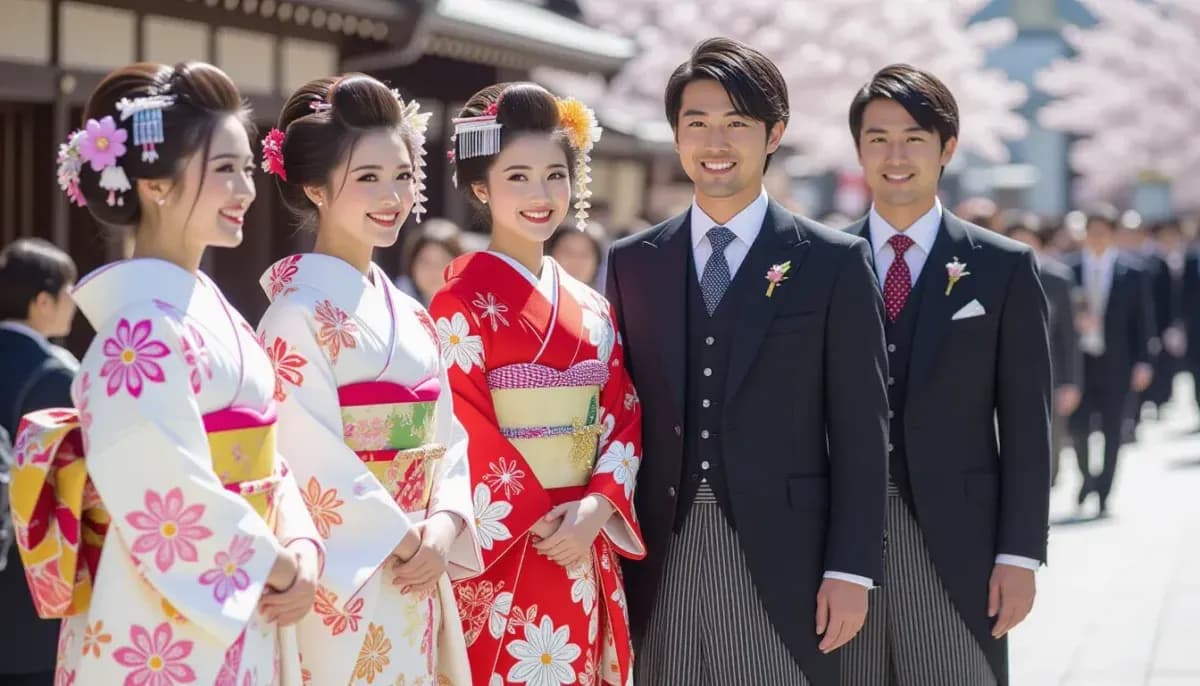
Every second Monday of January, Japan transforms. Young adults — predominantly dressed in vibrant long-sleeved kimono or sharp dark suits — gather at city halls, theme parks, and local venues across the country for one of Japan's most visually striking national holidays: Seijin no Hi (成人の日), or Coming of Age Day.
For foreign families living in Japan, this holiday is far more than a photo opportunity. It marks a profound cultural shift, weaving together ancient ceremony, modern legal rights, family celebration, and a very Japanese sense of collective milestone-marking. Whether your child will eventually participate, or you simply want to understand the culture around you, this guide explains everything about Seijin no Hi — its history, meaning, ceremony details, traditions, and how legal changes have reshaped it in recent years.
What Is Seijin no Hi? The Basic Meaning
Seijin no Hi (成人の日) literally translates as "Coming of Age Day." It is a national public holiday in Japan — one of 16 designated national holidays — dedicated to celebrating and congratulating all those who have newly reached the age of adulthood.
The holiday carries a dual message: recognition of the rights and freedoms that come with adulthood, alongside an emphasis on the responsibilities that accompany them. It is not simply a party. Official ceremonies include speeches from mayors and local officials encouraging new adults to become contributing members of society.
The holiday falls on the second Monday of January each year. Before the year 2000, it was a fixed date of January 15. Japan's "Happy Monday System" (ハッピーマンデー制度) moved several holidays to Mondays to create three-day weekends. The 2025 ceremony was held on January 13; the 2026 ceremony on January 12.
Participants in the ceremony are called seijin (成人), meaning "adult" or "person who has come of age." The formal ceremony itself is called seijin-shiki (成人式), literally "coming-of-age ceremony."
Ancient Roots: From Genpuku to Modern Ceremony
Seijin no Hi has origins stretching back over 1,300 years. Understanding its history helps explain why the holiday feels so deeply meaningful to Japanese people today.
The Nara Period Origins (710–794 AD)
The earliest recorded predecessor dates to 714 AD, when a young Nara-era prince celebrated his transition to adulthood by changing into new formal clothing and adopting a new adult hairstyle. This custom — called genpuku (元服) — was formalized during the Nara period as an aristocratic coming-of-age rite for boys aged 12 to 16.
During genpuku, young males publicly appeared in adult clothing for the first time, symbolizing their readiness for adult roles: governance, military service, and marriage. The ceremony was derived from Chinese Tang dynasty customs, reflecting Japan's cultural exchange with the Asian continent during this era.
A parallel ceremony for women, mogi (裳着), emerged during the Heian period (794–1185 AD). Aristocratic women changed into formal adult attire upon marriage or reaching maturity, typically between ages 18 and 20.
Over the centuries, these rites spread from the imperial family to the warrior (samurai) class, and eventually to the general population. Traditional genpuku rites continue within the imperial household to this day.
The Modern Ceremony's Birth (1946–1948)
Japan's modern Coming of Age Day has its direct origins in the post-World War II period. In 1946, Warabi City (蕨市) in Saitama Prefecture organized the first modern event — a "Seinen Matsuri" (Youth Festival / 青年祭) — specifically designed to uplift young people who had grown up amid wartime devastation and despair.
The initiative was so successful that in 1948, the Japanese government officially designated January 15 as a national holiday called Seijin no Hi. It has been celebrated nationally ever since, transitioning to its current "Happy Monday" format in 2000.
Japan's Changing Legal Age of Adulthood
One of the most significant recent developments surrounding Seijin no Hi is the change in Japan's legal age of majority — something every foreign family in Japan should understand.
From 20 to 18: A Historic Change
For 140 years — since the Meiji government set the age in 1876 — Japan's legal age of adulthood was 20 years old. This changed in April 2022.
| Milestone | Date |
|---|---|
| Original adult age set at 20 | 1876 (Meiji era) |
| Voting age lowered to 18 | 2016 |
| Cabinet approved lowering adult age | June 2018 |
| New adult age of 18 takes effect | April 1, 2022 |
As of April 1, 2022, Japan's legal age of majority dropped to 18 — the first such change in over a century. This brought Japan in line with most other countries.
What Changes at 18 (and What Doesn't)
The new law granted 18-year-olds new legal rights, but some restrictions remain in place until age 20.
Rights granted at age 18:
- Sign contracts independently (mobile phones, apartments, loans)
- Marry without parental consent
- Obtain a 10-year passport
- Qualify for certain national certifications (public accountant, judicial scrivener)
- Apply for a credit card
Still restricted until age 20:
- Purchasing and drinking alcohol
- Smoking
- Gambling (horse racing, boat racing, auto racing, bicycle racing)
- Obtaining medium or large vehicle driver's licenses
Why Most Ceremonies Still Target 20-Year-Olds
Despite the legal change, the vast majority of municipalities continue to hold ceremonies for 20-year-olds. The practical reason: 18-year-olds in Japan are typically in the middle of critical university entrance examinations in January, making ceremony participation nearly impossible. Some progressive municipalities have begun including 18-year-olds, but this remains the minority.
For foreign families, this means the ceremonies your child may attend (if they have been registered as a resident) will most likely still be organized around the age of 20.
The Seijin-Shiki Ceremony: What Happens on the Day
The actual coming-of-age ceremony — seijin-shiki — is organized and run by local municipalities (city, ward, or town offices), not by the national government. This means every ceremony has its own character, venue, and local flair.
Invitation and Eligibility
Eligible participants receive an invitation voucher in December from the municipal office where they are officially registered as a resident. Eligibility is based on being registered (juuminhyou / 住民票) in that city and turning 20 (or 18 in some municipalities) between April 2 of the previous year and April 1 of the current year.
Foreign residents are eligible if they are registered residents of the municipality — a particularly important point for expat families. Many cities now explicitly welcome international students and long-term foreign residents in their ceremonies.
The Ceremony Program
The ceremony itself typically lasts less than one hour and follows a structured format:
- Japan's national anthem (Kimigayo)
- Welcome speech from the mayor or a senior municipal official
- Acknowledgement of youth organizations and local associations
- Sometimes a message from a local mascot character (yuru-kyara)
- Speeches or video messages — sometimes from famous local athletes or performers
- Photo slideshow of participants' childhood memories (submitted in advance)
- Committee representatives' speeches
- Distribution of small gifts or commemorative items to new adults
The organizing committee for each ceremony typically consists of about a dozen young volunteers drawn from the eligible age group — meaning the youth themselves help plan and run the event.
Famous and Unique Ceremony Venues
While most ceremonies are held at city halls, gymnasiums, or convention centers, some municipalities are famous for extraordinary venues:
- Tokyo Disneyland (Urayasu City, Chiba): One of Japan's most photographed seijin-shiki venues. Because Urayasu has a large eligible population, two ceremonies are held. This event receives heavy national media coverage every year.
- Kamogawa Sea World (Kamogawa City, Chiba): Participants in full kimono and formal suits take photos alongside sea animals.
- Snow-affected regions (Niigata, Aomori, Akita, Yamagata): Some cold-weather prefectures reschedule ceremonies to Golden Week (late April) or Obon (August) so participants can wear summer kimono without winter weather hazards.
Traditional Attire: The Heart of the Visual Spectacle
The visual splendor of Seijin no Hi comes almost entirely from the traditional clothing worn by participants — particularly young women. This attire is one of the few remaining occasions where traditional Japanese dress is worn by large numbers of young people simultaneously.
Women: The Furisode Kimono
The defining garment of Seijin no Hi for women is the furisode (振袖) — a long-sleeved formal kimono worn only by unmarried women. The word furisode means "swinging sleeves," referring to the long, flowing sleeves that distinguish it from other kimono styles.
The furisode is the most formal style of kimono for unmarried women. On Coming of Age Day, they appear in vibrant colors — deep reds, bright pinks, purples, greens — often with elaborate floral patterns. Accessories include:
- Elaborate hair decorations (sometimes incorporating fresh flowers)
- Professional makeup
- Traditional zori (草履) sandals
- Thick fur stoles or scarves (practical for January weather)
- Decorative obiage and obijime cords
Many furisode are family heirlooms handed down from grandmothers or mothers. Hair salons across Japan book months in advance, opening at 4 AM or earlier on Coming of Age Day to accommodate demand.
Cost considerations: Furisode rental packages, including the photo shoot and kimono dressing, range from approximately ¥50,000 to ¥200,000 (roughly $300–$1,300 USD). Purchasing a furisode outright costs considerably more.
Men: Suits and Hakama
Men most commonly attend in dark Western-style three-piece suits. A more traditional option is the haori-hakama combination: a haori (羽織) jacket worn over a wide-legged hakama (袴) trousers, paired with geta (下駄) wooden sandals. Some young men opt for bold colors or personalized fashion statements reflecting their individual style.
After the Ceremony: Celebrations and Reunions
The official ceremony is just the beginning of Coming of Age Day celebrations. The rest of the day is typically filled with:
Class Reunions (Dousoukai / 同窓会) Former middle school and high school classmates reunite — often for the first time since graduation. In Japan's educational system, strong bonds form between students and homeroom teachers, so teachers sometimes attend these reunions as well.
Shrine and Temple Visits Many new adults visit local shrines or temples to pray for good health, success, and happiness. These visits are often combined with professional photography sessions in full formal attire.
Family Celebrations Family members gather for celebratory meals, and monetary gifts are commonly given. Typical amounts:
- From parents: ¥10,000–¥50,000
- From grandparents: ¥10,000–¥100,000
- From aunts and uncles: ¥10,000–¥30,000
Izakaya and Nightlife Young adults celebrating their first legal opportunity to drink alcohol (if aged 20+) often gather at izakaya (Japanese pubs), particularly in entertainment districts like Shibuya in Tokyo.
Demographics: A Holiday Reflecting Japan's Future
The statistics around Seijin no Hi tell a powerful story about Japan's demographic challenges — something relevant for foreign families choosing to raise children in Japan.
In 2026, approximately 1.09 million people reached adulthood as of January 1 — 560,000 men and 530,000 women. This was the second-lowest figure on record. In 2024, the number hit a record low of 1.06 million.
Compare this to the 1970 peak of 2.46 million — more than double today's figure. New adults now represent only 0.88% of Japan's total population, reflecting decades of declining birth rates.
This demographic context adds weight to official ceremony speeches. New adults are frequently described as "the bearers of Japan's future" — a phrase that resonates differently when you understand how few of them there are.
Inclusive and Modern Adaptations
Seijin no Hi continues to evolve to reflect Japan's changing society.
LGBT-Inclusive Ceremonies The Kansai LGBT Seijinshiki, established in Osaka in 2014, offers a free alternative ceremony with no gender-based dress code requirements. Strict photography rules protect participants' privacy. Similar inclusive events have since appeared in other regions.
Multicultural Ceremonies In Nagoya, an ethnic Korean community holds a Resident Korean Seijinshiki where participants wear both Western suits and traditional Korean hanbok, celebrating dual cultural heritage alongside the national holiday.
Related Milestone Celebrations Several newer traditions have emerged around the Coming of Age concept:
- Totose no iwai (十歳の祝い): A celebration at age 10 — the midpoint toward 20.
- Nibun no ichi seijin-shiki (二分の一成人式): A "Half Coming-of-Age Ceremony" for 10-year-olds, increasingly popular in elementary schools.
- Misoji-shiki (三十路式): A 30th birthday celebration in the style of seijin-shiki.
What This Means for Foreign Families in Japan
If you are raising children in Japan, Seijin no Hi is worth understanding on several levels.
Participation eligibility: If your child is registered as a resident (juuminhyou) of a Japanese municipality when they turn 20 (or 18 in some cities), they will likely receive an invitation to the ceremony. Many cities explicitly include foreign residents.
Cultural education: Seijin no Hi provides a rich opportunity to teach children about Japanese concepts of responsibility and community — how growing up here is marked publicly and collectively, not just privately within the family.
Connection to school life: The ceremony creates a powerful reunion with former classmates from Japanese schools. For children who attended Japanese elementary school or junior high school, this can be a meaningful moment of reconnection.
Related holidays: Seijin no Hi sits within a broader tapestry of Japanese milestone-marking traditions. See our guide to Japanese holidays, festivals, and seasonal events for how it fits alongside Shichi-go-san, Obon, and other significant dates.
Parenting context: Understanding how Japanese society formally marks the transition to adulthood can inform your own approach to cross-cultural parenting — and help your children navigate their own sense of belonging in Japan.
For more context on living in Japan through the lens of Japanese cultural events and traditions, Living in Nihon's complete guide to Japanese seasons and traditions is an excellent resource. For those navigating work life alongside raising children, For Work in Japan covers employment realities for foreign residents. And for families supporting school-age children through Japanese academic life, Chuukou Benkyou provides resources on middle and high school study support.
For more in-depth reading on Seijin no Hi ceremonies and traditions, Savvy Tokyo's guide to Seijin no Hi and Kanpai Japan's overview are excellent starting points.
Key Dates and Facts at a Glance
| Detail | Information |
|---|---|
| Holiday name | Seijin no Hi (成人の日) — Coming of Age Day |
| When | Second Monday of January (was January 15 until 2000) |
| Ceremony name | Seijin-shiki (成人式) |
| Legal adult age | 18 (since April 2022); most ceremonies still for 20-year-olds |
| Eligible participants | Those turning 20 (or 18) between April 2 previous year – April 1 current year |
| Traditional women's attire | Furisode kimono (long-sleeved formal kimono for unmarried women) |
| Traditional men's attire | Dark suit or haori-hakama (traditional jacket and trousers) |
| Number of new adults (2026) | ~1.09 million (2nd lowest on record) |
| Ceremony organizer | Local municipalities (not the national government) |
| Foreign residents eligible? | Yes, if registered as residents |
Coming of Age Day is one of Japan's most visually stunning and culturally layered national holidays. For foreign families in Japan, it represents both an opportunity for your children to participate in a genuinely significant Japanese tradition, and a window into the values — responsibility, community, and the weight of adulthood — that shape Japanese society. Whether your child will one day stand in a furisode or a dark suit at a city hall ceremony, or simply watch the coverage from home, understanding Seijin no Hi helps you understand Japan more deeply.

Originally from Vietnam, living in Japan for 16+ years. Graduated from Nagoya University, with 11 years of professional experience at Japanese and international companies. Sharing practical information for foreign parents raising children in Japan.
View Profile →Related Articles

Creating Family Traditions That Blend Both Cultures
Discover practical strategies for multicultural families in Japan to blend two cultures through intentional traditions, bilingual rituals, and bicultural identity-building for children.
Read more →
How to Mark Milestones Across Two Cultures
A complete guide for bicultural and expat families in Japan on how to celebrate childhood milestones across two cultures — from Shichi-Go-San to birthday traditions, with practical tips for blending both worlds.
Read more →
Half Coming of Age (Nibun no Ichi Seijinshiki)
Everything foreign parents need to know about the Nibun no Ichi Seijinshiki - Japan's Half Coming of Age Ceremony for 10-year-olds. What it is, what happens, and how to participate.
Read more →
School Photo Day and Memory Traditions in Japan
Everything expat parents need to know about school photo day traditions in Japan — from the entrance ceremony shot to graduation albums (sotsugyou arubamu), shashin hanbai ordering systems, yosegaki, and purikura culture.
Read more →
Preschool Recitals and Performance Events
Everything foreign parents need to know about preschool recitals and performance events in Japan — happyokai, undoukai, sotsuenshiki, and more. Practical tips for expat families.
Read more →
Randoseru Buying: Choosing Your Child's School Bag
Everything foreign families need to know about buying a randoseru in Japan — prices, materials, colors, brands, and when to shop. Practical tips for expat parents.
Read more →