
Preschool Recitals and Performance Events

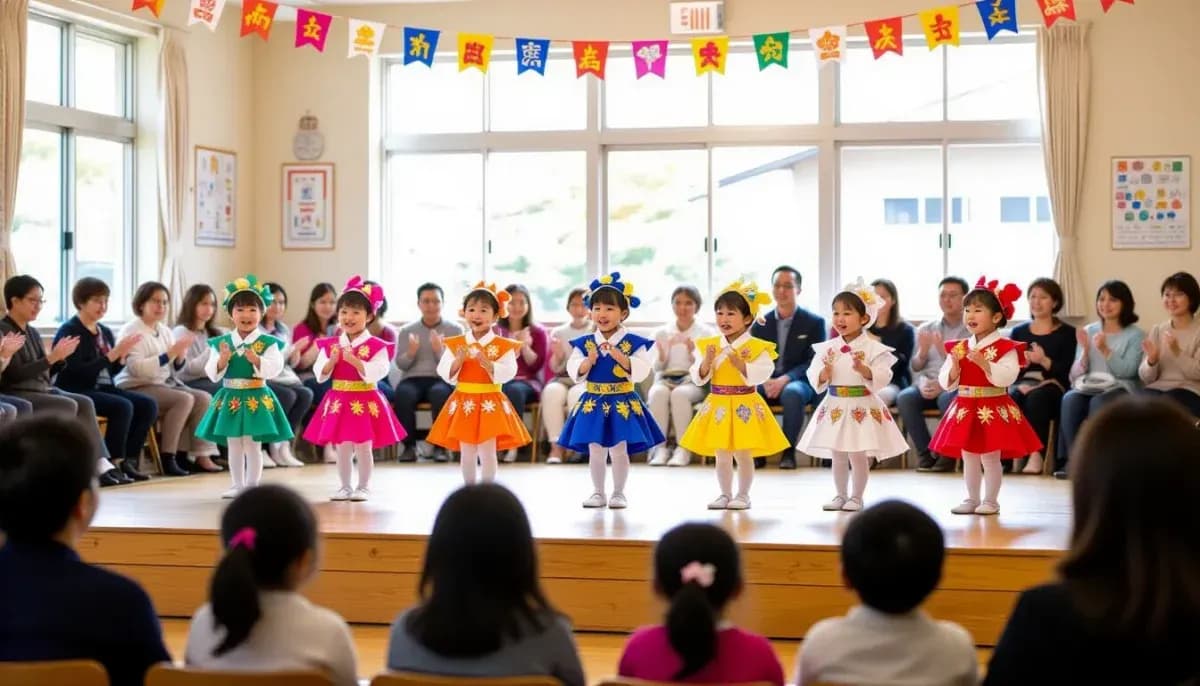
Everything foreign parents need to know about preschool recitals and performance events in Japan — happyokai, undoukai, sotsuenshiki, and more. Practical tips for expat families.
Preschool Recitals and Performance Events in Japan: A Complete Guide for Foreign Parents
Attending your child's first preschool recital in Japan can be both thrilling and a little overwhelming. The gym is packed with parents armed with cameras, children appear on stage in adorable costumes, and the entire event runs with a precision that reflects Japan's deep cultural investment in early childhood education. Whether your child attends a hoikuen (daycare center) or a yochien (kindergarten), performance events are a central pillar of the Japanese preschool calendar — and knowing what to expect makes the experience far richer for the whole family.
This guide walks you through everything foreign and expat parents need to know about preschool recitals and performance events in Japan: the types of events, the Japanese terminology, what to wear, how to prepare your child, and how to navigate these occasions as a non-Japanese-speaking family.
What Is a Happyokai? Understanding the Japanese Preschool Recital
The most common Japanese term you will encounter for a preschool performance event is 発表会 (happyokai), literally meaning "presentation meeting" or "recital." A happyokai is a formal performance event in which children showcase skills they have been practicing — singing, dancing, acting in a play, or demonstrating musical instrument skills — in front of parents and school staff.
Happyokai events are distinct from other school events in their emphasis on prepared performance. Unlike Sports Day (undoukai), where children compete in athletic activities, or open class days where parents observe regular lessons, the happyokai is a rehearsed showcase. Children typically spend several weeks preparing, and the event itself is a polished, stage-style performance.
For foreign families, the happyokai is often one of the most emotionally memorable events of the school year. Seeing your child confidently perform a song in Japanese — a language they have been immersed in for only months — is a powerful testament to how quickly young children adapt.
Key Japanese terms to know:
- 発表会 (happyokai) — recital or performance event
- 劇 (geki) — theatrical play or drama
- お遊戯会 (oyugikai) — performance/dance recital (used at some yochien)
- 合唱 (gassho) — choir singing
- 衣装 (isho) — costume
- 年間行事予定 (nenkan gyoji yotei) — annual event schedule
For a broader overview of education in Japan, see our guide to the Japanese education system for foreign families.
The Annual Preschool Event Calendar: Where Recitals Fit In
Japanese preschools operate an extremely rich annual event calendar. Performance events do not happen in isolation — they are woven throughout the year alongside seasonal festivals, sports days, and ceremonies. Understanding the full calendar helps you anticipate when your child will be in heavy rehearsal mode and when major parent attendance is expected.
| Month | Major Event | Type |
|---|---|---|
| April | Entrance Ceremony (入園式 nyuenshiki) | Ceremony |
| May | Field Trip (遠足 ensoku) | Outing |
| June/Sept–Oct | Sports Day (運動会 undoukai) | Athletic performance |
| July | Tanabata Festival (七夕) | Seasonal festival |
| August | Summer Festival (夏祭り natsumatsuri) | Celebration |
| October/November | Culture Festival (文化祭 bunkasai) | Performance/Exhibition |
| November–December | Happyokai / Oyugikai | Recital/Performance |
| December | Christmas Party / End of Year Events | Celebration |
| January–February | Setsubun Bean Throwing, Mochi Making | Seasonal events |
| March | Graduation Ceremony (卒園式 sotsuenshiki) | Ceremony/Performance |
The happyokai typically falls in November or December, when children have had most of the school year to develop their skills and friendships. The graduation ceremony in March also functions as a major performance event — at many preschools, graduating classes perform skits, songs, and dances lasting over two hours.
Sports Day (undoukai) deserves special mention as a performance-adjacent event: while it is primarily athletic, it almost always includes choreographed group dances (お遊戯 oyugi) in which every child participates. These dances are rehearsed extensively and are often as carefully choreographed as anything in a formal happyokai.
For more on choosing between daycare and kindergarten in Japan, see our guide to hoikuen and daycare for foreign parents and yochien for foreign families.
What to Expect at a Japanese Preschool Recital
The Venue and Atmosphere
Most preschool recitals take place in the school gymnasium (体育館 taiikukan) or a multi-purpose hall. Space is limited and demand is high — parents typically receive a set number of tickets, and grandparents or other family members may need to watch via live video if the venue is small.
Expect to arrive early to secure a good seat or standing position. At many schools, parents begin queuing before the doors open. Photography and video recording are generally permitted (and enthusiastically practiced), though rules vary by school — always confirm in advance.
The event is formal. Japanese parents dress smartly: mothers typically wear semi-formal attire, and fathers wear business or smart casual clothing. As a foreign parent, you are not expected to match the dress code exactly, but dressing tidily shows respect and helps you blend in comfortably.
Practical tips for the day:
- Bring indoor slippers (上履き uwabaki) — you will be asked to remove outdoor shoes
- Bring your camera or fully charged phone
- Arrive 30–45 minutes early for a good spot
- Silence your phone completely
- Do not leave early — the event typically ends with all classes performing together
What the Children Perform
The content of a happyokai depends on the age group and the school's philosophy. Typical performances include:
- Age 3 (年少 nensho): Simple songs, group dances in costume, or participation in a class play with basic roles
- Age 4 (年中 nenchuu): More complex songs, longer dances, simple instrument performance (e.g., castanets, maracas), slightly more elaborate plays
- Age 5 (年長 nenchou/年長 nenchou): Full theatrical performances, choir singing, glockenspiel or piano recitals, elaborate costumes and stage sets
One of the distinctive features of Japanese preschool performances is their group orientation. Rather than showcasing individual children in solo spots, the happyokai is structured as a collective presentation. Every child has a role; no child is left without participation. This reflects the Japanese educational philosophy of prioritizing group harmony (和 wa) and collective achievement over individual recognition.
How to Prepare Your Child (and Yourself) as a Foreign Family
Getting Your Child Ready
Preschool teachers manage all rehearsal preparation — your child will learn their songs, dances, and lines entirely at school. However, there are several ways you can support them at home:
- Listen to the practice songs — teachers sometimes send home recordings or lyric sheets so children can practice at home
- Encourage without pressure — some children (especially in their first year of Japanese immersion) feel anxious about performing. Celebrate their effort, not perfection
- Handle costume preparation carefully — parents are often asked to prepare or partially make portions of the costume. Instructions will come in the school newsletter (おたより otayori), so keep a translation app ready
- Talk about what to expect — for children who have never experienced a formal stage performance, explain what will happen: "You will go on stage, do your dance, and Mama and Papa will be watching and clapping"
Navigating Language Barriers
All communication — event schedules, costume instructions, seating arrangements — will be in Japanese. Here is how to manage:
- Annual schedule (年間行事予定): Request this at the start of the school year. Feed it through a translation app to mark all major events in your calendar
- School newsletter (おたより): Sent home weekly or biweekly; contains preparation instructions. Google Lens works well for quick translations
- Ask a Japanese-speaking parent: Making friends with another parent who can translate occasionally is invaluable
- Contact the school directly: Many preschools can accommodate basic communication needs for foreign families; some cities have support organizations that can provide interpreters for major events
For more strategies on supporting your child's Japanese language development, see teaching Japanese to foreign children and raising bilingual children in Japan.
Sports Day: The Other Big Performance Event
While the happyokai is the formal recital, Sports Day (運動会 undoukai) is often the most emotionally intense event for parents. Held in late spring or early autumn, undoukai combines athletic competitions with choreographed group dances (oyugi) that children rehearse for weeks.
At the preschool level, undoukai is about participation, not competition. Children run races, play team games, and perform group dances in matching costumes (often hats or colored vests that parents help prepare). The dances are the performance element — carefully choreographed to popular children's songs or upbeat music, they showcase the children's coordination, memory, and teamwork.
Tips for undoukai:
- Bring a large picnic sheet — families claim ground space early in the morning
- Pack a substantial packed lunch (obento) — the school day is long and children need energy
- Dress for the weather — September/October events can be very hot
- Some schools hold undoukai on weekends; if postponed due to rain, a make-up date will be announced via the school app or newsletter
- Parents may be asked to participate in adult races — embrace it
Detailed information about both hoikuen and yochien events is available at Living in Nihon's guide for raising children in Japan, which covers the full lifecycle of raising children as a foreigner in Japan.
Graduation Ceremony: The Final Performance
The graduation ceremony (卒園式 sotsuenshiki) held in March is the year's final and most emotionally significant event. At most preschools, the ceremony is a blend of formal ritual and performance — graduating children (nenchou, age 5–6) receive their certificates, make speeches, and perform songs and skits they have rehearsed throughout the year.
Expect the ceremony to last two to three hours. Parents dress formally — mothers often wear kimono or formal suits, and fathers wear dark suits. Even non-graduating siblings attend in their best clothes.
The emotional weight of sotsuenshiki is significant in Japanese culture. Children have often been together since age 1 or 2, and the ceremony marks the end of their preschool community before they disperse to different elementary schools. Tears — from children, parents, and teachers alike — are common and expected.
What to bring to sotsuenshiki:
- Formal attire (formal suit or dress for parents)
- Camera with extra battery/memory
- A handkerchief (ハンカチ hankachi) — you will likely need it
- Indoor slippers
- Flowers or small gifts for the teachers are customary
For expat families navigating the transition from preschool to elementary school, our guide to elementary school in Japan for foreign parents covers what comes next.
Resources for Foreign Parents
Navigating the Japanese preschool event calendar is much easier with good resources. Here are some we recommend:
- Living in Nihon: Raising Children in Japan Guide — comprehensive guide for foreign families on education and child-rearing in Japan
- For Work in Japan — resources for expats in Japan including family life and work-life balance tips
- Chuukou Benkyou — Japanese education resources and study support for families
- Savvy Tokyo: Japanese School Event Kanji Cheat Sheet — practical kanji reference for school event communications
- The Wagamama Diaries: Inside Kindergarten in Japan — first-hand account of kindergarten life from an expat perspective
- Metropolis Japan: Daycare and Yochien Guide — practical overview of Japanese early childhood education options
Japanese preschool performance events are among the most rewarding experiences of raising a child in Japan. They showcase not only your child's progress but also the powerful community that Japanese preschools build. With a little preparation and the right expectations, these events become treasured memories — and a genuine window into one of the world's most thoughtful approaches to early childhood education.

Originally from Vietnam, living in Japan for 16+ years. Graduated from Nagoya University, with 11 years of professional experience at Japanese and international companies. Sharing practical information for foreign parents raising children in Japan.
View Profile →Related Articles
Creating Family Traditions That Blend Both Cultures
Discover practical strategies for multicultural families in Japan to blend two cultures through intentional traditions, bilingual rituals, and bicultural identity-building for children.
Read more →
How to Mark Milestones Across Two Cultures
A complete guide for bicultural and expat families in Japan on how to celebrate childhood milestones across two cultures — from Shichi-Go-San to birthday traditions, with practical tips for blending both worlds.
Read more →
Half Coming of Age (Nibun no Ichi Seijinshiki)
Everything foreign parents need to know about the Nibun no Ichi Seijinshiki - Japan's Half Coming of Age Ceremony for 10-year-olds. What it is, what happens, and how to participate.
Read more →
School Photo Day and Memory Traditions in Japan
Everything expat parents need to know about school photo day traditions in Japan — from the entrance ceremony shot to graduation albums (sotsugyou arubamu), shashin hanbai ordering systems, yosegaki, and purikura culture.
Read more →
Randoseru Buying: Choosing Your Child's School Bag
Everything foreign families need to know about buying a randoseru in Japan — prices, materials, colors, brands, and when to shop. Practical tips for expat parents.
Read more →
First Day of School Traditions and Customs in Japan
Everything foreign parents need to know about Japan's first day of school: the nyuugakushiki entrance ceremony, randoseru, dress codes, indoor shoes, and daily school customs.
Read more →