
First Day of School Traditions and Customs in Japan

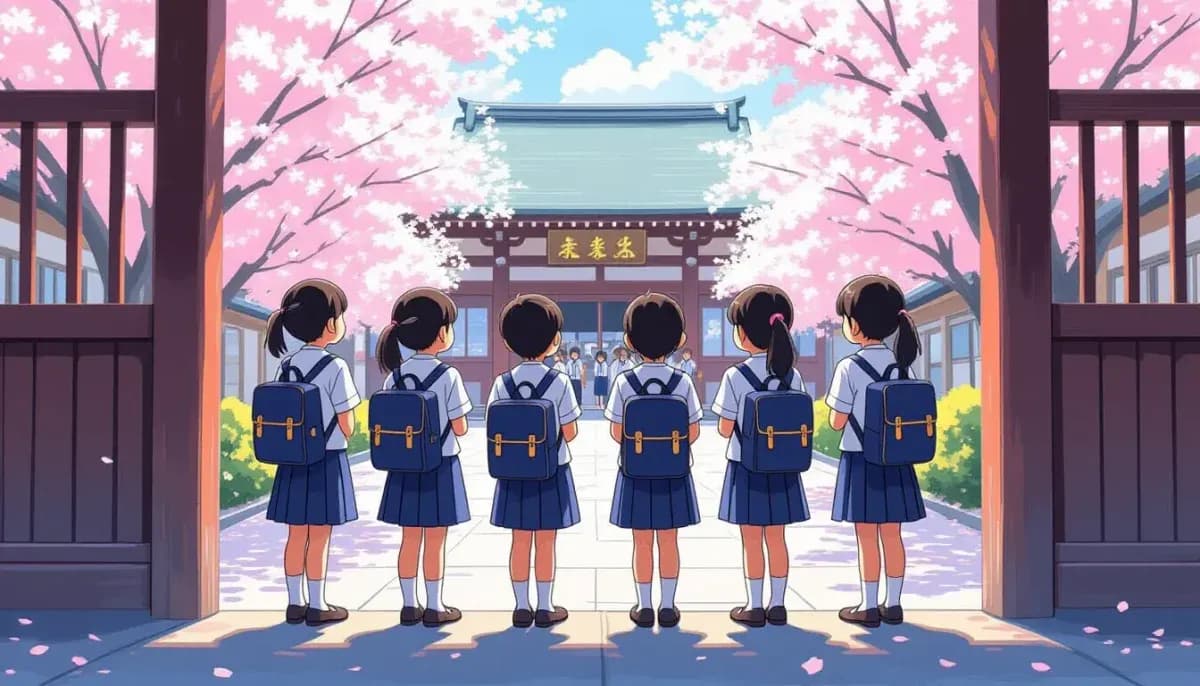
Everything foreign parents need to know about Japan's first day of school: the nyuugakushiki entrance ceremony, randoseru, dress codes, indoor shoes, and daily school customs.
First Day of School Traditions and Customs in Japan
Starting school in Japan is far more than just showing up with a new backpack. It is a deeply ceremonial milestone woven into the cultural fabric of Japanese society, complete with time-honored rituals, carefully chosen attire, and a community-wide sense of occasion. For foreign parents raising children in Japan, understanding these traditions can turn what might feel like an overwhelming experience into something genuinely meaningful. This guide walks you through everything you need to know about the first day of school in Japan — from the entrance ceremony to daily customs that shape your child's school life from day one.
The School Year Starts in April — and That Matters
Unlike most Western countries where school begins in September, Japan's academic year starts in April. This tradition dates to the Meiji period (1868–1912), when the government aligned the school calendar with the national fiscal year beginning on April 1st. By 1900, April enrollment was formally mandated for all elementary and junior high schools.
The timing is not arbitrary. April is when cherry blossoms (sakura) bloom across Japan, and the two have become symbolically intertwined. New beginnings, fresh starts, and the fleeting beauty of sakura are emotionally connected in the Japanese imagination. School entrance photographs are almost always taken with cherry blossom trees in the background, a tradition cherished by families across generations.
For foreign families new to Japan, this April start date has practical implications. If you arrive in Japan in autumn or mid-year, your child will either need to wait for April enrollment or enter school mid-year, which is possible but requires extra coordination with the local Board of Education.
The Entrance Ceremony (Nyuugakushiki / 入学式)
The centerpiece of the first day of school in Japan is the nyuugakushiki (入学式), the formal school entrance ceremony. This is a structured, semi-formal event held in the school gymnasium or hall, attended by new students, their parents, grandparents, teachers, current students, and sometimes local government officials.
A typical ceremony follows this program:
| Ceremony Step | Description |
|---|---|
| Student entry | New students walk in together, often to formal music |
| Kokka seishou | National anthem sung by all attendees |
| Name-calling (点呼) | Homeroom teacher calls each new student's name; students stand and respond |
| Principal's speech | Words of encouragement and welcome for new students |
| Student pledge | A representative from the new class reads an oath of commitment to school life |
| Kouka seishou | The school song performed by all |
| Guest addresses | Local officials or PTA representatives offer brief remarks |
| Class photograph | Commemorative group photo taken at the school entrance |
| Homeroom meeting | Students meet teachers; parents attend PTA orientation separately |
The ceremony typically begins around 9:00 AM and lasts one to two hours. After the formal program, students go to their classrooms, where they meet their homeroom teacher, receive school materials, and have their indoor shoes checked. Parents are usually invited to sit in on this portion before heading to the PTA meeting.
For more on the formal ceremony itself, see our full guide at [/school-entrance-ceremony-nyuugakushiki-guide].
What to Wear: Dress Code for Children and Parents
One of the most common questions from foreign parents is: what should we wear? There is no single uniform dress code for the nyuugakushiki, but there is a strong social norm around what is appropriate.
For New Students
At junior high schools and high schools, students typically wear their new school uniform to the entrance ceremony — it is their first official occasion to wear it.
At public elementary schools, there is usually no uniform, so families choose their own formal outfits. Common choices include:
- Boys: A blazer or jacket with dress trousers or shorts, in navy, gray, or black. White dress shirt and formal shoes.
- Girls: A blazer or dress jacket with a skirt or dress, in navy, white, gray, or pastel colors. Mary Jane shoes or simple flats.
The look is "smart casual formal" — neat, clean, and conservative. Bright colors, cartoon characters, or casual athletic wear are avoided.
For Parents
Parents' attire is taken seriously. The general rule is conservative, spring-appropriate formal wear:
- Mothers: A spring-toned suit or dress in navy, gray, beige, white, or soft pastels. Low heels or smart flats. Pearl jewelry or a simple flower corsage are common accessories.
- Fathers: A navy or charcoal suit, white dress shirt, plain tie, and polished dress shoes.
- Avoid: Bold prints, loud colors, very high heels, overly casual clothing, or anything that could be perceived as drawing attention away from the children.
If you are unsure, navy is almost always a safe choice for both parents and children.
The Randoseru: Japan's Iconic First-Day Backpack
No image of a Japanese child on their first day of school is complete without the randoseru (ランドセル) — the distinctive firm-framed rectangular backpack that elementary school children use throughout all six years of elementary school.
The randoseru is not just a bag. It is a cultural institution. Traditionally, girls received red randoseru and boys received black, though today a full spectrum of colors including brown, caramel, purple, light blue, and green are equally common and accepted.
Key facts about the randoseru:
- Made from genuine leather or high-quality synthetic leather (clarino)
- Designed to distribute weight evenly and protect the child's back and posture
- Durable enough to last the full six years of elementary school
- Price range: approximately ¥30,000 to ¥80,000+ for premium models
The randoseru gift tradition: It is a deeply established custom for grandparents to gift the randoseru to their grandchild as an nyugaku-iwai (入学祝い) — an entrance gift. Families often begin shopping for randoseru 6–12 months before the child starts school, as popular styles sell out quickly. If your child's grandparents live abroad, it is worth discussing this custom early so they can participate if they wish.
For a detailed buying guide and how to choose the right randoseru, visit [/randoseru-buying-choosing-school-bag].
Daily School Customs Every Foreign Family Should Know
Beyond the ceremony, there are many daily school customs that surprise foreign families. Understanding these from day one helps your child settle in smoothly and avoids any inadvertent breaches of school etiquette.
Indoor Shoes (Uwabaki / 上履き)
All students — and all visitors — must change into uwabaki (上履き), simple soft canvas indoor shoes, upon entering school premises. Outdoor shoes are stored in a dedicated locker near the entrance (getabako). This custom reflects Japan's broader indoor/outdoor shoe separation practice and is non-negotiable.
Your child will need their own uwabaki from day one. Most schools specify a color or style. Parents attending any school event will also need to bring their own indoor shoes or slippers to the entrance ceremony and all subsequent visits.
Walking to School (Todan / 集団登校)
Japanese elementary school children do not typically have parents walk them to school every day. Instead, children walk in neighborhood groups (todan) organized by the school. A senior student (usually a 5th or 6th grader) leads the group, and children in the same residential area walk together each morning.
This independence is considered an important part of childhood development in Japan. Bicycles are generally prohibited for elementary school children. The first few weeks may involve parents observing the walking route, but the expectation is that children will walk independently very quickly.
Classroom Cleaning (Souji / 掃除)
Japanese school children clean their own classrooms, hallways, restrooms, and school grounds — every day. There is no janitorial staff doing this work during school hours. This practice, called souji (掃除), is considered an essential part of education in Japan, teaching responsibility, community care, and respect for shared spaces.
Children bring zoukin (雑巾) — small cloth cleaning rags — from home, often sewn from old towels. Your child's supply list will likely include these. Do not be surprised when they come home with dusty knees — it means souji is happening.
School Lunch (Kyuushoku / 給食)
At most public elementary and junior high schools, lunch is a communal affair. Kyuushoku (給食) is a nutritionist-designed hot lunch prepared in the school kitchen and served by students on a rotating basis, in their classroom. Students wear small aprons and caps, serve their classmates, and eat together at their desks.
Monthly lunch fees are approximately ¥4,000. The menus are nutritionally balanced and typically include rice or bread, a hot dish, miso soup or soup, milk, and a small dessert. Children are expected to finish their lunch.
Senior Student Mentorship
On the first day, new first-graders are often paired with an older student (grades 5 or 6) who serves as a guide and mentor. These older students show newcomers around the building, explain how things work, and provide a sense of continuity. Classrooms are decorated with cherry blossom themes and welcome messages written by current students.
Practical Tips for Foreign Families
As a foreign parent, a few additional points are worth keeping in mind:
1. Enroll before March: The enrollment process for April typically requires visiting your municipal office to register your residential address, then contacting the local Board of Education by late February or early March. Documents needed usually include your residence card, your child's birth certificate, and immunization records.
2. Language support is available: All lessons are conducted in Japanese. However, many wards — particularly in Tokyo, Osaka, and Nagoya — offer Japanese as a Second Language (JSL) support programs free of charge. Children typically gain conversational Japanese within about six months; academic fluency takes two to three years.
3. Bring a bag to the ceremony: The entrance ceremony involves receiving a significant number of documents, handouts, and sometimes school materials. Bring a large reusable bag (an A4-size tote or similar) to carry everything home.
4. Bring your hanko and a black pen: Japanese schools frequently ask for signatures and personal seals (hanko) on administrative documents. Bring both to the ceremony and to all subsequent school meetings.
5. Label everything: All school belongings — including uwabaki, randoseru, stationery, and even individual pencils — must be clearly labeled with your child's name in permanent marker. Some parents use name stamps (namaae hanko) for efficiency. Buy a permanent black marker and label everything before the first day.
For more guidance on navigating education as a foreign family in Japan, Living in Nihon's guide to raising children and education in Japan offers comprehensive practical advice.
Understanding the Emotional Weight of This Day
The first day of school in Japan is not just a logistical event — it is one of the most emotionally significant milestones in Japanese family life. Photographs are taken with great care. Grandparents travel to attend. Mothers have been known to cry.
For your child, especially if they are navigating a new language and culture simultaneously, the day can feel both exciting and overwhelming. It is normal for children — especially older ones — to need a few weeks to find their footing. The structured, welcoming nature of the Japanese school system (with its mentor students, organized group activities, and clear daily routines) actually supports newcomers well, even if the language barrier feels daunting at first.
Framing the day as a Japanese cultural milestone — not just the start of classes — helps children feel that they are participating in something meaningful rather than just enduring something foreign.
This milestone connects naturally to the wider world of Japanese childhood ceremonies, from Shichi-Go-San in November to graduation ceremonies that mark each transition in the school journey.
For a broader look at how all these milestones fit together in Japanese family culture, see the main pillar: Milestones, Ceremonies, and Coming-of-Age Traditions in Japan.
Resources for Foreign Parents
Navigating Japan's school system as a foreign parent is much easier with the right information sources. Here are some recommended resources:
- Savvy Tokyo — School Entrance Ceremony Preparation for Parents — Practical checklist and attire guidance from parents who have been through it
- How Foreign Students Can Attend Public School in Japan — Official enrollment process and legal rights of foreign children
- Piece of Japan — Entrance Ceremony Traditions — Cultural background on nyuugakushiki
- For Work in Japan — English Teaching Jobs Guide — If you are considering work in Japan's education sector
- Chuukou Benkyou — Middle School Entrance Exam Guide — For families planning ahead to junior high school
The first day of school in Japan is a moment that families remember for decades. By understanding the ceremony, the customs, and the expectations, you can help your child step through those school gates with confidence — randoseru on their back, uwabaki in their bag, and the cherry blossoms blooming overhead.

Originally from Vietnam, living in Japan for 16+ years. Graduated from Nagoya University, with 11 years of professional experience at Japanese and international companies. Sharing practical information for foreign parents raising children in Japan.
View Profile →Related Articles

Creating Family Traditions That Blend Both Cultures
Discover practical strategies for multicultural families in Japan to blend two cultures through intentional traditions, bilingual rituals, and bicultural identity-building for children.
Read more →
How to Mark Milestones Across Two Cultures
A complete guide for bicultural and expat families in Japan on how to celebrate childhood milestones across two cultures — from Shichi-Go-San to birthday traditions, with practical tips for blending both worlds.
Read more →
Half Coming of Age (Nibun no Ichi Seijinshiki)
Everything foreign parents need to know about the Nibun no Ichi Seijinshiki - Japan's Half Coming of Age Ceremony for 10-year-olds. What it is, what happens, and how to participate.
Read more →
School Photo Day and Memory Traditions in Japan
Everything expat parents need to know about school photo day traditions in Japan — from the entrance ceremony shot to graduation albums (sotsugyou arubamu), shashin hanbai ordering systems, yosegaki, and purikura culture.
Read more →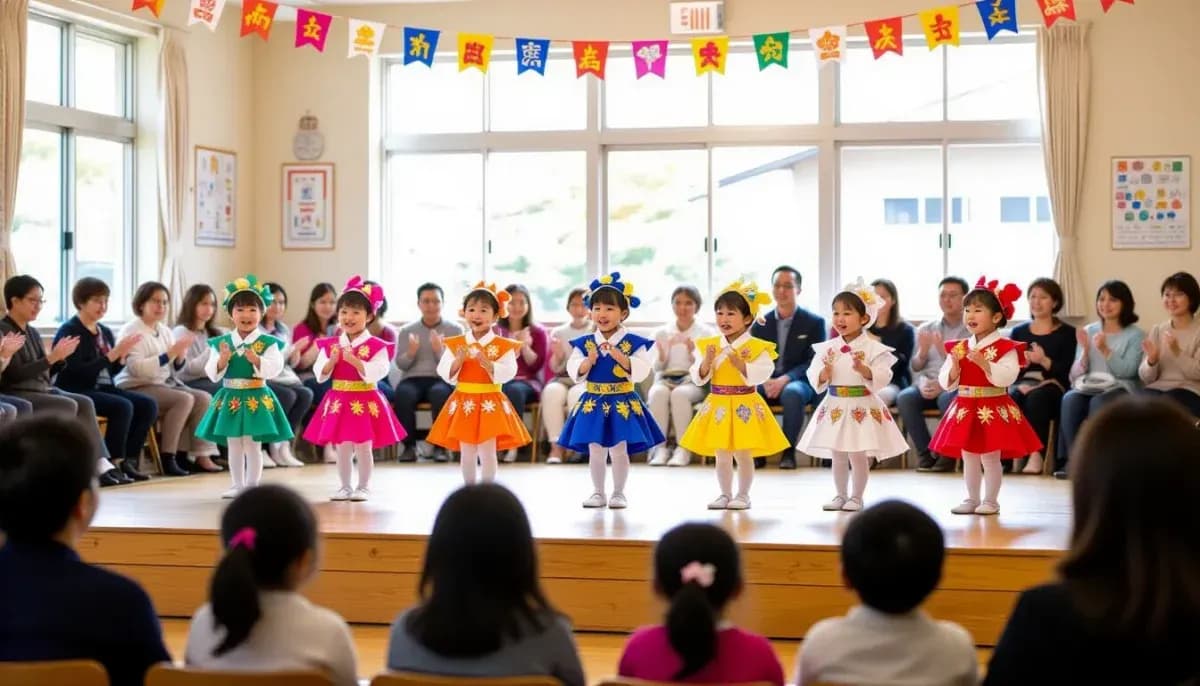
Preschool Recitals and Performance Events
Everything foreign parents need to know about preschool recitals and performance events in Japan — happyokai, undoukai, sotsuenshiki, and more. Practical tips for expat families.
Read more →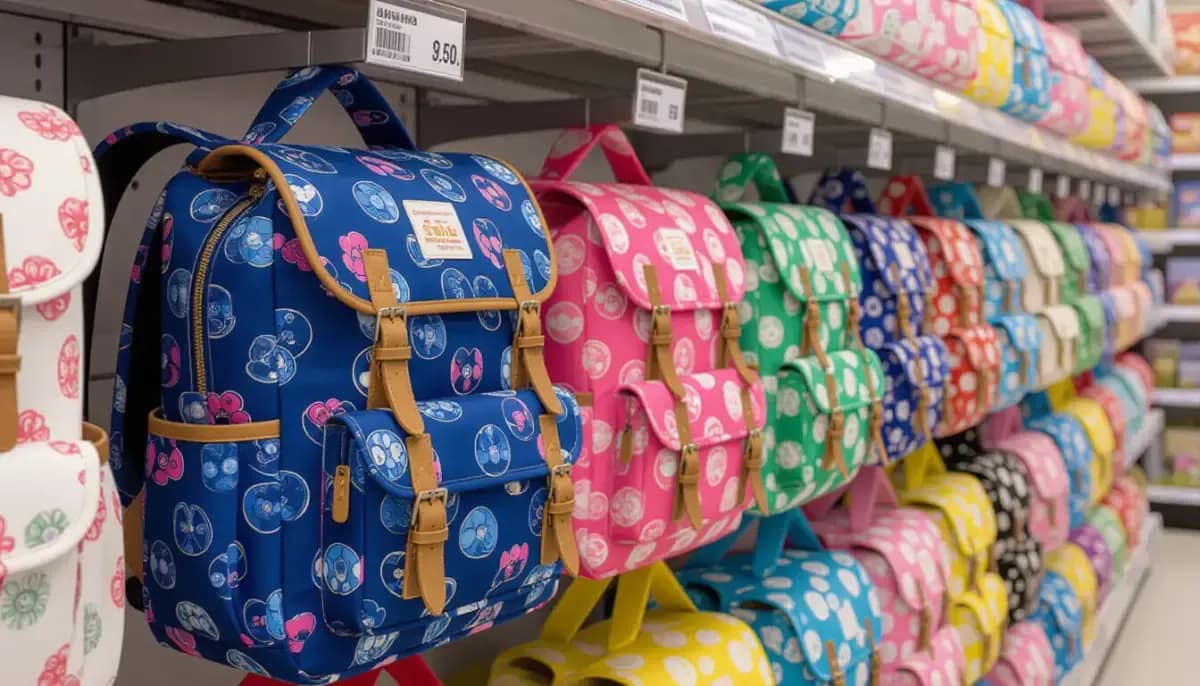
Randoseru Buying: Choosing Your Child's School Bag
Everything foreign families need to know about buying a randoseru in Japan — prices, materials, colors, brands, and when to shop. Practical tips for expat parents.
Read more →