
English Bookstores and Libraries for Families in Japan

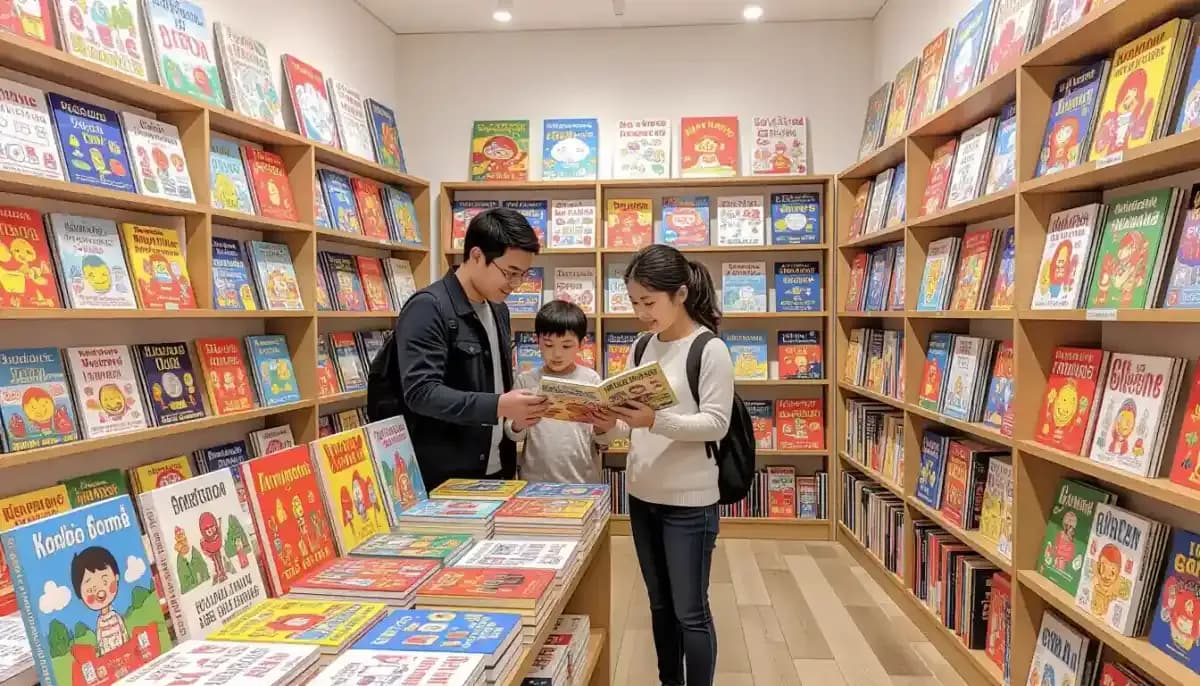
Find English books for your children in Japan with our complete guide to bookstores, public libraries, community swaps, online retailers, and digital reading apps for expat families.
English Bookstores and Libraries for Families in Japan
Finding English books for your children in Japan can feel like a treasure hunt — but once you know where to look, you'll discover a surprisingly rich ecosystem of bookstores, libraries, community swaps, and digital resources. Whether you're raising a bilingual child, maintaining your child's first language, or simply want to keep up a love of reading in English, Japan has more options than most expats realize. This guide covers everything from major bookstore chains to free community resources, helping your family stay connected to English-language literature no matter where you are in Japan.
Major English Bookstores in Japan
When it comes to buying new English books in Japan, a few standout retailers consistently serve the expat community.
Kinokuniya is the undisputed flagship destination for English-language books in Japan. With major Tokyo branches in Shinjuku (the main store on the 6th floor of Takashimaya Times Square has an especially large selection), Shibuya Seibu, and a prominent Osaka branch inside Umeda Station, Kinokuniya stocks a wide range of English fiction, nonfiction, children's picture books, young adult novels, parenting guides, and educational materials. Not every small Kinokuniya outlet carries English books — stick to the larger standalone stores for the best selection.
Maruzen and Junkudo are two other Japanese bookstore chains with dedicated foreign-language sections. The Maruzen Nihonbashi branch in Tokyo and the Kyoto store are particularly well-stocked. Junkudo in Ikebukuro carries a respectable English children's section alongside academic titles.
For families in Tokyo, Tower Records Shibuya might seem like an odd addition to this list, but its book floor has a curated English section including children's titles and bestsellers that's worth checking when you're in the area.
| Bookstore | Location | English Children's Books | Online Shopping |
|---|---|---|---|
| Kinokuniya | Tokyo (Shinjuku, Shibuya), Osaka, Sapporo, Fukuoka | Excellent (major branches) | Yes – kinokuniya.com |
| Maruzen | Tokyo (Nihonbashi), Kyoto | Good | Yes – maruzen.co.jp |
| Junkudo | Ikebukuro, Osaka, Hiroshima | Moderate | Yes |
| Tower Records | Shibuya Tokyo | Small but curated | No |
| Tsutaya Books Daikanyama | Daikanyama, Tokyo | Good – English focus | No |
Used and Independent English Bookshops
Buying new English books in Japan isn't cheap — import pricing means picture books can run ¥1,500–¥3,000 each. Fortunately, Japan has a thriving second-hand book scene, and several shops specialize in English titles.
Jimbocho, Tokyo's legendary "book town" district near Jinbocho Station (Shinjuku, Hanzomon, and Mita lines), is the best single destination for used English books in Japan. The neighborhood hosts dozens of antiquarian and second-hand bookshops along a few compact streets. Two shops stand out for English-language content:
- Kitazawa Bookstore (est. 1902): Stocks approximately 12,000 English titles across literature, history, philosophy, and more. A true institution.
- Isseido Booksellers (est. 1903): Specializes in rare English first editions and academic titles — worth a browse even if you're not a collector.
Tsutaya Books Daikanyama deserves special mention for families. Often described as a "library in the woods," this stunning three-building bookstore concept is one of the most beautiful bookstores in Japan. Its first floor is dedicated to English and Japanese books including children's titles, travel, art, and fiction, with an in-house café where kids can flip through books comfortably.
Infinity Books Japan in Asakusa focuses on secondhand and rare English titles and regularly hosts community events including book clubs and read-alouds — making it a community hub as well as a shop. They also operate an online store.
BOOK OFF, the national second-hand chain, is worth checking in urban areas. English books appear sporadically, but Tokyo branches near expat-dense neighborhoods — Ikebukuro, Nishi-Gotanda, Akihabara — tend to have better selections. Prices are typically ¥100–¥500, making it great for stocking up on picture books.
For families in Osaka and Kobe, For Work in Japan has resources on expat life in the Kansai region.
Public Libraries: Free English Books for Residents
Japan's public library system is free and open to all residents — and many people are surprised to discover that local libraries often hold English-language collections, including children's books.
Getting a library card requires visiting your local library in person with proof of residency (your residence card or a recent utility bill with your registered address). The process is straightforward and the card is issued on the spot. Borrowing is completely free, and lending periods are typically two weeks with renewable loans.
English collection quality varies significantly by ward and city. In Tokyo:
- Minato City Libraries (multiple branches) maintain some of the best English children's collections in the capital.
- Yotsuya Library (Shinjuku Ward) and Shibuya Chuo Library are also reliable for English titles.
- Tokyo Metropolitan Central Library (Hiroo) holds approximately 230,000 foreign-language books — the largest collection in Japan — though many are for in-library browsing only, not checkout.
Borrowing limits vary by ward: Shibuya Ward allows up to 30 books and magazines at a time, while Shinjuku Ward limits borrowers to 10. Check your ward's specific rules when you sign up.
Outside Tokyo, Yokohama's International Library in Motomachi is particularly well-regarded by expat families for its English children's section. Osaka's Nakanoshima Library and Kobe City Library also maintain foreign-language collections.
E-book lending is an emerging option. Several Tokyo wards now offer digital library apps (typically TRC Digital Library or similar) that include English-language e-books for children — ask at your local library branch for details.
Chuukou Benkyou has useful resources on children's education and study support in Japan.
Community Book Swaps and Free Resources
One of the best things about Japan's expat community is how generously people share resources — especially children's books, which children outgrow quickly.
Tokyo Kid's Book Group on Facebook hosts regular book swap events where families bring English books their children have outgrown and exchange them with others. These events are free, social, and a great way to meet other English-speaking families. The Instagram account @tokyo.bookswap runs similar community swap events across the city.
Expat-focused Facebook groups are goldmines for secondhand English books. Groups like "Books Garage Sale Japan," "Tokyo Expat Families," and neighborhood-specific buy/sell groups regularly feature bulk lots of children's English books at low prices or for free. Mercari, Japan's dominant marketplace app, is another option — search "英語絵本" (English picture books) to find listings.
International schools and English cram schools (英会話教室, eigo juku) sometimes have borrowable book collections or notice boards for book exchanges. Even if your child doesn't attend these schools, some welcome community members at book swap events.
For tips on raising bilingual children and supporting their reading development, see our guide on raising bilingual children in Japan.
Online Retailers: Buying English Books in Japan
When you can't find what you need locally, online retailers open up the full range of English-language publishing.
Amazon Japan (amazon.co.jp) carries many English children's books, though the selection is narrower than Amazon US or UK and prices are often higher. For popular titles, it's convenient and fast.
Amazon UK and Amazon US often beat Amazon Japan on price for English books, even when you factor in international shipping costs. Many expat families find it cost-effective to bulk order twice a year rather than buying individually. Shipping times are typically 2–4 weeks for standard delivery.
Better World Books (US-based) ships internationally for free on orders over $15 USD and specializes in used and remaindered books at low prices — excellent for stocking up on picture books and chapter books in quantity.
The Book Depository (UK-based) offers free international shipping on all orders with no minimum and a large selection of English children's titles at competitive prices.
For Japanese children's books in English translation, the JBBY (Japanese Board on Books for Young People) publishes an annual English-language catalog with reviewed titles categorized by age group (picture books, chapter books, nonfiction) — a useful reference for discovering quality Japanese children's literature your child can read in English.
| Retailer | Shipping to Japan | Price Range | Best For |
|---|---|---|---|
| Amazon Japan | Free (Prime) or ¥350+ | Higher (import markup) | Quick delivery, popular titles |
| Amazon UK/US | £5–£15 per order | Lower – competitive | Bulk orders, full selection |
| Better World Books | Free over $15 USD | Low (used/remaindered) | Budget buying, picture books |
| The Book Depository | Free always | Mid-range | No-fuss ordering, variety |
| kinokuniya.com | Domestic | Higher | Supporting local stores |
Digital Reading: Subscriptions and Apps
For families who want instant access to a wide range of English titles without waiting for shipping, digital reading subscriptions offer excellent value.
Oxford Owl Ebook Library is completely free and includes approximately 100 graded reading scheme titles for children aged 3–11. The books are linked to the Oxford Reading Tree system used in UK schools, making it useful for tracking reading progress. No subscription or credit card required.
Kindle Unlimited (approximately ¥980/month with a 30-day free trial) gives access to a large library of English children's ebooks including many popular series. The selection varies but is generally strong for picture books and early chapter books.
Reading Eggs (approximately $18.99 AUD/month) combines reading lessons with a library of 4,000+ ebooks with built-in read-aloud features — well-suited for children learning to read independently in English.
Libby and Cloud Library are free apps that connect to public library systems. If you maintain a US or UK library card from before your move to Japan, you can use these apps to borrow ebooks and audiobooks remotely. Some US public libraries (especially larger city systems) allow non-residents to sign up online for a digital-only membership.
For additional digital learning resources and bilingual education strategies, see our guide on teaching Japanese to foreign children and heritage language maintenance.
Tips for Building Your Family's English Library in Japan
Building a solid English book collection in Japan is absolutely achievable with a bit of planning:
Shop strategically when traveling. Visits back home or to English-speaking countries are prime opportunities to stock up, especially on bulkier board books and boxed sets that are expensive to ship. Airport bookshops often have a good children's selection.
Join multiple community groups. The Facebook groups and swap communities mentioned above frequently list free or very cheap books. A single post asking for recommendations or books in a local expat group often yields surprising results.
Use your local library for discovery. Even if your local library's English collection is limited, use it to try out authors and series before committing to buying. Many popular children's series (Roald Dahl, Diary of a Wimpy Kid, Magic Tree House) appear in Japanese public libraries.
Mix Japanese and English reading. Japan is an excellent country for bilingual picture books — many classic English titles have been published in Japanese translation with the original English on facing pages. These bilingual editions are widely available in Japanese bookstores and support both language development simultaneously. For more on raising confident bilingual children in Japan, see our guide on bilingual strategies for children in Japan.
Check the Comprehensive guide to Japanese education for context on how English reading fits into the broader educational picture: Japanese education system for foreign families.
GaijinPot's guide to English bookstores in Tokyo provides up-to-date store addresses and details for planning visits.
Conclusion
Japan's English book ecosystem is far richer than most new expats expect. Between Kinokuniya's extensive selections, Tokyo's Jimbocho used-book district, community book swaps, well-stocked ward libraries, and a growing range of digital options, raising an enthusiastic English reader in Japan is entirely within reach. The key is knowing where to look — and building connections with the expat community, which is generous with both books and knowledge. Start with your local library, join a Facebook book swap group, and use digital subscriptions to fill the gaps. Your child's English bookshelf will grow faster than you might think.

Originally from Vietnam, living in Japan for 16+ years. Graduated from Nagoya University, with 11 years of professional experience at Japanese and international companies. Sharing practical information for foreign parents raising children in Japan.
View Profile →Related Articles
Birthday Party Ideas and Venues for Kids in Japan
Plan the perfect birthday party for your child in Japan. Discover top venues, cultural etiquette, cake options, entertainment ideas, and budget tips for expat families in Japan.
Read more →
Traditional Japanese Toys and Games for Kids
Discover traditional Japanese toys and games for kids living in Japan. From kendama to karuta, this complete expat guide covers history, where to buy, and how to use traditional play for cultural integration.
Read more →
Educational Toys and Learning Materials in Japan
Discover the best educational toys and learning materials in Japan for foreign parents. From STEM kits to bilingual tools, find where to buy, what to choose by age, and how to save money.
Read more →
Subscription Boxes and Services for Children in Japan
Discover the best subscription boxes and services for children in Japan. From toy rentals like Toysub! to educational services like Kodomo Challenge, find the perfect options for your foreign family raising kids in Japan.
Read more →
Music and Podcasts for Kids in Japan
Discover the best music, podcasts, and streaming resources for kids in Japan. From warabe uta to anime songs and bilingual podcasts — a complete guide for expat families.
Read more →
Best Children's TV Programs in Japan
Discover the best children's TV programs in Japan for foreign families. From Doraemon to NHK for School, learn what to watch and how Japanese TV helps kids learn Japanese.
Read more →