
English-Language Special Needs Resources in Japan

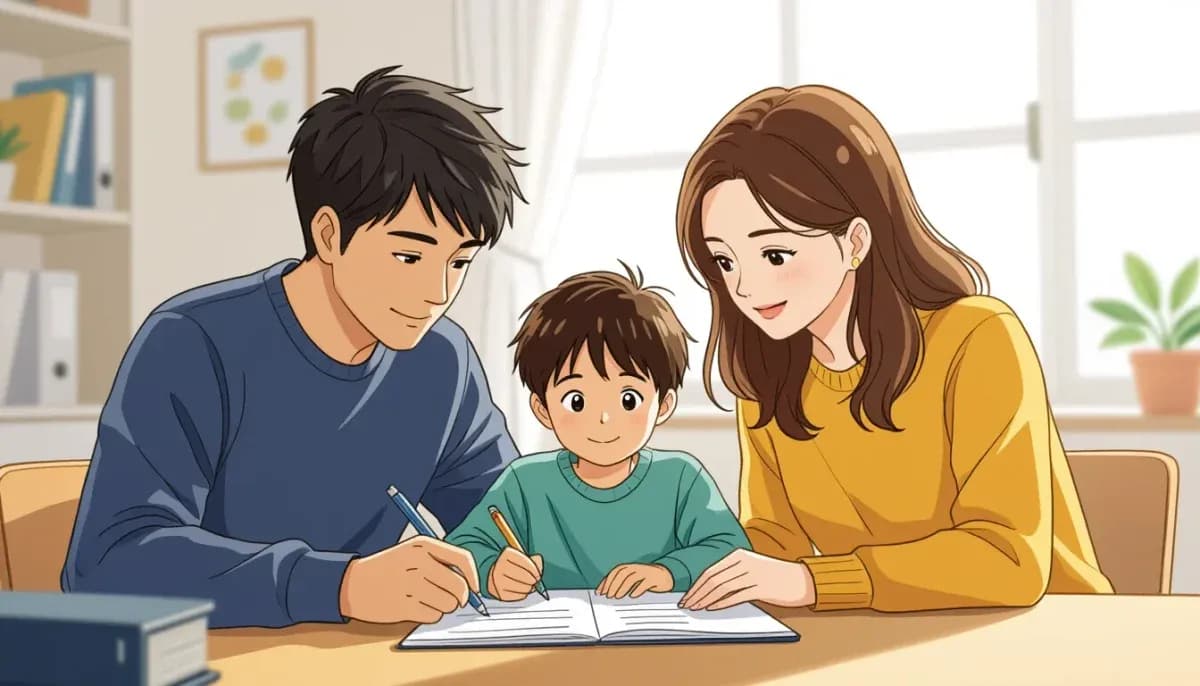
A complete guide to English-language special needs resources in Japan for expat families, covering education support, therapy services, disability certificates, financial aid, and parent communities.
English-Language Special Needs Resources in Japan: A Complete Guide for Expat Families
Navigating special needs support in a foreign country can feel overwhelming — especially when language barriers, unfamiliar bureaucracy, and cultural differences add to the daily challenges of raising a child with additional needs. Japan has a robust public education and welfare system for children with disabilities, but for foreign families, accessing English-language services and understanding how the system works is often the hardest part.
This guide compiles the most important English-language special needs resources in Japan, covering education, therapy, counseling, legal rights, financial support, and community networks — so you can find the right help for your child without wading through Japanese-only paperwork alone.
Whether your child has been diagnosed with autism, ADHD, dyslexia, a learning disability, a physical disability, or any other special need, Japan offers more support than many expat families realize. This article walks you through the key services and how to access them.
Understanding Japan's Special Needs Education System
Before finding external resources, it helps to understand how Japan's public school system handles special needs. Japan offers three main tiers of support within its mainstream school structure:
- Regular classes with team teaching — A special needs teacher co-teaches in a standard classroom, supporting students with mild additional needs without removing them from the group.
- Resource rooms (tsukyu shidou) — Students attend a mainstream class but are pulled out for individual or small-group sessions in a resource room several hours per week. This tier supports students with autism, ADHD, speech/language differences, and learning disabilities.
- Special needs classes (tokubetsu shien gakkyuu) — Small, dedicated classes capped at 8 students, designed for children who need more intensive support.
For children with more complex needs, Japan also maintains approximately 1,135 special support schools (tokubetsu shien gakkou), which serve students with visual, hearing, intellectual, physical, or health impairments. As of recent data, around 71,802 students attend special support education programs at the elementary and junior high level.
Since 2007, Japan has also shifted toward inclusive education, with the goal of supporting students with disabilities within mainstream settings whenever possible. About 6.5% of school-age children may have developmental disorders according to the National Institute for Educational Policy Research (NIER) — making special needs education a significant part of Japan's educational landscape.
For a broader overview of how Japan's schools operate, see our guide to the Japanese education system for foreign families.
English-Language Counseling and Assessment Services
One of the biggest challenges for expat parents is finding professionals who can assess and diagnose their child in English. Formal diagnosis is often required before accessing school support services in Japan, making this a critical first step.
Key English-language assessment and counseling services include:
- TELL Counseling Center (Tokyo) — One of the most well-known English-language mental health services in Japan. TELL offers psychological assessments, counseling, and runs the free monthly Exceptional Parenting Program (EPP) workshops for parents of children with special needs. Visit TELL Japan's EPP program
- Tokyo Mental Health — Provides psychological testing and evaluations in multiple languages, not just Japanese. Particularly useful for formal ADHD or learning disability assessments. Tokyo Mental Health website
- 1st Step Kokoro No Clinic — Offers English and bilingual psychological evaluations, including developmental assessments.
- Akasaka Family Clinic (Tokyo) — A bilingual English/Japanese clinic with expertise in neurodevelopmental conditions, neurofeedback therapy, and nutritional consultation for children with disabilities.
If you're concerned about your child's mental health as well as learning needs, our guide to mental health and emotional wellbeing for foreign children in Japan covers English-language counseling resources in more depth.
English-Speaking Therapy and Educational Support Services
Beyond formal diagnosis, many children benefit from ongoing therapy and educational support. These organizations provide English-language or bilingual services in Japan:
- Lucrea Inc. (Tokyo) — Offers speech and hearing therapy, shadow teacher placement in schools, and bilingual learning plans. A strong resource for families of children with autism spectrum conditions or language processing difficulties.
- NPO EDGE (Japan Dyslexia Society) — A Tokyo-based nonprofit supporting children with learning disabilities and dyslexia, with an English-speaking founder. They provide advocacy, training, and direct support. Visit NPO EDGE
- Kento Center (Kobe, Hyogo) — A learning support center that works with international families in the Kansai area. They also offer phone support for families outside their immediate area.
- Litalico Junior — After-school classes for children from infancy through elementary school, specifically welcoming children with special needs. Offers structured, individualized programs in a supportive environment.
- Tracos (Sports Programs) — Soccer coaching and recreational activities for children with special needs, with English-speaking members available. Visit Tracos
For parents navigating school enrollment with a child with special needs, our guide to elementary school in Japan for foreign parents explains the enrollment process and what to expect.
Developmental Disabilities Support Centers
Every prefecture in Japan is required to maintain at least one Developmental Disabilities Support Center (hattatsu shogai-sha shien sentaa). These centers are part of the government's welfare infrastructure and offer:
- Early intervention and developmental assessment
- Educational support planning
- Employment assistance for adults with developmental disabilities
- Parent training and family counseling
- Community integration programs
- Psychiatric and psychological evaluation
Some notable examples:
- Tokyo Metropolitan Developmental Disabilities Support Center
- Elm Osaka (Osaka City)
- Kagayaki (Kyoto City, established 2005)
While services at these centers are primarily in Japanese, many centers can arrange interpreters or connect families with bilingual support workers. Contact your local municipal welfare office (fukushi madoguchi) to find the center closest to you.
For additional information on government benefits your family may be entitled to, see our guide on government benefits and subsidies for families in Japan.
Japan's Disability Certificate System
Japan's disability certificate (shougaisha techou) is an official document that grants access to a wide range of services and financial benefits. There are three types:
| Certificate Type | What It Covers | Who Can Apply |
|---|---|---|
| Physical Disability Certificate (Shintai Shougaisha Techou) | Mobility, sensory, organ, and physical impairments | Children and adults with qualifying physical disabilities |
| Mental Disability Health & Welfare Certificate (Seishin Shougaisha Hoken Fukushi Techou) | Psychiatric and mental health conditions | Children and adults with qualifying mental health diagnoses |
| Rehabilitation/Developmental Support Certificate (Ryoiku Techou) | Intellectual disabilities, developmental disabilities | Children with qualifying developmental or intellectual disabilities |
Foreign residents who meet residency requirements are fully eligible to apply for these certificates. Benefits include:
- Tax reductions and income support
- Discounts on public transport (trains, buses, domestic flights)
- Reduced fees for some municipal services
- Access to special welfare employment programs
To apply, visit your local ward or city office (shiyakusho or kuyakusho) and bring your residence card (zairyu card), the relevant medical documentation (medical certificates from a licensed physician in Japan are usually required), and photos.
For more on financial support and entitlements as a foreign family in Japan, our financial planning guide for expat families is a helpful starting point.
Financial Support for Families with Children with Disabilities
Beyond the disability certificate, Japan offers several direct financial support programs for families raising children with special needs:
- Special Child Rearing Allowance (Tokubetsu Jidou Fuyo Teate) — Paid to parents or guardians of children under 20 with moderate to severe disabilities who are not institutionalized:
- Serious disability: approximately 50,400 yen/month - Moderate disability: approximately 33,570 yen/month
- Child Welfare Allowance (Shougai Jidou Teate) — An additional monthly payment of approximately 14,280 yen/month for children with severe disabilities
- Municipal support programs — Many cities and wards offer additional subsidies, reduced childcare fees, or priority enrollment in support programs for children with disabilities
Income limits apply to most of these programs, and the application process is handled through your local municipal welfare office. Eligibility criteria change periodically, so verify the current amounts with your local government office.
For more on navigating Japan's healthcare system for children with additional medical needs, see our guide to healthcare and medical care for children in Japan.
Parent Communities and Advocacy Organizations
Connecting with other expat parents who have children with special needs can be one of the most valuable resources available. Several organizations and communities actively support English-speaking families in Japan:
- TELL Japan Exceptional Parenting Program — Monthly free workshops bringing together parents of children with special needs, often with guest speakers covering topics from education rights to therapy options. A great first community to join.
- Japan Down Syndrome Society — Has some English-speaking directors and provides a community for families of children with Down syndrome. Visit JDSS
- Autism Society Japan — Advocates for improvements in healthcare, education, and community services for individuals with autism and related conditions. Some English-language materials available.
- Japan Academy of Learning Disabilities — A research and advocacy body covering learning disabilities, ADHD, and developmental disorders; membership includes doctors, researchers, and parents.
- Facebook Groups and Online Communities — Groups such as "Special Needs Parents in Japan" on Facebook are informal but active communities where expat parents share recommendations, experiences, and support.
For expat parents in general, Living in Nihon has a range of guides covering daily life for foreign families in Japan: Living in Nihon. For work and career considerations that affect your family's resources and visa status, For Work in Japan offers practical guidance: For Work in Japan.
If your child attends or will attend a Japanese middle school, our guide to junior high school in Japan for foreign families explains how special needs support continues into secondary education.
International Schools as an Alternative
For some families, a Japanese public school setting — even with resource room support — is not the right environment for their child. International schools in Japan offer:
- English as the primary language of instruction
- Smaller class sizes and more individualized attention
- IEP (Individual Education Plan) frameworks familiar to parents from the US, UK, or Australia
- Specialist learning support coordinators
Nishimachi International School in Tokyo, for example, has a published Special Needs Profile (updated 2025 by the US State Department) outlining its support services. The American School in Japan (ASJI) also publishes an annual Special Needs overview.
That said, international school fees in Japan are significant — often between 1.5 and 3 million yen per year — so this option requires careful financial planning. Our guide to international schools in Japan for families covers fees, application processes, and which schools are most accommodating of diverse needs.
For parents considering educational options more broadly, Chuukou Benkyou offers study and educational guidance resources: Chuukou Benkyou.
Key Takeaways for Expat Families
Raising a child with special needs in Japan as a foreign family is challenging, but the resources — once you know where to look — are more substantial than many parents expect:
- Japan's public schools offer three tiers of support; resource rooms (tsukyu) are often the most practical entry point for children with autism, ADHD, or learning differences
- English-language psychological assessment is available in Tokyo through TELL, Tokyo Mental Health, and other clinics — formal diagnosis opens doors to school support
- Every prefecture has a Developmental Disabilities Support Center you can approach for government-backed services
- Japan's disability certificates are available to eligible foreign residents and unlock meaningful financial and practical benefits
- Parent communities, particularly TELL's Exceptional Parenting Program, provide invaluable peer support and information
For more comprehensive guidance on raising children in Japan as a foreign family, start with our complete guide to the Japanese education system for foreign families and our overview of healthcare and medical care for children in Japan.
You can also find detailed statistics and research on Japan's special needs education system at Savvy Tokyo's special needs education guide and the Diverse Needs Japan resource directory.

Originally from Vietnam, living in Japan for 16+ years. Graduated from Nagoya University, with 11 years of professional experience at Japanese and international companies. Sharing practical information for foreign parents raising children in Japan.
View Profile →Related Articles
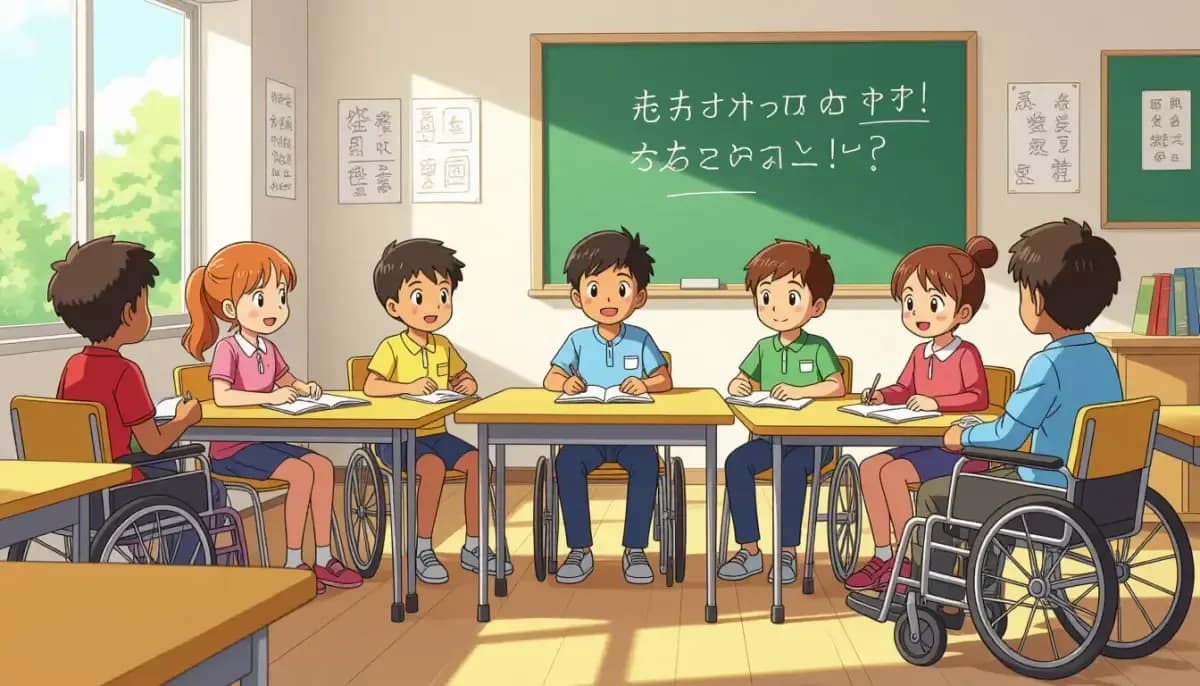
Inclusive Education Movement and Progress in Japan
Discover the state of inclusive education in Japan — from legal frameworks and school options to UN criticism and practical advice for foreign families with children with disabilities.
Read more →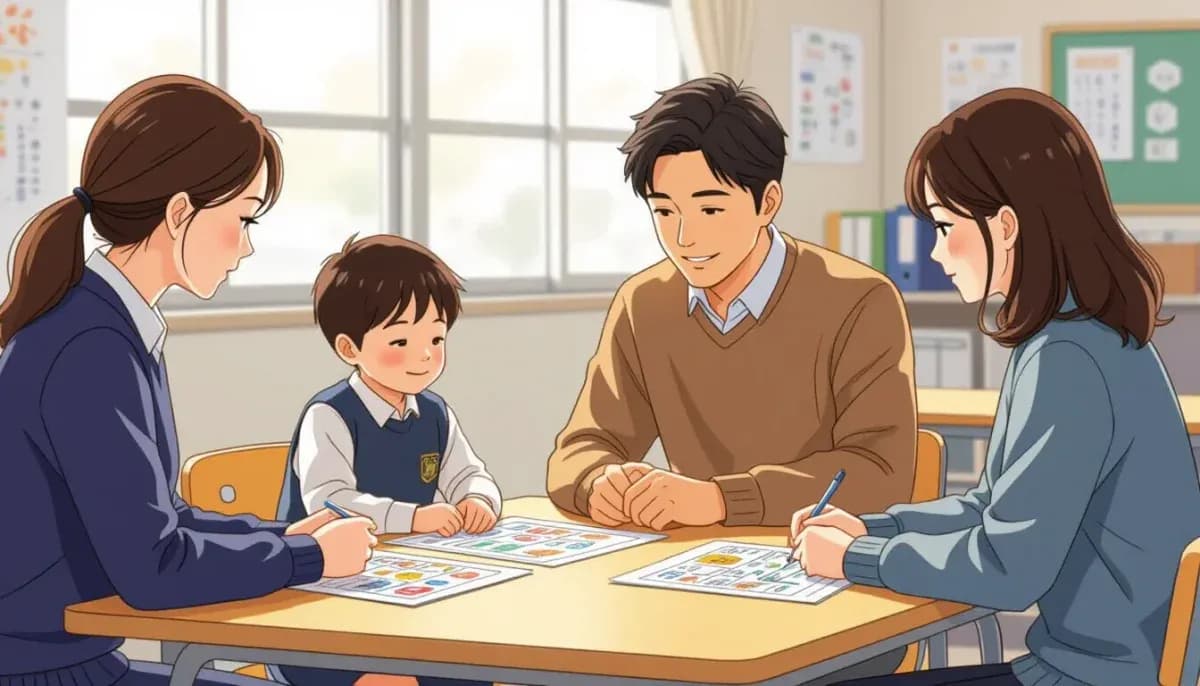
Advocating for Your Special Needs Child in Japanese Schools
A complete guide for foreign parents on navigating Japan's special needs education system — from understanding the three-tier support structure to effective advocacy strategies, English-language resources, and financial assistance.
Read more →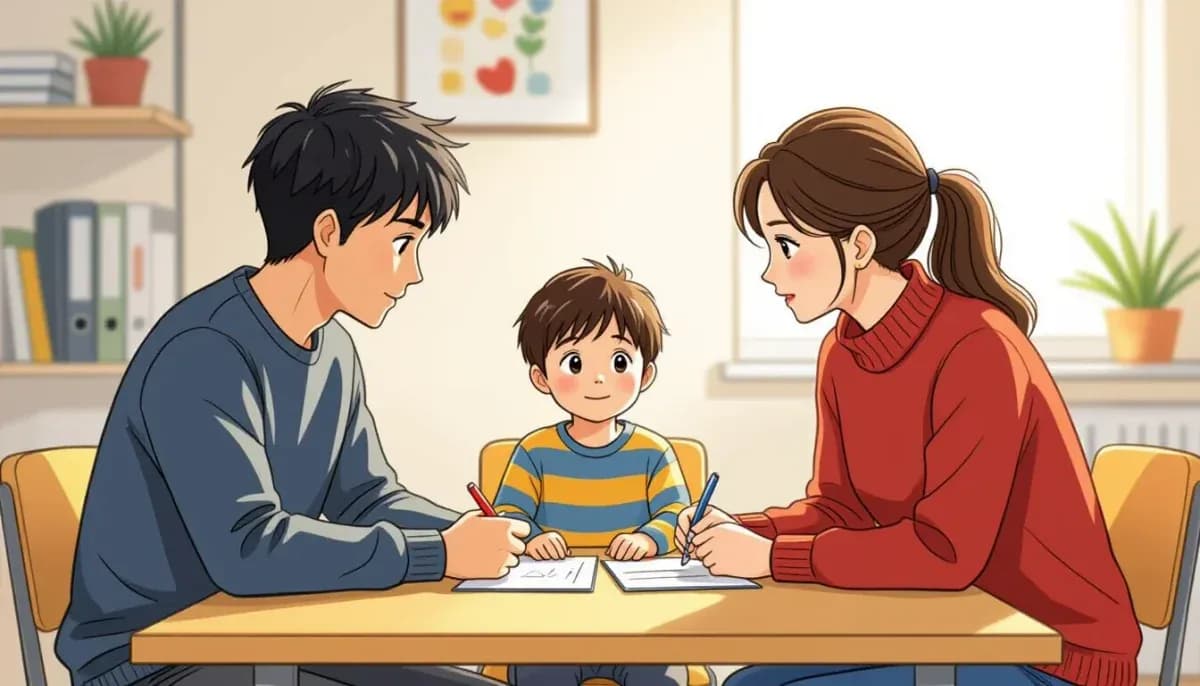
Therapy and Intervention Services for Children in Japan
Complete guide to therapy and intervention services for children in Japan. Find English-language speech therapy, mental health support, and early intervention programs for expat families.
Read more →
Government Support and Benefits for Special Needs Families
Complete guide to government support for special needs families in Japan: disability certificates, cash allowances up to ¥58,450/month, healthcare subsidies, school support, and welfare services for foreign residents.
Read more →
International Schools for Children with Special Needs
A complete guide to international schools and support services for children with special needs in Japan. Learn about inclusive schools, learning support teams, resources for expat families, and how to navigate the admissions process.
Read more →
Special Education Classes (Tokubetsu Shien Gakkyu) Explained
A complete guide to Japan's special education classes (Tokubetsu Shien Gakkyu) for foreign families — how the system works, enrollment process, legal rights, and English-language resources.
Read more →