
Government Support and Benefits for Special Needs Families

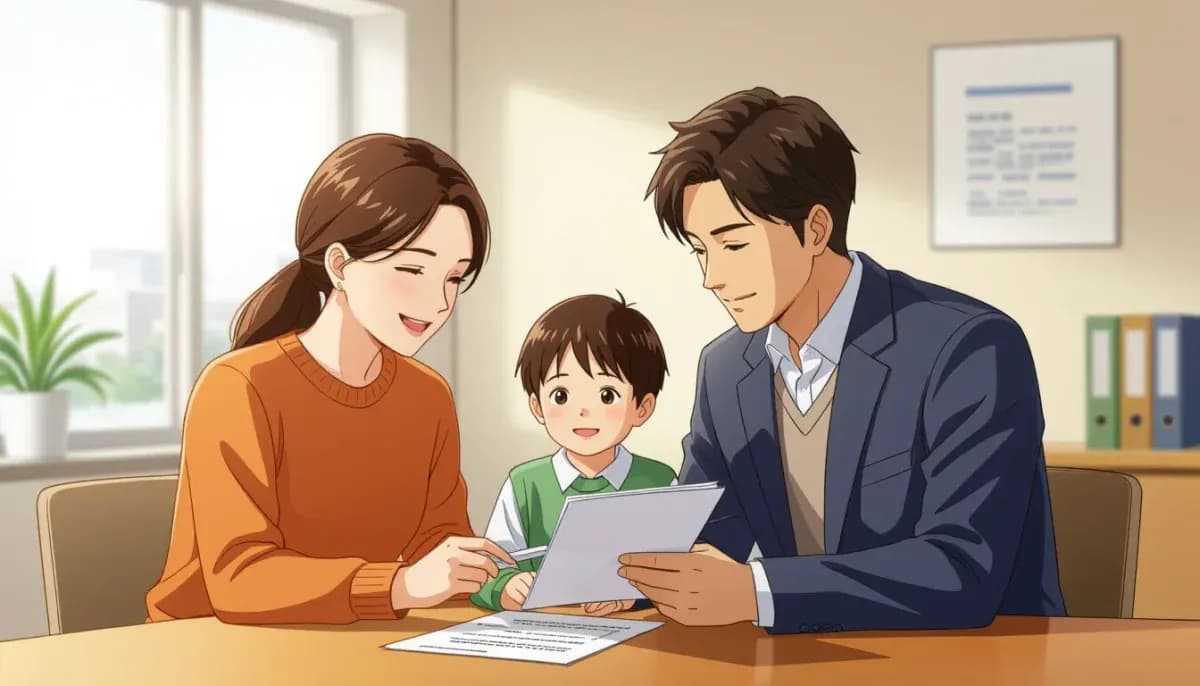
Complete guide to government support for special needs families in Japan: disability certificates, cash allowances up to ¥58,450/month, healthcare subsidies, school support, and welfare services for foreign residents.
Government Support and Benefits for Special Needs Families in Japan
Raising a child with special needs in Japan can feel overwhelming — navigating a new language, unfamiliar bureaucratic systems, and social expectations all at once. The good news is that Japan has a comprehensive system of financial allowances, healthcare subsidies, educational support, and welfare services for families with disabled children. And critically, foreign residents with valid residence status qualify for nearly all the same benefits as Japanese citizens.
This guide explains every major support program available to special needs families in Japan, how to access them, what documentation you need, and what to expect at each step — all written specifically for English-speaking foreign parents living in Japan.
!A family receiving support documents at a Japanese government municipal office
The Disability Certificate System: Your Key to Benefits
Before accessing most support programs, you or your child will need a disability certificate (障害者手帳, shōgaisha techō). Japan issues three types, each covering a different category of disability:
| Certificate Type | Japanese Name | Who It Covers | Severity Levels | Holders (FY2023) |
|---|---|---|---|---|
| Physical Disability Certificate | 身体障害者手帳 | Vision, hearing, limb, organ disabilities | Levels 1–6 (1 = most severe) | ~4.78 million |
| Intellectual Disability Certificate (Ryoiku Techo) | 療育手帳 | Intellectual disabilities | A1, A2, B1, B2 | ~1.28 million |
| Mental Disability Certificate | 精神障害者保健福祉手帳 | Psychiatric conditions, autism, ADHD, developmental disorders | Levels 1–3 | ~1.45 million |
Who can apply: Children of any age, including infants. Foreign residents holding a valid residence card (work visa, spouse visa, student visa, permanent residence) are fully eligible. Tourists and short-term visitors are NOT eligible.
How to apply: Visit your local municipal office (市役所, shiyakusho) or ward office (区役所, kuyakusho). You will need:
- Residence card
- Child's residence registration (住民票)
- Diagnosis or medical documentation from a licensed Japanese physician
- Passport-sized photos
Processing typically takes 2–4 weeks. The certificate is free to obtain and must be renewed periodically depending on the type.
For a detailed walkthrough of the application process as a foreign resident, see this comprehensive guide at Yarnity: Disability Certificate in Japan for Foreign Residents.
Financial Allowances: Cash Support for Special Needs Families
Japan provides several direct cash allowances to families raising children with disabilities. These are paid by the national government and administered through your local municipality.
Special Child Rearing Allowance (特別児童扶養手当)
This is the primary financial support program for families raising children under age 20 with physical or intellectual disabilities.
| Grade | Severity | Monthly Amount (FY2024–2025) |
|---|---|---|
| Grade 1 | Severe disability | ¥58,450/month |
| Grade 2 | Moderate disability | ¥38,930/month |
Payment schedule: Three times per year — April, August, and November. Each payment covers approximately 4 months of the allowance.
Income limits apply: The allowance is subject to household income limits. If the parent/guardian's annual income exceeds the threshold (roughly ¥4.6–5 million depending on household size), the allowance is reduced or suspended. An annual income status report is required each August.
Who qualifies: The parent or guardian (including non-biological caregivers) of a child under 20 with a qualifying disability. Foreign residents with valid residence status qualify.
Not eligible if: The child is in an institutional facility, or if the parent is receiving a disability pension.
More details at Niseko Town's official page on Special Child Rearing Allowance.
Disabled Child Welfare Allowance (障害児福祉手当)
For children with particularly severe disabilities who cannot perform daily living activities independently:
- Amount: ¥14,850/month (FY2024–2025)
- Age limit: Until age 20
- Payment: Four times per year
This allowance is specifically for home-dwelling children with the most severe conditions. Children in residential care facilities do not qualify.
Child Allowance (児童手当) — Universal Benefit for All Families
Every family with children in Japan — including foreign residents — receives the universal Child Allowance (児童手当). As of October 2024, income limits have been removed:
| Child's Age | Monthly Amount |
|---|---|
| Under 3 | ¥15,000/month |
| Age 3 to end of elementary school | ¥10,000/month (¥15,000 for 3rd+ child) |
| Junior high school student | ¥10,000/month |
Tokyo adds an additional ¥5,000/month per child under 18 through its city-specific program. Apply through your ward/municipal office. See more about general family financial support at Living in Nihon.
Healthcare Support for Special Needs Children
!A doctor consulting with a parent about their child's medical care in Japan
Child Healthcare Certificate (子ども医療証)
All children in Japan up to age 18 (until March 31 following their 18th birthday) are covered by the Child Healthcare Certificate:
- Hospital and clinic visits: ¥500 per visit
- Prescription medications: Free of charge
- Second or later visits to the same facility in the same month: Free
- Dental care: Covered under same terms
This applies to all children registered as residents in Japan, regardless of parents' nationality or visa status.
Medical Benefits from Disability Certificates
Disability certificate holders receive additional healthcare benefits:
- Reduced co-payments at medical facilities
- Access to in-home care services
- Subsidized or free assistive devices (wheelchairs, hearing aids, communication aids)
- The cost of welfare services is capped at 10% of the actual cost, and may be further reduced based on household income
For children with severe conditions, many municipalities offer full medical expense coverage. Check your local ward office for city-specific programs — Yokohama's welfare services, for example, are explained in English at Yokohama City's disability welfare page.
Educational Support for Special Needs Children in Japan
Japan's public school system offers a tiered approach to special needs education. You can find a full overview at Savvy Tokyo's special needs education guide.
Three Tiers of Support in Public Schools
Tier 1: Regular Class with Support Children attend regular classes but receive support from team teachers and small-group sessions. An Individualized Education Support Plan (similar to an IEP) is created with input from parents.
Tier 2: Resource Room (通級指導教室, Tsūkyū) Children attend regular classes most of the day but are "pulled out" several times per week for specialized instruction in areas like:
- Speech and language therapy
- Autism support
- Emotional and behavioral regulation
- ADHD management
- Learning disabilities (dyslexia, dyscalculia)
Tier 3: Special Needs Education Classes Separate classes within regular schools, with a maximum of 8 students per class. Available in approximately 62% of Japanese public schools.
Tier 4: Dedicated Special Needs Schools (特別支援学校) Japan has over 1,000 dedicated special needs schools:
- 505 for intellectual disabilities
- 159 for physical/motor disabilities
- 102 for hearing impairment
- 78 for health impairment
- 71 for visual impairment
Maximum class size is 6 students (single disability) or 3 students (multiple disabilities).
Development Disability Support Centers (発達障害者支援センター)
Every prefecture operates free Development Disability Support Centers — your first point of contact if you suspect your child has developmental or learning challenges. Services include:
- Initial consultation and developmental assessment
- Referrals to medical, educational, and welfare services
- Support for parents and caregivers
- Coordination with schools and community services
You do not need a disability certificate to access these centers. They are free and open to all residents.
For tips on raising bilingual children with special needs, also see our guide on raising bilingual children in Japan.
Welfare Services: In-Home and Community Support
Beyond cash and healthcare, Japan provides a range of practical welfare services through the 障害福祉サービス (shōgai fukushi sābisu) system.
Services for Children at Home
| Service | Description |
|---|---|
| Home-visit rehabilitation | Therapists visit the home for physical, occupational, or speech therapy |
| Visiting care workers | Help with daily living activities at home |
| Short-term residential care (respite) | Temporary placement in a facility to give caregivers a break |
| After-school day services (放課後等デイサービス) | Care and developmental support after school hours |
| Developmental support (児童発達支援) | For children under school age with disabilities |
Cost: Users pay up to 10% of the actual cost. Households below certain income thresholds pay nothing.
How to access: Apply through your local municipal office. A care manager (相談支援専門員) will assess your child's needs and create a service utilization plan.
Japan has approximately 43,000 children with severe motor and intellectual disabilities (SMID), of whom about 70% live at home — supported by exactly these community-based services.
For broader information on raising children with health challenges in Japan, see our guide on healthcare and medical care for children in Japan.
Non-Cash Benefits and Discounts
Disability certificate holders receive a wide range of additional benefits beyond cash allowances:
| Benefit | Details |
|---|---|
| Public transport discounts | Reduced fares on JR, private railways, buses, subways, taxis |
| NHK subscription fee | Reduction or full exemption depending on income |
| Mobile phone charges | Reduced rates from major carriers |
| Public facilities | Discounts at museums, art galleries, sports venues, cinemas |
| National parks | Free or reduced entry for certificate holders |
| Tax deductions | Households with disabled members receive income tax deductions |
These discounts apply to the certificate holder (the child) and in many cases to the accompanying parent or guardian as well.
How Foreign Residents Access Benefits: A Practical Checklist
As a foreign parent in Japan, you can access the same system as Japanese families. Here is a step-by-step checklist:
- Register your child at your local municipal office (住民登録, jūmin tōroku). This is required before any benefits can be applied for.
- Get a formal diagnosis from a licensed physician in Japan. This is typically required for disability certificates and allowance applications.
- Apply for the appropriate disability certificate at your ward/municipal office.
- Apply for financial allowances (Special Child Rearing Allowance, Disabled Child Welfare Allowance) at the same office.
- Enroll in the Child Healthcare Certificate program — this is often automatic upon birth registration.
- Contact your child's school about educational support options and request an individualized education plan meeting.
- Reach out to a Development Disability Support Center if you need guidance on where to start.
Many large municipalities offer multilingual support. For general expat family guidance, resources are available at For Work in Japan and Chuukou Benkyou.
For broader government benefits your family may be entitled to, see our complete guide on government benefits and subsidies for families in Japan.
Language Barriers and Getting Help
Navigating Japan's welfare system in a second language is genuinely challenging. Here are practical strategies:
- Bring a Japanese-speaking friend or colleague to initial appointments — municipal staff are generally not trained interpreters.
- Request a foreign language support interpreter if your municipality offers one (many Tokyo wards do).
- Use the multilingual guides from Tokyo's multicultural information center at tabunka.tokyo-tsunagari.or.jp.
- Contact the Yokohama City international resident support line at 045-664-2525 for English-language welfare guidance (if you're in Kanagawa).
- Bring all documentation translated or accompanied by originals — foreign medical records may need a certified Japanese translation for official applications.
For broader visa and legal issues that affect your ability to access benefits, see our guide on visa and legal issues for foreign families with children in Japan.
Summary: Key Benefits at a Glance
| Benefit | Amount | Eligibility |
|---|---|---|
| Special Child Rearing Allowance (Grade 1) | ¥58,450/month | Child under 20, severe disability |
| Special Child Rearing Allowance (Grade 2) | ¥38,930/month | Child under 20, moderate disability |
| Disabled Child Welfare Allowance | ¥14,850/month | Child under 20, very severe disability at home |
| Child Allowance | ¥10,000–¥15,000/month | All children under 18 |
| Child Healthcare Certificate | ¥500/visit | All children to age 18 |
| Welfare services | Up to 10% co-pay | Children with disability certificates |
Japan's support system for special needs families is more extensive than many foreigners realize — the key is knowing it exists and knowing how to access it. Start at your local municipal office, get the right disability certificate, and don't hesitate to ask for help navigating the system. The benefits can make a significant practical and financial difference for your family.
For more on supporting your child's emotional wellbeing alongside these formal systems, see our guide on mental health and emotional wellbeing for foreign children in Japan.
Further reading:

Originally from Vietnam, living in Japan for 16+ years. Graduated from Nagoya University, with 11 years of professional experience at Japanese and international companies. Sharing practical information for foreign parents raising children in Japan.
View Profile →Related Articles
Inclusive Education Movement and Progress in Japan
Discover the state of inclusive education in Japan — from legal frameworks and school options to UN criticism and practical advice for foreign families with children with disabilities.
Read more →
English-Language Special Needs Resources in Japan
A complete guide to English-language special needs resources in Japan for expat families, covering education support, therapy services, disability certificates, financial aid, and parent communities.
Read more →
Advocating for Your Special Needs Child in Japanese Schools
A complete guide for foreign parents on navigating Japan's special needs education system — from understanding the three-tier support structure to effective advocacy strategies, English-language resources, and financial assistance.
Read more →
Therapy and Intervention Services for Children in Japan
Complete guide to therapy and intervention services for children in Japan. Find English-language speech therapy, mental health support, and early intervention programs for expat families.
Read more →
International Schools for Children with Special Needs
A complete guide to international schools and support services for children with special needs in Japan. Learn about inclusive schools, learning support teams, resources for expat families, and how to navigate the admissions process.
Read more →
Special Education Classes (Tokubetsu Shien Gakkyu) Explained
A complete guide to Japan's special education classes (Tokubetsu Shien Gakkyu) for foreign families — how the system works, enrollment process, legal rights, and English-language resources.
Read more →