
Advocating for Your Special Needs Child in Japanese Schools

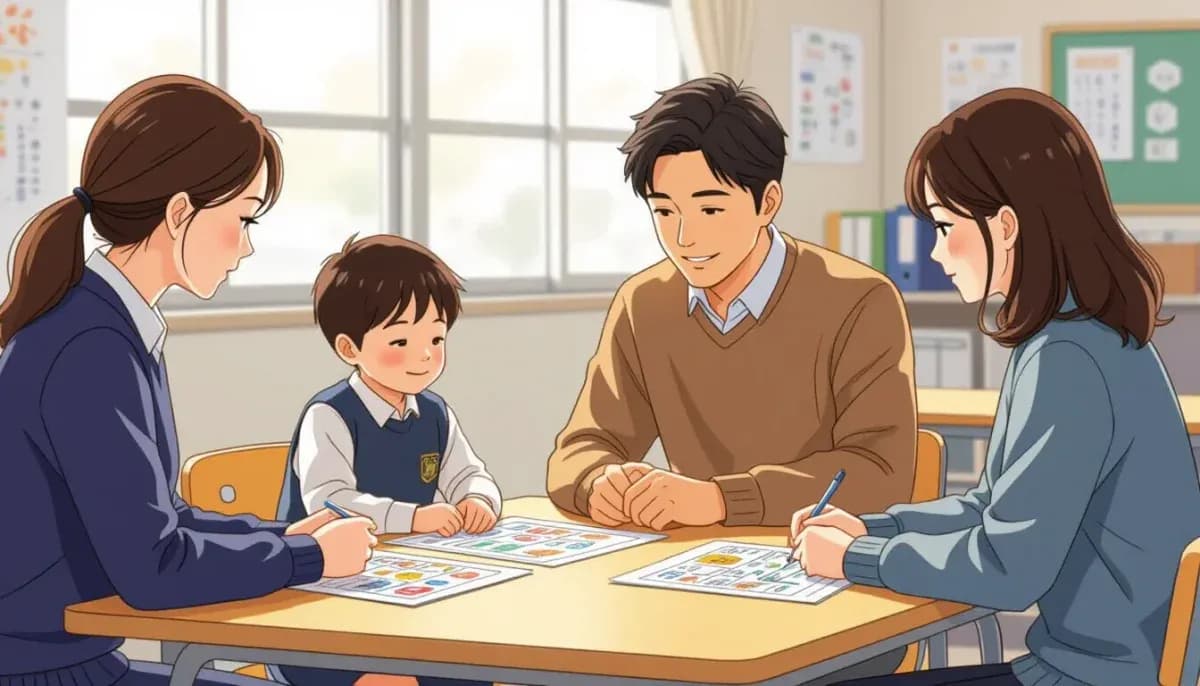
A complete guide for foreign parents on navigating Japan's special needs education system — from understanding the three-tier support structure to effective advocacy strategies, English-language resources, and financial assistance.
Advocating for Your Special Needs Child in Japanese Schools
Raising a child with special educational needs is challenging enough — doing so in a foreign country, in a language that may not be your own, adds a whole new layer of complexity. Japan has a structured special education system, but it operates very differently from what many Western families are accustomed to. Understanding how the system works, knowing your rights, and learning how to advocate effectively can make an enormous difference for your child's educational experience.
This guide is designed specifically for foreign parents navigating Japan's special needs education landscape. Whether your child has been recently diagnosed, or you're arriving in Japan with an existing IEP or EHCP, this comprehensive resource will help you understand the system and fight for the support your child deserves.
Understanding Japan's Special Needs Education System
Japan's special needs education framework (特別支援教育, tokubetsu shien kyoiku) was significantly reformed in 2007 when the School Education Law was revised. The old system of separate disability-type schools — schools exclusively for the blind, deaf, or intellectually disabled — was replaced with unified Schools for Special Needs Education (tokubetsu shien gakko) that can serve students with multiple or mixed disabilities. Today, over 1,013 such facilities exist nationwide.
However, most children with special educational needs in Japan do not attend dedicated special needs schools. Instead, they are integrated into regular public schools through a tiered support system:
The Three Tiers of Special Needs Support
Tier 1 – Regular Classroom with Additional Support Students with mild needs remain in the standard classroom (通常学級, tsujogakkyu) and may receive team-teaching or small-group instruction during certain lessons. This is the least intensive option and relies heavily on the classroom teacher's initiative.
Tier 2 – Resource Room Instruction (通級指導, *Tsukyu Shido*) Students attend a specialist resource room for a few sessions per week to address specific difficulties such as ADHD, autism spectrum disorder, learning disabilities (LD), or speech and language impairment. The rest of their schooling takes place in the regular classroom. This is one of the most commonly used support structures.
Tier 3 – Special Needs Classes (特別支援学級, *Tokubetsu Shien Gakkyu*) These are dedicated classes within regular public schools, capped at 8 students, offering a more specialized curriculum and teaching approach. Approximately 62% of regular public schools in Japan have at least one such class.
According to Japan's Ministry of Education, Culture, Sports, Science and Technology (MEXT), an estimated 6.5% of school-age children may have some form of developmental disorder — yet only around 1.03% are enrolled in dedicated special needs facilities. This gap means many children remain in regular classrooms without the specialized support they need, making parental advocacy all the more critical.
What Foreign Parents Should Know Before Enrolling
Navigating special needs education as a foreign family requires preparation. Here is what you should do before or immediately after arriving in Japan.
Gather All Documentation from Your Home Country
Bring copies of any assessments, diagnoses, IEPs (Individualized Education Programs), EHCPs (Education, Health and Care Plans), medical records, and psychological evaluations. While Japan does not have a formal IEP system, having detailed documentation will help you communicate your child's needs clearly to Japanese educators and support professionals.
If your documents are not in Japanese, consider having the most critical ones professionally translated. Many Japanese schools will want to see formal documentation before providing additional support.
Contact Your Local Development Disability Support Center
The Hattatsu Shougai-sha Shien Sentaa (発達障害者支援センター, Development Disability Support Center) is your first port of call. Every prefecture has at least one of these centers, and they provide:
- Multilingual counseling and support for families
- Referrals for diagnostic assessments
- Connections to medical, educational, welfare, and vocational services
- Guidance on navigating local school systems
Some centers offer English-language services or can connect you with interpreters. Contact your local center before school enrollment if possible.
Visit Schools Before Deciding
School placements and support levels are not uniformly enforced across Japan. MEXT defines inclusive education as enabling disabled and non-disabled students to learn "together as much as possible" — but that qualifier gives individual city boards and school principals significant discretionary authority. The quality and approach of support can vary dramatically not just between schools, but between classrooms within the same school.
Visit prospective schools in person, ask to speak with the head of special needs support (tokubetsu shien kyoiku coordinator, 特別支援教育コーディネーター), and ask specific questions about how they handle your child's particular needs.
For more information on the broader school system, see our guide to Elementary School in Japan for Foreign Parents and our overview of Junior High School in Japan for Foreign Families.
How to Advocate Effectively in Japanese Schools
Advocacy in Japan's school system looks different from advocacy in many Western countries. The cultural emphasis on harmony (wa), consensus, and avoiding confrontation means that direct, assertive approaches can sometimes backfire. Here's how to navigate effectively.
Build Relationships First
Japanese schools operate on relationship-based communication. Before making requests, invest time in building trust with your child's homeroom teacher (tantou kyouin), the special needs coordinator, and the school principal. Attend school events, respond promptly to the school communication notebook (renrakucho), and express genuine appreciation for the school's efforts.
This groundwork makes it far easier to have productive conversations about your child's needs later.
Put Everything in Writing
Always follow up verbal conversations with written summaries via the renrakucho or email. This creates a paper trail, reduces misunderstandings caused by language barriers, and signals that you are organized and serious. In Japanese bureaucratic culture, written records carry significant weight.
Request Meetings with the Right People
You have the right to request meetings with:
- Your child's homeroom teacher
- The school's tokubetsu shien kyoiku coordinator
- The school principal (kochou sensei)
- Local school board officials (kyouiku iinkai) if you feel the school is not responding adequately
When requesting additional support, frame your requests in terms of your child's best interests and the school's goals, rather than as complaints or demands.
Learn Key Japanese Terminology
Even basic Japanese terminology can help enormously in meetings. Here are some essential terms:
| Japanese | Romaji | English |
|---|---|---|
| 特別支援教育 | Tokubetsu shien kyoiku | Special needs education |
| 発達障害 | Hattatsu shougai | Developmental disorder |
| 自閉スペクトラム症 | Jiheisu pekutoramu shou | Autism spectrum disorder |
| 注意欠如・多動症 | Chui ketsujyo tada-shou | ADHD |
| 学習障害 | Gakushuu shougai | Learning disability |
| 通級指導 | Tsukyu shido | Resource room instruction |
| 特別支援学級 | Tokubetsu shien gakkyu | Special needs class |
| 個別の指導計画 | Kobetsu no shido keikaku | Individual instruction plan |
| 支援員 | Shien-in | Support assistant |
Escalate When Necessary
If you feel your child is not receiving appropriate support, you can escalate through official channels:
- Start with the school's special needs coordinator
- Move to the school principal
- Contact the local Board of Education (kyouiku iinkai)
- In serious cases, contact MEXT's consultation helpline or seek assistance from your country's embassy
Japan's special needs enrollment grew by 5% between 2018 and 2022, and the system is expanding — but persistent, well-documented parental advocacy remains one of the most reliable ways to secure appropriate accommodations.
Support Resources for Foreign Parents
You don't have to navigate this alone. A growing network of English-language support services exists for expat families in Japan.
English-Language Professional Support
TELL Counseling Center — Offers bilingual psychological assessments and therapy for children and families. Their free monthly Exceptional Parenting Program workshops are particularly valuable for parents of children with special needs. Visit telljp.com for details.
International Mental Health Professionals Japan (IMHPJ) — A directory of English-speaking mental health and educational professionals in Japan. Find an appropriate specialist at imhpj.org.
Litalico Junior — A Japanese provider of after-school therapeutic classes for children with developmental disorders, with some English-friendly locations in major cities. They provide detailed feedback reports for parents.
Tokyo Metropolitan Schools for Special Needs Education — The Tokyo metropolitan government provides an English-language portal for foreign families interested in special needs education options. Search for their foreign families education guide on the Tokyo metropolitan government website.
For broader guidance on keeping your child healthy and supported, see our article on Healthcare and Medical Care for Children in Japan and Mental Health and Emotional Wellbeing for Foreign Children in Japan.
More comprehensive guidance on raising children with education challenges in Japan is available at Living in Nihon's guide for raising children and education in Japan.
For work-life considerations while managing your child's needs, For Work in Japan provides resources for foreign professionals navigating Japanese workplace culture.
Considering International Schools
For some families, particularly those with children who have moderate to significant support needs, international schools may be a better fit than the Japanese public school system. International schools in Japan generally follow Western educational frameworks and are more likely to have experience with IEPs, EHCPs, and individualized support plans.
Several schools in the Kanto region — including Nishimachi International School and The American School in Japan — have increasingly accepted students with diagnosed disabilities, especially when families demonstrate commitment to supplemental services such as private speech therapy, occupational therapy, or reading specialists.
See our full guide to International Schools in Japan for a comprehensive breakdown of options, costs, and application processes.
Cost Comparison: Support Options in Japan
| Option | Estimated Monthly Cost | Key Feature |
|---|---|---|
| Public school (regular class) | Free | Lowest cost, least specialized |
| Public school (resource room) | Free | Free specialist sessions 1-3x/week |
| Public school (special class) | Free | Small group, specialized curriculum |
| Special needs school | Free (transport subsidy available) | Highest support, separate campus |
| International school (with support) | ¥150,000–¥400,000 | English environment, IEP-compatible |
| Private therapy (speech, OT, ABA) | ¥5,000–¥15,000/session | Supplements any school option |
| After-school programs (Litalico etc.) | ¥20,000–¥60,000/month | Therapeutic enrichment |
Raising Bilingual Children with Special Needs
A common concern among foreign parents is whether maintaining two languages might be too burdensome for a child with special needs. The research is clear: bilingualism does not cause or worsen developmental disorders. However, some children may develop each language more slowly than monolingual peers, and assessment tools may not accurately reflect a bilingual child's true abilities.
When having your child assessed in Japan, request that the assessment accounts for their bilingual background. If possible, seek bilingual assessments that test the child in both languages. TELL's counselors are experienced with bilingual children and can provide appropriate assessments.
For more on this topic, see our guides on Raising Bilingual Children in Japan and Teaching Japanese to Foreign Children.
For further reading on navigating Japanese school systems for children with learning differences, Chuukou Benkyou offers education resources relevant to Japanese school progression.
Government Support and Financial Assistance
Raising a child with special needs often comes with significant additional costs — therapies, assessments, specialized materials, and potentially private school fees. Japan offers some financial support for families:
- Disability handbook (shougaisha techou): Having an official disability certification opens access to reduced transport costs, discounts on services, and priority access to some support programs.
- Jidou Hattatu Shien Jigyosho: After-school support programs that are partly government-subsidized for children with developmental disorders.
- Municipal grants: Some municipalities offer grants or subsidies for therapy costs. Contact your local ward office (kuyakusho) for details.
- Child allowance and special disability allowance: Children with certified disabilities may be eligible for additional allowances.
See our guide to Government Benefits and Subsidies for Families in Japan for more details.
Conclusion
Advocating for a special needs child within Japan's education system requires patience, persistence, and cultural sensitivity. The system is not always transparent, and the quality of support varies widely — but it is improving. Special needs enrollment is growing, funding is increasing, and there is a genuine community of support for foreign families.
Remember: you are your child's most important advocate. Build relationships with school staff, put everything in writing, know your escalation pathways, and connect with the expat parent community. With the right knowledge and support network, your child can thrive in Japan.
For a broader overview of all education options available to your family, start with our Complete Guide to the Japanese Education System for Foreign Families.

Originally from Vietnam, living in Japan for 16+ years. Graduated from Nagoya University, with 11 years of professional experience at Japanese and international companies. Sharing practical information for foreign parents raising children in Japan.
View Profile →Related Articles
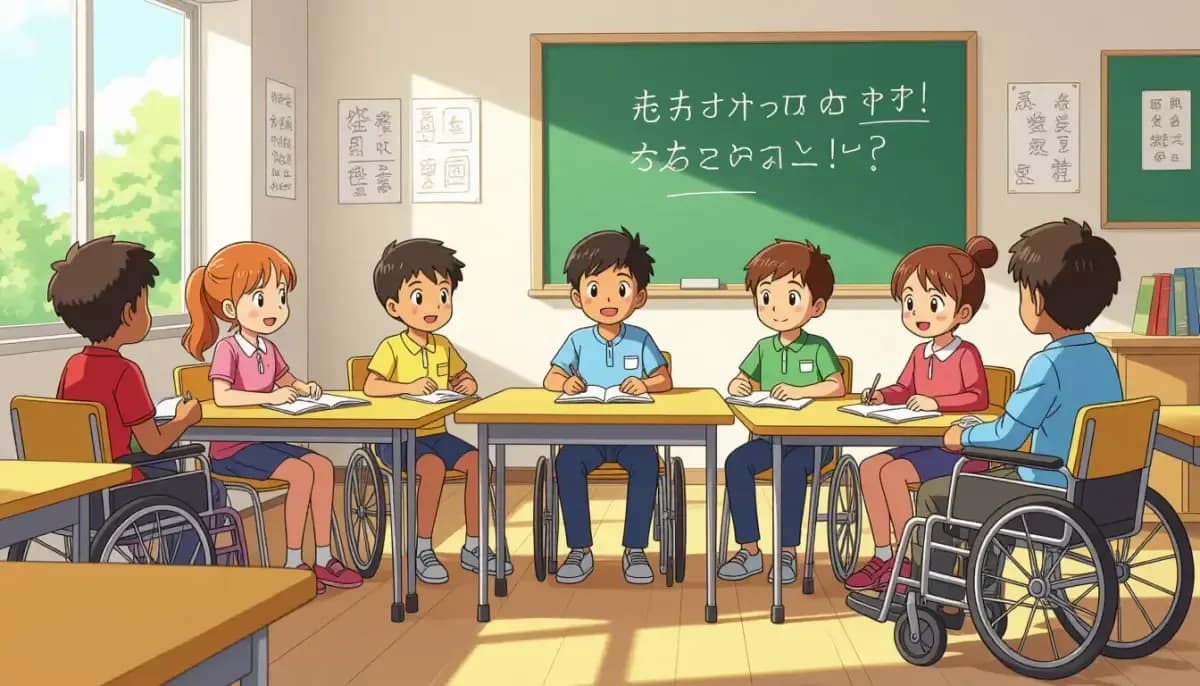
Inclusive Education Movement and Progress in Japan
Discover the state of inclusive education in Japan — from legal frameworks and school options to UN criticism and practical advice for foreign families with children with disabilities.
Read more →
English-Language Special Needs Resources in Japan
A complete guide to English-language special needs resources in Japan for expat families, covering education support, therapy services, disability certificates, financial aid, and parent communities.
Read more →
Therapy and Intervention Services for Children in Japan
Complete guide to therapy and intervention services for children in Japan. Find English-language speech therapy, mental health support, and early intervention programs for expat families.
Read more →
Government Support and Benefits for Special Needs Families
Complete guide to government support for special needs families in Japan: disability certificates, cash allowances up to ¥58,450/month, healthcare subsidies, school support, and welfare services for foreign residents.
Read more →
International Schools for Children with Special Needs
A complete guide to international schools and support services for children with special needs in Japan. Learn about inclusive schools, learning support teams, resources for expat families, and how to navigate the admissions process.
Read more →
Special Education Classes (Tokubetsu Shien Gakkyu) Explained
A complete guide to Japan's special education classes (Tokubetsu Shien Gakkyu) for foreign families — how the system works, enrollment process, legal rights, and English-language resources.
Read more →