
Inclusive Education Movement and Progress in Japan

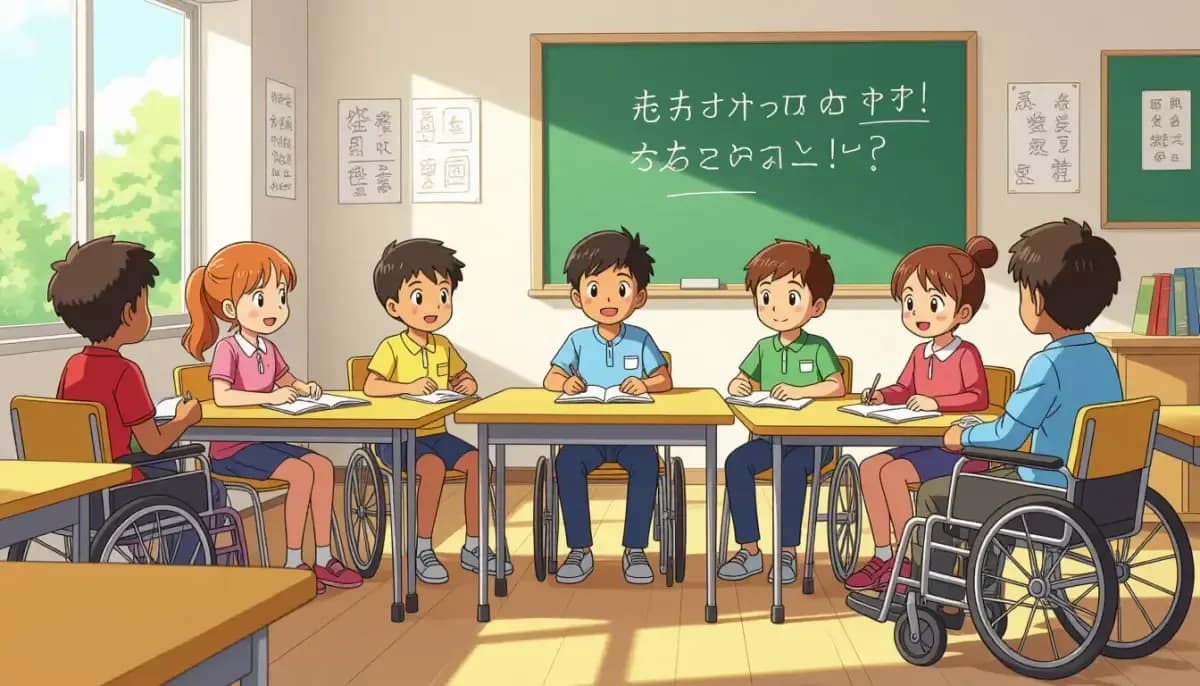
Discover the state of inclusive education in Japan — from legal frameworks and school options to UN criticism and practical advice for foreign families with children with disabilities.
Inclusive Education Movement and Progress in Japan
Japan's journey toward inclusive education is one of the most complex and contested stories in its modern school system. For foreign families raising children with disabilities or special learning needs in Japan, understanding this landscape is essential — whether navigating school enrollment, advocating for your child's rights, or simply making sense of a system that looks very different from what many Western countries have built. This guide breaks down the inclusive education movement in Japan, what progress has been made, where significant gaps remain, and what it all means for expat and foreign resident families.
What Is Inclusive Education and Why Does It Matter in Japan?
Inclusive education — at its core — means that children with disabilities learn alongside their non-disabled peers in regular school settings, with appropriate support and reasonable accommodations. It stands in contrast to segregated or "special" schooling, where students with disabilities are educated in entirely separate environments.
Japan signed the UN Convention on the Rights of Persons with Disabilities (CRPD) in 2007 and ratified it in 2014 — relatively late compared to many developed nations. The CRPD establishes a clear international standard: states must ensure that "persons with disabilities are not excluded from the general education system on the basis of disability." This binding commitment set the stage for Japan's ongoing (and often criticized) push toward inclusive education.
For foreign families in Japan, the relevance is direct: the educational rights that apply to Japanese children with disabilities also apply to your child, provided they hold appropriate residency status. Understanding the framework helps you advocate effectively within it.
The History of Special Needs Education in Japan
Japan's approach to educating children with disabilities has gone through several distinct phases:
Pre-1947: Education for children with physical and sensory disabilities was largely limited to specialized institutions, with no formal legal framework ensuring access.
1947 Fundamental Law of Education: Compulsory education was established but applied inconsistently to children with disabilities. Many were simply excluded.
1979: Mandatory schooling was extended to all children with disabilities, including those with severe intellectual disabilities — a significant milestone.
2006 Major Reform: The government launched a sweeping restructuring of special needs education under MEXT (Ministry of Education, Culture, Sports, Science and Technology). "Special schools" replaced the older category-specific schools, and a new framework called the "Inclusive Education System" was announced.
2014 CRPD Ratification: Japan formally committed to the international standard of inclusive education.
2022 UN Criticism: The UN Committee on the Rights of Persons with Disabilities formally declared that Japan's implementation remains insufficient, noting a troubling increase in segregated special education enrollment rather than a decrease.
This history helps explain why Japan occupies a complicated middle ground today — it has stated commitments to inclusion, significant infrastructure investments, but a school reality that many advocates describe as fundamentally segregated.
How Japan's School System Currently Handles Disability and Special Needs
The current Japanese education system offers several educational "tracks" for children with disabilities or special learning needs. Understanding these is critical for any foreign family navigating school enrollment.
| Track | Setting | Description |
|---|---|---|
| Tokubetsu Shien Gakkō (特別支援学校) | Dedicated special school | Separate schools for students with severe disabilities |
| Tokubetsu Shien Gakkyu (特別支援学級) | Special class within regular school | Small classes inside mainstream schools |
| Tsūkyū Shidō (通級指導) | Resource room pull-out | Regular class + periodic special support |
| Regular Classroom (通常学級) | Mainstream class | Full inclusion, often with limited support |
As of the most recent MEXT data:
- There are 1,135 special support schools in Japan
- 71,802 students are enrolled in special support elementary and junior high schools
- Special needs classrooms exist in approximately 70% of elementary and junior high schools nationwide
- 858 children requiring active medical care are enrolled in public elementary and junior high schools
The multi-track system offers flexibility in theory, but critics point out that it creates clear hierarchies and makes it difficult for children to move from segregated to inclusive settings. Advocacy groups note that special school enrollment has been increasing, not decreasing — the opposite of what genuine inclusive education reform would produce.
For a broader overview of how Japan's education system works, see our Complete Guide to the Japanese Education System for Foreign Families.
What Progress Has Been Made: Real Improvements Since 2014
Despite the criticisms, Japan has made measurable progress in several areas:
Physical Accessibility
The government committed to barrier-free schools by the end of 2025, and infrastructure improvements are visible:
- 85% of primary and lower secondary school buildings are now step-free from gate to building (2024 MEXT data)
- 65% are fully step-free from entrance to classrooms
- 75% are equipped with accessible toilets
- Elevators, ramps, and tactile paving have been added to schools across the country
Diversified Learning Schools Program
One of the more innovative recent initiatives is the Diversified Learning Schools (多様な学びの場) program. The government has set a target of establishing 300 such schools nationwide. As of February 2025:
- 21 public Diversified Learning Schools are operational
- 14 private Diversified Learning Schools are operational
- These schools span elementary, junior high, and high school levels
Progress toward the 300-school goal remains early-stage, but the program signals a policy shift toward recognizing that one-size-fits-all education does not serve all learners.
Online and Flexible Schooling Options
Japan introduced a significant online credit system for high schoolers in April 2024, allowing students who struggle in traditional settings to fulfill academic requirements through remote learning. N High School, an online and hybrid learning provider, reached over 30,000 enrolled students as of September 2024 — making it the highest-enrollment high school in Japan.
These developments are particularly relevant for students who face barriers in traditional school settings, including those with anxiety disorders, autism spectrum conditions, or physical disabilities that make daily commuting difficult.
For foreign families exploring school options, our guide to High School in Japan for Foreign Families covers these pathways in more detail.
Where Japan Falls Short: The Persistent Gaps
For all the progress, Japan's inclusive education system faces deep structural challenges that have not been resolved:
Teacher Overwork and Training Gaps
Japanese teachers work an average of 53.9 hours per week — the longest among OECD countries. This leaves minimal time for the collaborative planning, individualized preparation, and ongoing professional development that effective inclusive education requires.
Research consistently shows that Japanese teachers perceive implementing inclusive education for students with disabilities as not feasible within existing workload and resource constraints. Without addressing teacher capacity, structural reforms alone cannot create genuinely inclusive classrooms.
Rising Absenteeism
A record 346,482 students were classified as missing 30 or more school days per year in 2023 — representing 3.7% of all enrolled primary and secondary students. This crisis, driven by psychological, emotional, physical, and social factors, disproportionately affects students with disabilities, neurodivergent learners, and children from non-Japanese backgrounds.
For foreign children, school refusal can be compounded by language barriers, social isolation, and a school culture that does not always accommodate difference well. Our guide on Mental Health and Emotional Wellbeing for Foreign Children in Japan addresses this intersection.
The UN's 2022 Verdict
The UN Committee on the Rights of Persons with Disabilities concluded in 2022 that:
- Japan's efforts to provide quality education within an inclusive setting with reasonable accommodation remain insufficient
- There is a "negative trend of segregated special education" with increasing numbers of disabled children unable to attend regular schools
- Japan must reverse this trend and align its education system with CRPD standards
This is a significant international rebuke. Japan's advocacy community, including organizations like Inclusive Education Japan, characterizes the government's "Inclusive Education System" branding as misleading — a re-labeling of segregation rather than a genuine transformation.
What This Means for Foreign Families with Children with Disabilities
Navigating Japan's education system as a foreign family with a child who has a disability or special learning need requires understanding both the formal system and its practical realities.
Enrollment Rights: Foreign children who hold valid residency in Japan have the legal right to enroll in public schools. The multi-track system described above applies to your child as it does to Japanese children.
Language and Bureaucracy: The assessment and placement process — including psychological evaluations, individualized education plan (IEP equivalent) discussions, and school placement decisions — is conducted in Japanese. Securing a translator or bilingual support person is essential.
Advocating for Inclusion: If you want your child in a mainstream classroom rather than a special class or school, you have the right to request this. The school and local education board are required to consider your request, though the practical outcome varies significantly by region and school.
International Schools: For families who find public school options inadequate, International Schools in Japan often have stronger inclusive education frameworks, though at significant cost.
Government Support Programs: Japan's disability support system (障害福祉サービス) includes subsidized therapy, assistive devices, and educational support for qualifying residents. Foreign families who meet residency requirements are eligible. See our guide to Government Benefits and Subsidies for Families in Japan for details.
For more context on how daily schooling works, read our guides on Elementary School in Japan for Foreign Parents and Junior High School in Japan for Foreign Families.
The International Context: How Japan Compares
Japan's challenges with inclusive education are not unique — but the gap between stated commitments and actual practice is particularly notable.
Globally, WHO data shows that approximately 1 in 6 people experience significant disability. Over 10% of children and youth with disabilities globally are refused school entry outright. In OECD countries, approximately 30% of young people with disabilities — and 70% of those with severe disabilities — are classified as NEET (not in education, employment, or training).
Japan's infrastructure progress (85% step-free access, accessible toilets) compares favorably to many countries. Its online schooling expansion is innovative. But the persistent increase in special school enrollment, teacher overwork, and UN criticism place Japan firmly in the "work in progress" category compared to Nordic countries, Canada, or Australia, which have made more sustained progress toward genuine classroom inclusion.
The World Economic Forum has highlighted Japan's inclusive school system initiatives as potentially instructive for building resilience, noting the country's innovations in flexible learning environments — while also acknowledging that full inclusion remains an unfinished agenda. Read more in WEF's coverage of Japan's inclusive school systems.
Resources and Support for Families
Whether you are just arriving in Japan or have been navigating the system for years, these resources can help:
- Inclusive Education Japan (inclusive-education.jp) — English-language advocacy site covering policy, rights, and family guidance
- Japan Times: Inclusive Education Coverage — Up-to-date reporting on policy developments
- Living in Nihon — General expat guide covering education and life in Japan
- For Work in Japan — Resources for foreign residents navigating Japanese systems
- Chuukou Benkyou — Academic support resources for students in Japan
- UNESCO GEM Education Profile for Japan — Data and policy analysis on inclusion in Japanese education
For families navigating disabilities within Japanese healthcare and social systems, our Healthcare and Medical Care for Children in Japan guide is an essential companion read.
Conclusion: Progress, Pressure, and Practical Steps
Japan's inclusive education movement is real but incomplete. The country has made genuine strides in physical accessibility, launched innovative online and flexible schooling programs, and formally committed to international disability rights frameworks. At the same time, special school enrollment is rising, teacher capacity is stretched thin, and the UN has formally found Japan's efforts insufficient.
For foreign families, the honest picture is this: your child with a disability has legal rights within Japan's education system, but the practical experience of exercising those rights varies enormously. Proactive advocacy, local knowledge, and connecting with other expat families navigating similar challenges are your most valuable tools.
The Japan Times reporting on inclusive education progress and the World Economic Forum's analysis of inclusive workforces in Japan suggest that momentum is building — driven by demographic pressure, international scrutiny, and a growing domestic advocacy movement. The question is whether that momentum translates into genuinely inclusive classrooms within the next decade.

Originally from Vietnam, living in Japan for 16+ years. Graduated from Nagoya University, with 11 years of professional experience at Japanese and international companies. Sharing practical information for foreign parents raising children in Japan.
View Profile →Related Articles
English-Language Special Needs Resources in Japan
A complete guide to English-language special needs resources in Japan for expat families, covering education support, therapy services, disability certificates, financial aid, and parent communities.
Read more →
Advocating for Your Special Needs Child in Japanese Schools
A complete guide for foreign parents on navigating Japan's special needs education system — from understanding the three-tier support structure to effective advocacy strategies, English-language resources, and financial assistance.
Read more →
Therapy and Intervention Services for Children in Japan
Complete guide to therapy and intervention services for children in Japan. Find English-language speech therapy, mental health support, and early intervention programs for expat families.
Read more →
Government Support and Benefits for Special Needs Families
Complete guide to government support for special needs families in Japan: disability certificates, cash allowances up to ¥58,450/month, healthcare subsidies, school support, and welfare services for foreign residents.
Read more →
International Schools for Children with Special Needs
A complete guide to international schools and support services for children with special needs in Japan. Learn about inclusive schools, learning support teams, resources for expat families, and how to navigate the admissions process.
Read more →
Special Education Classes (Tokubetsu Shien Gakkyu) Explained
A complete guide to Japan's special education classes (Tokubetsu Shien Gakkyu) for foreign families — how the system works, enrollment process, legal rights, and English-language resources.
Read more →