
International Universities and Programs in Japan


Complete guide to international universities and study programs in Japan for foreigners. Covers top universities, English programs, tuition costs, scholarships, and admission requirements.
International Universities and Programs in Japan: The Complete Guide for Foreigners
Japan has become one of the world's most desirable destinations for international students, and for good reason. With world-class research institutions, a rich cultural experience, and a growing number of English-taught programs, Japan offers a compelling option for anyone considering studying abroad. As of 2024, a record 336,708 international students were enrolled in Japan — a 20.6% increase from the year before — and the Japanese government has set an ambitious target of 400,000 international students by 2033.
Whether you are a foreign resident in Japan looking to pursue further education, a parent helping a child plan their university path, or someone relocating specifically to study, this guide covers everything you need to know about international universities and degree programs in Japan.

Overview: Japan's University System
Japan's higher education landscape is diverse and well-structured. The system includes:
- 86 national universities (e.g., University of Tokyo, Kyoto University) — generally the most prestigious and affordable
- 101 public universities — funded by prefectural or municipal governments
- 620 private universities — the largest category, ranging from small specialized schools to large research universities like Waseda and Keio
| Standard degree lengths: | Degree Type | Duration |
|---|---|---|
| Bachelor's degree (most fields) | 4 years | |
| 6 years | Junior college (tanki daigaku) | |
| Master's degree | 2 years |
Junior college graduates can transfer to a 4-year university to complete their bachelor's degree, making it a useful stepping stone for those who want to ease into the system.
For foreign residents already living in Japan, your children may have gone through the Japanese education system for foreign families, and university is the natural next step. It is also relevant for expat families who transitioned their children through high school in Japan and are now planning for tertiary education.
Top Universities in Japan for International Students
Japan's universities rank competitively on global indices. Here are some of the most internationally friendly institutions:
| University | QS World Ranking | Notable Features |
|---|---|---|
| University of Tokyo | ~32 | 10 faculties, 15 graduate schools; largest research output in Japan |
| Kyoto University | ~50 | 11 Nobel Prize alumni; emphasis on independent research |
| Tokyo Institute of Technology | ~84 | Leading science and engineering programs |
| Osaka University | ~86 | Strong interdisciplinary programs |
| Tohoku University | ~107 | Top-ranked in materials science |
| Nagoya University | ~152 | Global 30 English-medium programs in science |
| Hokkaido University | ~173 | Japan's oldest large university; international research emphasis |
| Keio University | ~188 | Founded 1858; strong international exchange network |
| Waseda University | Top 200 | 5,000+ international students from 100+ countries |
| Ritsumeikan APU | N/A | 50% international students from 109 countries; bilingual campus |
| Temple University Japan | N/A | Accredited American degrees taught in English in Tokyo and Kyoto |
| GLOBIS University | N/A | Multi-campus; online MBA options |
Ritsumeikan Asia Pacific University (APU) deserves special mention: its campus in Beppu, Oita is one of the most internationally diverse in Japan, with half of all students coming from abroad and nearly all courses offered in both English and Japanese.
Temple University Japan (TUJ) is a great option for those specifically seeking a US-accredited degree while living or working in Japan. It operates campuses in Azabu (Tokyo) and Kyoto, and all instruction is in English.
English-Taught Programs: What's Available
A common concern for foreign students is language. While many Japanese university programs require Japanese proficiency, English-taught programs have grown significantly, especially at the graduate level.
Fields most commonly available in English:
- Business administration and economics
- Media and communications
- Science, technology, and engineering (STEM)
- International relations and policy
- Medicine and health sciences (some graduate programs)
- Robotics and AI (increasingly common)
| Language requirements for English-taught programs: | Program Level | TOEFL iBT | IELTS |
|---|---|---|---|
| Undergraduate (English-medium) | 71–80 | 5.5–6.0 |
For Japanese-medium programs, most universities require at least JLPT N2 — a level that takes roughly 1,600–2,200 hours of study from beginner level. This is a significant commitment, but achievable if your child has been raised in Japan or has studied Japanese throughout their junior high school and high school years.

Tuition Fees and Living Costs
Japan's university costs are moderate compared to the US or UK, especially for national institutions.
| University Type | Annual Tuition | First-Year Total (incl. enrollment fee) |
|---|---|---|
| National university | ~¥535,800 | ~¥820,000 |
| Public university | ~¥580,000 | ~¥930,000 |
| Private university (arts/social sciences) | ~¥900,000–¥1,100,000 | ~¥1,300,000+ |
| Private university (science/engineering) | ~¥1,200,000–¥1,500,000 | ~¥1,600,000+ |
Living costs (annual estimates):
- Housing: ¥50,000–¥85,000/month (university dormitories are cheaper at ¥20,000–¥40,000/month)
- Food: ¥40,000–¥60,000/month
- Transportation: ¥10,000–¥20,000/month
- Total living expenses: ¥1,000,000–¥1,500,000/year depending on city
Tokyo and Osaka are significantly more expensive than regional cities like Sendai, Sapporo, or Beppu. If cost is a major factor, studying at a national university in a regional city is often the most economical choice.
For broader financial planning considerations for your family, see our guide on financial planning for expat families in Japan and government benefits and subsidies for families.
Scholarships and Financial Aid
A critical consideration for international students is funding. Here are the main options:
1. JASSO Scholarships (Japan Student Services Organization) JASSO is the primary government body providing scholarships to international students. Awards are based on academic performance and financial need. Monthly stipends typically range from ¥48,000 to ¥80,000 for undergraduates.
2. Japanese Government (MEXT) Scholarships
- Monthly allowances of ¥117,000–¥145,000 for undergraduates; ¥145,000–¥200,000 for graduate students
- Covers tuition, round-trip airfare, and sometimes accommodation
- Highly competitive — apply through your country's Japanese embassy
3. Tobitate! Study Japan Program A government-funded program providing comprehensive financial aid for Japanese students studying abroad and for international students at Japanese universities. Includes mentoring, networking, and career support in addition to financial assistance.
4. University-Specific Scholarships Most major universities offer internal scholarships. The University of Tokyo, for example, provides both direct university scholarships and facilitates access to external organization grants covering tuition, living expenses, and sometimes travel.
5. Private Foundation Scholarships Numerous private foundations in Japan — particularly those affiliated with major corporations — offer scholarships to international students in specific fields like engineering, business, or Japan studies.
Note that 96% of international students in Japan are self-funded, meaning scholarships are competitive. Apply early and to multiple sources simultaneously. The official JASSO statistics and scholarship portal is the best place to start.
Admission Requirements and the Application Process
Academic Prerequisites
To enroll in a Japanese university, you generally need to have completed 12 years of formal education (equivalent to secondary/high school graduation). Internationally recognized qualifications that are accepted include:
- International Baccalaureate (IB)
- German Abitur
- French Baccalauréat
- UK GCE A-Levels
- US high school diploma (with additional qualifications in some cases)
The EJU (Examination for Japanese University Admission)
The EJU is required by most Japanese national and public universities for international applicants. Key details:
- Offered: June and November
- Cost: ¥13,000–¥18,000
- Sections: Japanese language, Science (physics, chemistry, biology), General Subjects (humanities/social sciences), Mathematics (Course 1 or 2)
- Languages: Sections can be taken in Japanese or English (except the Japanese section)
- Register at: Study in Japan Official Website
Many private universities waive the EJU requirement if you have strong test scores from TOEFL/IELTS/SAT (for English-medium programs) or JLPT N2+ (for Japanese-medium programs).
Application Documents
| Document | Notes |
|---|---|
| Application form | University-specific; often online |
| Passport-sized photos | Standard format required |
| High school diploma/transcripts | Official translations required if not in Japanese or English |
| EJU score report | Or JLPT certificate for language requirement |
| Personal statement (志望理由書) | In Japanese or English depending on program |
| Letter(s) of recommendation | Usually 1–2, from teachers or supervisors |
| Passport copy | Valid ID |
| Application fee | ¥10,000–¥35,000 per school |
All documents must be in Japanese or English. If your originals are in another language, certified translations are required.
Timeline
| Milestone | Typical Timing |
|---|---|
| Start researching universities | 18–24 months before enrollment |
| Take EJU or JLPT | June/November (EJU); July/December (JLPT) |
| Submit applications | 6–9 months before enrollment |
| Receive acceptance | 3–6 months before enrollment |
| Apply for student visa | After receiving acceptance letter |
| Enrollment (most universities) | April; some offer October intake |
Most Japanese universities begin their academic year in April, though a growing number — particularly those targeting international students — also offer an October intake.
Support Services at Japanese Universities
Universities in Japan increasingly offer dedicated international student support:
- International student centers — assist with visa renewals, dormitory placement, and adjusting to campus life
- Mentorship programs — pairing new international students with experienced peers or faculty advisors
- Part-time work guidance — Japan allows international students on a student visa to work up to 28 hours/week (with permission)
- Mental health services — counseling in English is increasingly available at larger universities
- Academic support — Japanese language tutoring, writing centers, and academic advising
For students who may experience cultural adjustment challenges — especially children who have grown up between cultures — our guide on mental health and emotional wellbeing for foreign children in Japan offers useful context.
For students who have been raised bilingually, the transition to a Japanese-medium university can be smoother but still requires deliberate preparation. See our article on raising bilingual children in Japan for strategies that apply through university age.
Visa Requirements for International Students
Foreign nationals who are not permanent residents of Japan will need a College Student (留学) visa to enroll full-time at a Japanese university.
Key points:
- Apply at a Japanese embassy or consulate in your home country after receiving an acceptance letter and Certificate of Eligibility (CoE) from your university
- The CoE is issued by the Japanese Immigration Bureau based on your enrollment
- Student visas are typically granted for 1–2 years and are renewable as long as you remain enrolled
- Dependents (spouse, children) may be eligible for a Dependent visa — they are not automatically permitted to work
For foreign residents already living in Japan on other visa statuses (work visa, spouse visa, etc.), contact your university's international office about whether a status change is required. In most cases, full-time degree students need to hold or switch to a student visa.
For detailed information on visa categories and legal considerations for foreign families in Japan, see our guide on visa and legal issues for foreign families with children in Japan.
Useful Resources
- Study in Japan Official Website — government portal with university search, EJU info, and scholarship listings
- JASSO International Student Statistics — annual enrollment data
- ICEF Monitor: Record International Enrollments in Japan 2024 — latest enrollment statistics and trends
- Futures Abroad: Top Universities in Japan — practical overview of top schools and costs
- How to Apply to a Japanese University (studyinjapan.org) — step-by-step application guide
- Living in Nihon — practical guides for daily life in Japan as a foreigner
- For Work in Japan — career and work resources for expats in Japan
- Chuukou Benkyou — education resources for those navigating Japanese academic systems
Final Thoughts
Japan's higher education system offers outstanding opportunities for international students — both those who have relocated to Japan with their families and those choosing Japan as a study destination. The key to success is starting early: research universities at least 18–24 months before your target enrollment date, prepare for the required examinations (EJU or JLPT), and explore all available scholarship options.
With record numbers of international students choosing Japan and a government actively expanding English-medium programs, now is an excellent time to pursue a degree in one of Asia's most dynamic academic environments.
For more information on navigating education in Japan at all levels, explore our complete guide to the Japanese education system for foreign families.

Originally from Vietnam, living in Japan for 16+ years. Graduated from Nagoya University, with 11 years of professional experience at Japanese and international companies. Sharing practical information for foreign parents raising children in Japan.
View Profile →Related Articles

Community College and Junior College Options in Japan
Everything foreigners need to know about junior colleges (tanki daigaku) in Japan: costs, admission requirements, language requirements, career paths, and how to apply as an international student.
Read more →
Career Prospects After University in Japan
A complete guide to career prospects after university in Japan — covering the shinsotsu system, job-hunting timeline, top industries for foreign graduates, visa options, JLPT requirements, and practical job search resources for 2025.
Read more →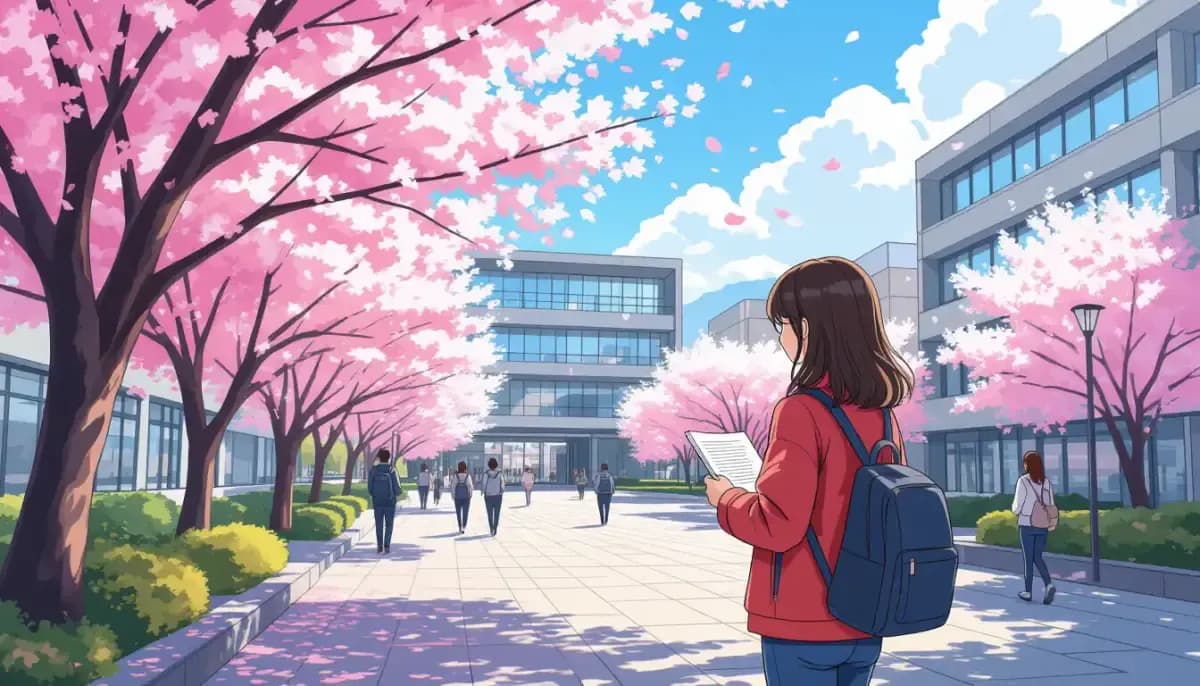
Student Life at Japanese Universities: What to Expect
Everything foreign students need to know about university life in Japan — from club culture, part-time work rules, and housing costs to scholarships, job hunting (shūkatsu), and cultural adjustment tips.
Read more →
University Costs: Tuition and Living Expenses in Japan
Complete guide to university tuition fees and living expenses in Japan for foreign students. Covers national vs private costs, scholarships, part-time work rules, and money-saving strategies.
Read more →
Gap Year Options for Students in Japan
Discover the best gap year options for students in Japan—working holiday visas, language schools, teaching English, volunteer programs, and structured gap year programs. Includes visa details and costs.
Read more →
Vocational Schools and Alternatives to University in Japan
A complete guide to senmon gakko (vocational schools) and alternatives to university in Japan for foreign students and expat families. Covers enrollment, costs, language requirements, and career outcomes.
Read more →