
Japanese Academic Year Calendar: Key Dates Every Parent Should Know

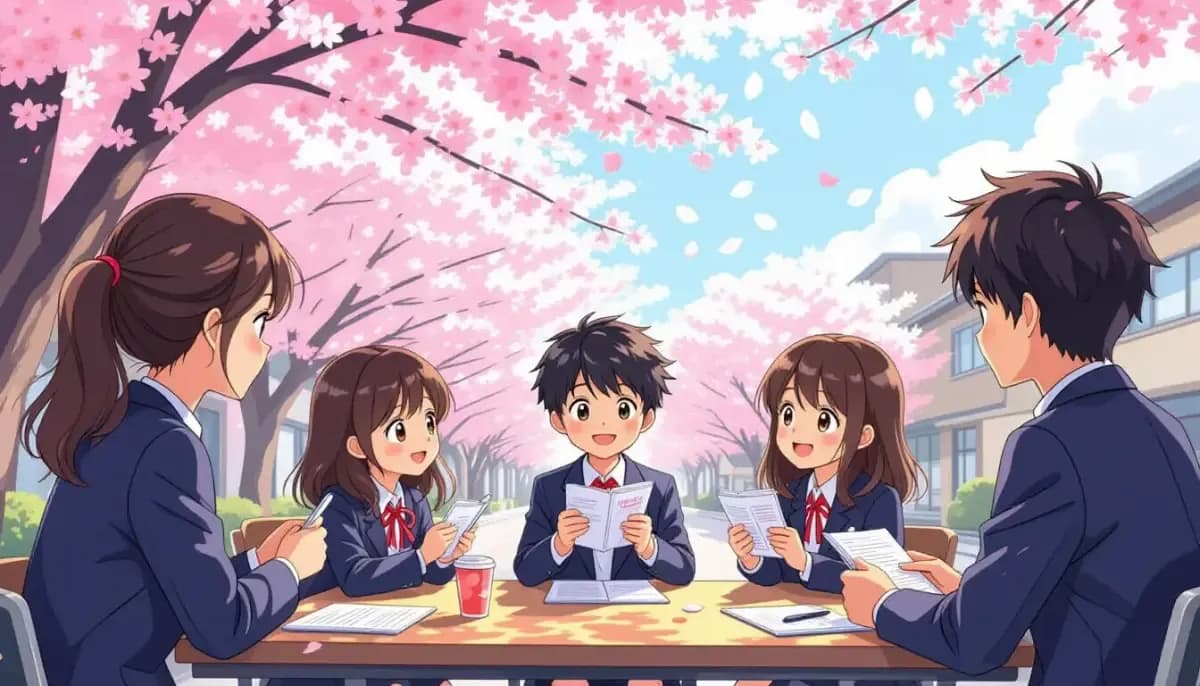
Complete guide to the Japanese school year calendar for foreign parents. Learn about term dates, holidays, enrollment timelines, and important school events from April through March.
Japanese Academic Year Calendar: Key Dates Every Parent Should Know
If you are a foreign parent raising children in Japan, understanding the Japanese academic year calendar is one of the most important things you can do to help your family settle in smoothly. Unlike most Western countries where the school year begins in September, Japan's academic year starts in April and ends in March — aligned with the country's fiscal year and the iconic cherry blossom season. This guide walks you through every key date, term, holiday, and event you need to mark on your calendar.
For a broader overview of the education landscape, check out our complete guide to the Japanese education system for foreign families.
How the Japanese Academic Year Is Structured
The Japanese school year is divided into three terms (学期, gakki), each separated by a holiday break. This trimester system applies to public elementary schools, junior high schools, and most high schools across the country. Here is how the year breaks down:
| Term | Period | Key Events |
|---|---|---|
| 1st Term (一学期) | April – July | Entrance ceremony, Golden Week, sports day (some schools) |
| Summer Break | Late July – August 31 | Homework assignments, free research projects |
| 2nd Term (二学期) | September – December | Cultural festival, field trips, mid-term exams |
| Winter Break | Late December – Early January | New Year celebrations |
| 3rd Term (三学期) | January – March | Final exams, graduation ceremony |
| Spring Break | Late March – Early April | Transition between school years |
This structure means there are roughly 243 school days per year — significantly more than the 180 days typical in American schools. Japanese students attend school Monday through Friday, and some schools hold Saturday classes once or twice a month.
The First Term: April Through July
The academic year kicks off in the first or second week of April with the entrance ceremony (入学式, nyūgakushiki). This is a formal event where new students are welcomed into their school. Parents are expected to attend dressed in business attire, and it is considered one of the most important school events of the year.
Children who turn 6 years old by April 1 are eligible to begin elementary school that spring. If your child's birthday falls on April 2, they will need to wait until the following year.
Golden Week falls in late April and early May (April 29 – May 5), bringing a cluster of national holidays including Showa Day, Constitution Memorial Day, Greenery Day, and Children's Day (こどもの日). Schools are closed during this period, and it is one of the busiest travel seasons in Japan. Book any trips well in advance.
The first term also typically includes a parent-teacher meeting (家庭訪問, katei hōmon), where the teacher visits your home, and a class observation day (授業参観, jugyō sankan). Both are important opportunities to build a relationship with your child's teacher. For more on navigating school as a foreign parent, see our guide on elementary school in Japan.
Summer Break: Late July to August
Summer vacation (夏休み, natsu-yasumi) is the longest break of the year, running approximately from July 21 to August 31. The exact start date varies by region — schools in Hokkaido and northern Tōhoku may start summer break later and end it earlier due to shorter summers.
During this break, students are typically assigned:
- A large volume of homework (宿題, shukudai)
- A self-directed research project (自由研究, jiyū kenkyū)
- A reading assignment with a book report
- Physical exercise logs or swimming practice
Many schools also hold swimming classes during the break, and children are expected to attend. Some schools organize summer festivals or volunteer activities as well.
This is a great time for foreign families to travel back to their home country or explore Japan. Just be aware that mid-August (Obon week) is an extremely busy travel period with higher prices. For tips on managing your family's daily life, check out the complete guide to family life in Japan.
The Second Term: September Through December
The second term begins on September 1 and runs until late December. This is often considered the most event-packed term of the year.
Key events during the second term include:
- Sports Day (運動会, undōkai) — Usually held in September or October, this is a major school-wide event where students compete in relay races, tug-of-war, and choreographed group performances. Parents are invited to attend and many families bring elaborate bento lunches.
- Cultural Festival (文化祭, bunkasai) — More common in junior high and high schools, students organize performances, art exhibits, and food stalls.
- Field Trips (遠足, ensoku) — Day trips to local parks, museums, or historical sites. Overnight excursions (修学旅行, shūgaku ryokō) typically happen in 6th grade and 3rd year of junior high.
- Health Screenings — Schools conduct comprehensive health checks including vision, hearing, dental exams, and physical measurements.
For families enrolling children for the following April, health screenings for incoming students take place in October or November. Parents must file a 就学届 (school enrollment notification) at the local ward or city office. Required documents include your residence card, birth certificate, immunization records, and passport. See our guide to raising children and education in Japan for detailed enrollment advice.
Winter Break and the New Year
Winter vacation (冬休み, fuyu-yasumi) typically runs from December 26 to January 7, lasting about two weeks. This break coincides with Japan's most important holiday season — the New Year (お正月, oshōgatsu).
During this time, families:
- Do a major house cleaning (大掃除, ōsōji) in late December
- Eat traditional New Year foods (おせち料理, osechi ryōri)
- Visit a shrine or temple for the first prayer of the year (初詣, hatsumōde)
- Give children New Year's money (お年玉, otoshidama) — typically ¥1,000–¥10,000 depending on the child's age
Schools generally assign winter homework, though it is lighter than summer assignments. Students return in early January for the start of the third term.
The Third Term: January Through March
The third and final term runs from early January to mid-March. It is the shortest term but carries significant weight academically.
Key dates and events include:
- Coming-of-Age Day (成人の日) — The second Monday of January. While this holiday is for 18-year-olds, schools are closed.
- Marathon Events — Many elementary schools hold distance running events (マラソン大会) in January or February.
- Final Exams — End-of-year exams take place in February or March, especially important for junior high students preparing for high school entrance exams.
- Graduation Ceremony (卒業式, sotsugyōshiki) — Held in mid-March, this is an emotional and formal event. Parents attend in formal clothing.
For families with children in their final year of junior high school, the high school entrance exam period (February–March) is particularly stressful. Understanding the exam system is crucial — learn about the exam system for returnee and foreign students if your child falls into this category.
National Holidays That Affect School Schedules
Japan has 16 national holidays (国民の祝日), and schools are closed on all of them. Here are the ones that fall during the school year:
| Date | Holiday | Notes |
|---|---|---|
| April 29 | Showa Day (昭和の日) | Start of Golden Week |
| May 3 | Constitution Memorial Day | Golden Week |
| May 4 | Greenery Day (みどりの日) | Golden Week |
| May 5 | Children's Day (こどもの日) | Golden Week |
| July 3rd Monday | Marine Day (海の日) | Near start of summer break |
| September 3rd Monday | Respect for the Aged Day | Sometimes creates a long weekend |
| September 23 | Autumnal Equinox Day | Can create Silver Week with above |
| October 2nd Monday | Sports Day (スポーツの日) | Long weekend |
| November 3 | Culture Day (文化の日) | |
| November 23 | Labor Thanksgiving Day | |
| January 1 | New Year's Day | During winter break |
| January 2nd Monday | Coming-of-Age Day | |
| February 11 | National Foundation Day | |
| February 23 | Emperor's Birthday | |
| March 20/21 | Vernal Equinox Day | Near end of school year |
When a holiday falls on a Sunday, the following Monday becomes a substitute holiday (振替休日, furikae kyūjitsu).
Enrollment Timeline for Foreign Families
If you are planning to enroll your child in a Japanese public school, here is the typical timeline you should follow:
| When | What to Do |
|---|---|
| 6+ months before | Research schools in your area, visit the local Board of Education |
| October–November | Attend health screening for incoming students |
| November–January | Submit 就学届 (enrollment notification) at ward office |
| February | Receive school assignment notification |
| Late March | Purchase school supplies, uniform, and randoseru (backpack) |
| Early April | Attend entrance ceremony |
Public elementary and junior high schools in Japan are tuition-free, and textbooks are provided at no cost. However, families are expected to pay for school supplies, uniforms, lunch fees (approximately ¥4,000–¥5,000 per month), and activity fees. For more on education costs, see education fund planning.
Tips for Foreign Parents Navigating the School Calendar
Managing the Japanese school calendar as a foreign parent comes with unique challenges. Here are practical tips:
- Get a school calendar early — Most schools distribute an annual calendar (年間行事予定, nenkan gyōji yotei) in April. Ask for one at the entrance ceremony or through your child's teacher.
- Check the renrakuchō daily — The communication notebook (連絡帳, renrakuchō) is how teachers and parents exchange information. Your child will bring it home every day.
- Prepare for PTA involvement — Most Japanese schools have an active PTA, and foreign parents are generally expected to participate. Read about navigating school as a foreign parent for guidance.
- Plan holidays around school breaks — Visiting your home country is easiest during summer break. Avoid pulling children out during term time, as attendance is taken seriously.
- Support homework during breaks — Japanese children receive substantial homework during every break. Help your child create a schedule to complete it on time.
- Learn key Japanese phrases — School communications are almost always in Japanese. Building basic reading skills will help you stay informed. Consider resources for teaching Japanese to your children as well.
- Connect with other foreign parents — Join local parent groups or international community organizations for support and shared experiences. The Japan school holidays overview on Expatica is also a helpful ongoing reference.
For a comprehensive look at school year calendars and enrollment procedures, E-Housing's guide provides detailed ward-specific information.
Conclusion
The Japanese academic year calendar follows a clear, predictable rhythm once you understand its structure. From the cherry blossom entrance ceremonies in April to the emotional graduation ceremonies in March, each term brings its own set of important dates and events. As a foreign parent, staying on top of these dates helps you support your child's education and fully participate in school life. Bookmark this guide and refer back to it throughout the year — and explore our complete guide to raising children in Japan for everything else you need to know.

Originally from Vietnam, living in Japan for 16+ years. Graduated from Nagoya University, with 11 years of professional experience at Japanese and international companies. Sharing practical information for foreign parents raising children in Japan.
View Profile →Related Articles
Recent Japanese Education Reforms That Affect Foreign Children
Comprehensive guide to recent Japanese education reforms that affect foreign children, including free high school tuition, GIGA School program, JSL support expansion, and special exam pathways for expat families.
Read more →
How to Transfer Schools in Japan as a Foreign Family
Complete guide to transferring schools in Japan for foreign families. Learn the required documents, step-by-step process, best timing, and tips for a smooth school transition in Japan.
Read more →
School Fees and Education Costs in Japan Breakdown
Complete breakdown of education costs in Japan for foreign families. Compare public, private, and international school fees from kindergarten through high school with real cost data.
Read more →
Understanding Japanese Report Cards and Academic Evaluation
Understand Japanese report cards (tsushinbo), grading scales, evaluation criteria, and naishoten scores. A complete guide for foreign parents navigating academic assessment in Japanese schools.
Read more →
Homework and Study Habits in Japan: What to Expect
A complete guide to homework and study habits in Japanese schools for foreign families. Learn about daily homework amounts, summer assignments, juku cram schools, and tips for supporting your child.
Read more →
Japanese Classroom Culture and Etiquette Your Child Should Know
A complete guide to Japanese classroom culture and etiquette for foreign families. Learn about bowing rituals, school cleaning duties, lunch customs, dress codes, and how to prepare your child for school in Japan.
Read more →