
Japanese Parenting Philosophy and Core Values

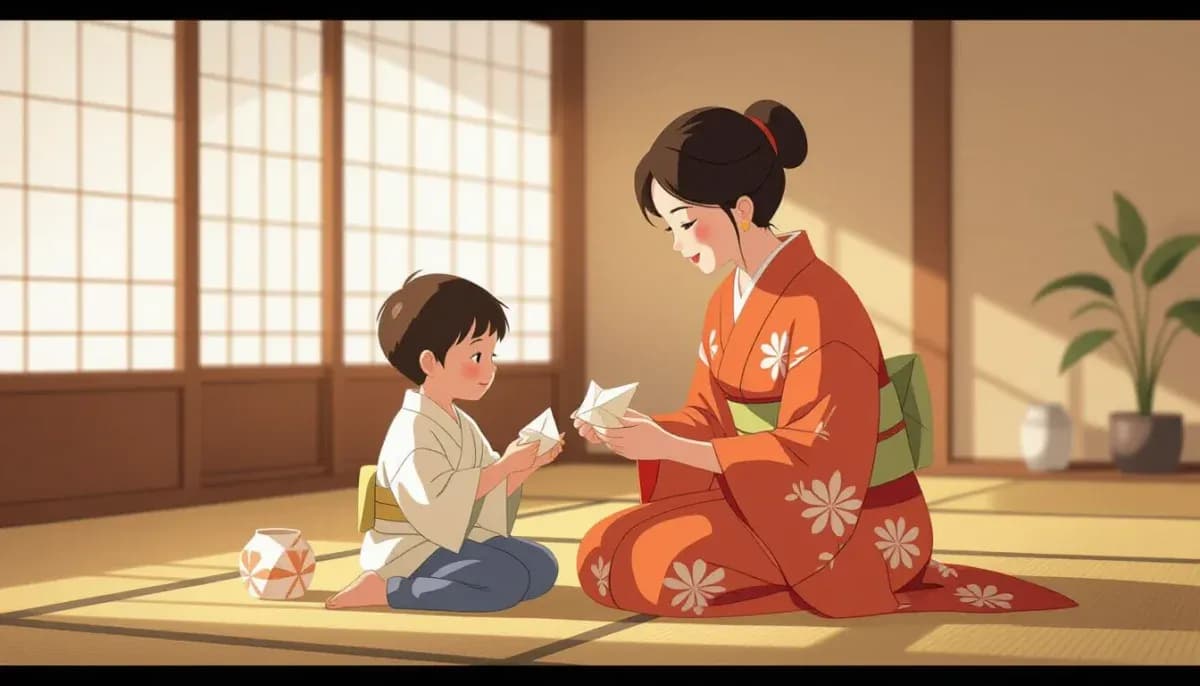
Understand Japanese parenting philosophy — from shitsuke discipline and wa harmony to co-sleeping and empathy training. A practical guide for foreign parents raising children in Japan.
Japanese Parenting Philosophy and Core Values: A Guide for Foreigners
If you've spent any time in Japan with children, you've likely noticed something different — children ride the subway alone at age six, clean their own classrooms, and wait patiently in queues without fussing. This isn't coincidence. Behind these behaviors lies a deeply intentional parenting philosophy built over centuries, shaped by values of harmony, discipline, empathy, and collective responsibility.
For foreign parents raising children in Japan, understanding Japanese parenting philosophy isn't just intellectually interesting — it's practically essential. Whether you're navigating daycare, school expectations, or simply trying to understand why your Japanese neighbors parent so differently from your own upbringing, this guide breaks down the core values and concepts at the heart of Japanese child-rearing.
Shitsuke (躾): Discipline Through Modeling, Not Punishment
The Japanese concept of shitsuke (躾) is fundamental to understanding their approach to parenting. The word is often translated as "discipline" but carries a deeper meaning — it refers to training or upbringing through modeling. The kanji itself combines the characters for "body" and "beauty," suggesting discipline that comes from embodied practice, not external pressure.
In practical terms, shitsuke means that Japanese parents focus intensely on demonstrating the behavior they want their children to adopt. Rather than issuing commands or punishments, the parent becomes the living example. You won't often see Japanese parents shouting or threatening in public. Instead, they whisper, model, and wait — sometimes crouching behind a park pillar to speak quietly to a misbehaving child away from public view.
This stands in sharp contrast to Western parenting approaches that often rely on immediate correction, verbal reprimands, or time-outs. In Japan, the goal is for children to internalize correct behavior through repeated observation and gentle guidance, not fear of punishment. The result, over time, is children who understand why they should behave correctly, not just that they must.
For foreign parents, this can feel counterintuitive at first. When your toddler has a meltdown at the supermarket, the Japanese approach often involves staying calm, allowing the emotion to run its course, and addressing the behavior privately rather than escalating in the moment. It takes patience, but the long-term results are evident in Japanese children's remarkable self-regulation.
For more on daily life in Japan as a foreign parent, Living in Nihon is a valuable resource covering practical expat experiences.
Wa (和): The Priority of Harmony and Group Belonging
Perhaps no concept is more central to Japanese culture — and Japanese parenting — than wa (和), which translates as "harmony" or "peace." From a very early age, Japanese children are taught that the needs of the group take precedence over individual desires.
This value is instilled through constant, gentle reinforcement. A Japanese mother might say "how do you think that made your friend feel?" long before a child understands abstract empathy. Objects, animals, and even food are often spoken of as having feelings — a strategy that builds emotional intelligence and awareness of impact on others.
The priority of wa explains many behaviors that foreign parents find puzzling:
- Children clean their own classrooms and school grounds every day — not as punishment, but as a contribution to shared spaces
- Children in kindergarten resolve conflicts themselves, with minimal adult intervention, learning to negotiate and compromise
- Students wait for the group before eating, starting, or leaving — "itadakimasu" before meals and "otsukare sama deshita" at the end of activities are rituals of collective acknowledgment
For foreign families raising children in Japan, embracing the concept of wa can ease your child's social integration significantly. Children who learn to value group harmony alongside individual expression tend to thrive in Japanese educational and social settings. You can learn more about related topics at For Work in Japan, which covers cultural integration for foreign residents.
The Proximal Parenting Style: Closeness as Foundation
Japanese parenting follows what researchers call a proximal parenting style — characterized by constant physical closeness, co-sleeping, and deep attunement between mother and child. This is the foundation upon which all other values are built.
The statistics are striking: research shows that 59% of Japanese children co-sleep with their parents three or more nights per week, compared to only 15% of children in the United States. Japanese mothers also spend an average of just 2 hours per week away from their baby in the early months, versus approximately 24 hours per week for American mothers.
This practice — sometimes called skinship (スキンシップ) in Japanese — refers to the bond created through physical contact. Co-sleeping, co-bathing (ofuro time as a family), and constant carrying are not seen as indulgent or developmentally harmful. They are viewed as the essential foundation of trust, security, and emotional attunement that allows children to eventually become confident, independent individuals.
The result is that Japanese children develop exceptional self-regulation — the ability to control emotions, wait patiently, and manage frustration — earlier than many Western peers. Research by developmental psychologist Heidi Keller found that while Western babies learn "my actions create results" (self-recognition), Japanese babies learn "my mother anticipates my needs" — a relational rather than individual model of the self.
Public Parenting vs. At-Home Parenting: The Hidden Warmth
One of the most common misconceptions among foreigners is that Japanese parents are cold or distant. This misreading comes from observing Japanese parents in public — where parenting is indeed reserved, quiet, and rule-bound — without understanding what happens at home.
In public spaces, Japanese parents model restraint. They speak quietly, they avoid emotional displays, and they manage their children's behavior with minimum fuss. Tantrums are managed with calm detachment. Praise is given privately, rarely publicly. This is not emotional distance — it is a different cultural expression of care.
At home, Japanese parenting is typically warm, physically close, and deeply emotionally engaged. The same mother who barely reacted to her child's public meltdown is the one spending hours doing crafts, reading stories, and playing imaginatively at home. Understanding this duality is key for foreign parents who want to build relationships with Japanese parents at school or in the neighborhood.
For support on navigating Japanese school culture, see resources at Chuukou Benkyou, which covers education-related topics for families in Japan.
Key Japanese Parenting Values: A Comparison
| Value | Japanese Approach | Western Comparison |
|---|---|---|
| Discipline | Modeling through behavior (shitsuke) | Verbal correction, time-outs, consequences |
| Independence | Gradual — after deep interdependence | Early autonomy encouraged |
| Emotions | Regulate and internalize; express at home | Verbal expression encouraged publicly |
| Group vs. Individual | Group harmony (wa) prioritized | Individual achievement emphasized |
| Sleep | Co-sleeping common and accepted | Separate sleeping typically preferred |
| Praise | Minimal public praise; effort recognized | Frequent verbal praise for achievement |
| Misbehavior | Addressed privately, calmly | Addressed immediately and directly |
| Father's Role | Limited daily involvement historically | More equal involvement expected |
Social Pressure and Peer-Based Learning
Rather than relying heavily on parental authority alone, Japanese parenting leverages social learning through peer groups. From kindergarten onward, children are placed in small groups (han) that rotate responsibilities, share tasks, and hold each other accountable.
This is not accidental. Japanese educators and parents understand that children are often more responsive to peer expectations than to adult demands. A child who ignores a teacher's request may change behavior immediately when their classmate says "we're waiting for you."
This approach shapes how children internalize rules. In Japan, behavioral norms are not primarily enforced by external authority figures — they are maintained by the group itself. Children learn to self-police and to support each other's compliance, which is why Japanese classrooms can function with remarkable independence and minimal direct adult management.
For foreign children entering Japanese schools, this can be both an asset and a challenge. Children who adapt quickly to group expectations tend to integrate smoothly. Those who struggle with the expectation of conformity may find the transition harder. Supporting your child through this cultural learning is one of the most important things you can do. Learn more about supporting your child at school in our guide to the Japanese education system for foreign families.
Empathy Training: Teaching Children to Feel for Others
Japanese mothers are known for their intensive empathy instruction — a practice of constantly drawing children's attention to the emotional states of others, including objects. Phrases like "the toy is sad because you threw it" or "see how your friend's face looks when you take their toy" are common in Japanese households and early childhood classrooms.
This is not mere sentimentality. Research consistently shows that Japanese children develop strong prosocial behavior — sharing, helping, cooperating — from a very young age, which researchers link directly to this explicit empathy training.
The academic development of the Japanese Parenting Style Scale (JPSS), validated with 1,236 Japanese parents of preschool-age children, identified Warmth as the dimension most positively correlated with child prosocial behavior. Warmth in the Japanese context means emotional responsiveness, attunement, and empathy modeling — not verbal praise or overt affection displays.
For foreign parents, incorporating empathy language into your interactions with your child — regardless of your own cultural background — can help bridge the gap between home and school expectations in Japan. Children who can recognize and name emotions (in both Japanese and their home language) tend to navigate peer relationships more successfully.
This is particularly relevant if you're raising bilingual children. See our guide on raising bilingual children in Japan for strategies that support emotional and linguistic development simultaneously.
The Father's Role in Japanese Parenting
No discussion of Japanese parenting philosophy would be complete without addressing the role of fathers. Cross-cultural research consistently shows that Japanese fathers have among the lowest levels of household and childcare task involvement compared to fathers in other developed nations.
This is changing — slowly. Government campaigns promoting ikumen (育メン, "parenting men") have raised awareness, and younger Japanese fathers increasingly take paternity leave and participate in childcare. However, long working hours and workplace culture still place the overwhelming majority of day-to-day parenting responsibilities on mothers.
For foreign couples in Japan, this cultural context matters in two ways. First, you may find that your own more equal division of parenting tasks is viewed with curiosity or admiration by Japanese neighbors and parents. Second, understanding the pressure Japanese mothers face — often parenting largely alone — can help you build more empathetic relationships with the Japanese families around you.
Fathers who want to be more actively involved can find support through Japan's parenting leave policies. See our guide to government benefits and subsidies for families in Japan for information on paternity leave entitlements.
What Foreign Parents Can Learn From Japanese Parenting
Japanese parenting philosophy is not a system to be adopted wholesale — it is a lens through which to examine what we value and why. That said, there are elements that many foreign parents find genuinely valuable:
- Patience in discipline: Addressing behavior calmly and privately rather than reactively
- Empathy instruction: Teaching children to consider the feelings of others from an early age
- Contribution to shared spaces: Instilling a sense of responsibility for communal areas
- The value of skinship: Physical closeness as an emotional foundation, not a crutch
- Allowing struggle: Not rushing to rescue children from difficulty, allowing them to develop resilience
For further reading on Japanese parenting culture, Savvy Tokyo's guide to disciplining children the Japanese way offers a detailed expat perspective, and Tsunagu Japan's overview of unwritten parenting rules provides practical social context. The academic research behind Japanese parenting styles is well documented in this study from PMC/Scientific Reports.
Practical Tips for Foreign Parents Navigating Japanese Parenting Culture
- Don't mistake reserve for coldness — Japanese parents in public are modeling social norms, not demonstrating lack of affection
- Learn the key vocabulary: shitsuke, wa, skinship, ikumen — these concepts open conversations with Japanese parents and teachers
- Embrace the school's communal values — support your child's participation in classroom cleaning, group activities, and shared responsibilities
- Address behavior calmly and privately — you'll fit in better and model the approach Japanese teachers also use
- Connect with other expat parents — communities like those at Japan Dev share real experiences of raising children cross-culturally in Japan
For parents navigating toddler years in Japan specifically, our guide to toddler parenting in Japan covers the developmental stage where many of these values are first instilled. And for parents just starting out, our guide to baby and infant care in Japan covers the early months in detail.
Understanding Japanese parenting philosophy doesn't mean abandoning your own cultural values. It means gaining a richer vocabulary for what parenting can look like — and finding the practices that resonate across cultures to help your children thrive in Japan and beyond.

Originally from Vietnam, living in Japan for 16+ years. Graduated from Nagoya University, with 11 years of professional experience at Japanese and international companies. Sharing practical information for foreign parents raising children in Japan.
View Profile →Related Articles

Modern Parenting Trends and Changes in Japan
Explore how parenting in Japan is changing in 2025 — from landmark government reforms and childcare expansion to shifting discipline norms and the rise of involved fathers. A practical guide for foreign families.
Read more →
Mama-Tomo Culture: Navigating Mother Friendships in Japan
Understand mama-tomo (ママ友) culture in Japan and learn practical strategies for foreign mothers to build genuine friendships through hoikuen, kodomokan, and school communities.
Read more →
The Ikumen Movement: Japan's Push for Involved Fathers
Discover Japan's ikumen movement — the cultural push for involved fatherhood. Learn about paternity leave rights, government initiatives, and what it means for foreign fathers living in Japan.
Read more →
Japanese vs Western Parenting Styles Compared
Discover the key differences between Japanese and Western parenting styles — from amae and shitsuke to co-sleeping, discipline, and public behavior. A practical guide for foreign parents in Japan.
Read more →
Group Harmony and Socialization in Japanese Child-Rearing
Understand wa (group harmony) and how Japanese schools, proximal parenting, and mimamoru shape your child's socialization. Essential guide for expat families in Japan.
Read more →
Japanese Approach to Early Childhood Development
Understand Japan's early childhood development philosophy: hoikuen, yochien, kodomoen, mimamoru, and Chi-Toku-Tai. A complete guide for foreign parents raising children in Japan.
Read more →