
Legal Protections Against Bullying in Japan

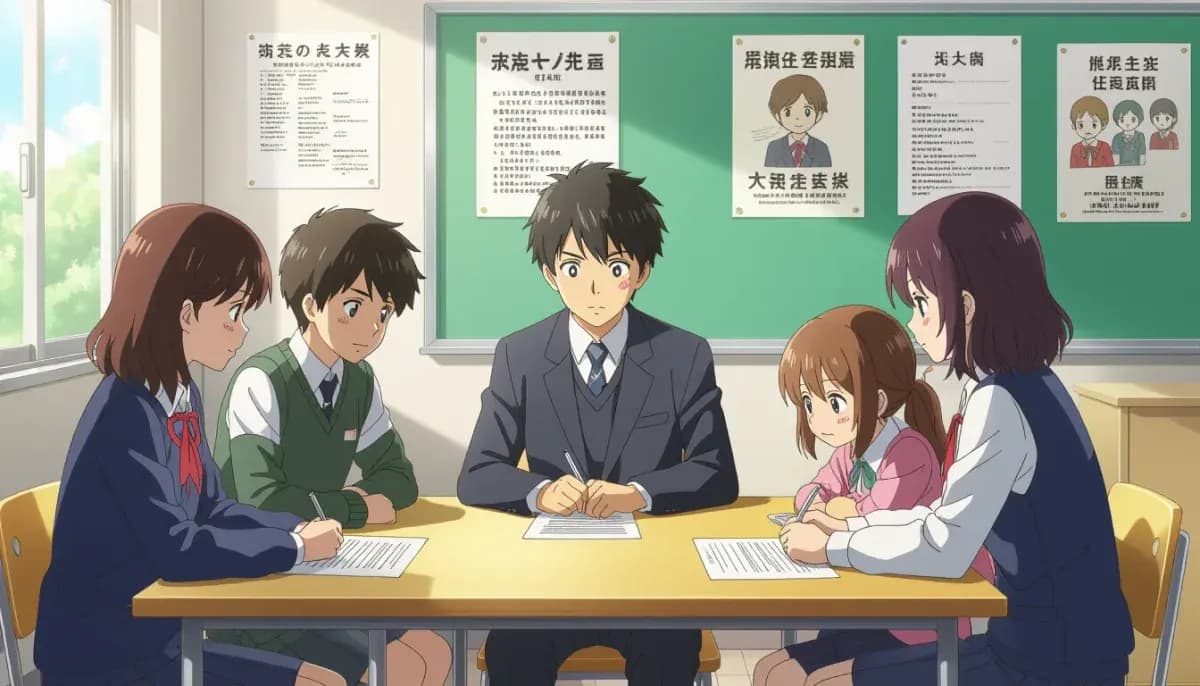
A complete guide to Japan's anti-bullying laws for foreign families. Covers the 2013 Act, criminal liability, workplace harassment protections, and multilingual support resources.
Legal Protections Against Bullying in Japan: A Complete Guide for Foreign Families
Bullying — known as ijime (いじめ) in Japanese — is one of the most serious challenges facing children and adults in Japan. With a record 769,022 reported bullying cases in FY2024, it is a pervasive social issue that affects students, workers, and entire families. For foreign families living in Japan, navigating the complex web of Japanese laws, reporting systems, and support resources can feel overwhelming — especially when language and cultural barriers add another layer of difficulty.
This guide breaks down the key legal protections against bullying in Japan, how the law defines bullying, what rights your child (and you) have, and where to turn for help. Whether you are dealing with school bullying, workplace harassment, or online abuse, Japan's legal framework provides real protections — if you know how to use them.
Japan's Anti-Bullying Law: The 2013 Act
The most important piece of legislation is the Act for the Promotion of Measures to Prevent Bullying (Act No. 71 of 2013), enacted on September 28, 2013. This law was passed in direct response to the high-profile 2011 Otsu case, in which a 13-year-old student died by suicide after enduring severe, prolonged bullying while school authorities failed to act.
What the Law Defines as Bullying
Under the 2013 Act, bullying is legally defined as:
"Physical or psychological acts committed by one child against another child through their relationship with each other at school, which cause physical pain or psychological suffering to the child subjected to such acts."
Key features of this definition:
- Victim-centered perspective: Whether an act counts as bullying is judged from the victim's perspective, not the perpetrator's intention
- Includes online conduct: Cyberbullying — sending threatening messages, spreading rumors online, or excluding someone from online groups — is explicitly covered
- Covers all school types: Elementary schools, junior high schools, senior high schools, and special needs education institutions are all covered
Who Is Obligated to Act
The law places binding obligations on multiple parties:
- National government: Must develop and implement comprehensive anti-bullying policies
- Local governments: Must adapt national policies to local circumstances, establish dedicated support centers
- School boards and operators: Must create school-wide prevention plans and investigate every reported case
- Teachers and school staff: Must report suspected bullying to school leadership and take immediate action
- Parents and guardians: Must cooperate with school anti-bullying measures and not allow bullying behavior
Schools are required to establish multi-disciplinary organizations (専門家チーム) including psychology specialists, welfare workers, lawyers, and school counselors to handle serious cases.
School Responsibilities and Reporting Procedures
Under the 2013 Act, schools have specific legal duties that are enforceable by local governments.
What Schools Must Do
| School Obligation | Details |
|---|---|
| Prevention education | Regular anti-bullying lessons and school climate surveys |
| Dedicated organization | Permanent committee with teachers, counselors, and external specialists |
| Immediate investigation | Every bullying report must be investigated — schools cannot dismiss claims |
| Serious case reporting | Significant harm or prolonged absence triggers mandatory government reporting |
| Victim protection | Schools must prioritize the victim's safety, including separating bully and victim if needed |
| Information disclosure | Parents of bullied children must be informed of investigation outcomes |
What Counts as a "Serious Case"
Cases classified as serious (重大事態) include situations where:
- The bullied child suffers significant physical or psychological harm
- The bullied child misses school for 30+ consecutive days or 30+ cumulative days due to bullying
- There is a risk to the child's life or safety
In serious cases, the school principal must report to the head of the local government (教育委員会), who may independently investigate and report to the local assembly. This adds an external accountability layer that bypasses school administrators who may want to minimize incidents.
Disciplinary Powers
- School principals may impose disciplinary measures on students who bully, including suspension
- Municipal boards of education can order the suspension of bullies from school
- Police referral is possible and increasingly used for cases involving physical violence, extortion, or online harassment
Criminal Liability for Bullying Acts
While Japan does not have a standalone criminal law that says "bullying is a crime," many bullying behaviors constitute existing criminal offenses under the Penal Code and other laws.
When Bullying Becomes a Crime
| Bullying Behavior | Criminal Charge | Potential Penalty |
|---|---|---|
| Hitting, kicking, physical violence | Assault (暴行罪) | Up to 2 years imprisonment or ¥300,000 fine |
| Causing bodily injury | Bodily injury (傷害罪) | Up to 15 years imprisonment |
| Demanding money or valuables | Extortion (恐喝罪) | 1–10 years imprisonment |
| Online defamation, spreading false rumors | Defamation (名誉毀損罪) | Up to 3 years imprisonment |
| Threatening messages online | Criminal threat (脅迫罪) | Up to 2 years imprisonment |
| Damaging property | Property damage (器物損壊罪) | Up to 3 years imprisonment |
| Sexual bullying behaviors | Sexual assault laws | Varies by severity |
Age and Criminal Responsibility
Japan's Juvenile Act affects how bullying crimes are handled based on age:
- Under 14: Cannot face criminal charges; handled under the Child Welfare Law and family courts
- 14–19: Referred to Family Court; serious cases involving violence may be transferred to criminal court
- 20+: Full criminal liability applies (now 18+ for some serious crimes under 2022 reforms)
For foreign families: if your child is the victim of criminal bullying behavior, you have the right to request police involvement regardless of the perpetrator's age. The school does not have the authority to prevent you from contacting police.
Workplace Harassment Protections
Bullying doesn't stop at the school gates. Japan also has strong legal protections against workplace harassment, which directly affects foreign workers and parents.
The 2019 Power Harassment Prevention Law
The Act on Comprehensive Promotion of Labor Policies (Amendment, 2019) — commonly called the Power Harassment Law — became mandatory for all employers by April 1, 2022. This law defines and prohibits pawaharā (power harassment / パワハラ).
Legal definition: Power harassment is conduct that:
- Comes from a position of workplace power or authority
- Goes beyond what is necessary and reasonable for business operations
- Causes harm to the employee's work environment
Six prohibited behavior types:
- Physical aggression — hitting, throwing objects, physical intimidation
- Psychological aggression — excessive verbal abuse, threats, humiliation in front of others
- Workplace isolation — excluding an employee from meetings, communications, or work activities
- Unreasonable demands — assigning impossible tasks or deliberately setting up employees to fail
- Underemployment — giving demeaning tasks far below the employee's qualifications
- Personal violations — intruding into private life, excessive monitoring
Employer obligations:
- Establish an internal harassment complaint system
- Investigate allegations and take remedial action
- Train all employees on harassment prevention
- Protect complainants from retaliation (retaliation is illegal)
- Maintain confidentiality during investigations
Foreign workers have identical legal protections. Japan's Labor Standards Law Article 3 explicitly prohibits discrimination based on nationality in working conditions. If your employer treats you differently because you are a foreigner, that is illegal.
For comprehensive guidance on workplace rights in Japan, see Labor Law and Workplace Rights for Foreigners at For Work in Japan.
How Foreign Families Can Navigate the System
The legal framework exists, but using it as a foreigner requires knowing the right entry points.
Step 1: Document Everything
Before approaching any authority, collect evidence:
- Written records: Save all messages, emails, LINE chats, screenshots
- Medical records: If your child was physically hurt, get documentation from a doctor
- Incident logs: Keep a dated diary of every incident
- Witness information: Note the names of any adults or children who witnessed bullying
Japanese courts and agencies rely heavily on written evidence (書面証拠). Without documentation, cases are difficult to pursue.
Step 2: Report to the School
Begin by submitting a written complaint to the school's anti-bullying committee (いじめ対策委員会). Verbal complaints are easily dismissed; written complaints create a paper trail and legally obligate the school to respond.
If school authorities are unresponsive or dismissive:
Step 3: Escalate to the Board of Education
Every municipality has a Board of Education (教育委員会) that has supervisory authority over public schools. You can file a complaint directly. The board can:
- Independently investigate the school's handling of the case
- Order the school to take specific actions
- Reclassify a case as "serious" if the school failed to do so
Step 4: Contact Legal and Support Resources
| Organization | Contact | Language | Service |
|---|---|---|---|
| Houterasu / Legal Aid Center (法テラス) | 0570-078377 | Multilingual | Free legal consultations and case referrals |
| Foreign Residents Support Center (FRESC) | 0570-011000 | 13 languages | General support for foreign residents |
| Foreign Worker Consultation Hotline | 0120-811-610 | Multiple | Workplace harassment issues |
| Human Rights Bureau (法務省人権局) | Available via Legal Affairs Bureaus | Interpretation available | Civil rights complaints including bullying |
| TELL Lifeline | 0800-300-8355 | English | 9am–11pm daily crisis support |
| Tokyo Education Consultation | 03-3360-4175 | English | First Friday each month, 1–5pm |
For a broader guide to legal issues and troubleshooting in Japan, Living in Nihon's Legal Issues Guide provides helpful overviews of the system for foreigners.
For additional academic and school support resources in Japan, Chuukou Benkyou offers educational guidance relevant to middle and high school students.
Cyberbullying: Special Considerations
Online bullying is legally covered under the 2013 Anti-Bullying Act, but additional laws also apply.
Relevant Laws for Cyberbullying
- Provider Liability Limitation Act: Allows victims to request deletion of defamatory or harmful content from platforms, and in serious cases, to demand identification of anonymous senders
- Defamation and threat laws: Apply equally to online conduct
- Legal Affairs Bureaus can assist with content removal requests for online bullying
Practical Steps for Cyberbullying Cases
- Screenshot and preserve all evidence before requesting removal (content may be deleted)
- Report to the platform (LINE, Twitter/X, TikTok etc.) using their reporting functions
- Contact the nearest Legal Affairs Bureau (法務局) for assistance with content removal through official channels
- Consult Houterasu about civil suits for online defamation if the harassment is severe
Foreign children using Japanese social platforms are protected by the same laws. Language is not a barrier to filing a report — interpretation services are available.
Warning Signs Your Child May Be Experiencing Bullying
Recognizing bullying early is critical, because Japanese children — particularly in school settings — are often reluctant to tell adults. Cultural factors like gaman (enduring hardship silently) and fear of making things worse by "causing trouble" mean many cases go unreported.
Watch for these signs:
- Physical symptoms: Unexplained bruises, lost or damaged belongings, complaints of stomachaches or headaches on school days
- Behavioral changes: Withdrawal from friends and family, sudden reluctance to go to school, changes in eating or sleeping patterns
- Digital behavior: Secretiveness about phone or computer use, visible distress after checking messages, avoiding certain apps
- Academic changes: Sudden drop in grades, loss of interest in previously enjoyed school activities
- Social withdrawal: Stopping attendance at clubs or after-school activities they previously loved
If you notice these signs, consider reading our guide on Signs of Stress and Anxiety in Expat Children for additional context on how cultural adjustment factors into mental health challenges for children in Japan.
It also helps to understand How the Japanese School System Works to better navigate reporting structures and teacher relationships.
What Happens If Schools Don't Act
One of the most frustrating realities for foreign families is that schools sometimes fail to take bullying seriously — especially when the victim is a foreign child who may not have strong community connections. The law, however, provides recourse.
Legal Remedies When Schools Fail
- Administrative complaint to the Board of Education: Can force an independent investigation
- Complaint to the prefectural government: Escalates above the local board level
- Human Rights Bureau complaint: The Ministry of Justice's Human Rights Bureau (人権擁護局) handles complaints about rights violations, including by public institutions like schools
- Civil lawsuit for damages: If bullying caused documented psychological or physical harm, a civil suit against the school board for negligence in supervision (監督義務違反) is legally possible
- Criminal police report: For physical violence, extortion, or criminal-level conduct
Japan's Supreme Court has held in multiple rulings that schools have a duty of care (注意義務) to students, and failure to prevent foreseeable bullying can constitute negligence. Several municipalities have paid significant damages in cases where schools ignored or covered up bullying.
For guidance on understanding your broader legal rights as a foreign parent, including custody, residency, and documentation issues, see our guide on Child Custody Laws in Japan: What Foreign Parents Need to Know.
Key Statistics: Understanding Bullying in Japan
Understanding the scale of the problem can help contextualize your experience and show that you are not alone:
| Metric | Data |
|---|---|
| Reported cases FY2024 | 769,022 (record high) |
| Year-over-year increase | ~5% |
| Serious cases classified FY2024 | 1,405 |
| Adults who report being bullied as children | 51.5% men / 56.2% women |
| Students accused who were previously bullied | ~80% |
| Workers experiencing power harassment | 32.5% (in 3-year period) |
| Girls bullied by groups of 4+ students | ~50% |
| Boys who told no one about bullying | ~45% |
These figures are from MEXT annual surveys and Ministry of Health research. For further reading, the MEXT Anti-Bullying Policy Overview provides official government data.
For an in-depth analysis of bullying patterns among expat and dual-nationality children, Savvy Tokyo's guide to bullying in Japanese schools provides excellent context from a foreign resident perspective.
Final Thoughts: You Have Rights, and So Does Your Child
Japan's legal framework around bullying is comprehensive — arguably more detailed than many Western countries — but it only works when people know how to use it. As a foreign parent, the language barrier can make it easy to feel powerless. But the law is on your side.
Key takeaways:
- The 2013 Anti-Bullying Act legally obligates schools to investigate every reported case
- Criminal laws cover physical violence, extortion, online harassment, and defamation
- Workplace harassment laws protect you as a foreign worker equally as a Japanese national
- Multilingual support services are available and free (Houterasu, FRESC, Human Rights Bureau)
- If schools fail to act, you have escalation paths through the Board of Education, government agencies, and the courts
You do not have to accept bullying as part of "cultural adjustment." Document everything, know the system, and do not hesitate to escalate through official channels. Japan's legal system, when activated, can be a powerful tool for protecting your family.
For comprehensive information about raising children in Japan and navigating the education system, see our Complete Guide to the Japanese Education System for Foreign Families.

Originally from Vietnam, living in Japan for 16+ years. Graduated from Nagoya University, with 11 years of professional experience at Japanese and international companies. Sharing practical information for foreign parents raising children in Japan.
View Profile →Related Articles
Recovery and Building Resilience After Being Bullied
Learn how to help your child recover from bullying (ijime) in Japan. Practical steps, support resources, and proven resilience strategies for foreign families navigating Japanese schools.
Read more →
Bullying Prevention Strategies Parents Can Use
Learn effective bullying prevention strategies for parents raising children in Japanese schools. Understand ijime culture, warning signs, school escalation steps, and English support resources for expat families.
Read more →
When to Consider Changing Schools Due to Bullying
Learn the warning signs, escalation steps, and school transfer process for bullied children in Japan. A practical guide for foreign parents navigating ijime in Japanese schools.
Read more →
Peer Pressure and Conformity Challenges in Japanese Schools
Understand how conformity culture and peer pressure affect children in Japanese schools — especially foreign and mixed-heritage kids. Practical strategies, warning signs, and expert guidance for expat families.
Read more →
The Role of Teachers in Preventing Bullying in Japan
Learn how Japanese teachers prevent and respond to bullying (ijime). Understand the 2013 law, teacher responsibilities, systemic barriers, and what foreign parents can do.
Read more →
Bullying of Foreign Children in Japanese Schools
Foreign children in Japan face a 52.2% bullying rate if they speak a non-Japanese language at home. Learn the warning signs, how to report ijime, and what resources are available to protect your child.
Read more →