
Bullying Prevention Strategies Parents Can Use

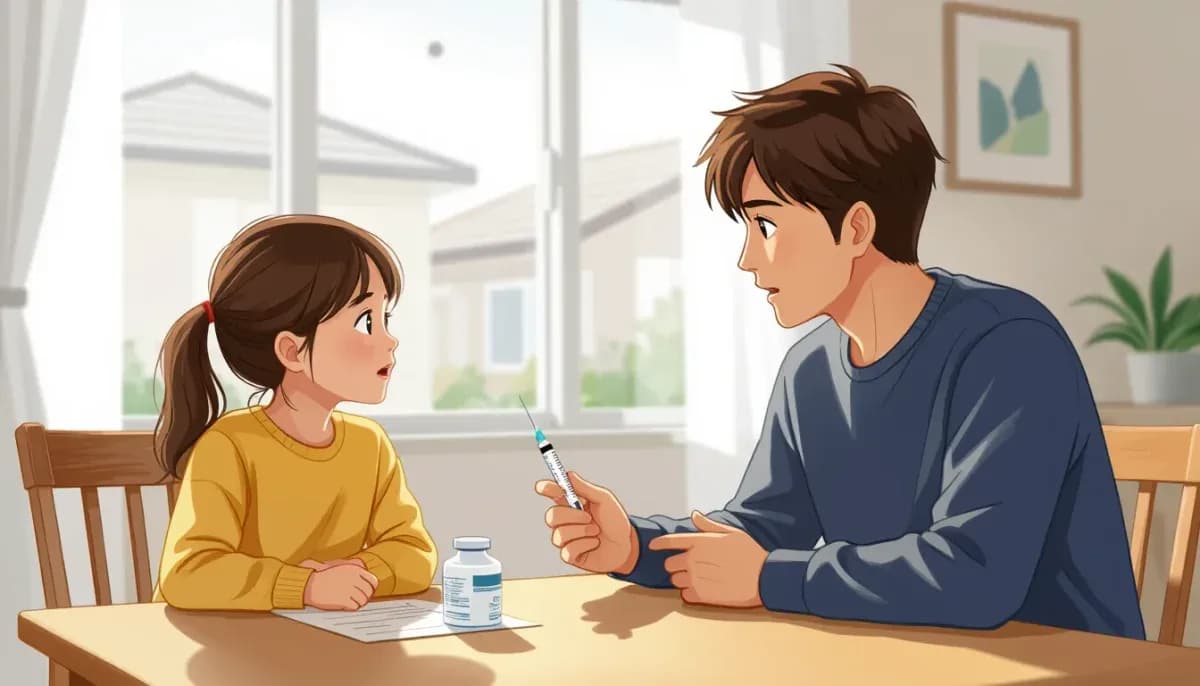
Learn effective bullying prevention strategies for parents raising children in Japanese schools. Understand ijime culture, warning signs, school escalation steps, and English support resources for expat families.
Bullying Prevention Strategies Parents Can Use in Japan
Bullying — known as ijime (いじめ) in Japan — is one of the most pressing concerns for any parent raising children in Japanese schools. In FY2024, Japan recorded a staggering 769,022 reported cases of school bullying, a record high representing a roughly 25% increase from just five years earlier. For foreign families, the challenge runs even deeper: language barriers, cultural differences, and the social pressure to "fit in" can leave expat children especially vulnerable — and parents feeling powerless.
This guide is for parents who want to take a proactive role. Whether your child has not yet encountered bullying or is already showing warning signs, these evidence-based strategies will help you build the environment, communication habits, and intervention skills to protect your child's wellbeing.
Understanding Ijime: Why Japanese Bullying Is Different
Before developing prevention strategies, it helps to understand how ijime differs from the bullying patterns common in Western countries. In Japan, bullying is primarily relational and psychological rather than physical. The most common forms include:
- Social exclusion and ostracism — being deliberately left out of groups, lunch tables, or activities
- Silent treatment (mushi) — the entire class ignoring a student, sometimes for weeks or months
- Gossip and rumor-spreading — damaging reputation through whisper campaigns
- Verbal insults disguised as jokes — difficult for teachers to identify as bullying
- Cyberbullying via LINE — group chats used to exclude, mock, or spread harmful content
- "Play-fighting" harassment — physical aggression framed as horseplay
A striking longitudinal study found that 80.3% of seventh-graders had experienced silent treatment or ostracism — and this rose to 90.3% by ninth grade. Unlike physical bullying, these psychological tactics are subtle, socially sanctioned, and can continue undetected for long periods.
One particularly important cultural factor is the intropunitive tendency among Japanese children: victims tend to blame themselves rather than their aggressors. This deeply rooted shame response makes children less likely to report what is happening — making parental awareness all the more critical.
For foreign families, children who are visibly "different" — mixed-heritage (hafu), or those with accented Japanese or non-Japanese customs — face a statistically higher risk of exclusion. Understanding this context is the first step to protecting your child.
For more on navigating the Japanese school system as a foreigner, see our Complete Guide to the Japanese Education System for Foreign Families.
Warning Signs Every Parent Should Know
Children rarely come home and announce they are being bullied. Instead, watch for these behavioral and physical warning signs:
| Category | Warning Signs |
|---|---|
| School attitude | Sudden reluctance or refusal to go to school; faking illness on weekdays |
| Social changes | Loss of friends; stopping mentions of classmates; avoiding school events |
| Emotional shifts | Irritability, crying without explanation, withdrawal, anxiety |
| Physical signs | Unexplained bruises, torn or damaged belongings, missing or broken school supplies |
| Money and belongings | Money disappearing; requesting extra lunch money without explanation |
| Device behavior | Distress after using phone or computer; secrecy about online activity; avoiding devices suddenly |
| Sleep and appetite | Nightmares, insomnia, loss of appetite on school nights |
Any single warning sign may have an innocent explanation. A consistent cluster of these signs — especially when correlated with school days — warrants a calm, open conversation.
For expat families, children may not have the Japanese vocabulary to explain social dynamics at school, even if they are fluent in Japanese at a basic conversational level. This is one reason why regular English (or your home language) check-ins are so valuable.
Prevention Strategy 1: Build Daily Communication Habits
The single most effective bullying prevention tool is an open, consistent communication channel between parent and child. Children who know they can speak freely to their parents without punishment or over-reaction are far more likely to disclose problems early — before they escalate.
Practical communication habits to build:
- The "best and worst" check-in — Every evening, ask your child to share one good thing and one hard thing from their day. This normalizes discussing difficulties without stigma.
- Specific questions over general ones — Instead of "How was school?" (answered with "Fine"), ask "Who did you sit with at lunch today?" or "Did anyone say anything that bothered you this week?"
- Validate before problem-solving — When your child shares something difficult, resist the urge to immediately suggest solutions. First say: "That sounds really hard. I'm glad you told me."
- Protect the conversation space — Make it clear that anything shared about school will not result in an immediate parental intervention unless your child wants that. Children clam up if they fear their words will trigger an embarrassing parent-teacher confrontation.
- Shared activities — Bullying conversations often happen more naturally during low-pressure activities (driving, cooking, walking) than face-to-face formal talks.
For children dealing with identity-related exclusion, also check out our guide on Cultural Identity for Hafu and Mixed-Race Children in Japan.
Prevention Strategy 2: Build Social Resilience and Friendship Skills
Children with strong social networks and confidence are statistically less likely to be targeted — and more likely to recover quickly when incidents occur. Parents can play an active role in building these skills:
Facilitate out-of-school friendships:
- Arrange playdates and activities outside school, where social dynamics are less rigid
- Enroll your child in extracurricular clubs (bukatsu) — team-based activities create strong peer bonds and give children a social identity beyond their class
- Sports clubs, music groups, and arts activities all provide alternative friendship environments where your child's strengths may shine
Teach assertiveness (without aggression):
- Role-play scenarios: "What would you say if someone said something unkind to you?"
- Teach the "stop, think, choose" model: stop before reacting, think about options, choose a calm response
- Practice boundary-setting phrases in Japanese: "やめて" (yamete — stop it), "それは嫌だ" (sore wa iya da — I don't like that)
Celebrate uniqueness:
- Frame bilingualism, mixed heritage, and international experience as advantages, not liabilities
- Help your child identify personal strengths to build self-worth that is not dependent on peer approval
Research consistently shows that social isolation is both a risk factor and a warning sign for bullying. A child with even one or two close friends is significantly more protected than a child who is isolated.
Prevention Strategy 3: Understand the School's Bullying Prevention Framework
Japan's 2013 Ijime Prevention Methods Promotion Law (Act No. 71) legally mandates that every school implement a structured bullying prevention system. Approximately 96% of Japanese schools hold mandatory staff meetings on bullying prevention each academic year. Understanding how this system works puts you in a stronger position to advocate for your child.
Key school structures to know:
- Homeroom teacher (担任, *tannin*) — Your primary contact for any bullying incident. They are legally required to report and investigate allegations.
- School counselor (スクールカウンセラー) — Most junior high schools and many elementary schools have a counselor. Request a meeting if your child is struggling emotionally.
- Student guidance teacher (生徒指導, *seito shido*) — Handles behavioral issues and more serious cases.
- Principal (校長, *kōchō*) — Escalate to this level if the homeroom teacher is unresponsive or minimizes the issue.
Questions to ask at parent-teacher meetings:
- What is the school's process for reporting a bullying incident?
- Has the school conducted a student bullying survey this year? What were the results?
- Who is the designated bullying prevention contact (ijime taisaku suishin kyōin)?
For a deeper dive into how Japanese elementary schools operate for foreign families, read our Elementary School in Japan Guide.
Prevention Strategy 4: Responding Effectively When Bullying Occurs
Despite all prevention efforts, bullying may still occur. How you respond in the first 48 hours often determines whether the situation is resolved or escalates. Here is a step-by-step framework:
Step 1: Listen first, act second Resist the urge to call the school immediately after your child first discloses. Take time to listen fully, ask clarifying questions ("How long has this been happening?" "Who else knows?"), and let your child tell you what they want to happen.
Step 2: Document everything Create a written record with dates, incidents, names, and locations. If your child's belongings were damaged, photograph them. This documentation is essential for school meetings and, in serious cases, formal complaints.
Step 3: Contact the homeroom teacher Request an in-person meeting (not just a phone call). Bring your documentation. In Japan, school meetings tend to follow a collaborative rather than confrontational tone — approaching the teacher as a partner ("I want to work with you to resolve this") is more effective than a demanding approach.
Step 4: Escalate methodically If the homeroom teacher is unresponsive after 1–2 weeks, contact the principal. If the school fails to act, contact the local Board of Education (教育委員会, *kyōiku iinkai*) — each municipality has one.
Step 5: Access support resources English-language support lines are available:
- TELL Lifeline: 0800-300-8355 (9 a.m.–11 p.m. daily) — free English counseling
- Tokyo Metropolitan Education Consultation Center: 03-3360-4175 (Fridays, 1–5 p.m.)
- 24-Hour Children's SOS Hotline: 0120-0-78310 (Japanese only)
For comprehensive guidance on your child's mental health during difficult periods, see our article on Mental Health and Emotional Wellbeing for Foreign Children in Japan.
Prevention Strategy 5: Address Cyberbullying Proactively
Cyberbullying has emerged as one of the fastest-growing forms of ijime in Japan, primarily through LINE group chats. Because LINE is used for school communication (sports teams, class groups), your child cannot simply delete the app without social consequences.
Practical cyberbullying prevention steps:
- Establish phone rules early — Age-appropriate screen time limits, no devices in bedrooms after 9 p.m., and the understanding that parents may periodically review messages
- Talk about digital empathy — What seems funny to send can cause serious harm to receive
- Screenshot and save — If cyberbullying occurs, save evidence before blocking or deleting
- Report within LINE — LINE has a reporting function for abusive content and group chat behavior
- School reporting — In Japan, cyberbullying that involves classmates is within the school's jurisdiction to address, even when it occurs outside school hours
For families navigating LINE dynamics in Japan, Savvy Tokyo's overview of ijime in Japanese schools offers useful practical context on how digital bullying intersects with school culture.
Additional perspective on the cultural complexity of ijime can be found in the Nippon.com analysis of Japanese bullying dynamics.
Additional Resources for Foreign Families in Japan
Navigating bullying as a foreign parent can be isolating, but you are not alone. Here are resources to help:
- Living in Nihon — A comprehensive resource hub for foreigners living and raising children in Japan, covering education, healthcare, and family life
- For Work in Japan — Practical guides for expat families on navigating Japanese systems including schools and bureaucracy
- Chuukou Benkyou — Resources for middle and high school students in Japan, with information on school challenges and academic support
For further academic reading, the GaijinPot guide on tackling ijime and Nippon.com's bullying statistics report provide excellent background.
If your family is also navigating high school decisions in Japan, our High School in Japan Guide for Foreign Families covers options including international programs that may offer a more supportive environment.
Summary: Your Bullying Prevention Action Plan
Preventing and responding to bullying in Japan requires a multi-layered approach: daily communication habits, social skills development, knowledge of the school system, a clear response framework, and proactive digital parenting.
| Strategy | Key Action | When to Start |
|---|---|---|
| Daily communication | Ask specific, open-ended questions every day | Now — regardless of current situation |
| Social resilience | Facilitate friendships and extracurricular activities | Now — before issues arise |
| School knowledge | Learn your school's bullying policy and contacts | At the start of each school year |
| Response framework | Know the escalation path from teacher to Board of Education | Before you need it |
| Cyberbullying | Set digital ground rules and model healthy tech use | Before your child gets a phone |
The key insight from research into Japanese bullying is that early disclosure is the single most important factor in successful resolution. Everything else — documentation, school meetings, support resources — only works if your child feels safe enough to tell you what is happening. Building that trust, day by day, is the most powerful bullying prevention strategy of all.
If you are just beginning to navigate Japanese schools for your family, start with our Complete Guide to the Japanese Education System for Foreign Families for a comprehensive foundation.

Originally from Vietnam, living in Japan for 16+ years. Graduated from Nagoya University, with 11 years of professional experience at Japanese and international companies. Sharing practical information for foreign parents raising children in Japan.
View Profile →Related Articles
Recovery and Building Resilience After Being Bullied
Learn how to help your child recover from bullying (ijime) in Japan. Practical steps, support resources, and proven resilience strategies for foreign families navigating Japanese schools.
Read more →
When to Consider Changing Schools Due to Bullying
Learn the warning signs, escalation steps, and school transfer process for bullied children in Japan. A practical guide for foreign parents navigating ijime in Japanese schools.
Read more →
Peer Pressure and Conformity Challenges in Japanese Schools
Understand how conformity culture and peer pressure affect children in Japanese schools — especially foreign and mixed-heritage kids. Practical strategies, warning signs, and expert guidance for expat families.
Read more →
The Role of Teachers in Preventing Bullying in Japan
Learn how Japanese teachers prevent and respond to bullying (ijime). Understand the 2013 law, teacher responsibilities, systemic barriers, and what foreign parents can do.
Read more →
Bullying of Foreign Children in Japanese Schools
Foreign children in Japan face a 52.2% bullying rate if they speak a non-Japanese language at home. Learn the warning signs, how to report ijime, and what resources are available to protect your child.
Read more →
Supporting Your Child Emotionally After Bullying
Practical guide for expat parents on supporting children emotionally after bullying in Japan. Learn what to say, warning signs, recovery steps, and English-language help resources.
Read more →