
The Role of Teachers in Preventing Bullying in Japan

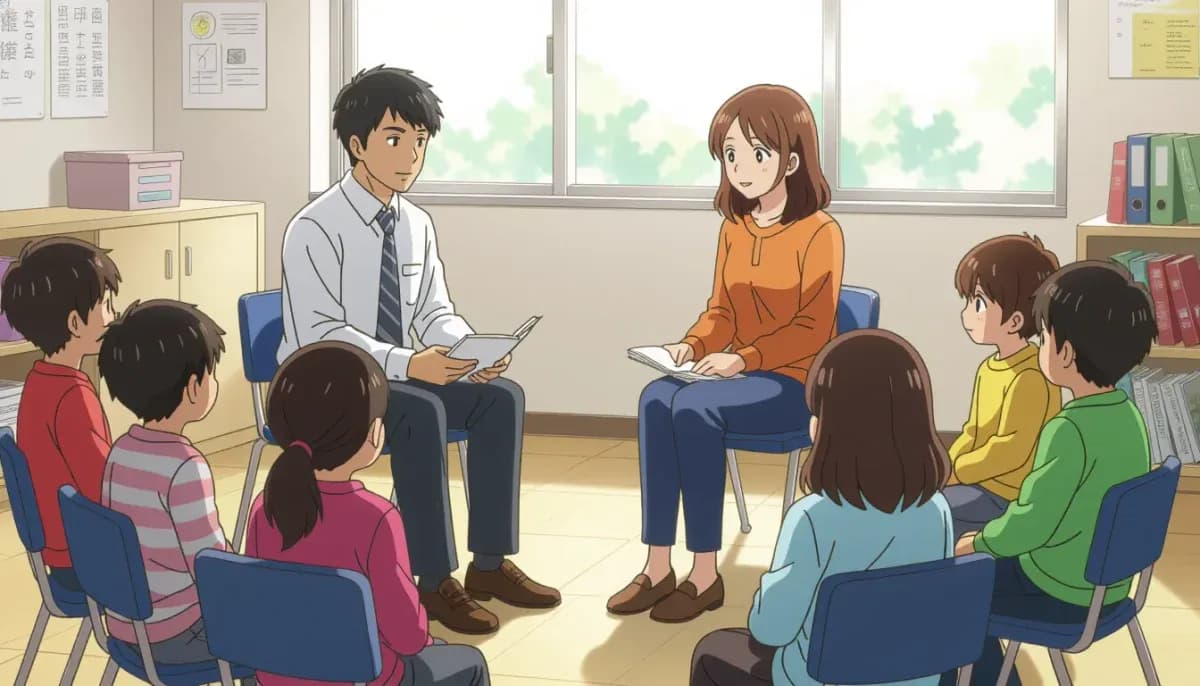
Learn how Japanese teachers prevent and respond to bullying (ijime). Understand the 2013 law, teacher responsibilities, systemic barriers, and what foreign parents can do.
The Role of Teachers in Preventing Bullying in Japan
Bullying — known as ijime (いじめ) in Japanese — is one of the most pressing concerns facing families raising children in Japan. With a record 769,022 bullying cases reported in fiscal year 2024, Japan's schools are confronting a deeply rooted social problem. For foreign families navigating an unfamiliar school system, understanding how teachers are expected to respond to bullying is essential knowledge. This guide explains the legal framework, the practical tools teachers use, the systemic challenges they face, and what parents can do to work effectively with educators when their child is affected.
Japan's Legal Framework: What Schools Are Required to Do
Japan enacted the Ijime Prevention Methods Promotion Law (いじめ防止対策推進法) in 2013, following a wave of high-profile bullying cases — most notably the 2011 Otsu City case, where a homeroom teacher witnessed severe bullying of a student and reportedly laughed, with tragic consequences. The law fundamentally changed the obligations placed on teachers and schools.
Under the 2013 law, every school in Japan must:
- Formulate and publish an anti-bullying policy
- Establish a dedicated response organization (対応組織) within the school
- Conduct regular surveys of students to detect signs of bullying early
- Report suspected cases to the school's response team immediately
- Train educators to view incidents from the victim's perspective
- Notify guardians and, in serious cases, local authorities
Approximately 96% of Japanese schools hold regular staff meetings as part of bullying prevention, ensuring all teachers share a common understanding of school-wide issues. Despite this framework, implementation varies significantly between schools, and parents should not assume that the law alone guarantees a consistent response.
For a broader overview of how the Japanese school system is structured, see our guide to the Japanese education system for foreign families.
The Homeroom Teacher's Central Role
In Japan, the homeroom teacher (担任, tan-nin) is the frontline of bullying detection and response. Unlike school systems in many Western countries where pastoral care is handled by a dedicated counselor or year group leader, Japanese homeroom teachers are responsible for the academic, social, and emotional wellbeing of their class. This makes their role in bullying prevention both powerful and difficult.
A homeroom teacher's anti-bullying responsibilities typically include:
- Observing daily interactions between students for subtle social changes
- Conducting one-on-one talks (個人面談) with students throughout the year
- Reviewing results from school-issued bullying survey questionnaires
- Acting as the first point of contact for students who report being bullied
- Coordinating with the school counselor (スクールカウンセラー) and other teachers
Given that Japanese junior high school teachers work an average of 56 hours per week (with some logging over 120 overtime hours per month), the time available for individual student welfare is genuinely constrained. Japan has approximately one school counselor per 1,000 students, which means counselors cannot substitute for teacher vigilance.
If your child attends elementary school in Japan or junior high school, their homeroom teacher is your primary contact for any bullying concerns.
Common Prevention Strategies Teachers Use
Effective Japanese teachers deploy a range of strategies rooted in both cultural context and evidence-based practice. Because Japan places high value on group harmony (集団意識, shuudan ishiki), skilled teachers appeal to this collective sense when addressing bullying — explaining, for example, that one student's suffering diminishes the entire class community.
Early detection tools:
- Anonymous written surveys distributed monthly or quarterly asking students whether they feel safe
- Anonymous suggestion or comment boxes in the classroom
- Analysis of changes in attendance, behavior, or academic performance
Classroom-level interventions:
- Class meetings (gakkyuu-kai) to address interpersonal conflict without naming individuals
- Seating rotations and group restructuring to break harmful social dynamics
- Role-play exercises and moral education (doutoku) lessons focused on empathy and perspective-taking
- Cooperative project assignments that require students to collaborate across social cliques
Schoolwide approaches:
- Peer support programs pairing older and younger students
- Regular teacher team meetings to flag students at risk across multiple classes
- Involvement of parents through homeroom association (PTA) meetings
For more on the emotional and social challenges foreign children face at Japanese schools, see our article on mental health and emotional wellbeing for foreign children in Japan.
The Systemic Barriers Teachers Face
Despite their legal obligations and genuine desire to help, Japanese teachers operate within a system that creates significant barriers to effective bullying prevention.
| Barrier | Description | Impact on Prevention |
|---|---|---|
| Incentive to underreport | Teachers who formally report bullying face added paperwork, scrutiny, and potential career impact | Cases are minimized or handled informally |
| Heavy workload | 56+ hour weeks leave little time for individual student welfare | Signs of bullying may be missed |
| Counselor shortage | ~1 counselor per 1,000 students | Teachers must handle emotional issues alone |
| Group pressure culture | Teachers may fear disrupting class harmony | Victim-blaming or "solve it yourselves" responses |
| Cyberbullying blind spots | Bullying via LINE or private chat groups is invisible to teachers | Detection relies entirely on student disclosure |
| Language barriers | Foreign students may lack Japanese to report incidents | Incidents may go unreported entirely |
The gap between policy and practice is real. The same institutional culture that prizes harmony and group cohesion can discourage teachers from surfacing uncomfortable realities. Foreign parents — especially those whose children are navigating Japanese language challenges — should be proactive rather than waiting for the school to initiate contact.
For detailed analysis of how bullying in Japan is reported, see GaijinPot's guide to bullying in Japanese schools and Savvy Tokyo's overview of ijime.
Cyberbullying: The New Frontier for Japanese Teachers
Cyberbullying has grown dramatically in Japanese schools, fueled by the near-universal use of LINE among school-age children. Unlike physical or in-class bullying, cyberbullying occurs outside the school building — often in private group chats or on anonymous platforms — making detection by teachers almost impossible without student disclosure.
Common forms of cyberbullying in Japan include:
- Being excluded from a class LINE group
- Being added to a group specifically to receive insults
- Having embarrassing photos or videos shared without consent
- Having fake social media accounts created using the victim's name
Japan's Ministry of Education has issued guidance urging teachers to discuss digital citizenship in class and to explicitly address cyberbullying in school surveys. Some schools now ask students directly whether they have experienced anything upsetting online involving classmates.
Teachers are encouraged to treat cyberbullying with the same seriousness as in-person bullying under the 2013 law, even when the incident occurs outside school hours. However, enforcement is difficult, and the response quality varies widely.
What Foreign Parents Can Do
As a foreign parent, you have both the right and the responsibility to engage with your child's school on bullying issues. Here is what you can do:
- Build a relationship with the homeroom teacher early — introduce yourself at the beginning of the school year and establish open communication channels
- Learn the word ijime — using the correct Japanese term signals that you understand the gravity of the issue
- Request meeting notes in writing — Japanese schools sometimes prefer verbal communication; politely requesting written summaries helps avoid misunderstandings
- Escalate to the vice principal (教頭, kyoutou) or principal (校長, kouchou) if the homeroom teacher is unresponsive
- Contact the local Board of Education (教育委員会) if the school fails to act within a reasonable timeframe
- Use the national bullying consultation hotline — 0120-0-78310 (free, operated by the Ministry of Education, available on school days)
If language is a barrier, consider bringing a trusted interpreter, reaching out to your ward office's international relations division, or contacting a support organization for foreign families.
For further context on navigating the Japanese school system as a foreign family, Living in Nihon and For Work in Japan offer practical guides on daily life in Japan. For resources on Japanese school entrance exams and academic support, Chuukou Benkyou provides useful preparation materials.
Related reading for foreign families: cultural identity for hafu and mixed-race children in Japan and raising bilingual children in Japan.
Conclusion
The role of Japan's teachers in bullying prevention is both legally mandated and culturally complex. Teachers are required by law to detect, report, and address ijime — but systemic barriers including institutional disincentives, heavy workloads, and counselor shortages make this far harder in practice than it is on paper. For foreign families, the most important step is building a proactive relationship with your child's homeroom teacher from day one, understanding your rights under Japanese law, and knowing how to escalate if the school fails to act. Your child's safety depends not only on the system working as intended — but on your active involvement within it.
According to Japan Today's reporting on record bullying cases in FY2024, the numbers continue to rise even as awareness grows. Staying informed and engaged remains the most powerful tool available to any parent.

Originally from Vietnam, living in Japan for 16+ years. Graduated from Nagoya University, with 11 years of professional experience at Japanese and international companies. Sharing practical information for foreign parents raising children in Japan.
View Profile →Related Articles
Recovery and Building Resilience After Being Bullied
Learn how to help your child recover from bullying (ijime) in Japan. Practical steps, support resources, and proven resilience strategies for foreign families navigating Japanese schools.
Read more →
Bullying Prevention Strategies Parents Can Use
Learn effective bullying prevention strategies for parents raising children in Japanese schools. Understand ijime culture, warning signs, school escalation steps, and English support resources for expat families.
Read more →
When to Consider Changing Schools Due to Bullying
Learn the warning signs, escalation steps, and school transfer process for bullied children in Japan. A practical guide for foreign parents navigating ijime in Japanese schools.
Read more →
Peer Pressure and Conformity Challenges in Japanese Schools
Understand how conformity culture and peer pressure affect children in Japanese schools — especially foreign and mixed-heritage kids. Practical strategies, warning signs, and expert guidance for expat families.
Read more →
Bullying of Foreign Children in Japanese Schools
Foreign children in Japan face a 52.2% bullying rate if they speak a non-Japanese language at home. Learn the warning signs, how to report ijime, and what resources are available to protect your child.
Read more →
Supporting Your Child Emotionally After Bullying
Practical guide for expat parents on supporting children emotionally after bullying in Japan. Learn what to say, warning signs, recovery steps, and English-language help resources.
Read more →