
Bullying of Foreign Children in Japanese Schools

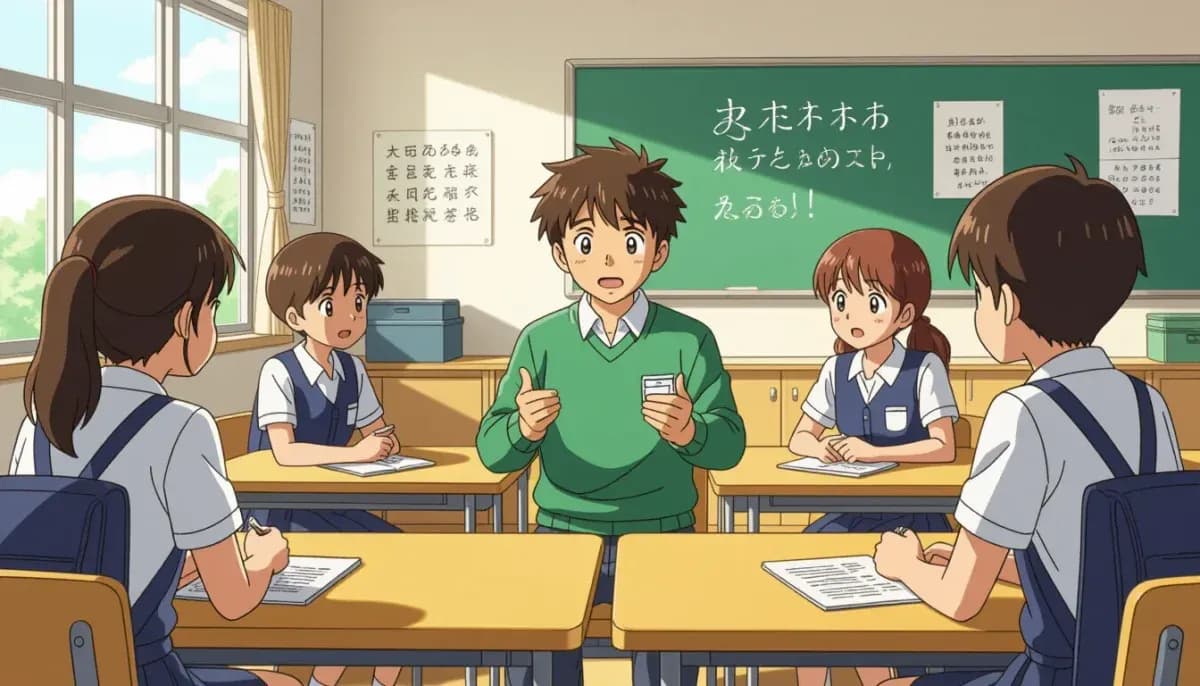
Foreign children in Japan face a 52.2% bullying rate if they speak a non-Japanese language at home. Learn the warning signs, how to report ijime, and what resources are available to protect your child.
Bullying of Foreign Children in Japanese Schools: What Every Expat Parent Needs to Know
Moving to Japan as a family is an exciting journey, but navigating the Japanese school system as a foreign child comes with challenges that many parents underestimate. Chief among them is ijime (いじめ) — the Japanese word for bullying — and its disproportionate impact on children who look, speak, or behave differently from their peers. If you are raising a child in Japan or planning to enroll one in a Japanese public school, understanding bullying risks, warning signs, and what to do if it happens is essential.
Japan's school system prizes group harmony and conformity. For children who stand out — whether due to their nationality, ethnicity, language, or mixed heritage — this cultural emphasis can create an environment where differences are noticed, pointed at, and sometimes weaponized by classmates. This guide will give you the facts, the framework, and the resources to protect your child.
The Scale of Bullying in Japan's Schools
Japan does not have a minor bullying problem. In fiscal year 2024, the Ministry of Education, Culture, Sports, Science and Technology (MEXT) recorded 769,022 confirmed bullying cases across Japanese schools — a record high and a 5% increase over the previous year. Of these, 1,405 were classified as serious cases involving significant physical or psychological harm.
School refusal (futoko) reached 353,970 students in 2024, representing 12 consecutive years of increases. While not all school refusal is caused by bullying, ijime is one of the most commonly cited reasons children stop attending.
Here are some key statistics from academic and government sources:
| Metric | Figure |
|---|---|
| Total bullying cases in Japan (FY2024) | 769,022 |
| Serious bullying cases (FY2024) | 1,405 |
| School refusal cases (futoko, FY2024) | 353,970 |
| Victimization rate — Japanese nationals | 35.6% |
| Victimization rate — Non-Japanese / dual-nationality students | 39.5% |
| Victimization rate — students speaking non-Japanese at home | 52.2% |
| Foreign children enrolled in public schools (FY2024) | 129,000 (up 9% YoY) |
| Foreign children not attending or unconfirmed (May 2024) | 8,432 |
| Students needing Japanese as Foreign Language instruction | ~70,000 |
The most striking figure: children who speak a non-Japanese language at home face a 52.2% bullying victimization rate — compared to 34.9% for Japanese-speaking students. This difference is statistically significant (p=0.001) and points directly to language as the single greatest risk factor for foreign children.
For more context on school attendance challenges facing foreign families in Japan, see our guide to Elementary School in Japan for Foreign Parents.
Why Foreign Children Are Targeted: Understanding Ijime Culture
To protect your child, you need to understand why bullying occurs in this specific cultural context. Japanese schools are built around the concept of uchi and soto — insider and outsider groups. Children who are perceived as different in ways the group cannot easily absorb are vulnerable to exclusion and ridicule.
Foreign children are often targeted along several specific fault lines:
Language differences. A child who cannot speak Japanese fluently, who uses broken grammar, or who mixes English words into conversations becomes an easy target for mockery. This is especially true in the first one to two years of enrollment, before language skills develop.
Physical appearance. Children who are visibly non-Japanese — particularly hafu (mixed-heritage) children — may be teased about the color of their skin, hair, or eyes. Even children with otherwise fluent Japanese can experience this form of bullying throughout their school years.
Cultural practices. Bringing different food for lunch, celebrating different holidays, wearing different clothing, or practicing a different religion can all mark a child as "other." Japan's school culture places strong emphasis on uniformity, and deviation from group norms attracts attention.
Racial and ethnic stereotypes. Some bullying targeting foreign children is explicitly discriminatory — comments about a child's country of origin, nationality, or ethnic group. This type of bullying can be more serious and sometimes requires intervention beyond the school level.
Being returned students (kikokushijo). Even Japanese children who have lived abroad for several years can face bullying when they return. Their exposure to foreign culture can make them stand out as much as genuinely foreign peers.
For a deeper exploration of identity challenges specific to mixed-heritage children, see our article on Cultural Identity for Hafu and Mixed-Race Children in Japan.
Warning Signs Your Child May Be Experiencing Bullying
Children — especially those navigating a foreign language environment — often struggle to communicate that something is wrong at school. Many children feel shame or fear that telling an adult will make things worse. As a parent, learning to read behavioral and physical warning signs is critical.
Watch for the following patterns, especially in the first year of enrollment or after a change in class:
- Morning complaints — frequent stomachaches, headaches, or vomiting on school days that resolve over weekends
- Resistance or refusal to go to school — crying, dramatic tantrums, or extended morning routines that keep delaying departure
- Sudden drop in grades or interest in schoolwork
- Damaged or missing belongings — torn textbooks, missing stationery, lost money
- Unexplained bruises or injuries described vaguely or dismissed
- Social withdrawal — losing interest in activities, avoiding friends, spending more time alone
- Changes in eating or sleeping habits
- Anxiety about social media or messaging apps — a sign of cyberbullying, which has become increasingly common
- Reluctance to talk about school or classmates
- Return to younger behaviors — bedwetting, thumb-sucking, or excessive clinginess in older children
It is important to distinguish between general adjustment difficulty (common for foreign children in their first months) and persistent distress that signals something more serious. If warning signs appear consistently over two or more weeks, begin investigating.
For related guidance on children's mental health, see our article on Mental Health and Emotional Wellbeing for Foreign Children in Japan.
What to Do If Your Child Is Being Bullied: A 5-Step Response Plan
If you believe your child is experiencing bullying, here is a structured approach adapted from best practices used by support organizations in Japan:
Step 1: Listen Without Forcing Disclosure
Create a calm, low-pressure environment for your child to talk. Do not demand details, push for names, or immediately react with anger or alarm — this can cause children to shut down or regret having opened up. Validate their feelings ("That sounds really hard") before problem-solving. Ask open-ended questions: "What was school like this week?" rather than "Did anyone bother you today?"
Step 2: Report to the School with Preparation
Contact your child's homeroom teacher (tantou kyoushi) first. Request a formal meeting rather than a hallway conversation. Come prepared with:
- Specific dates and descriptions of incidents
- Any physical evidence (photos of damaged items, screenshots of messages)
- A clear request: that the school investigate and report back to you within a specific timeframe
If you do not speak Japanese fluently, bring an interpreter. Many municipalities offer free interpretation services for foreign residents at school meetings. Do not allow language barriers to prevent you from advocating for your child.
If the homeroom teacher is unresponsive or you do not see improvement within two to three weeks, escalate to the school principal (kocho sensei) or the school counselor (sukuuru kaaunsera).
Step 3: Contact External Support Organizations
Japan has multiple support channels specifically for foreign families:
- Multilingual Human Rights Consultation Hotline (Gaikokugo Jinken Soudan Dial): 0570-090911 — available in 10 languages including English, Mandarin, Korean, Filipino, Portuguese, Vietnamese, Nepali, Spanish, Indonesian, and Thai. This line can also connect families with legal resources if discrimination is involved.
- Municipal Board of Education (kyoiku iinkai) — if the school is unresponsive, the board of education has authority over individual schools and can mandate investigation.
- Japan Legal Support Center (Houterasu): 0570-078374 — free legal consultations, available in multiple languages.
For comprehensive guidance on bullying and school refusal resources, the team at Living in Nihon has put together an excellent resource covering both the formal reporting process and emergency support options.
Step 4: Consider Alternative Schooling Options
Switching schools is not always the right answer, but it is sometimes the most effective one. Options include:
- Transferring to another public school within the same municipality — possible and often straightforward; contact your municipal education office
- Enrolling in an international school — removes the conformity pressure of the Japanese system, though costs are significant (typically ¥1.5–3 million per year)
- Online schooling or home education — legally possible in Japan; MEXT recognizes some online school attendance as meeting compulsory education requirements
For a full comparison of public and international school options in Japan, see our guide to International Schools in Japan.
Step 5: Pursue Legal Remedies for Serious Cases
If bullying involves physical violence, hate speech, online harassment, or discriminatory acts, you may have recourse beyond the school system. Japan's Act for the Promotion of Bullying Prevention Measures (2013) places legal obligations on schools and municipalities to respond to reported cases. Persistent failure to act can constitute negligence. Consulting with a lawyer or the Houterasu legal hotline is appropriate when:
- The school has failed to take action after multiple escalations
- Your child has been physically injured
- The bullying involves racial or ethnic discrimination
Language Support: The Front Line of Prevention
Because language is the single strongest predictor of elevated bullying victimization, investing in Japanese language support is not just an academic decision — it is a protective one. Children who achieve conversational Japanese fluency faster are statistically less vulnerable to the most common forms of bullying targeting.
Resources available through Japanese public schools include:
- Nihongo shidou (Japanese instruction pull-out classes) — available at most public schools for foreign children; request this from the school office on enrollment
- Interpreter-supported school entry programs — available in municipalities with high foreign resident populations (Tokyo, Osaka, Nagoya, Hamamatsu, etc.)
- After-school language support at community centers — free or low-cost in most major cities
For structured approaches to language learning at home alongside formal schooling, see our article on Teaching Japanese to Foreign Children.
If you are also concerned about maintaining your child's native language while they acquire Japanese, see our guide to Heritage Language Maintenance for Children in Japan.
Supporting Your Child's Resilience and Identity
Beyond crisis response, long-term protection from bullying's most serious effects comes from building a child's internal resilience and sense of identity. Research consistently shows that children with a strong sense of who they are — including pride in their cultural background — recover more effectively from bullying experiences and are less likely to internalize negative social messages.
Practical steps for building resilience:
- Celebrate your home culture at home — cook native foods, maintain cultural traditions, speak your native language with pride
- Find a community of families with similar backgrounds — many cities in Japan have expat parent networks, foreign resident community centers, and international family events
- Normalize the experience — explain to your child in age-appropriate terms why some children act unkindly toward those who are different, and make clear that the problem is with the bully's behavior, not with your child's identity
- Maintain connections with your home country — video calls with grandparents, visits when possible, and awareness of events in your home culture give children an identity anchor beyond their school environment
- Work with a therapist if needed — bilingual and multicultural therapists are available in major Japanese cities; your local international hospital or expat community group can provide referrals
For additional resources on raising children with strong cross-cultural identities, the bilingual families community at For Work in Japan has resources on bicultural child-raising in Japan.
If your child is struggling academically as well as socially, consider exploring Japan's junior high transition resources at Chuukou Benkyou, which covers the school system for returnee and foreign students navigating Japan's exam pathways.
Key Contacts and Resources at a Glance
| Resource | Contact | Languages |
|---|---|---|
| Multilingual Human Rights Hotline | 0570-090911 | English, Mandarin, Korean, Filipino, Portuguese, Vietnamese, Nepali, Spanish, Indonesian, Thai |
| Japan Legal Support Center (Houterasu) | 0570-078374 | Multiple |
| Municipal Board of Education | Via city/ward office | Japanese (bring interpreter) |
| School Counselor (sukuuru kaaunsera) | Via homeroom teacher | Japanese |
| Living in Nihon (bullying/school refusal guide) | livinginnihon.com | English |
| Savvy Tokyo (ijime overview) | savvytokyo.com | English |
Conclusion
Bullying of foreign children in Japanese schools is a real and statistically documented risk, but it is not inevitable, and it is not something you have to navigate alone. With 769,022 bullying cases reported in FY2024 and foreign children facing elevated victimization rates — especially those still developing Japanese fluency — awareness and preparation are the most powerful tools available to expat parents.
Know the warning signs. Build strong communication with your child. Act quickly when you see problems emerging. And remember that Japan has legal frameworks, multilingual support lines, and an expanding community of expat parents who have navigated this exact challenge.
For a broader overview of educating your child in Japan, start with our Complete Guide to the Japanese Education System for Foreign Families. For the junior high school years specifically, see our Junior High School in Japan Guide for Foreign Families.

Originally from Vietnam, living in Japan for 16+ years. Graduated from Nagoya University, with 11 years of professional experience at Japanese and international companies. Sharing practical information for foreign parents raising children in Japan.
View Profile →Related Articles
Recovery and Building Resilience After Being Bullied
Learn how to help your child recover from bullying (ijime) in Japan. Practical steps, support resources, and proven resilience strategies for foreign families navigating Japanese schools.
Read more →
Bullying Prevention Strategies Parents Can Use
Learn effective bullying prevention strategies for parents raising children in Japanese schools. Understand ijime culture, warning signs, school escalation steps, and English support resources for expat families.
Read more →
When to Consider Changing Schools Due to Bullying
Learn the warning signs, escalation steps, and school transfer process for bullied children in Japan. A practical guide for foreign parents navigating ijime in Japanese schools.
Read more →
Peer Pressure and Conformity Challenges in Japanese Schools
Understand how conformity culture and peer pressure affect children in Japanese schools — especially foreign and mixed-heritage kids. Practical strategies, warning signs, and expert guidance for expat families.
Read more →
The Role of Teachers in Preventing Bullying in Japan
Learn how Japanese teachers prevent and respond to bullying (ijime). Understand the 2013 law, teacher responsibilities, systemic barriers, and what foreign parents can do.
Read more →
Supporting Your Child Emotionally After Bullying
Practical guide for expat parents on supporting children emotionally after bullying in Japan. Learn what to say, warning signs, recovery steps, and English-language help resources.
Read more →